Search

Super Library Marketing: Practical Tips and Ideas for Library Promotion

Tag

library content marketing

Save Time and Reach Your Whole Audience With an Incredible Trick! (Includes Guide and an Example You Can Steal)

Photo courtesy Cincinnati and Hamilton County Public Library

Last week, we went over the Marketing Rule of 7 and how consistent messaging delivered many times over multiple channels will lead to promotional success.

But that does NOT mean you must create 500 versions of every promotion you do. PHEW!

So, letโ€™s talk about the easiest way to make the Marketing Rule of 7 happen within the constraints of working in a library. We do that by repurposing our content.

Repurposing content

Repurposing content is the practice of reusing elements of existing content to expand that contentโ€™s reach.

Repurposing content makes it easy to fulfill the Marketing Rule of 7 because you donโ€™t need to write every post, shoot every video, and design every infographic from scratch.

Instead, you can use a piece of new content as the basis for lots of other content.

Why repurpose your content?

Your community is diverse. Their preferred methods of receiving information are diverse.

Some of them are visiting your website every day for updates. Some are seeing your social media posts. Some are waiting for your next email to hit their inbox. And some are fans of your Reels, TikTok, or YouTube videos.

Re-purposing content helps you reach more people on the channels they prefer efficiently, so you can go do all the other things you need to do in a day!

I repurpose this blog every week. (Did you notice?!) Hereโ€™s how I do it.

I pull out a few lines, usually from the first one-third of the post. I may use the lines exactly as they are in the post. Or I might rearrange them, adding more humor or emojisโ€ฆ things I wouldnโ€™t necessarily do in my blog post.

Then I take those lines and I post them across my social media channels and in my emails.

I also take parts of a post and use them in other posts, especially if these are key points I really want you to remember. For example, I strongly believe books are your library’s brand. And I say so… often!

Sometimes, I take parts of my blogs and use them in presentations.  I also turn them into an infographic or a 60-second video.

How will this work at your library?

Letโ€™s say youโ€™ve created an infographic to communicate the value of your library in the past year. We know infographics are a great way to present those statistics and give a whole picture of your library’s contribution.

But infographics take time to build. And some people will still need those stats broken down for them, piece by piece, in order to comprehend their meaning.

So you can take each of the points on that infographic and create separate social media posts. This really helps your audience digest the information.

Those separate pieces of breakout information can also serve as a springboard for your library to write blog posts or longer social media posts specifically diving into those key stats and what they mean for your community.

Choose three of the facts on the infographic. Pick a staff member who loves being on camera and ask them to create a 60-second Reel or TikTok video using trending audio and creative elements to explain this serious subject: the value proposition of your library.

Need more help figuring out how to make this work at your library? I created a 4-step guide for you!

Easy 4-step guide to repurposing content

Letโ€™s say your library is publishing a promotional blog post about Book Club Kits. It might look like this.


Get Convenient, Easy Help Leading Your Next Book Club

Are you someone who enjoys discussing books, sharing insights, and hearing different perspectives on a story? Or maybe you’ve been thinking about starting a book club but don’t know where to begin. Well, look no further! Our Book Club Kits are designed to bring people together through the power of literature, and here’s why you should definitely consider checking one out:

  1. Diverse Selection: Our Book Club Kits include a wide range of titles covering various genres, themes, and authors. Whether you prefer classics, contemporary fiction, non-fiction, or even a mix of everything, we have something for everyone. From thought-provoking novels to inspiring memoirs, our collection is carefully curated to spark engaging discussions.
  2. Convenience: Starting and maintaining a book club can be challenging, especially when it comes to sourcing multiple copies of the same book. With our Book Club Kits, we’ve taken care of that for you! Each kit includes multiple copies of the featured book, making it easy for your group to access and read the same title simultaneously.
  3. Discussion Guides: To facilitate meaningful conversations, our kits come with discussion guides. These guides provide questions, prompts, and talking points to help guide your book club discussions, ensuring that everyone gets a chance to share their thoughts and insights.
  4. Cost-Effective: Participating in a book club can sometimes become costly when you have to purchase multiple copies of a book. With our Book Club Kits, you can enjoy reading and discussing a wide variety of books without breaking the bank. It’s a budget-friendly way to explore new literary horizons.
  5. Community Building: Book clubs provide an excellent opportunity to meet new people, make friends, and engage in lively conversations. By checking out one of our Book Club Kits, you can be a part of a vibrant community of readers right here in your own neighborhood.
  6. Flexibility: Whether you prefer in-person meetings or virtual gatherings, our Book Club Kits are designed to accommodate your preferred format. You can use them to start a club with friends, family, or even coworkers, making it easy to connect with others over a shared love of reading.

You can use that post as a base for repurposing.

Step one: Write a two-line version of your blog post.

This is going to be the mini-version of your post… the elevator pitch, so to speak.

For this example, I would say:

Book Club Kits from the library make it easy, convenient, and cost-effective to start a book club. The library provides free book copies and discussion guides that allow everyone to participate and build community.

Step two: Promote in your emails.

Add your two-line version of the blog post to your newsletter and any other email you send over the course of the next month, with a link to the full post.

Step three: Share on your social channels.

Post your two-line version of the blog and include a link to the full post in the comments of your social media post. (Hereโ€™s why you want to put it in the comments instead of the post.)  

Keep the momentum going on different social media channels by creating more two-line versions of your blog. For example, during week one, post this to Instagram and Facebook:

Book Club Kits from the library make it easy, convenient, and cost-effective to start a book club. The library provides free book copies and discussion guides that allow everyone to participate and build community.

In week two, post a new two-line version on Instagram, Facebook, and LinkedIn:

Book Club Kits from the library bring people together through the power of literature. The curated kits are convenient and flexible to help any book club leader.

On week three, you put another two lines on Facebook, LinkedIn, and X:

Meet new people, make friends, and engage in lively conversations about books without breaking the bank. Check out the free library’s Book Club Kits.

And so on. Mix it up to make it sound like new content while driving home the key points you wish to make.

Step four: Use the promotional message on print promotions.

Create a bookmark, flier, and sign, with your favorite two-line pitch from your blog post. Include a QR code linking to the blog post.

Place the bookmarks and fliers in every hold or checkout. Place your sign on a display of books that have been assembled into book club kits.

Re-purposing all content

You can do this with any piece of content, from podcasts to press releases. Break the content down into pieces and spread them across all your available platforms.

In this way, you can make sure everyone in your community sees your message. You also can make sure the work you are doing right now will have maximum impact.

The added benefit to re-purposing: more data.

It won’t take long for you to learn where your audience is getting news about the library. If you notice that engagement is high on one marketing channel, you will know which channel to start with when you are promoting your library.


P.S. Want more advice?

Libraries Have a Huge Competitive Advantage: Customer Service! Here Are 3 Promotional Tips To Drive Home That Message

Upcoming Appearances

Will I see you soon?

Subscribe to this blog and youโ€™ll receive an email whenever I post. To do that, enter your email address and click on the โ€œFollowโ€ button in the lower left-hand corner of the page. You can also follow me on the following social media platforms:
Your Library Should COMPLETELY Ignore These 4 Pieces of Promotional Advice! Plus What To Do Instead for Real Results. [ARTICLE]

Photo courtesy Cincinnati and Hamilton County Public Library

We live in a world full of advice.

We get tips (whether we ask for them or not!) on health, fashion, finance, work, and family nearly every day.

According to the Oxford Dictionary, the word advice means “guidance or recommendations offered with regard to prudent future action.” Personally, I will take all the help I can get for prudent future action!

There are a lot of blogs, videos, and newsletters that contain vast amounts of promotional advice. Some of it is valuable. And some of it is hogwash.

I’ve worked with libraries for nine years and in the communications field for another 20 years before that. One good thing about working in this field for so long is I can now identify the marketing advice that simply does not work for my library friends. In some cases, that bad advice has the potential to harm library promotional efforts.

๐Ÿ‘‰Ignore this: “You need to go viral.”ย 

Your library should not pursue the goal of going viral with anything. Libraries are about community. They must focus on making personal connections with the people who use and fund them.

When you focus on going viral, you do so at the expense of creating relationships with the people in your local community who need you. And frankly, you need them too.

Going viral is a fluke, not a real goal. It’s like winning the lottery. It happens rarely and randomly. And your library won’t reap any lasting benefits from the exposure.

๐Ÿ‘Do this instead:ย Create engaging content that speaks to YOUR audience.

If you want to break through the noise and become a subconscious part of your cardholdersโ€™ thought process, you must do two things.

The first is to segment your patrons based on their hopes, dreams, needs, and wants. This works particularly well for promotions by email and for social media posts.

Then, you should weave storytelling into your promotions. Stories create emotion and make your promotions more memorable to readers and listeners. Here’s a great example of how one library staffer used stories to change the public’s perception of her library.

Stories also help your library explain your services in a less clinical way. They demonstrate your value and relevance in real, tangible ways that your audience will relate to.

๐Ÿ‘‰Ignore this: “All you have to do is share good content and your audience will find it.”

Your library is creating engaging, entertaining, and informative videos, blog posts, emails, and print pieces. So why isn’t anyone seeing them?

Creating content is only half the job. This blog is a great example. My posts and videos don’t get much traction until I send an email to my readers and post a link on my social media channels.

๐Ÿ‘ย Do this instead: Have a distribution plan for your promotions.

The Marketing Rule of 7 states that a prospect needs to hear or see your library’s message at least seven times before theyโ€™ll take an action like register for an event, download an eBook, or use a service.

For your library, the Marketing Rule of 7 means itโ€™s important to publish content on various platforms and in multiple formats. This will allow your library to reach your entire target audience.

Marketing expert Andrew Davis gives good advice that you can trust! He taught me how to use a tiered strategy–which means that you publish content and then promote it one area at a time, overlapping your amplification efforts.

For example, let’s say you write and publish a blog. You promote it on Facebook. A few days later, you promote it on Twitter. A few days later, you include a blurb and a link in your email newsletter.

With a distribution plan, the work you put into creating that content will reach a wider audience over a longer period of time and get more engagement.

๐Ÿ‘‰Ignore this: “You must increase your social media follower count.”ย 

It doesn’t matter how many followers your library has on social media. The algorithm decides when and where your libraryโ€™s organic posts are shown.

I know of libraries that have tens of thousands of followers but suffer from lackluster engagement. And I know of libraries with hundreds of followers who get high engagement.

And the difference between those two kinds of libraries is the content of their posts. Successful libraries post content that gets likes, comments, and shares. Those three actions will determine the success of your library on any social media platform, no matter how many followers you have.

๐Ÿ‘ย Do this instead: Focus on creating posts that serve your audience.

Look at your insights on each of the platforms to which your library posts. Your audience will be different for every platform. Make a list of the different audiences.

Then, focus your content on serving that available audience. And this may mean you have to pull back on posting to certain platforms. That’s okay!

Focus your energy and resources on creating engaging posts that help your library reach its overall goals. Quality posts will always be better for your library than a high quantity of posts.

๐Ÿ‘‰Ignore this: “There’s a new social media platform or feature that you HAVE to use!”

Twitter Spaces, Snapchat, Clubhouse, TikTok, Reels… the list of new social media platforms and fancy new features increases every day.

Libraries have limited time and energy. But we feel immense pressure to take advantage of these new features and platforms.

We (understandably) fear missing out on a chance to reach a new audience. And we fear missing out on a chance to prove our modernity and relevance.

๐Ÿ‘ย Do this instead: Claim your domain. Then make decisions based on your library’s goals.

If a new social media platform emerges, it’s important to claim a domain for your library. Make an account and create a handle that matches your other social media platform handles. This prevents nefarious dealers from masquerading as your library.

Next, take a step back and decide if your audience is on the platform. You may need to track the platform for several months to see what kind of audience it builds. Then, you can decide whether that audience is one you need to reach.

You must also think about whether your current library strategy aligns with the platform or feature. For example, if you don’t have the time or resources to shoot and edit short video clips, a platform like TikTok or a feature like Instagram Reels is not an effective use of your time.

Finally, consider your resources. You may not have the staff or time to manage another account or use another feature now. And that’s okay!


Read These Articles Too!

Maybe the Biggest Lesson for Libraries from Content Marketing World: Why Broad isย Flawed!

The Top Four Reasons To Use Content Marketing To Promote Your Library on Everyย Platform

Angela’s Latest Book Review

Let’s Not Do That Again by Grant Ginder

Subscribe to this blog and youโ€™ll receive an email every time I post. To do that, enter your email address and click on the โ€œFollowโ€ button in the lower left-hand corner of the page.

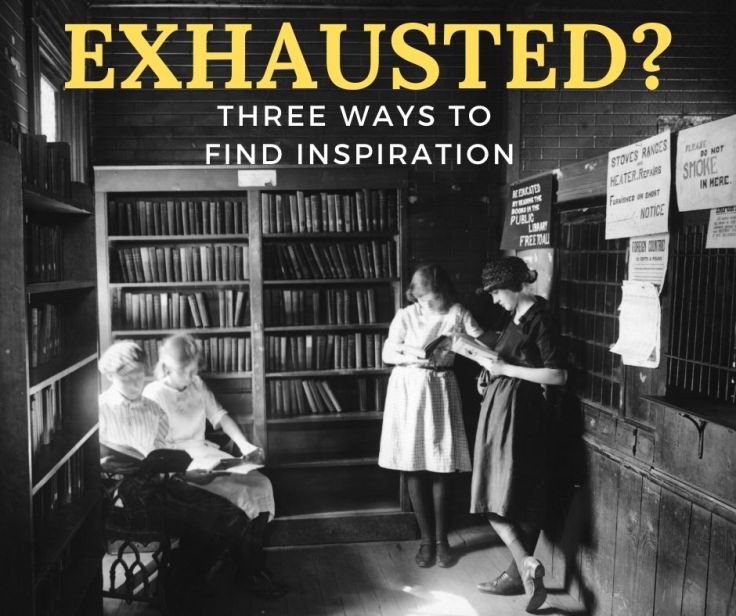
Three Easy Ways for the Exhausted Librarian to Figure Out What Your Community Needs AND Find Promotional Inspiration!

Photo courtesy Public Library of Cincinnati and Hamilton County

More than once, I’ve sat down at my computer to turn out a clever, groundbreaking, truly engaging library promotion… and ended up staring at a blank wall.

There are days, or weeks, or months (or let’s be honest, years… like 2020) when work in a library will run you ragged. As much as you’d like to create the most inspiring and noteworthy marketing piece for your library, you are just Too. Dang. Tired.

When I worked in a library, the exhaustion usually hit me after summer reading ended. With fall and winter looming, I felt my inspiration seeping away as quickly as the leaves fell from the trees.

If this happens to you, there are some things you can do to get your creativity back. If you need a little inspiration, look no further than your community.

The easiest and most effective library promotions are the ones that solve your cardholders’ big problems. If you have no idea what your community wants and needs from your library, here are three easy ways to figure that out and find the inspiration for your next effective promotion!

“Stalk” your library users.

There are three places you can go to learn more about your community.

Inside the building

If your library is currently open, take a walk around the library or visit the branches. This is your spy moment! Take off your badge and pretend to browse. Or sit at a table in a corner with your laptop.

Observe the way the cardholders browse the shelves, interact with staff, work the self-checkout machines, and use the public computers. Answer these questions.

  • Do they look for a map?
  • Are they drawn to a particular book display?
  • Do they linger over the new books, or do they dash in for their holds and dash out?
  • Do you notice all customers follow a particular path through your branch or are drawn to a particular place within the branch?
  • If your library has a drive-thru, is it busy? What kinds of customers use the drive-thru?

Watch how your community behaves inside the building to get an idea of what customers love and what problems they encounter during their interactions with your library. Both of those discoveries can be the basis for your next library promotion.

On your website

Take a close look at your library website’s analytics to find out who is visiting and what they’re doing.

Google Analytics is the best place to get a sense of how your community is interacting with your library’s website. If you don’t have access to your library’s Google Analytics, make an appointment to meet with whoever does have access. Talk with that person about their work. Then, share your goals for the library promotions you create. It’s your chance to form a collaboration that can lead to a more effective library website.

When you get a chance to see the data, ask these five questions:

  • Which landing pages are the most popular?
  • Which pages get zero traffic?
  • Has website traffic to certain pages changed over time or remained relatively the same?
  • How long did people stay on our website?
  • How does the bounce rate compare on your landing pages?

If you notice that people are interested in a certain section of your website, you may want to create promotions that support that. Likewise, if you realize that cardholders are missing some key places on your website, you may want to create promotions to entice people to visit those pages!

And if you notice that people are visiting a certain webpage but bouncing right off, you may want to think about improving the customer experience on that page.

On social media

Social listening is an insightful way to get promotional inspiration. It’s kind of like eavesdropping. It’s the purposeful search for conversations about your library on social media platforms.

Social listening will give you a clearer picture of how people feel about your library. You may be able to spot problems before they happen. And you will certainly spot promotional opportunities which you can amplify to connect to more users.

For full details about how to actively use social listening for promotional inspiration, read this post.

Check your statistics.  

Your library likely makes circulation and programming stats available on your internal website. These pieces of data can inspire you to find ways to help make their interaction with the library more worthwhile.

If you make it a regular part of your job to check your library statistics, you will find promotional inspiration. You’ll notice when there is a dip in the use of a service. When it happens, you’ll want to consider shifting some of your promotional focus to re-educate your community about that service.

If you work for a system with more than one location, you may notice trends in visits and circulation between the locations. Library staff at branches with lower visits and circulation can reach out to those with higher visits and circulation to see if you can steal some of their successful promotional ideas!

Talk to your coworkers.

You might find inspiration simply by “interviewing” your fellow staffers. Some key questions you can ask include:

  • What are your customers struggling with?
  • What are you struggling with?
  • What part of their job brings them joy?

You may uncover a great story that centers on your community member or cardholder as a hero. You can use that as a piece of content marketing to promote your library on every platform.

You might also learn that there is a customer problem that you can help to solve with your promotions. Answering a commonly asked cardholder question is an easy and effective way to promote your library.

You May Also Want to Read These Posts

The Quest for Perfection May Spoil Your Library Promotions! How To Walk the Line During the Revision Process and Still Create Authentic Messages

Behind the Scenes of The Library Marketing Show: Anyone Can Create Library Videos!

Angela’s Latest Book Review

The Sweetness of Water by Nathan Harris


Subscribe to this blog and youโ€™ll receive an email every time I post. To do that, enter your email address and click on the โ€œFollowโ€ button in the lower left-hand corner of the page.

Four Steps to Transform Your Library’s Plain Old Newsletter into a Marketing Masterpiece (With Examples!)

Photo courtesy Public Library of Cincinnati and Hamilton County. People in the newspaper room, circa 1900.

I love to read anything in print. The texture and smell of the paper, the actual physical weight the words have in your hands, and the ability to re-read and annotate the pages give a sense of importance to the printed piece that you can’t get when you read something online.

Digital exhaustion is a real phenomenon, and the pandemic has only made it worse. According to Statista, the average daily time spent with digital media is expected to increase from seven hours and 50 minutes in 2020 to just under eight hours in 2022.

Even though people are spending more time online, that online space is crowded. It’s harder for the library’s message to break through all the content noise.

People want a more personal connection to their marketing. A printed promotional piece appeals to the senses. It’s tangible. It occupies physical space and creates the value of possession. Your audience must physically interact with it, and that makes it authentic and reliable.  

And for members of our community who don’t have access to the internet, or who don’t have a connection strong enough to support streaming videos or high-resolution downloads, print is the key to marketing success.

Most libraries have a printed newsletter. I want to challenge your library to take that piece and transform it into a powerhouse marketing tool.

To do that, you’re going to trim down the number of events in the piece and add stories about your library and its patrons.

Here’s how you can transform your newsletter into a promotional masterpiece that people will want to read. There are examples of great library print pieces at the end of this post!

Make a plan and an outline.

Divide your publication into pages. Then, plot out what you are going to put on each page.

You’ll want to create a balance between the sections of your piece. Start by dividing your publication into thirds.

  • One third will be dedicated to promoting collection items, including booklists, streaming music and movies, your physical movie and music collection, and magazines.
  • One third will be dedicated to events and programs.
  • The final third will be stories about patrons and staff and the ways the library has impacted their lives.

Pick one big story to serve as your cover.

Some cover stories we used at my library included:

A father and son who visited all 41 branches of our library in one day.

A middle schooler who gave a speech about library funding.

A 103-year-old woman who read three books a week, thanks to the work of our outreach department.

How to use the library to determine if stories on the internet are fact or fiction.

Once you determine your cover story, place it in your outline about halfway through your publication. You want people to have to read several pages to get to it.

Here are some other ideas for stories to put in your publication.

  • Staff and patron reading recommendations, including quotes about why they love and recommend the books.
  • Stories behind the forming of a book club.
  • A profile of a teacher or a school librarian who takes advantage of services like teacher collections and support from the library.
  • How your library has helped someone find a job or earn a degree.
  • Profile of a small business that used your library to launch a successful company.
  • Behind the scenes of a certain department at your library. For example, I interviewed the manager of our Preservation Lab, which restores and preserves rare items in the library’s collection such as military uniforms, books written on palm leaves, and all kinds of historically valuable photographs. In another issue, we took people along for a ride with our Outreach Services and talked to the people whose lives were changed by the simple act of bringing books to their homes.

Make sure each page includes at least one call to action.

Calls to action are very important, even in print. Remember, if you want your cardholders to do something, you must tell them to do it explicitly!

End each article with a call to action, like, “To learn more, email us.” Or “To join this book club, visit our website.”

The whole point of your print publication is promotion. Make sure that you give your readers a way to interact with your library and take the next step.

Give yourself time to edit and review.

Typically, it took me about a month from start to finish to write, edit, and review my 12-page print publication. Specifically, my timeline looked like this:

  • Four weeks before we went to print, articles written by other staff were due.
  • Three weeks before we went to print, I thoroughly read and edited each article. I used my own punctuation and grammar skills, plus Microsoft Word’s review editor, and a Grammarly extension on my browser to perfect each article.
  • Two weeks before we went to print, I made copies of the publication and passed them around to at least five staff members inside and outside of my department. I asked them to carefully read the articles and mark any mistakes they noticed.
  • One week before we went to print, I gave copies to senior leaders for final approval.
  • I also made a copy for myself and read it out loud. This is a trick I learned from journalism school that I still use today for this blog! Your brain may automatically correct errors when you read silently in your head but if you read each word out loud, as if you are doing it for an audience, you’ll find missing words or grammar errors that you never noticed before.

Some examples of great library print promotional pieces that incorporate promotions and stories about the library (that you can read online!)

Niles-Maine District Library Newsletter

Department of Library Services Newsletter from the University of Pretoria

The Storyline from Oak Park Public Library

Next Page from Bucknell University

Source from the Howard County Library System

Between the Columns from Eastern Kentucky University Libraries

Does your library have a print publication that you’re really proud of? I’d love to see it! Please let me know where I can read it by hitting the Feedback button on the bottom left-hand side of this page.


You May Also Want to Read These Articles

How Can You Tell If People Want To Read Your Libraryโ€™s Print Newsletter or Magazine? Some Not Exactly Scientific Ideas!

๐Ÿ“šI Was Wrong About Bookmarks! How to Use Print to Keep People Coming Back to the Library

Angela’s Latest Book Review

Couple Found Slain by Mikita Brottman


Subscribe to this blog and youโ€™ll receive an email every time I post. To do that, enter your email address and click on the โ€œFollowโ€ button in the lower left-hand corner of the page.

The Quest for Perfection May Spoil Your Library Promotions! How To Walk the Line During the Revision Process and Still Create Authentic Messages

I learned a skill as a journalist which has been invaluable to me as a marketer.

As a journalist, I was an expert at knowingย when to let go of a piece of contentย and send it out into space, even though it was imperfect.

It’s the nature of the news business. You have a deadline and when the deadline arrives, you go to air or to print with as much information as you have. You know that youย can revisit the story later to add new details. And that must be enough.

One of the hardest adjustments I had to make when I left the newsroom and went to the library was the constant reshaping of promotional messages and campaigns.

The good and bad of the revision process

When I worked in a library, each blog post, print piece, email, social media post, or video would go through rounds of review by several departments. The record was held by our content marketing magazine, which sometimes went through upwards of 15 edits per issue.

All the scrutiny had its advantages. More edits meant grammatical, punctuation, and spelling errors were found and fixed. The revision process also gave me the chance to see how each message was perceived by different people with different perspectives.

I purposefully chose reviewers who worked with different target cardholder audiences. They told me whether they thought their patron base would respond to the message. I trusted their opinions and took their advice when they told me a phrasing or image change would increase my message’s effectiveness.

But there were also pitfalls to revision process. The message was sometimes reshaped by people who pressured me to add words or phrases that weren’t customer friendly. They might also wish to dilute or change the message altogether, depending on their department’s own goals or agenda.ย 

The point at which your library’s revision process goes from helpful to over-examined is the space I want to focus on in this post.

It’s very easy to start over-thinking text, images, and graphics. The message you’ve carefully crafted may not connect with your audience because it disappears in the search for perfection. It can be crippling.

There is a very thin line between authenticity and perfection. It takes practice to walk that line. Here’s the advice I have for you.

Constant improvement is better than perfection

The best content isn’t perfect. That is what makes it good.

Imperfection shows your library’s human side. When you write from the heart, your message feels more authentic. 

Don’t sabotage your own marketing efforts by waiting for the moment when every single detail is right.ย Give yourself permission to release a piece of marketing content when the time is right, not when it’s perfect.

Creative, honest messaging will be the doorway for your library to connect with consumers in the moment when they are genuinely searching for answers from your library.

I’m a fan of author, speaker, and showrunner Jay Acunzo. I highly recommend his newsletter. His niche is creativity. He inspires others by talking about how creativity intersects with work in the real world.

In this blog post, Jay makes a great point that I think about all the time. He says, “How can we aspire to perfection (even if it’s never something we reach) while still moving forward without delay (even if we aren’t creating amazing work yet)? Well, I think the key is to place perfection where it belongs: away in the distance. Then, we can busy ourselves with marching towards it.”

In the library, that means we must do the work and ship it when it needs to be shipped. But we also must commit to revising it, molding it, and realizing that it is a work in progress.

In your library promotional work, your goal must not be perfection. It must be constant improvement.

But I have a deadline!

You work in a real library with real goals and strategies. And the quest for perfection will sometimes seem like a lofty goal that you don’t have the luxury of achieving.

So how do you know when a piece of content is ready for release, even if it’s not perfect? Ask yourself these three questions.

1. Is your promotion as compelling and authentic as it can be in this moment?

2. Is your promotional piece free of grammatical, punctuation, and spelling errors?

3. Is the information in your promotional piece correct?

If the answer is yet to these three questions, it’s time to let go.

Marketing is one giant experiment. Even when you release a promotion that isn’t perfect, you will still learn plenty from it. Measure and record the results of your promotion. Then use that data to adjust and reconfigure your attempts on the next go-around.

Don’t get bogged down in the quest for perfection. Be human. Be authentic. Be true to your library voice.

And get the message out there! Your imperfect message may lead to some perfect insight into your community.


Do you have an example of a time when an imperfect message brought you some perfect insight into your customers? Share your thoughts in the comments!

You may also like these posts

Hereโ€™s When Itโ€™s Okay for Your Library To Forget Perfection and Just Push Send!

You Donโ€™t Have To Be Cool To Promote Your Library to Teens! Here Are Seven Seriously Easy Ways To Connect With Gen Z

Latest Book Review

The Only Good Indians by Stephen Graham Jones

Subscribe to this blog and youโ€™ll receive an email every time I post. To do that, click on the โ€œFollowโ€ button in the bottom left-hand corner of the page. Connect with me on YouTube, Twitter, Instagram, Goodreads, and LinkedIn.

Five Creative Ideas to Help You Beat the Blues, Get Inspired, and Create Amazing Library Marketing Campaigns Again!

It is hard to believe that in a building filled with the stories, a library marketer would need inspiration.

But alas, we are human. And sometimes we get stuck in a rut.

Library marketers are expected to be energetic and enthusiastic at all times. We must come to all meetings and be able to give a list on the fly of exciting and innovative ideas for promoting major developments and smaller decisions that affect the everyday cardholders.

I don’t know about you, but sometimes, I just too plain exhausted to be the marketing superwoman. The busyness of the library summer reading season seems to melt every year into the busyness of fall. There is little time to rest. And exhaustion makes it even more difficult to find creative inspiration.

We struggle to inspire our cardholders, both old and new. We want our customers to use our collection and enjoy our services every day, but we can’t seem to figure out a way to make them act. The tried and true methods of marketing no longer work and we’re frustrated, angry, and frankly, a little worried.

Here’s what I do when I find myself stuck in a marketing rut.

Define your workflow and make it the law of your marketing landscape. A defined outward-facing workflow sounds like the opposite of a creative endeavor. But in reality, it creates space for you to think. It ensures that you have time to be thoughtful so you can develop and deliver a quality product.

Set an expectation about who will manage workflow. That means all marketing requests go through one person on your team. That person is responsible for looking at the request and determining if it fits into the library’s overall strategic goals. That person sets clear expectations and goals for each project. That person communicates a plan of action based on realistic timelines and due dates.

Let me tell you: a defined workflow is a lifesaver. It reduces stress and anxiety for everyone on your team. When your staff understands what is expected of them, they can focus on the creative parts of the job.

If you are new to your library, it will take time to get a smooth workflow in place. Be patient with yourself and with others. Keep reinforcing your expectations. Eventually, your coworkers will be on board with you, especially when they start to see results.

Be generous with positive reinforcement. Positive reinforcement always creates an emotional experience for individuals or a team working together. Don’t just say, “Well done.” Write a note or a card praising specific actions or portions of work. Give yours staff unexpected breaks: team lunches and surprise treats can lift the spirit of your team and re-energize them.

Use your staff’s strengths to create passion for the work. I highly recommend that you invest in the Gallup Strengths Finders test. It gives you incredible and nuanced insight into yourself and your staff members. It shows you how to recognize the strengths of your team members and how to actually manage them to put those strengths to good use. You can find the book by Tom Rath at Walmart and Target for about $15. It includes a code that each team member uses to take the test online.

Through the Gallup process, I discovered my team members have a strong capacity for collaboration. This wasn’t much of a surprise to me. But the book also gave me suggestions for how to actually use that desire for collaboration to the advantage of my library. It also gave me greater insight and empathy for team members who prefer to work alone or who seem resistant to change. Iย can assign tasks to the best person for each job. It’s really changed the dynamics of my staff and made work easier for everyone.

Observe your customers. It helps me just to take a walk around the library or to visit the branches. I pretend to be browsing the books but really, I’m watching the way the cardholders browse the shelves, interact with staff, work the self-checkout machines and use the public computers. Do they look for a map? Do they look confused? Are they drawn to a particular book display? Do they linger over the new books or do they dash in for their holds and dash out? What questions do they ask? How do people actually move through the branch?

Observing the behavior of customers inside the library can give you an idea of what visitors love and what problems they encounter during their interaction with your system. Then, you can focus on creating new marketing ideas that spotlight the things your cardholders love, and answer the questions they have.

You can also observe online visitors. Spend some time poking around Google Analytics. Figure out which pages get the most visitors. Look for the pages where visitors stay for the longest period of time. Look for the landing pages with a high bounce rate. Page views and read time will help you focus effort on improving the customer experience for your website.

Check your statistics. ย Our library makes circulation and programming stats available on our intranet. This little piece of data inspires me to find ways to help make their interaction with the library more worthwhile.

Sometimes a surprising trend emerges and that gives me a creative marketing idea. Sometimes a service takes a dip in usage, and it becomes clear that we need to shift our marketing focus to re-educating the public about that service. Data is such a valuable inspirational tool. Use whatever stats you can get your hands on!

More inspiration

11 Powerful Quotes for Marketing Inspiration

5 Ted Talks for Marketing Inspiration

Need Marketing Inspiration? It’s All Around You!

Subscribe to this blog and youโ€™ll receive an email every time I post. To do that, click on โ€œFollowโ€ button in the bottom left-hand corner of the page. Connect with me on YouTube, Twitter,ย Instagram, and LinkedIn. ย And check my list of upcoming events so we can connect.

Lessons From The Greatest Press Release Ever Written!

4

When I left journalism for marketing, one of my big worries about switching careers centered on the dreaded press release.ย Organizations love writing and sending them. They’re usually glowing, self-congratulatory reports of amazing events, awards, and services. They make us feel productive, important, and authoritative.

But journalists hate them. They mock them. They look on most press releases as pretentious attempts at self-promotion by organizations with inflated egos. Most of the time, they file them in their assignment book and never look at them again. I know that’s probably not what you wanted to hear. I’m not trying to be mean. You deserve to know the truth because you work hard on those releases. It takes a lot of effort to write a release that makes all the invested parties happy and it takes forever to get them approved in the library bureaucracy. But they’re not an effective means of getting our message not–not in the current form, anyway.

I’m not saying we should ditch press releases. I’m pushingย you to change the way you write your press release. Commitย to writing in a way that will interest journalists and make them want to cover your library. Use storytelling techniques to turnย our news into an irresistible story. That’s how we get more press coverage.

I foundย inspiration recently when I came across this amazing, astounding, awesome press release, sent out BY THE FEDERAL GOVERNMENT no less. The year was 1921 and the U. S. Department of Agriculture had spent nearly a decade and thousands of dollars trying to hunt down a destructive wolf.

A little background is necessary. I first heard this press release read aloud while listening to This American Life with Ira Glass. According to Glass, when settlers arrived in the American west, they killed off the animals that wolves used to feed on– bison, elk, and deer. The wolves starting killing livestock for food. That angered the settlers, soย ranchers and the federal government set out to exterminate the wolves. Between 1883 and 1930, more than 80,000 wolves were killed.ย The government wanted to tell everyone what a good job they were doingย and so they put out press releases. Like this one.

Read The Great Wolf is Killed

An amazing piece of press work, it contains four major lessons for libraries looking to write a better press release. If you want to draw journalists in, make them want to cover your library, and get you more press, here’s what you need to do.

      1. Write a story, not a bureaucratic diatribe. Journalists are an audience that you need to engage. They don’t respond to rhetoric and library jargon any more than a general audience does. They want a story, with emotion, drama, good guys, bad guys, and a plot. Write your release as if you are writing theย real story for the publication which you are targeting. We know many newspapers and magazines lift copy right from the release–why not make it something they’ll really want to print? They’ll want something with a catchy headline and a story they can tease to their viewers to get them to watch/click/share.
      2. Ditch the dry, fact-based language and be a journalist. Get real quotes from the real stakeholders… stop making up quotes full of inspirational language that no one will really ever say in realย life. ย Journalists can see right through that. Interview the stakeholders and use their real words in your release.
      3. There is no right length. The wolf release is four pages andย 1500+ words long. And it’s perfect. Write the story. If you have 1500 words and they’re riveting, a newsroom will read and print all 1500 words! Focus on writing great, not writing short.
      4. Spend some time coming up with a great headline. “World’s Greatest Animal Criminal is Dead” is a show-stopper. I usually brainstorm headlines in a word document… I just write freely until I’m clean out of ideas. Then I pick my favorite three or four and run them through the same tests I use when creating an email subject line. Then I sit on it awhile and think about it. Do the same with your press release headlines. This isn’t a throwaway task. It’s the first thing a journalist will see… it could be the catalyst for the final decision they make about your story. Don’t waste it!

Subscribe to this blog and you’llย receiveย an emailย every time I post. To do that, click on “Follow” button on the bottom left-hand corner of the page. Connect with me on Twitter and Snapchat–it’s where I talk about library marketing! Iโ€™m @Webmastergirl.ย Iโ€™m also on LinkedIn, Slideshare, Instagramย and Pinterest.ย Views in this post are my own and do not represent those of my employer.

What Does Your Library Stand For? Advice From Ann Handley

I worked in a local television newsroom for 20 years. Broadcast TV schools tend to churn out formulaic writers; who, what, where, when, why, don’t bury your lead, put the important stuff in the first few sentences, pepper your story with natural sound breaks, no sounds bites over 20 seconds, done! Next!

When I jumped to Marketing, I spent the first year trying to get my sea legs. It took a long time to learnย the process, the lingo, the organizational structure, and the institutional history of the library. It was dizzyingly busy and exciting. But about three-quarters of the way through that first year, I realized I had a weird ache that I couldn’t soothe. What the heck was bothering me, I wondered?

I’d stopped writing. I missed it. I longed for it.

Lucky for me, I came into marketing during a time when good writing is viewed as a necessary, relevant, and effective way to add value to consumer’s lives. Marketers are moving pastย the catch-phrase, one-line, ad-jingle variety. Today’s audiences demand witty, sharp, insightful work that inspires and motivates. Challenge accepted.

About six months ago, I heard a podcast interview with Ann Handley (I can’t remember exactly which podcast but I think it was Social Media Examiner.) Ann is a veteran of creating and managing digital content to build relationships for organizations and individuals. She is the Chief Content Officer of MarketingProfs; a columnist for Entrepreneur magazine; a LinkedIn Influencer; a keynote speaker, mom, and writer.

130503AH_9843

Here’s why everybody loves Ann-she doesn’t sugar-coat the writing process. She admits it’s hard work. She has faced those angst-filled moments when a blank page is staring you in the face and you’ve literally got your head on the table, moaning “Dear God, why am I even here!” She shares easy-to-understand tactics for dealing with that anxiety. She believes everyone can write. She speaks to her readers on their level. You can read the first chapter of her book and start implementing her advice right away. No fluff. No bull. No pretension.

B-FWqj9CMAACS9b

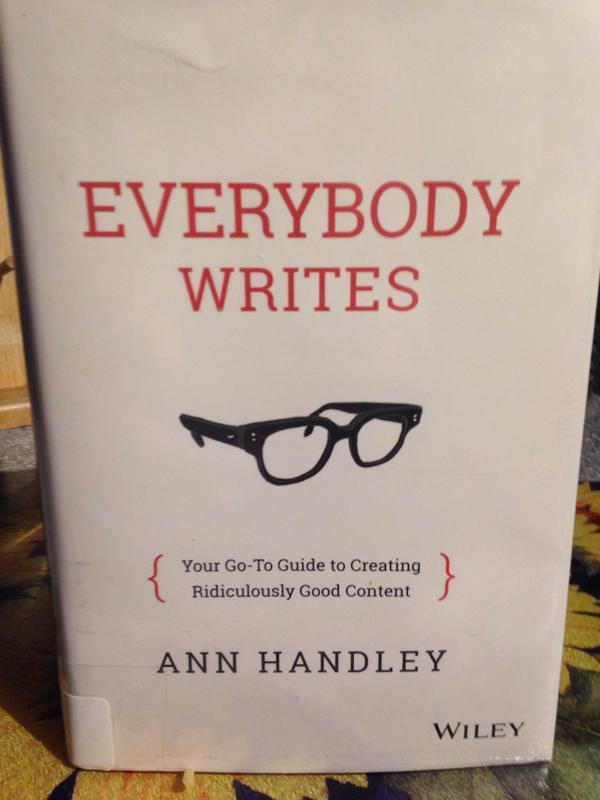
I devoured Content Rules in about three days. Everybody Writesย literally arrived on the holds shelf yesterday. Just this evening, I’ve read the foreword, the acknowledgments (yep, I’m one of those people) and the first two chapters. I actually hadn’t figured out what I wanted to write for the introduction to this interview, but I ran for my laptop after finishing those first two chapters. Ann inspires me. How is that possible with someone I’ve never even met?ย That’s the power of the written word done right.

I’m grateful to Ann for taking the time out of her busy schedule to answer my questions about library content marketing. Ann is fan and supporter of libraries and even served on a library Board of Trustees. I encourage you toย read her books. There’s no way you’ll ever be more of a super-fan than me though, so don’t even try.

recite-1gcgoor

One of the big points you make in Content Rules”ย is that you have to find your brand’s voice. I think many libraries have a hard time doing this–they feel like they need be all things to all people. Are there some questions libraries can ask themselves in order to find their voice?

Ann Handley: The question libraries need to ask is the same question we all need to ask ourselves, on behalf of our own organizations: What do we stand for? For example, the New York Public Libraryย says it is โ€œon a mission to inspire lifelong learning, advance knowledge, and strengthen communities.โ€ Then, use that to craft your content strategy and voice, and identify key themes that you can โ€œown,โ€ for lack of a better word. You can see how the NYPL does that on its wildly popular Instagram feed.

Our industry is all about the promotion of stories and yet somehow we struggle to find compelling stories that spur our audience to action. I think in some ways libraries take their evangelists for granted. How do you go about taking library cardholders on a journey through storytelling that leads them beyond that generic “I love the library” feeling?

Ann Handley: This relates to the finding what you stand for in the previous question, because itโ€™s all about inspiring people to connect with a mission.ย The #Shelfies movement is a great example of that, when the NYPL asked book lovers to submit photos of their personal bookshelves or favorite library shelves to profess their love of books, and the role they play in our lives. The response was impressive: More than 1,200 Instagram posts and 1,700 tweets from 11 countries in 6 languages.

Your best content is not about what you do or what you sell โ€“ but what you do for others. Good content doesnโ€™t happen in a vacuum. It has everything to do with the experience you are creating for those you serve. Does that sound high-minded? Itโ€™s really not โ€“ itโ€™s about getting comfortable embracing what makes your organization unique.

Libraries often struggle to fill the content demands with a small staff and an even smaller budget. Can you talk a little about how we might use repurposing to help ease those demands?

Ann Handley: Repurposing or reimagining existing content in new forms is a potentially rich source of content, especially at libraries with long histories. Whatโ€™s in your archives that you could reimagine as blog fodder? Whatโ€™s in your history thatโ€™s relevant to patrons today? Whatโ€™s commonplace to you that might be interesting to others? โ€œWhat already exists is an inspiration,โ€ as the designer Michael Wolff says.

Also, creating a culture of content can help, because it empowers people to create content on behalf of your organization. Those who maintain the NYPLโ€™s Instagram feed arenโ€™t in โ€œmarketing.โ€ But they are great at visual storytelling.

Curating the content others produce is a fantastic way to augment your content efforts. Said another way: Crowdsource, donโ€™t create.

A year or so ago, my MarketingProfs team bonded after hours at Bowl and Barrel, a Dallas-based bar and bowling spot. I shared a photo from thereย because itโ€™s what I do when Iโ€™m in a ridiculously photogenic place: the interior brickwork just begged to be Instagrammed. So I did, and I geo-tagged the location. A day or so later, Bowl & Barrel featured my photo (with full credit) on its burgeoning Instagram feed.

Library employees are surrounded by books, they host author visits, but they may not feel comfortable writing. How do you get over that fear and get something on the page?

Ann Handley: Librarians who donโ€™t love wordsโ€ฆ? Is that really a thing?!

Fear of the blank page is a real thing, which is why I wrote a whole book about it! (Everybodywrites.com) How much space do we haveโ€ฆ?

One key thing is to take pressure off yourself to write any certain way โ€“ there is no one way to write, just as there is no one way to raise a child or roast a turkey. (But there are terrible ways to do all three!)

Do you have any examples of libraries that are doing great content marketing which the rest of us could learn from?

Ann Handley: I mentioned the NYPL already. I also like what the Cincinnati Library is doing on Pinterest, as an extension of its in-house โ€œMakerโ€ programming. ย (Thanks Ann!)ย The NYPL does some cool stuff on Pinterest, too, especially its Little Lions board.

You’ve served on a library board of trustees. Tell us a little about how you got that gig and what you learned about libraries from that service.

Ann Handley:ย A friend of mine was on the board, and he recommended me. Thatโ€™s not a very interesting story, is it? I said yes because I always loved libraries. I grew up visiting our townโ€™s tiny library weekly, and carrying a stack of books to and fro became a ritual that, as I think back on it now, almost defined my childhood. The excitement of discovering new titles on the shelf. Getting my first library card. Meeting new friends in the pages. Reading about places far away from my insulated suburban world. My goal to read every book in the Childrenโ€™s Section before moving across the aisle to Adultโ€™s (I didnโ€™t quite accomplish that)โ€ฆ well, all of it thrilled me.

Iโ€™m guessing you and your readers know exactly what Iโ€™m talking about? Later, I replicated that ritual with my own kids.

Libraries have changed a lot since I was a child visiting with my mother. Childrenโ€™s sections with giant stuffed animals that kids flop on? Movie nights? Wii parties in the teen room? Coffee hangouts?ย Libraries are more cultural and community centers than they are just about books.

What book are you reading right now?

Ann Handley: Beside my bed is #Girlboss by Sophia Amoruso. I gave it to my teenage daughter for Christmas, and so I picked it up when she was done. Itโ€™s ok. Iโ€™d give it 3 out of 5 stars and one of those stars Iโ€™m giving just because I admire anyone who has the tenacity to write a book. Writing a book is truly like birthing a Honda Civic: Itโ€™s hard work, and you sweat a lot, and most of the work is done while crying.

If you could send a message to yourself ten years ago (in 2005), what would you say?

Ann Handley: Poke your nose out. No one is going to invite you.

Subscribe to this blog for updates every time I post. Click on the little “Follow” at the top left of this page.

Connect with me on Twitter. I’m @Webmastergirl and LinkedIn. I’m also on Instagram and Pinterest.

Views in this post are my own and do not represent those of my employer.

Why Library Marketing Stinks and What to Do About It

I’ve been in the library marketing business for about 18 months now. Here is what I’ve learned:

1. Never call anyone without a Library Sciences degree a “librarian.” Librarians take their degree and their expertise very seriously, and some might be offended.

2. Librarians are passionate, enthusiastic people who have a deep, driving desire to help others and a curiosity for information that is unparalleled in most other businesses.

3. Most library marketing departments are struggling to showcase their wonderful organizations because of out-of-date tactics.

So there it is. In my first post on this new blog, I’m issuing a call to arms for my fellow Library marketers. There are some great examples of forward-thinking marketing happening in libraries all across the U.S. (I’m looking at you, David Lee King. Also see New York Public Library, and Troy Public Library in Michigan.) But most library marketing departments are still doing things the same way they’ve been done for the past 10-15 years. They push programs. They issue press releases. They send out monthly brochures chock full of text, listing every single branch program and story time (do you know how many story times the average library holds?? A lot!).

Libraries are failing to drive more circulation and increase program visits because they lack a marketing strategy. Without a clear-cut plan, you might as well throw spaghetti at the wall. It’s frustrating and unsatisfying, and it won’t increase your circulation numbers or drive more traffic to your buildings or digital services.

Okay, so let’s address the elephant in the room. Change is hard, especially for a library system. We’re not talking about Google here. We’re talking about an organization with a long-standing tradition and a history in the community it serves. The bureaucracy in a library rivals some giant companies I know. Politics can be brutal. New ideas are hard to pitch, slow to catch on, and don’t always have the full backing of the administration or board.

Listen,ย I’m right there with you. ย I know how hard it is. ย I took this job so I could sing the praises of my favorite public Library system. I’m inspired by the work that is done here, and I want everyone else to be too! It’sย a dream job. But it sure is harder than I thought.

I’m lucky, though. I stepped in during a monumental shift in the greater marketing world. It’s what Content Marketing Strategist Robert Rose calls “The 7th Era of Marketing: Content-Driven Customer Experiences.” ย Customers are looking for value from brands (yes, your library is a brand!). They don’t want to just check out items. They want an experience and a connection to the library. They want to feel like their library has their back. We canย provide that!

So here’s what I propose. Let’s change the library marketing landscape together. We’ll start small and basic. Here are our first three steps.

1. We should create a strategy now and stick to it! Theย new year is coming. It’s the perfect time to try something new. Stop creating a promotional schedule based on events. Start creating content that promotes your biggest assets-your collection and your librarians. I’m not saying we should never promote a program again. But create a strategy and promote programs that fit into the strategy. We’ll talk more about this in a future post.

2.ย We should become content marketing enthusiasts. Weย work in buildings which areย piled from floor to ceiling with the tales of people, animals, and events, both real and imaginary. We are literally surrounded by stories. Of all the industries that have tried to embrace the content marketing model, it should be easiest for us. It’s a natural fit. Our loyal customers are often superย enthusiasticย fans. Most brands would kill for fans like that. We should be curating their stories and turning them into customer success piecesย and marketing them. Again, we’ll talk about this more in a future post.

3. We should learn from our for-profit counterparts. Do not isolate yourself in the library world. I would go so far as to tell you, library marketers, that you do not need to go to PLA or ALA. You should be attending marketing conferences like Content Marketing World and the Social Media Marketing World. You should be attending webinars and following marketing influencers. You should be reading books, white papers, listening to podcasts, and surrounding yourself with all things marketing. We should take the successes and failures that our for-profit friends have made and use them to our advantage. We won’t be able to do everything that Coca-Cola, GM, or Kraft can do with their massive budgets and extensive staff. But we canย scale those models and use pieces that will work for us.

We work in the best business in the U.S. Seriously, I believe that. Let’s make sure the rest of the world shares our enthusiasm. It’ll be a journey we’ll take together.

Views in this post are my own and do not represent those of my employer.

A WordPress.com Website.

Up ↑