The Library Marketing Show, Episode 138: In this episode, I’ll answer a viewer’s question. Michelle from Atlantic Public Library writes, “I am the director of a small library serving about 7,000 people in rural southwest Iowa. You have inspired me (and my board) to make marketing a higher priority and include it in our new strategic plan. I have just over 1,000 folks signed up for my e-mail newsletters. Does it make sense to invest our very limited publicity funds into a product that allows segmented lists for such a (relatively) small community?”
Kudos in this episode go to the Grosse Pointe Public Library. Watch the video to find out why they’re being recognized.
Do you have a suggestion for a topic for a future episode? Want to nominate someone for kudos? Let me know in the comments. And subscribe to this series to get a new video tip for libraries each week.
Thanks for watching!
Subscribe to this blog and you’ll receive an email every time I post. To do that, enter your email address and click on the “Follow” button in the lower left-hand corner of the page.
The Library Marketing Show, Episode 137: In this episode, I’ll share highlights of my favorite session at the #PLA2022 Conference in Portland, Oregon.
One library saw a 79 percent increase in circulation during the pandemic. How did they do it? Details in the video!
Do you have a suggestion for a topic for a future episode? Want to nominate someone for kudos? Let me know in the comments. And subscribe to this series to get a new video tip for libraries each week.
Thanks for watching!
Subscribe to this blog and you’ll receive an email every time I post. To do that, enter your email address and click on the “Follow” button in the lower left-hand corner of the page.
Photo courtesy Cincinnati and Hamilton County Public Library
When I was a kid, I was careful to always order the least expensive meal on the menu.
When we shopped for clothes, I always picked the cheapest option. At the start of each school year, I scoured ads (yes, even as a child!) to find the lowest prices on supplies, backpacks, and lunchboxes.
My frugality was a blessing during my time working in a library. I did a lot of effective promotions for free, especially on social media.
When I started work at the library in 2013, the average organic reach of a Facebook post was 12.5 percent. Today, it’s just 5.2 percent. That means roughly only one in every 19 fans will see your content. That is a huge decline.
Platforms adjust their algorithms to help them make money. And that’s why organic reach is now so limited.
Why your library might want to spend money on social media ads
Social media ads can do what organic posts cannot. They will ensure your posts will be seen by your target audience.
For major library campaigns, there is value in spending precious library dollars to purchase social media ads. Your library should consider investing in social media ads for the following reasons:
To reach new audiences
To solicit participation in system-wide programs like summer reading
To publicize larger library events especially if your library has invested a lot of time and money creating the event.
To publicize building openings and renovations
To soften the ground for upcoming levy or bond issues
To introduce a new library director or board member
To solicit donations
To recruit volunteers
Careful planning will lay the groundwork for a successful library social media ad campaign.
Planning your library social media ads
The first step is to identify your goal. What result are you looking to achieve? Be specific. Use numbers. Specify how you will measure the results.
For example, you may write goals like these:
“Last year, we had 500 kids ages 12-18 participate in our summer reading program. This year, we will increase that participation number by 25 percent to 625 kids.”
“We will fill 95 percent of the seats at our next virtual author program with Benjamin Gilmer, author of the new book, The Other Dr. Gilmer. Our platform has a 300-viewer capacity, so we will get at least 285 people to log on for the event.”
Once you have a specific goal, your next step will be to identify your target audience.
Let’s take the two examples above. The target audience for the summer reading program goal would be teens, their parents, and teachers. For the virtual author program, your target audience would be avid readers of nonfiction, true crime, and thriller books, book club leaders, medical professionals, lawyers, and criminal justice leaders, as well as medical, law, and criminal justice students from the nearby university. Note your target audience under your goal.
Finally, you’ll need to determine the content of your ads. To do that you’ll make these decisions:
What text will we use?
What images will we use?
What will our call to action be?
When those details are in place, you’ll be ready to begin buying your ads.
Choosing your social media ad platform
Let’s compare the three major platforms on which libraries typically purchase ads: Facebook, Instagram, and YouTube.
Facebook
Facebook is still the largest of the social media platforms, with nearly two billion active daily users. 15 percent of those users interact with ads on Facebook.
Facebook has the most powerful and accurate tools to optimize and target your audience. Facebook says nearly ten percent of the people who see the ads take an action. That’s quite high, and a great argument for using money to buy Facebook ads.
It used to be that libraries would create one ad on Facebook and be done with it. But Facebook now encourages pages to run multiple ads at the same time for optimum results.
But don’t worry about having to create the perfect combination of text, images, and calls to action. Facebook makes it easy with its Dynamic Ad creative tools. You’ll find them in the Facebook Ad Creator section.
Select “optimize ad creative for each person.” Then give Facebook at least two options for text, headlines, and images or videos. Facebook will then use keywords and its extensive knowledge of its own audience to mix and match the right combination for your target audience.
To increase the chances that your dynamic ad content will be successful, be sure to select the keywords in your text and headlines carefully and strategically. Facebook will use these keywords to help it decide who your ads will be shown to, and when they’ll be shown.
The final step is to set up Google Analytics on your library’s website with a Facebook Pixel. That will allow you to accurately track your ad on Facebook. The pixel will give your insight into how many people click on your ad and come to your library’s website to take any action, like registering for a program or signing up to participate in summer reading.
Once your ad creative pieces are chosen and your pixel is set up, run a test of all the ad options for seven days. At the end of the week, you’ll have a clear idea of which ad combination works the best. You can then invest a little more money in the ad with the best performance.
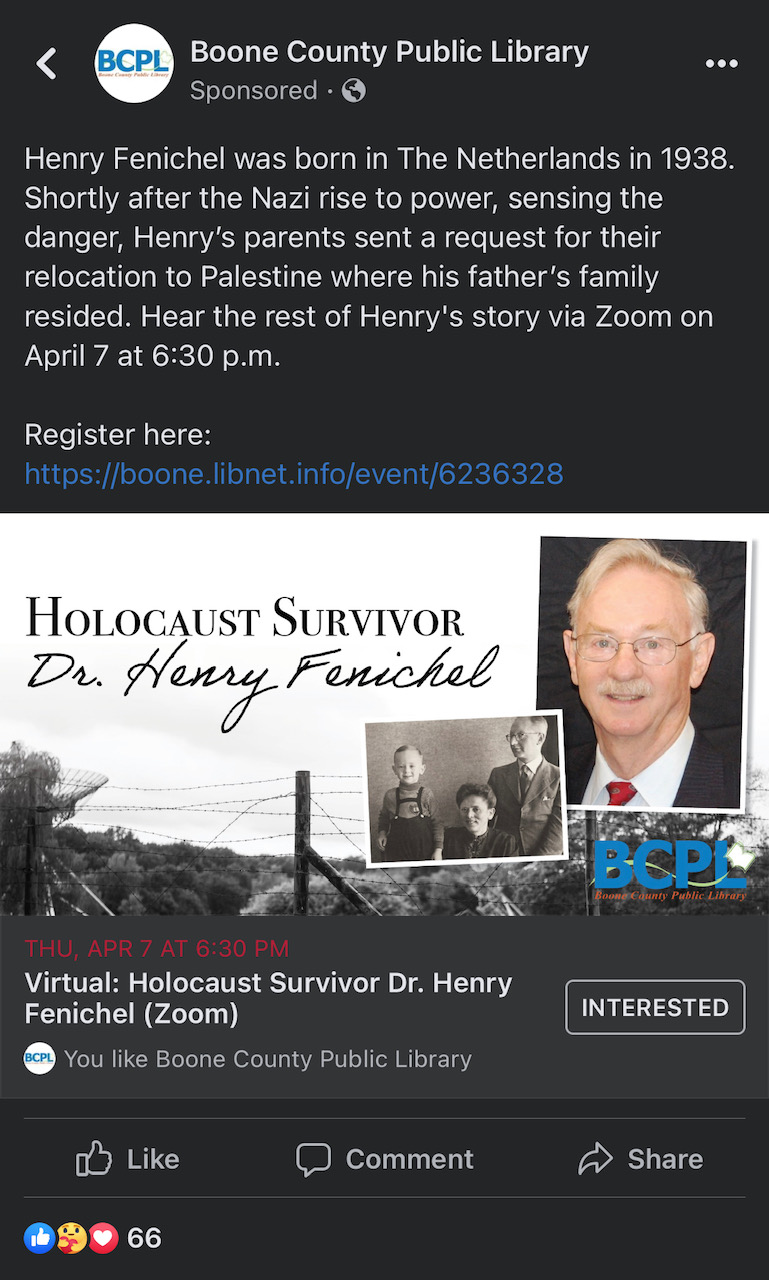
Boone County Library in Kentucky used Facebook ads.
Facebook also makes it easy to retarget people who interact with your initial ads. For example, let’s say you bought ads to spread awareness of your summer reading program. When registration opens, you can buy a second ad that will be shown to people who engaged with the first ad. That second ad might have a goal of getting those folks to register and pick up their reading log from the library.
A few weeks after that, your library could buy a third ad, retargeting anyone who engaged with the first and second ads. That third ad may have the goal of asking people to share summer reading content like photos of their book haul, their reading log, or their participation prizes.
Instagram
Instagram has around 500 million daily active users. 70 percent of shoppers say they use this app specifically to shop!
Libraries might not be selling anything, but we can certainly use the sales tools to drive engagement with our collection and services. And since the platform is owned by Facebook, libraries have access to the same targeting options that make Facebook ads so effective.
There are five types of Instagram ads:
Photo
Video
Carousel
Collection
Stories
Photo and video ads are self-explanatory. They feature one photo or video that shows up in the Instagram feed.
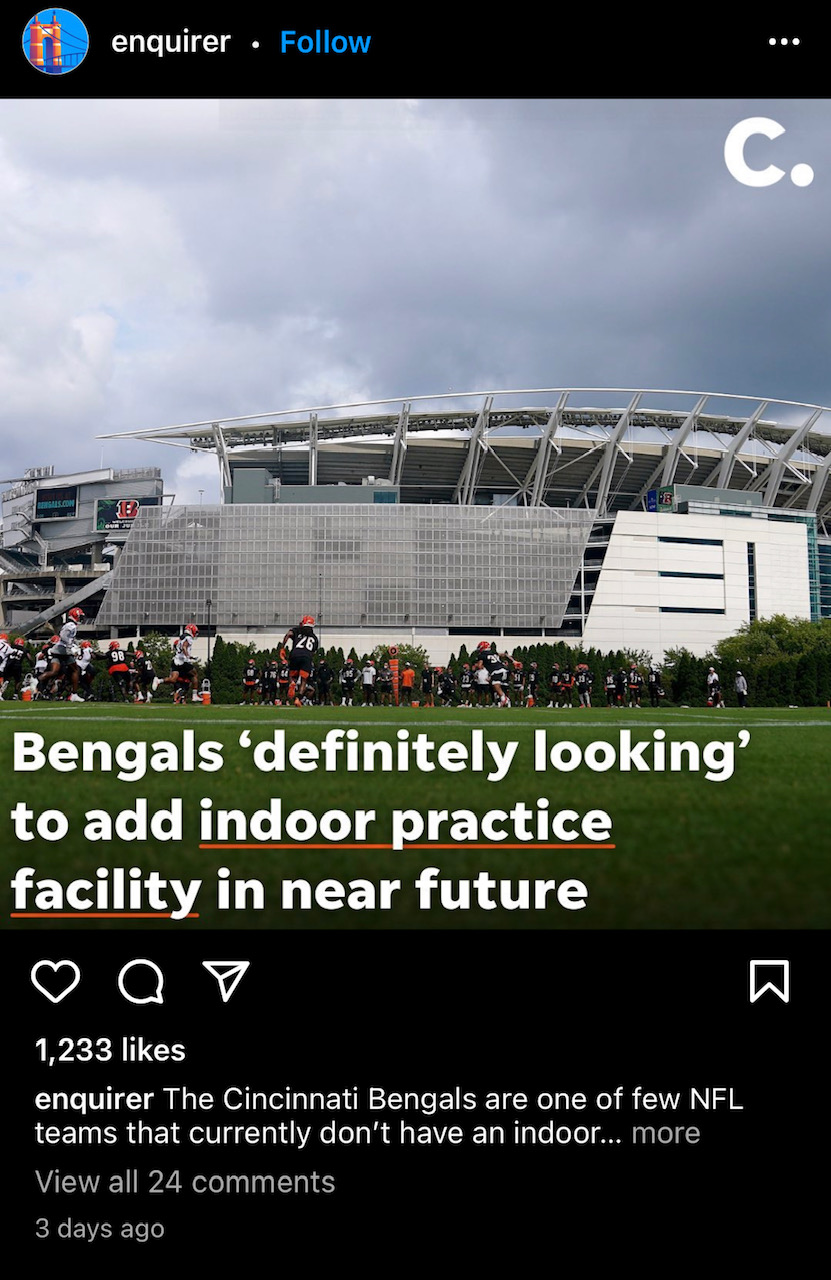
An example of a photo ad on Instagram.
Carousel ads let you combine anywhere from two and ten photos and videos all in the same post. People can swipe through to see everything in the carousel. These ads are dynamic, and they stand out from everything else in the Instagram feed.
Companies use collection ads to directly sell products. People can browse a wide range of products and services captured in a story format. For a library, a collection ad would let you showcase a series of specific library services, like a list of individual titles in a theme, or a list of your most popular databases.
You can also run Instagram story ads for your library. This would allow you to incorporate filters, video effects, music, and texts in these ads. And best of all, they include a swipe-up feature that directs the users to your library’s website.
To run an Instagram ad for your library, you’ll need to have an Instagram business or creator account—you can’t post ads from a personal Instagram account. You can convert your library page to a business account if you haven’t already done so.
You’ll be able to effectively target your audience on Instagram in the same way that you can on Facebook. You’ll choose from criteria including the location, age, gender, behavior, language, and browsing patterns of your target audience.
With both Facebook and Instagram, your library can set a daily budget. The platforms will help you determine the correct amount, based on your target audience specifications. For most libraries, a budget of $10 a day will be an adequate amount for a successful ad campaign.
YouTube
YouTube boasts an audience of over two billion monthly users. The platform is especially effective for reaching Gen Z. YouTube reaches more adults aged 18 to 24 than any TV network.
YouTube has two kinds of ads. The first, and most popular among users, is called “TrueView.” TrueView ads play before someone watches a video or in the middle of a video. The viewer may get the option to skip the ad after it plays for about 5 seconds. Your library can also customize your video’s call to action in a TrueView ad.
An ad that viewers can skip might not sound like a great idea. But YouTube’s pricing structure is set up so that your library will only pay for the ad if the user watches at least 30 seconds of a long ad or the entirety of a shorter video ad.
YouTube also has non-skippable ads that can play before, during, or after the main video. These are interruptive ads, but if you have a beautiful video ad that is valuable and entertaining, you won’t annoy the viewer. Non-skippable ads are shorter, between 7 and 15 seconds in length.
An example of a non-skippable ad on YouTube
The process of buying an ad on YouTube is slightly more complex than it is for Facebook and Instagram. Your library may end up being connected to a Google specialist by YouTube to help you make your final decisions.
But in general, once you’ve created your video ad, you’ll make some decisions that will impact the effectiveness of your ad. You’ll let YouTube know what goal you’re trying to reach. You’ll also indicate the demographics of your target audience. And you’ll set the budget for your ads. Then, your campaign begins!
Has your library purchased social media ads before? On which channels? Did you see results? Share your experience in the comments!
Subscribe to this blog and you’ll receive an email every time I post. To do that, enter your email address and click on the “Follow” button in the lower left-hand corner of the page.
The Library Marketing Show, Episode 136: In this episode, we’ll share the top three headlines and changes coming to Instagram, Facebook, and TikTok, and talk about their impact on library promotions and marketing.
Kudos in this episode go to the Mercer County Library System. Watch the video to see why they’re being recognized.
Do you have a suggestion for a topic for a future episode? Want to nominate someone for kudos? Let me know in the comments. And subscribe to this series to get a new video tip for libraries each week.
Thanks for watching!
Subscribe to this blog and you’ll receive an email every time I post. To do that, enter your email address and click on the “Follow” button in the lower left-hand corner of the page.
Photo courtesy the Cincinnati and Hamilton County Public Library
I’ve spent days trying to land on the right words to describe the amazing week I’ve just had.
I attended my first Public Library Association conference this past week in Portland, Oregon. It was glorious, wonderful, exhilarating, inspiring, transformative… and about 100 other adjectives.
Honestly, I felt like a kid attending her first week at a new school.
The sessions at PLA were mainly focused on equity, diversity, and inclusion practices. We also heard from experts about fighting censorship and first amendment challenges.
These are incredibly important and urgent problems facing the library industry. But there was a huge piece of the puzzle missing from the session offerings at PLA, and other library conferences I’m planning to attend this year.
Marketing and promotion are a critical part of all the work we do to be inclusive and to protect intellectual freedom. We need more library conference sessions that provide tips and inspiration for library promotion.
Megan Bratton, Marketing and PR manager for Natrona County Library, agrees. “It would be more valuable than most people realize,” she told me in between sessions at PLA. “Libraries do so much across so many spectrums and for so many demographics. It touches literally everyone in the community.”
We must make sure people know that our spaces, programs, and collections are open to all. We must share the message that we support EDI practices in our hiring process, collection development, and creation of services.
And to protect our libraries in the fight against censorship, we must do promotions to clearly explain the policies we put in place to ensure intellectual freedom is secure.
Marketing is an essential part of this work. It’s the job of everyone working at the library. And every library conference needs a marketing track.
The new friends I made a PLA agree with me. They shared a list of marketing struggles they’re facing that could be addressed through promotional-based sessions at library conferences.
Amy Cantley, assistant branch manager at Seminole County Public Library says she struggles to get information about her library’s services to people outside of her building’s wall. “We do social media promotion,” she explained. “However, we don’t do any outside promotion beyond that. So, unless you’re on our website on our social media channels you’re not hearing about it.”
Lisa Plath of Collierville Burch Library says her library does a great job of marketing her collection to current cardholders. So, this year, she’s focusing on expanding her library’s message.
Lisa says she is working on “… getting the word out to people who don’t use the library so that they know all the good we have to offer. The people who do use the library, knowing what we offer besides the books they come in to check out.”
Megan Maurer of Scenic Regional Library faces a similar challenge. She struggles with “… promoting things that people traditionally think about the library, but we don’t necessarily do a good job of reminding people we have. We don’t promote our collections or our databases.”
Katie Rothley of Northville District Library has seen the effectiveness of good storytelling in the for-profit marketing sector. She wants to replicate that for her library.
“I really want to tell a story about each service, but I want it to be a story of the person (who)… was able to solve the problem by using a library resource,” Katie said. “Connecting with people with stories is the most effective way to spread awareness and increase empathy and prove effectiveness so I want to figure out a concise formula so I can do that. I want to connect with people emotionally and feel empowered in their own life.”
As for Megan of Natrona County Library, she says she would like to see more library conference sessions on creating messages and convincing everyone on her library staff to share them. “Everyone in your organization should be sharing the same story,” she observed. “Libraries are very narrative-driven, and everyone needs to be speaking the same language. But people don’t understand the value of marketing until the marketing doesn’t do something they want it to… like their program doesn’t get enough attendees.”
There is a demand for answers to these big marketing hurdles libraries are facing today. Library conferences need to add more sessions focused on promotion to their agenda. A marketing track should be part of every library conference.
Marketing courses are typically not included in most library degree programs. Library staff needs help with marketing. It’s critical to our industry’s strength and survival.
So, I hope library conference organizers will take note and actively seek out more promotional-based sessions to add to their agendas. There are a lot of libraries of all sizes and shapes doing great promotions. I’d love to see more of these folks sharing their advice and stories at library conferences.
Do you agree? What is your favorite library conference? Share your thoughts in the comments.
Subscribe to this blog and you’ll receive an email every time I post. To do that, enter your email address and click on the “Follow” button in the lower left-hand corner of the page.
Have you been in the grocery store cereal aisle lately?
Recently I had a craving for yogurt topped with cereal as a snack. So, I went to the store with the simple plan of buying a box of cereal.
Did you know the average grocery store carries nearly 300 types of cereal? The cereal in my store takes up the length of an ENTIRE AISLE.
Holy Cheerios, Batman.
There is such a thing as too many choices.
When you’re faced with a wide range of selections, you can end up feeling paralyzed and unable to decide. Or, worse yet, you make a decision that turns out to be the wrong one because there were too many factors to take into consideration.
I sometimes feel the same way about working in library marketing.
Many of us have too much work to do. We have multiple goals we are trying to reach. And all that work makes it impossible to do anything well. It’s no wonder our promotions fail. We need to focus on focusing.
Now that’s you’ve created a promotional strategy and you’ve set up a promotional calendar, you may be tempted to try a whole bunch of new promotional ideas all at once.
But for true library promotional success, you’ll need to pace yourself. You want to be deliberate, intentional, and thoughtful about the library promotions you put out into the world.
Easier said than done, right?
So how do you create your promotions, track the results, and not lose your mind?
By using something I like to call “the divide and conquer approach.”
I’ve put together a three-step process to help you manage your workflow. This simple plan will help make sure your time is spent wisely. It will ensure you have the time to create your promotions and check the results so you can ensure that you’re reaching your promotional goals.
This method will make your marketing goals feel more manageable to you. You won’t get overwhelmed. And you’ll be able to spend time creating and tracking promotions to make sure the work you’re doing is effective.
Tackle one goal at a time.
People often sing the praises of multitasking, but any time management expert will tell you it kills productivity and leads to burnout.
Instead, you’ll want to prioritize your library marketing goals. Decide which is the most important by asking yourself one simple question: Which goal will have the most positive impact on your library? That’s the one you should focus on.
This laser focus will actually allow you to reach ALL of your library promotional goals faster. When you focus fully on one goal, you can learn valuable lessons about your community and how they respond to your promotions on your available channels. And those lessons will make it easier for you to reach your future goals.
As you work towards your goal, you’ll learn along the way which work, which don’t, and how to carry them out effectively. You can use this valuable knowledge for future goals.
Create an action plan with list of tasks you need to complete to reach your goal.
In this step, you’ll very specifically lay out what needs to be done to reach your goal. This will make the final goal seem less overwhelming. It will also help you to gauge how much time you need to set aside each day to work on your promotions.
Let’s say that your priority goal is to increase the number of people who come to visit a physical library space. Your initial task list might look something like this.
Create a weekly email to promote a service that’s only available inside a library branch.
Create one Instagram and Facebook story per week to highlight a service that’s only available inside a library branch.
Create two social media posts per week on Facebook, Instagram, and Twitter to promote one in-person event.
Create a video that shows people coming into a library branch, focused on the physical space as a place of community and social interaction.
Now that you have your initial list of tasks, you can divide each task further into two or three smaller action items.
For example, your initial task of creating two social media posts per week on Facebook, Instagram, and Twitter to promote one in-person event can be accomplished by making a smaller action item list like this:
Choose events (consult with programming department)
Write post text
Create images
Schedule posts
Set a firm timeline for reaching your overall goal. Assign deadlines for each item on the task lists.
For our example, we may decide that we are going to work for the next two months on increasing in-person visits to the library.
Now, we can take our lists of tasks and set deadlines for when each of these tasks needs to be completed and released out into the world. Those deadlines will help you reach your target efficiently by assigning a timeframe—a start and end date—to every step in the process.
This “divide and conquer” approach gives you and your co-workers a chance to merge this new way of thinking and the new workload into your schedule without stress. It will make it easier to measure results.
Subscribe to this blog and you’ll receive an email every time I post. To do that, enter your email address and click on the “Follow” button in the lower left-hand corner of the page.
The Library Marketing Show, Episode 134: This episode was born out of a desire to help libraries address the war in Ukraine and other major world events.
There are 3 ways your library can provide context, resources, and support when a crisis breaks out at home or abroad. I’ll outline those tips.
Do you have a suggestion for a topic for a future episode? Want to nominate someone for kudos? Let me know in the comments. And subscribe to this series to get a new video tip for libraries each week.
Thanks for watching!
Subscribe to this blog and you’ll receive an email every time I post. To do that, enter your email address and click on the “Follow” button in the lower left-hand corner of the page.
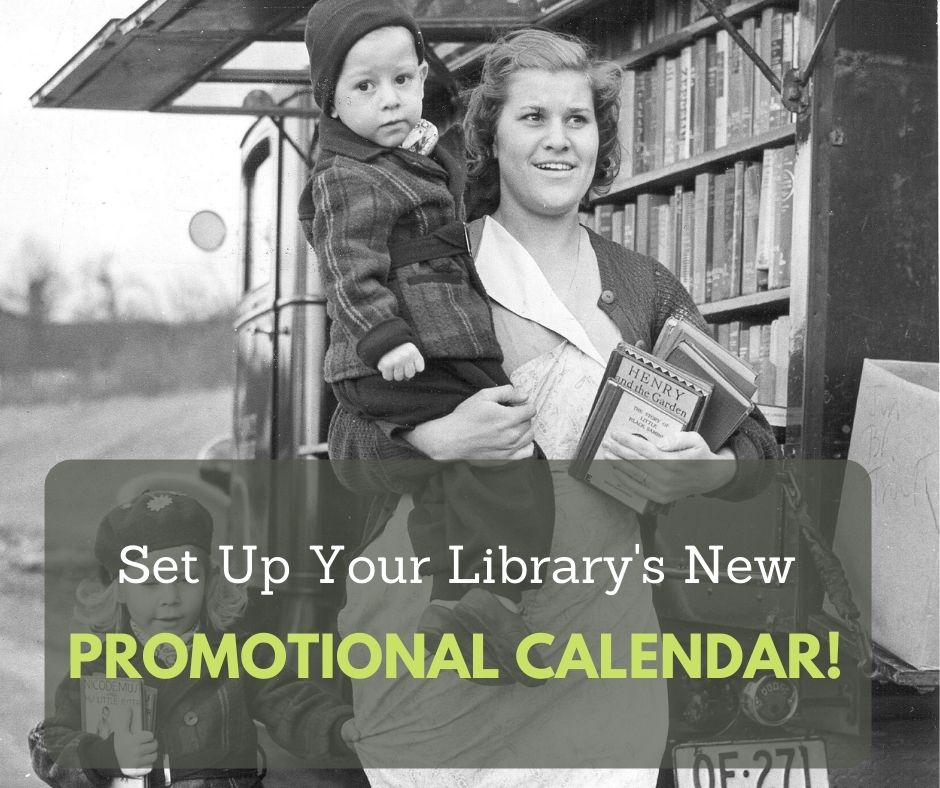
Now that you’ve created a library promotional strategy, it’s time to take the next step. And that is to create a calendar for all your library promotions.
Three main reasons a library promotional calendar is important
A promotional calendar is vital to success. This is especially true in an organization with many contributors and stakeholders, like a library.
Here’s why you’ll want to have a promotional calendar, even if your team of content creators or contributors is small.
It helps you stay organized and focused on the goals you set as part of your promotional strategy.
It helps you to keep track of holidays, seasonal library and literary events, and major annual promotions like summer reading.
It keeps everyone at your library up to date on your promotional plans.
How to set up your library’s promotional calendar
Scroll down to the bottom of this post for my recommendations of three free calendar templates that you can use to create your library’s promotional calendar.
No matter which template you choose, the calendar should be shareable. This will ensure the contributors at your library can see all future promotional plans. It will also make it easy for contributors to add comments and ideas.
Once you choose a template and a location where it will “live,” set up the columns to track the important pieces for library marketing. Your calendar should include spaces to track these things:
The name of the event or service you wish to promote
The date of the event or service launch if the service is new. If it’s an existing service, you can leave this space blank.
The start and end date of the promotion
The type of content. For example, blog post, video, etc.
The channel(s) in which the promotional content will be published. For example: email, social media platform, digital signs, etc.
The topic. For example: you may have two promotions for summer reading. One could be planned for two weeks before summer reading begins with the purpose of promoting registration. Later in the summer, you may launch a second promotion marking the halfway point and encouraging readers to log their reading hours. The “topics” for these two promotions could be “Registration Push” and “Halfway Check-in.”
Due dates
The date and time for publishing the content
The person in charge of each promotion
Follow-through. This column is where you will note if the content was published according to schedule or if there were delays. Tracking follow-through will help you spot hurdles in the process of creating and approving promotions, which will lead to more efficient planning of promotions in the future.
Links to promotions after they are published. This will be helpful for those times when you’ll need to find and analyze a promotion after it’s out in the world.
Success measurements. List the data you gather after the promotion is published to measure engagement and effectiveness. Tracking your promotional success will help you spot the topics, formats, and publishing platforms that yield the best results for your library.
How your promotional calendar will improve your library marketing
The Marketing Rule of 7 states that a prospect needs to hear or see the advertiser’s message at least seven times before they’ll buy that product or service.
For your library, the Marketing Rule of 7 means it’s important to publish content on various platforms and in multiple formats. This will allow your library to reach your entire target audience.
Your promotional calendar will help you make those decisions by having a list of your channels all in one spot. Your calendar will also help you to spot effective ways to re-purpose your content.
For example, let’s say you created an infographic demonstrating the value of summer reading in preventing the loss of literary skills. Initially, you planned to post the infographic to Instagram.
Using your promotional calendar, it may occur to you that the infographic would be a great starter for a blog post on the dangers of the “summer slide.” Then, you realize you can promote that blog post and infographic in your next library e-newsletter.
The library promotional calendar helps you to see all your promotions and create a holistic campaign. It can help you decide if you have enough resources to focus on the platforms where your target audience is most likely to see your content.
Use your calendar to prioritize your most important channels. Focus on creating high-quality content instead of aimlessly posting on all available platforms.
Your calendar can also help you set deadlines. You’ll quickly learn how often you can realistically create and release new promotions.
Finally, your library promotional calendar will help you spot the busiest times for your library before they sneak up on you. It will help you plan for those busy times. You’ll be able to ensure that the promotional creation process is finished well before the publishing date!
What to include in your library promotional calendar
Holidays, especially ones that affect your library’s service hours like Independence Day and Veterans Day.
Local holidays. For example, where I live in Cincinnati, Ohio, opening day for the Cincinnati Reds is a holiday.
Literary holidays such as Library Lovers Day or Audiobook Appreciation Month.
Seasons, like back to school or graduation.
Promotions tied to popular culture, like the Superbowl and the Olympics.
Building openings/renovations
New service releases
Summer Reading
Author events
Fundraising opportunities, like Giving Tuesday and National Library Week.
Patron stories
Interesting or funny details about your library.
Evergreen content, like collection promotion.
Three free promotional calendar templates
Some of these websites make you an offer to try their product, but you can still get these calendars without making a purchase.
Smartsheet: I recommend the Marketing Campaign Calendar Template.
Subscribe to this blog and you’ll receive an email every time I post. To do that, enter your email address and click on the “Follow” button in the lower left-hand corner of the page.
The Library Marketing Show, Episode 133: In this episode, I’ll address a recent discussion in the chat of a virtual conference I attended.
The commenter said, “I struggle with marketing our digital collection when my goal is getting people back in the Library. I am thankful for our digital collection and how it meets the needs of patrons, but when patrons mostly use our digital collection, they don’t come into the library. How should I be rethinking this?”
Kudos in this episode go to Rhone Talsma of the Chicago Public Library. Watch the video to find out why he’s being recognized.
Do you have a suggestion for a topic for a future episode? Want to nominate someone for kudos? Let me know in the comments. And subscribe to this series to get a new video tip for libraries each week.
Thanks for watching!
Subscribe to this blog and you’ll receive an email every time I post. To do that, enter your email address and click on the “Follow” button in the lower left-hand corner of the page.




 Super Library Marketing: Practical Tips and Ideas for Library Promotion