Search

Super Library Marketing: Practical Tips and Ideas for Library Promotion

Tag

media coverage

Your Library Deserves to Be in the News: Here’s How to Make It Happen

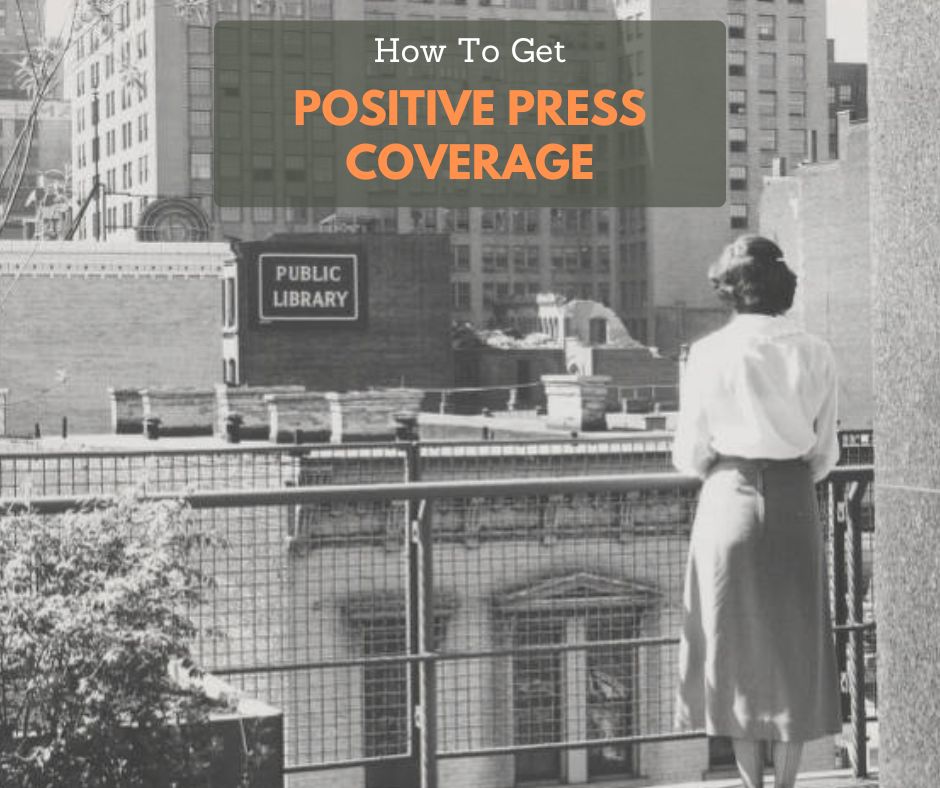
Alt text: A black-and-white historic photo of a woman standing on a rooftop terrace overlooking a city library building marked โ€œPublic Library,โ€ with tall buildings in the background. A translucent gray text box at the top reads, โ€œHow To Get POSITIVE PRESS COVERAGE,โ€ with โ€œPOSITIVE PRESS COVERAGEโ€ in large orange letters.
Photo courtesy Cincinnati & Hamilton County Public Library

You donโ€™t need to be a former journalist to get your library in the news. You just need a good story and a willingness to build relationships with local reporters.


If you work in library marketing, you almost certainly have a long list of responsibilities that have nothing to do with public relations. Adding media relations to that list can feel overwhelming, especially if your library doesn’t have a dedicated PR specialist and you donโ€™t have any experience with the media.

But press releases and media outreach are an important part of your library marketing strategy. And if youโ€™re not thinking of the press as part of your marketing channels, you are missing opportunities to earn meaningful coverage.

The press release isn’t dead. But its use has changed.

Michelle Garrett recently wrote about why press releases are playing a bigger role in PR and marketing. She points out that press releases do more than announce news to journalists. They also provide consistent messaging across an organization’s website and other marketing channels.

I agree with that advice, especially for libraries. A press release can be the starting point for a blog post, an email to community partners, social media content, and more. It gives everyone a reliable source of information and helps ensure that the library is telling the same story wherever people encounter it.

But… your press release must not be the entire PR strategy.

Sending a press release and hoping someone covers it is not a strategy. A release is a tool that helps you communicate the news. And the relationship you build with a reporter and the resources you provide are almost always more important.

I spent nearly 20 years working as a broadcast television journalist before moving into library marketing. I know firsthand that newsrooms have to make difficult decisions about which stories to cover, and they often have limited time and resources to do it. You have to be okay with the fact that not every press release will result in a story.

But you will get more coverage when you start thinking beyond the release itself and consider how you can help a reporter recognize the news value, gather the information they need, and produce something their audience will care about.

The easier you make it for a journalist to understand and tell your story, the better your chances of getting coverage.

Give reporters the materials they need, even when they can’t attend your event.

Let’s say your library is opening a new branch or celebrating a major renovation. You send a press release, invite the media, and hope a reporter shows up to cover the event. Sometimes someone comes, but sometimes nobody does.

That doesn’t mean your story is over.

At my library, when we have a branch opening, we don’t usually get media coverage at the event itself (not that we donโ€™t try!). So, we take photographs, capture B-roll video, and record soundbites that help tell the story. Then we send those materials to the media right after the event, and outlets use them in their coverage. We make it easy for the reporter to download the files, identify the people featured, and contact us with questions.

This approach works for more than branch openings. Consider trying this for author visits, summer reading celebrations, new service launches, community partnerships, and events that demonstrate the library’s impact.

Think about what a local TV station or newspaper might need to put together a story without sending a crew. You could provide a short video of the new space, a few high-quality photos, a quote from your library director, and a brief explanation of what the opening means for the community.

Hereโ€™s an example of a story shot entirely by my team, which appeared on one of our local TV stations after the opening of a library branch.

Build relationships with reporters before you need them.

One of the most valuable things you can do for your library’s media relations is get to know the journalists who cover your community.

You don’t have to become best friends with every reporter in town, and you don’t need to send them a weekly email just to stay on their radar. Start by learning who covers local news, education, family activities, community development, and other subjects that overlap with your library’s work.

At my library, we cultivated a relationship with a reporter from Axios Cincinnati who then came to cover an author visit with R.L. Stine. (Read that story here).

That kind of coverage is valuable because it gives the library room to tell a richer story. Instead of simply announcing that an event happened, a reporter can explore why it matters, who benefits, and what it says about the community.

You can start building these relationships by following local reporters’ work, learning what kinds of stories they cover, and sending them information that genuinely fits their interests. When a journalist contacts you, respond promptly and help them connect with the right staff members, community partners, or library users.

Most importantly, don’t contact a reporter only when you need something. Share useful story ideas throughout the year, even when you aren’t promoting a major event, and respect their deadlines and editorial decisions.

Think about recurring coverage, not just one-time publicity.

Not every successful media relationship starts with a press release. Sometimes the best opportunity is a recurring segment, a regular column, or an ongoing partnership that gives the library a predictable way to reach an audience.

My library has a standing segment called Chapter Chat with Fox 19. That arrangement gives us a recurring opportunity to talk about books and reading with a local television audience.

Think about what your library could offer a local outlet. Could a librarian recommend books for different age groups, share tips for parents during the summer, demonstrate how to use a digital resource, or explain how the library helps people navigate a common challenge?

Local television and radio stations, community newspapers, podcasts, and digital news outlets all need interesting content for their audiences (especially for morning shows!). Your library has knowledgeable staff, useful services, and stories about real people that can help meet that need.

The trick is to pitch an idea that benefits the outlet’s audience rather than simply asking for a chance to promote your library. A segment about helping reluctant readers find books they love is more compelling than a request to advertise your summer reading program.

Once you establish a recurring opportunity, you can plan and share the responsibility across your team. You might rotate librarians, prepare a list of seasonal topics, or create a simple calendar so you aren’t scrambling to come up with an idea every time the segment comes around.

Send the press release when the news is relevant, and be ready to respond.

Sometimes a press release works exactly the way you hope it will. This year,  my library sent out a press release about our summer meals program, and we received calls from the media just 30 minutes later.

That’s a great reminder that journalists are often looking for timely stories that connect to something happening in the community. Summer meals are a natural fit for coverage about food insecurity, family resources, and ways to support children when school is out.

It also illustrates why you shouldn’t dismiss a press release simply because you’ve sent them in the past without getting a response. The right story at the right time can get attention, particularly when it connects to a need that people are already thinking about.

Before you send a release, ask yourself a few questions.

  • Why would someone outside the library care about this news?
  • Is there a timely community issue or a real human story behind it?
  • Which reporters or outlets are most likely to cover it, and what would make the story useful to their audiences?

Then make sure you’re ready when the calls come in. Know who can speak on behalf of the library, have the key facts and contact information ready, and identify staff members or community partners who could offer additional perspectives. If a reporter needs an interview that afternoon, a quick response can make the difference between being included in the story and missing the opportunity.

You can find more practical advice in my earlier article, Breaking News: Make Sure Your Library Gets More Press Coverage with These Six Tips from a Former Journalist.

Okay, so when should your library send a press release about?

You don’t need to send a release for every program on your calendar. If you do, you’ll create more work for yourself and risk making your announcements less meaningful to reporters who receive them.

Instead, look for stories that have a clear connection to the community. A new building, a major service change, an unusual partnership, a significant community need, or a program with a compelling human story may be worth pitching to the media.

You should also consider the timing. A program that seems ordinary to library staff might be especially relevant during back-to-school season, a community crisis, or a time when families are looking for affordable activities. The news value often comes from the connection between what the library offers and what people need right now.

And remember that your library’s story doesn’t have to be about the library itself. A story about a family who found support through a library service, a teen who discovered a passion for reading, or a job seeker who used library resources to find employment can help people understand the library’s impact in a way that a list of services never will.

Don’t let media coverage go to waste.

When your library earns coverage, share it. Post the story on your website, include it in your newsletter, share it on social media, and let staff and community partners know about it. You can also thank the reporter and outlet publicly when appropriate, which helps reinforce the relationship.

You can repurpose the coverage into other content, too. A television interview might become a short video on your website, while a newspaper story could provide material for an email highlighting the impact of a service.

Finally, measure more than the number of stories you earn. Track whether the coverage generates calls, registrations, visits to a service page, program attendance, or conversations with community partners. Those outcomes will help you understand which kinds of stories are worth pitching again.

Where to start if you want to be more strategic with press coverage.

I’m not suggesting you add another complicated process to your workload or spend hours chasing reporters who aren’t interested in your news.

Instead, start small. Identify a handful of local reporters whose audiences overlap with yours, prepare a simple list of story ideas, and make sure you have a process for responding when journalists reach out. When you have a newsworthy announcement, send a concise press release directly to the people most likely to care about it.

You can also build a small library of photos, video clips, staff experts, and community success stories that will make future media outreach easier. Over time, those resources and relationships can become one of your most valuable marketing tools.

The goal isn’t to get your library into the news every week. It’s to help more people understand what your library does, why it matters, and how it makes their community better.


Want more help?

Interviewing Techniques Anyone Can Use To Land a Powerful Quote for Your Libraryโ€™s Blog, Video, Social Media, or Pressย Release

Subscribe to this blog, and youโ€™ll receive an email whenever I post. To do that, enter your email address and click on the โ€œFollowโ€ button in the lower left-hand corner of the page. You can also follow me on the following social media platforms:

Library Marketer Shares Brilliant 4-Step Plan for Getting Press Coverage and Building Personal Relationships With Media

Photo courtesy Cincinnati and Hamilton County Public Library

Leslie Marinelli says her happy place growing up was the Edgewood Branch of the C. C. Mellor Memorial Library in Pittsburgh, Pennsylvania. The library was right up the block from her childhood home.

โ€œBeing able to walk there and check out books on my own gave me such a sense of independence as a kid,โ€ recalls Leslie.

When her youngest son was in elementary school, Leslie volunteered as a shelver in the school media center and โ€œtotally fell in love again with the transformative power of libraries.”

“I had been a freelance writer and editor for about 10 years and took a job as a Youth Specialist at Forsyth County Public Library (FCPL) in 2017. When the Communications Manager role was created at FCPL in 2021 I jumped at the chance to use my skills and experience to promote the library to a wider audience.โ€

โ€œI typically write formal press releases for big series, special events, and major announcements,โ€ explains Leslie. โ€œBut for this branch-specific engagement program, I thought an informal email might be more personal and effective.โ€

โ€œI pitched this as a human-interest story to just one reporter and her editor. My hope was that a more casual email would stand out and not get lost in the mountain of press releases they receive daily.โ€

โ€œI also really wanted to be involved in helping to shape the story, so this approach enabled me to arrange a meeting and be there to make introductions, direct the photography, and highlight the key points. And of course, I used the emoji trick I learned in your marketing class to make the email stand out in her inbox!โ€

โ€œI also test all my important email subject lines at SubjectLine.com to see if thereโ€™s anything I can do to make them more effective. This one scored a 100. Again, I learned that trick from you and it has been a game changer for me.โ€

The subject line worked and Leslieโ€™s work building a relationship with the media landed her a victory: The display was covered in the local newspaper (you have to be a subscriber to read the full story).

Leslie says the time it takes to build those relationships with local reporters is a worthy investment for any library, no matter the size.

โ€œForsyth County is a rapidly growing area, but it still has a small-town feel,โ€ says Leslie. โ€œNetworking has been a critical part of building these relationships for me.”

โ€œOne relationship I have with a local magazine was the result of a media kit I sent to our local partners and media outlets about a big event a few years back. It contained a variety of graphics and blurbs they could copy and paste to make it easier for them to post about it online. The magazine owner liked it so much that she sent an email about it to my library director who then arranged a meeting for us. Weโ€™ve collaborated on several projects since then and she recently invited me to speak about the Library to her Rotary Club.โ€ 

โ€œI started making those media kits about select events after seeing one of our partners copy and paste the full 2-page text of one of my press releases into a Facebook post. (The horror!) Nobody is going to read that. Community partners want to support us, so the easier we make it for them to spread the word the way we want it, the better the end results will be.โ€

Leslie also has some excellent strategies for managing what gets covered by local media.

โ€œWe send out a curated list of events to the local paper each week,โ€ she explains. โ€œI started doing this after noticing they were picking events to include that werenโ€™t necessarily the programs we wanted to boost. Not only that, but they were getting some of the details wrong. By curating the events for them, in their preferred format, we have more control over the message, and it makes it easier for them to cover.โ€

Leslie also writes library-related articles for two different outlets, 400 Life and My Forsyth. (Hereโ€™s her favorite piece.) Itโ€™s a terrific way to promote the library and she says it works to satisfy her creative writing itch.

And that willingness to help her local media outlets has paid off in big ways for her library.

โ€œI helped a freelance reporter with a couple of articles about the library a couple of years ago,โ€ remembers Leslie. โ€œWe kept in touch and corresponded over email about library news I thought sheโ€™d enjoy. Last year she became the managing editor of the local newspaper, and she has been an invaluable resource for me. Weโ€™ve met a few times for coffee and lunch, and she let me pick her brain about how to improve my press releases.โ€

Leslie has four tips for any library looking to nurture a mutually beneficial relationship with the media and local partners.

Keep them informed: Invite the media to everything and follow up with them to make sure they are receiving your invitations and releases.

Make their jobs easier: In addition to the media kits for major events, create a media packet to hand out to reporters who attend your library board meetings. Include an executive summary of the topics that will be covered at the meeting, including key names, dates, and numbers, so reporters donโ€™t have to search for answers later.

โ€œOne local reporter told me sheโ€™s never received something like this from anyone else,โ€ says Leslie.

Another thing Leslie does is follow up with reporters after an event or meeting to email them additional details, links, name spellings, and more.

โ€œHaving your name misspelled or being misquoted is disheartening,โ€ exclaims Leslie. โ€œI try to do whatever I can behind the scenes to make sure everyone is happy with the results.โ€

Support their work: When a reporter writes something about your library or one of your pieces is published in a local magazine or blog, share it everywhere. This lets you support the media, fills your editorial calendar with great content, and builds your libraryโ€™s brand at the same time.

Thank them: โ€œI try to never miss an opportunity to thank and praise someone for writing a great article about my library or publishing one of my pieces,โ€ says Leslie. โ€œEmail is perfectly fine for this, but a handwritten note really stands out these days. (My grandmother would be so proud of me right now for saying that.)โ€

Leslie says press coverage is so importantโ€”now more than everโ€”for helping communities (and hopefully, lawmakers) better understand the value of libraries and excellent library workers. But thatโ€™s not the only value her library sees.

โ€œI think this kind of coverage can also be a big morale booster for staff who are in the trenches and probably donโ€™t hear often enough what a difference they make by creating such incredible programs, displays, and positive experiences for the patrons they serve,โ€ she says.

Leslie says her coworkers have told her that they know patrons who visited the library due specifically to the media coverage. As for the Charles Dickens display, the impact of the positive press coverage has a numeric value: nearly 1,000 more visitors came to the library than in the previous December.

Now FCPL turns its attention to other marketing initiatives including their annual report, an onboarding campaign for new cardholders, and building its presence on Facebookโ€ฆ again.

“We just launched a new Facebook page and changed all our social media handles to match (FoCoLibrary) due to a fruitless two-year-long battle with Meta to regain ownership of our page after a series of staffing changes,โ€ explains Leslie. โ€œNow that we have full control over the new page, weโ€™re having a lot of fun rebuilding our following and connecting with new audiences!โ€

I always ask the library marketers I profile where they draw inspiration for library marketing. Leslie says, โ€œAt the risk of sounding like a total sycophant, I have learned so much about library marketing from you and Caleigh Haworth (my co-worker at NoveList)! In fact, I just reached out to Caleigh the other day to ask how she did that cool poll in her follow-up eBlast after the LibraryAware Summer Templates Reveal Party.โ€

โ€œThe Library Marketing Book Club group on Facebook has been a great source of support and inspiration. Chris Boivin at Jacksonville Public Library does a masterful job running that group, keeping morale high, and communicating with all of us.โ€  

โ€œI love the Southern Adirondack Library Systemโ€™s Facebook page. Itโ€™s a great mix of literary humor, art, and community. They clearly got the memo that social media is supposed to be social and not a steady stream of program ads.โ€ 

โ€œThe Oklahoma Department of Wildlife Conservationโ€™s social media strategy is the best thing to ever happen to a government agencyโ€™s public persona. Iโ€™m in awe of how funny and irreverent they are.โ€

โ€œI think most library staff would be shocked to learn how much work goes on behind the scenes with such a shoestring budget to amplify the libraryโ€™s story and increase public awareness. Iโ€™m grateful to have found this little corner of the internet where we can share ideas, support, and encouragement.”  


P.S. You might also find this helpful

Emmy-Award Winning Journalist Shares 6 Dependable Ways To Get Press Coverage for Your Library

Subscribe to this blog and youโ€™ll receive an email whenever I post. To do that, enter your email address and click on the โ€œFollowโ€ button in the lower left-hand corner of the page. You can also follow me on the following social media platforms:
Emmy-Award Winning Journalist Shares 6 Dependable Ways To Get Press Coverage for Your Library

Watch this video now

#LibraryMarketing Show, episode 208

The media is an important part of your library marketing strategy. But how do you get reporters to cover your library? You’ve come to the right place.

In my former life, I was an Emmy-award-winning journalist. And I’m going to share some strategies to help you with press coverage in this episode.

Do you have a suggestion for a topic for a future episode? Want to nominate someone for kudos? Let me know here.

Thanks for watching!


Miss last week’s episode? No worries!

Will I see you soon?

Subscribe to this blog and youโ€™ll receive an email whenever I post. To do that, enter your email address and click on the โ€œFollowโ€ button in the lower left-hand corner of the page. You can also follow me on the following social media platforms:

Breaking News: Make Sure Your Library Gets More Press Coverage with These Six Tips from a Former Journalist

Photo courtesy Public Library of Cincinnati and Hamilton County

Before I worked in library marketing, I spent nearly 20 years as a broadcast television journalist.

I was a newscast producer for a local TV station. I created a nightly newscast from scratch. I decided which stories would be told, who would tell them, how long they would be, and more.

Every day, I was part of the newsroom decision-making process. I know why certain stories get airtime and others don’t (ratings). I know why important facts end up “on the cutting room floor” (time constraints). I know why online media outlets and newspapers write sensational headlines (clicks).

For the last eight years, I’ve been on the other side of that world. I’ve been the one sending press releases and asking, sometimes begging, for coverage of my library or for the libraries I work with in my current job.

A library blog and a video marketing strategy are the best ways to control the narrative and tell your own library story on your terms.

But let’s be honest… media coverage can be great for your library.

So here are my top six tips to help get more positive press for your library.

Did your library get amazing press coverage? How did you do it? Share your story by clicking on the feedback button in the lower left-hand corner of your screen.

Send news releases early.

For events like author visits, grand openings, and other programs, send press releases four to six weeks before the event. Then, send a reminder to the media again about a week before the event.

If your library is unveiling a new service, send your press release one to two weeks before the new service launches.

For big announcements, like awards, send the press release one week before the official announcement and include a line that embargos the release. That means the news outlet can’t cover the story in print or on air until the day the embargo ends. Put the embargo right in the sub-headline of the press release, to be sure the journalists see it.

Write a news story instead of writing a press release.

If you send the newsroom a publishable piece of content with photos or video, you win on two levels.

First, you’ll increase the chances that your library will get coverage. Second, the narrative is exactly as you want it! You make the important points. You have control.

So, write a story which the media outlet can copy and paste into a script or column. Use Associated Press style and these four basic journalistic principles:

  • A catchy lead sentence;
  • The who-what-where-when-why sequence,ย interspersed withย a quote or two;
  • Clear writing without library jargon or technical terms. If you must use a technical term, explain it clearly. And,
  • A concise ending.

Make your quotes sound like they come from a real person.

Reporters and editors can spot a manufactured quote a mile away.

I know a manufactured quote is often a necessity in libraries. So, if you must make up a quote from your director, don’t write: “Our dynamic approach to customer service is central to our strategic initiatives. We are scheduled to implement more of these forward-thinking tactics.”

This is so much better: “We are adding an online, real-time reading recommendations service because we wanted to do a better job of answering our patrons’ questions and help them find the books they want. We’re hoping to really shake up the service experience. But mostly, we want to make it easy for people to get personal attention and a great book.”

Don’t send your press release in a mass email.  

A reporter is much less likely to follow up with you for a story if they are part of a large group of journalists who’ve all received the same story. Journalists want the “exclusive,” even on small things. So don’t let on that you are also sending your release to other outlets.

When you create your list of media contacts, include information about that outlet’s target audience, the kind of stories they usually cover, and the reporters with whom you have a personal connection.

Then, match your potential story with the right reporter rather than sending your release to every reporter you know. It’s a better use of your time and energy, and you’re more likely to get media coverage.

Find good interview subjects ahead of time.

Reporters are looking for compelling quotes that add depth to a story.

They’ll love a quote or a soundbite from a child who finally catches up in reading because of extra tutoring from a children’s librarian. They’ll jump at the chance for a quote or soundbite from an immigrant who got help at his library filling out a naturalization form.

Arrange diverse interviews, including people from all different backgrounds and walks of life. Most newspapers, TV, and radio stations will tell you their target audience is women, ages 25-54. Your interview subjects should be relatable to people in that demographic.

Pick interview subjects who are comfortable on camera and can “talk in soundbites”. That means they can make a point in three to four sentences.

Respect the reporters’ deadline.

When I was a journalist, it was frustrating to call an organization hoping for an interview or answers to questions only to be told that the person was out of the office or wouldn’t be able to call me back until late in the day.

If a reporter is calling you, chances are that they’re working on the story for today’s edition or newscast, which means they’d really like to have all the elements by early afternoon at the latest, to give themselves time to craft the story. Tomorrow is too late.

Move heaven and earth to accommodate the reporter as much as possible. When you do that, you’re more likely to get coverage every time you ask for it.

Newsrooms often have crews available at odd hours, like 10 a.m. or 8 p.m. Sometimes reporters will squeeze in a story during a very limited window in their day. They may call you and say they can come to the library in 10 minutes. Make sure you and your interview subjects can accommodate those last-minute requests.

I have a special request.

I’m putting together a conference presentation and I’m looking for some examples.

  • Libraries that have reopened and have had some success drawing people back into the physical branch.
  • Libraries who believe they’ve figured out the hybrid program model.
  • Libraries who are trying to turn their pandemic digital users on to other services now that the library has reopened.

I’ve created a form so you can brag about your library.

I know you are doing amazing work. I want to highlight you on a national stage! Thank you in advance.


Subscribe to this blog and youโ€™ll receive an email every time I post. To do that, click on the โ€œFollowโ€ button in the bottom left-hand corner of the page.

You May Also Want to Read These Posts

You Donโ€™t Need a Press Release to Get Good Media Coverage of Your Library! Hereโ€™s the Secret Trick From a Former Journalist.

Lessons From The Greatest Press Release Ever Written!

Angela’s Latest Book Review

The Indifferent Stars Above by Daniel James Brown

A WordPress.com Website.

Up ↑