Search

Super Library Marketing: Practical Tips and Ideas for Library Promotion

Tag

Promotional Ideas

Save Money at the Library! 5 Ideas For Promoting the Cost-Saving Benefits of Your Library

Photo courtesy Public Library of Cincinnati and Hamilton County

My favorite bedtime snack is cereal. Thereโ€™s something comforting about climbing into bed to watch TikTok while munching on Cheerios or Rice Krispies or, God forgive me, Cookie Crisp.

But it costs a lot more now to indulge in my favorite nighttime ritual. The average price of a gallon of milk rose by $1.23 between 2020 and 2022. The price of an average box of dry cereal rose by $1 between 2020 and 2022, according to my research.

Everything is getting more expensive, and not just in the United States. According to the Organization for Economic Cooperation and Development, consumer prices are up 9.2 percent in 2022. Some countries like Turkey and Estonia are seeing double-digit inflation rates.

Your patrons are struggling, as Iโ€™m sure you know. Thatโ€™s why now is the moment to start promoting your library as a money-saving opportunity for your community.

This isnโ€™t a new idea. During the recession of 2008, libraries marketed themselves as a place for free books, DVDs, education, and entertainment. Weโ€™ve expanded our services since then, and we can show our community the value of using their library card to save money.

This approach has benefits for the library too. It will help reconnect community members who may have stopped coming to the library during the pandemic. That will drive circulation, visitors, and attendance.

Specificity is key.

Libraries, in our well-intentioned effort to appeal to everyone, often appeal to no one. So instead of saying, โ€œThe library saves you money,โ€ be specific.

Think about the audiences you have on the platforms where you promote your library. Your Facebook followers have a specific demographic makeup. So do your Instagram followers. Your email newsletter subscribers react positively to certain promotions.

Think about those specific audiences. Write down what you know about them. For example:

Our libraryโ€™s Instagram audience is women between the ages of 25 and 34. We get the most likes, shares, and comments for posts featuring historic photos of our library and book recommendations.

Next, do some research about the financial state of your area. Census statistics from 2020 are a great place to start. You can also search local news articles for more recent reports from your city or county about the state of the economy in your service area. If I were to do this for the city where I live (Cincinnati, Ohio), I would write:

The average household income according to the 2020 census is $65,000 and the poverty rate is 24 percent. Our population is majority white (50 percent) and black (41 percent). Cincinnati was ranked by the Bureau of Labor Statistics in the bottom ten urban areas for job growth. The homeownership rate is only 39 percent. Most households consist of three people. Most residents have at least a high school diploma.

Armed with just those few statistics, I can make a list of the needs my service community has.

  • Finding a job
  • Career growth for better-paying jobs
  • Adult education advancement and the money to pay for higher education
  • Family activities that are cheap or free
  • Entertainment that is cheap or free

Now I can identify the specific library services that fall into those categories. Then, I can make plans to promote each of those library offerings as cost savings to my community.

Here are five ideas for specific promotions. Scroll down to the bottom of the post for examples of libraries that are promoting their services to save money.

Include a price comparison.

How much does a subscription to Netflix, Spotify, Hulu, or Audible cost compared with your library’s free streaming movies and music? How much does it cost to rent a workspace compared to using the library as a remote workspace? How much does it cost to buy a folding table versus checking one out from your library of things? Make the comparison so community members can see how much money they can save.

Always start with your collection.

Books are your library’s brand. In your print collection, focus on bestselling fiction and nonfiction, cookbooks, DIY, and childrenโ€™s books. If youโ€™re worried about growing the holds list, be sure to promote these books in all formats, including digital and audio, to give your patrons access faster.

You should also promote your libraryโ€™s digital magazines and online newspapers. Remember to do a price comparison to show people how much they can save by using your library.

Remember, donโ€™t promote the entirety of your collection. Be specific. Pick one to three titles that match a specific target audience. Your promotions will be more effective.

For example, when I worked at the Cincinnati Library, I promoted Reminisce Magazine to baby boomers on Facebook. Before our promotion, we had only a few downloads of this magazine each month. Afterward, downloads rose by more than 100 percent! Our community also really loved Cincinnati Magazine and whenever I marketed it by itself, downloads spiked. Specificity is the key.

Consumer reports database

This is a huge money saver for your community. Show your fans how they can research the best products and save time and money.

Homework help

Tutoring isnโ€™t cheap. Many libraries offer help for kids struggling with schoolwork, either in person or online. If your homework help is in-person, introduce people to the faces their kids will see at the library. The Cincinnati Library did this in a blog post. You can also make a short video or a series of slides on Instagram or Facebook stores.

Other library services that save money

  • Library of things
  • Free Wi-Fi hotspots
  • Video games
  • Free or cheap classes and testing preparation.
  • The library as a workspace

Real-life examples of libraries promoting their cost-savings

Alma College blog post The Library Can Save You Time and Money–Here’s How

Jefferson Public Library’s Borrow, Donโ€™t Buy Facebook promotion

Bridges Library System talking about money savings on Sorta Green Podcast

Crab Orchard Public Library’s savings comparison Facebook post

Riverhead Free Library’s money savings meme

Bryan Public Library’s money savings receipt post on Instagram

Monmouth County Library’s money savings Instagram post

Jackson Madison County Public Library’s price comparison series on Facebook

Now it’s your turn! Has your library done a money savings promotion? Let me know in the comments.


Read These Articles Too!

How Do We Get People To Come Back to the Library? Four Ideas That Can Help You Rebuild Use of Your Library

Your Library Can Reach Teens With Programming and Marketing! A Look Inside the Lives and Minds of the Elusive Generation Z

Latest Book Reviews

Pack up the Moon by Kristan Higgins

The Virgin’s Lover by Philippa Gregory

Subscribe to this blog and youโ€™ll receive an email every time I post. To do that, enter your email address and click on the โ€œFollowโ€ button in the lower left-hand corner of the page.

Direct Foot Traffic in Your Library Branch Using These Six Secrets for Helpful Wayfaring Signage

Photo courtesy Public Library of Cincinnati and Hamilton County

There is a romantic notion attached to wandering the stacks of the library, aimlessly lost in a sea of books for hours on end.

But for a portion of our community, efficiency is the name of the game. They’re hoping to pop into your branch, find what they need, and get out as quickly as possible.

This is especially true in the Next Normal. Some community members just don’t feel comfortable spending a lot of time inside our buildings.

That’s where wayfaring signage comes into play.

Wayfaring signs help direct human traffic, making it easy for people to navigate our buildings. But the signs can do more than move bodies.

Wayfaring signage is a key marketing opportunity for libraries. An efficient and well-planned system of directional signs will make it easier for visitors to discover new or underused portions of your collection or services.

Unfortunately, for many libraries, wayfaring signage is an afterthought. Creating the best signage seems intimidating.

But now, when library buildings are just reopening for full service, we have an opportune time to reimagine and reshape the way the public moves through and uses our physical libraries. And this work doesn’t have to be complicated.

Here are six tips to help you create the traffic flow that is best for your community, your staff, and your library statistics.

Start with a signage audit.

Your first step will be to go through your library and make a list of all the wayfaring signs you currently have. Take photos to go with your list so that you can have an accurate record of your current signage situation.

Next, study how people are using your space. Pick an hour each day for three days and sketch a “heat map” of people entering and exiting your library. You’ll use a blueprint or map of your library. Watch how people enter the building, move through the space, and exit. As they move, trace a line on your map to indicate where they’ve been.

Using your heat map, you’ll be able to see how your current signage is affecting the way people move through your branch. This will help you identify which parts of the building are underused. You can start to imagine how to configure your new signage to move people into those key areas.

For instance, if you have a heat map that shows people are drawn to your computers and your holds shelf but are missing your Makerspace or your fiction collection, you’ll want to consider how you can use wayfaring signage to change the traffic pattern and draw people to those underused spaces.

Less is more. 

It seems counterintuitive, but you don’t want to label every single shelf in every single section of your library. Too many signs areย a distraction–the eye doesn’t know where to look and the brain gets overloaded.

Use your signs to point customers to underused areas. And consider leaving the other spaces blank. If a space is already popular and your customers know how to reach it, it likely doesn’t need any wayfaring signage.

Rely on a simple, consistent design.

Your library’s brand is your starting point for great wayfaring signage. Your logo use, color selection, font style, and wording should all be within brand guidelines.

Next, decide whether you’ll incorporate symbols, arrows, words, or a mix of all three. Moderation is key, but a well-placed arrow can help ease confusion and build confidence in your timid customers. 

If your library has more than one branch, standardize wayfaring signs and signage terminology for all locations. Your customers will know exactly what to look for, no matter which branch they visit.

If your library doesn’t have clear branding, remember this: good signage isn’t fancy. It’s functional. Use a simple, accessible font in a neutral color like white or black with a plain background to make the sign pop. A clean, simple design will also add longevity to your signs and keep them from looking outdated.

You’ll also want to ask yourself whether your signs convey friendliness and helpfulness. Exclamation points, capitalized letters, and red font or a red background may come off as angry or unfriendly.

Ditch the library jargon. ย 

In 2012, a reference librarian at the University of Berkley reviewed more than fifty library usability studies to pinpoint library terms that are generally not understood by the customer. His review uncovered problems with terms like “database”, “e-journals”, “periodical”, “serial”, and “reference.”

Whenever possible, we should be clearย when we create our wayfaring signs. Instead of saying “reference”, you can use the word “research.” Instead of “periodicals”, say “magazines.”ย 

Change the sign above your reference desk to say, “Ask us a question here!” The sign at your circulation might read “Check out your books here!”

Train staff to help with wayfaring.

Staff who know to look for signs of confusion in a community member are providing good customer service.

If an employee spots a customer who walks around directionless for a long time or who keeps looking around, staff can delight and surprise the cardholder by gently approaching them and offering to help find what they need.

It sounds simple but there is such an emphasis in our society on self-sufficiency that we often forget, sometimes our customers just need a little extra help.

Be flexible.

Good signage is always a work in progress. Wayfaring signage can be updated, taken down, or added to as your community needs change.

Re-evaluate your signage every 2-3 years. If you find that you need to make some changes, and you began with a simple, consistent design, it will be easy to correct any issues and create new traffic patterns that benefit your library and your community.


You May Also Want to Read These Posts

Five Excellent Ways To Improve Every Sign in Your Library

What I Learned About Library Marketing From an Amusement Park

Subscribe to this blog and youโ€™ll receive an email every time I post. To do that, enter your email address and click on the โ€œFollowโ€ button in the lower left-hand corner of the page.
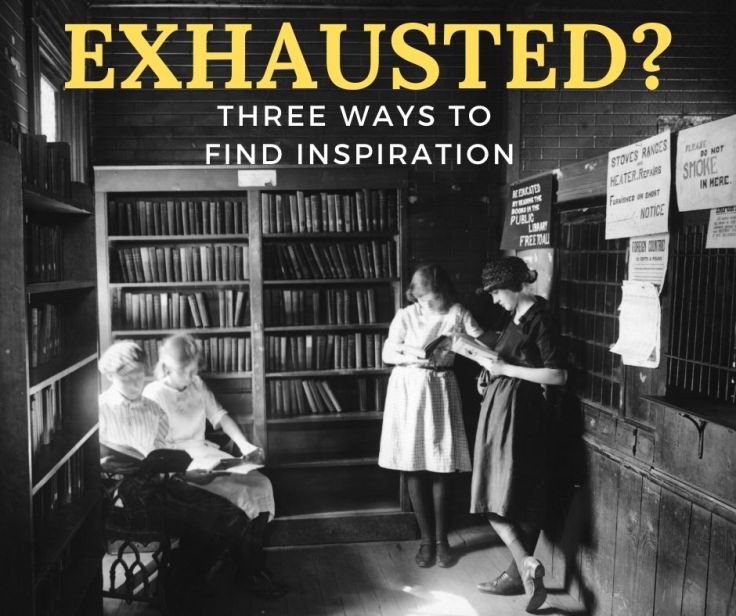
Three Easy Ways for the Exhausted Librarian to Figure Out What Your Community Needs AND Find Promotional Inspiration!

Photo courtesy Public Library of Cincinnati and Hamilton County

More than once, I’ve sat down at my computer to turn out a clever, groundbreaking, truly engaging library promotion… and ended up staring at a blank wall.

There are days, or weeks, or months (or let’s be honest, years… like 2020) when work in a library will run you ragged. As much as you’d like to create the most inspiring and noteworthy marketing piece for your library, you are just Too. Dang. Tired.

When I worked in a library, the exhaustion usually hit me after summer reading ended. With fall and winter looming, I felt my inspiration seeping away as quickly as the leaves fell from the trees.

If this happens to you, there are some things you can do to get your creativity back. If you need a little inspiration, look no further than your community.

The easiest and most effective library promotions are the ones that solve your cardholders’ big problems. If you have no idea what your community wants and needs from your library, here are three easy ways to figure that out and find the inspiration for your next effective promotion!

“Stalk” your library users.

There are three places you can go to learn more about your community.

Inside the building

If your library is currently open, take a walk around the library or visit the branches. This is your spy moment! Take off your badge and pretend to browse. Or sit at a table in a corner with your laptop.

Observe the way the cardholders browse the shelves, interact with staff, work the self-checkout machines, and use the public computers. Answer these questions.

  • Do they look for a map?
  • Are they drawn to a particular book display?
  • Do they linger over the new books, or do they dash in for their holds and dash out?
  • Do you notice all customers follow a particular path through your branch or are drawn to a particular place within the branch?
  • If your library has a drive-thru, is it busy? What kinds of customers use the drive-thru?

Watch how your community behaves inside the building to get an idea of what customers love and what problems they encounter during their interactions with your library. Both of those discoveries can be the basis for your next library promotion.

On your website

Take a close look at your library website’s analytics to find out who is visiting and what they’re doing.

Google Analytics is the best place to get a sense of how your community is interacting with your library’s website. If you don’t have access to your library’s Google Analytics, make an appointment to meet with whoever does have access. Talk with that person about their work. Then, share your goals for the library promotions you create. It’s your chance to form a collaboration that can lead to a more effective library website.

When you get a chance to see the data, ask these five questions:

  • Which landing pages are the most popular?
  • Which pages get zero traffic?
  • Has website traffic to certain pages changed over time or remained relatively the same?
  • How long did people stay on our website?
  • How does the bounce rate compare on your landing pages?

If you notice that people are interested in a certain section of your website, you may want to create promotions that support that. Likewise, if you realize that cardholders are missing some key places on your website, you may want to create promotions to entice people to visit those pages!

And if you notice that people are visiting a certain webpage but bouncing right off, you may want to think about improving the customer experience on that page.

On social media

Social listening is an insightful way to get promotional inspiration. It’s kind of like eavesdropping. It’s the purposeful search for conversations about your library on social media platforms.

Social listening will give you a clearer picture of how people feel about your library. You may be able to spot problems before they happen. And you will certainly spot promotional opportunities which you can amplify to connect to more users.

For full details about how to actively use social listening for promotional inspiration, read this post.

Check your statistics.  

Your library likely makes circulation and programming stats available on your internal website. These pieces of data can inspire you to find ways to help make their interaction with the library more worthwhile.

If you make it a regular part of your job to check your library statistics, you will find promotional inspiration. You’ll notice when there is a dip in the use of a service. When it happens, you’ll want to consider shifting some of your promotional focus to re-educate your community about that service.

If you work for a system with more than one location, you may notice trends in visits and circulation between the locations. Library staff at branches with lower visits and circulation can reach out to those with higher visits and circulation to see if you can steal some of their successful promotional ideas!

Talk to your coworkers.

You might find inspiration simply by “interviewing” your fellow staffers. Some key questions you can ask include:

  • What are your customers struggling with?
  • What are you struggling with?
  • What part of their job brings them joy?

You may uncover a great story that centers on your community member or cardholder as a hero. You can use that as a piece of content marketing to promote your library on every platform.

You might also learn that there is a customer problem that you can help to solve with your promotions. Answering a commonly asked cardholder question is an easy and effective way to promote your library.

You May Also Want to Read These Posts

The Quest for Perfection May Spoil Your Library Promotions! How To Walk the Line During the Revision Process and Still Create Authentic Messages

Behind the Scenes of The Library Marketing Show: Anyone Can Create Library Videos!

Angela’s Latest Book Review

The Sweetness of Water by Nathan Harris


Subscribe to this blog and youโ€™ll receive an email every time I post. To do that, enter your email address and click on the โ€œFollowโ€ button in the lower left-hand corner of the page.

The Secret to Writing Engaging Copy for Any Library Promotion AND Getting Results Starts With a โ€œKISSโ€!

	
Delivery room (2nd floor of intermediate building) - in 1898-1899 Annual Report. Moved here from first floor in 1898-1899. Photo courtesy Public Library of Cincinnati and Hamilton County.

In 1960, Kelly Johnson was the lead engineer at a division of Lockheed that made spy plans.

One day, he handed a team of design engineers a handful of tools. Then he told the engineers that they must design a jet aircraft that would be repairable by the average mechanic in the field under combat conditions using only those tools.

At that moment, the popular design phrase “Keep it Simple, Stupid” or KISS was born. It describes the idea that most systems will work better if they are designed simply.

I first heard this phrase in journalism school. Reporters, marketers, ad agents, and public relations employees are all taught the power of simplified language in copy.

Simplified copy is easy to read and understand. It sounds authentic. Conversational copy subconsciously signals to your audience that you are a person, and people like communicating with other people.

Librarians are intelligent and sophisticated people. They have a deep understanding and appreciation of complex concepts. They’re driven by accuracy and information. It’s challenging to write clearly when you’re an expert in your field!

But our cardholders may have a difficult time understanding library brochures, posters, blogs, and websites with convoluted and confusing language. They may be tune out if the wording of your promotions isn’t conversational.

Your job as a library marketer is to translate complex thoughts and concepts into a concise and clear language your audience can understand and appreciate.ย You must present information in a way that the cardholder can understand.

It’s easier said than done, but here is some guidance you can put into practice any time you’re asked to write a piece of library marketing.

Identify your target audience and the action you want them to take.  

Before you even write the first draft of any promotion, pinpoint your audience as precisely as possible.

Are you writing for teens ages 13-15? Are you writing for women, ages 25-54, who love to read cozy mysteries? Are you aiming your message at parents of preschoolers who need help finding books to read to their children?

When you’ve settled on your target audience, write a sentence about them at the top of the page. Be as descriptive as possible.

Underneath that, write a sentence that describes the point of your marketing material. Are you trying to persuade someone to try a new service? Do you want to increase participation in a preschool storytime? Are you trying to get teens to enter an art contest?

Once you know precisely who your audience is and what you want them to do after they’re read your marketing material, you’ll have an easier job of writing clearly.

Define unfamiliar or difficult words, titles, or services. 

Go through the draft of your material and highlight words or terms that may confuse your audience. Then, find a better way to say or explain those words.

Never take it for granted that your reader has been a lifelong user or follower of the library. Words used by librarians to describe services, programs, catalogs, and databases, which may seem common and every day to you and your staff, may not be so to your reader.

Shorten your sentences and paragraphs. 

You may have noticed that, about 18 months ago, I started writing shorter sentences and paragraphs here on the blog. Views rose by 118 percent!

That’s because shorter sentences and paragraphs make it easier for your reader to understand and absorb what you are saying. Long paragraphs look thick and off-putting. Multiple studies show readers will skip lengthy paragraphs. And the Poynter Institute’s Eyetrack Study shows people are more likely to read an entire webpage when the paragraphs are short.

There are two rules you can remember to help you get into the habit of shortening sentences and paragraphs.

  • Ziomek’s 1-2-3-4-5 rule: Created by Jon Ziomek, a professor at the Medill School of Journalism. The rule says each paragraph must contain: 1 idea, expressed in 2 to 3 short sentences, taking 4 to 5 lines.
  • Nityesh Agarwal‘s 80-20 rule: You can convey 80 percent of the information in any piece of writing using 20 percent of the words.

Get into the habit of hitting your return key more often. You can also break your writing up using bullet points or lists.

Use online writing tools.

There are lots of free tools that can help you craft sentences that are clear and concise, even when the subject matter is not! They can help you figure out a headline that will draw readers in. They can help you discover just the right word to make your meaning clear.

Here’s a list of my favorite online writing tools. The Grammarly extension for Windows is also extremely helpful.

Ask a non-library employee to read your work.

I often ask my family members to read my writing. If they find anything to be confusing or convoluted, I know I need to change it.

Bonus Tip: Read or listen to the bookย Everybody Writesย by Ann Handley. It’s life-changing. Check your library collection first. If you have Overdrive, you’ll have the audiobook version. You MUST read this. It will make you a better writer.

Do you have tips for writing more clearly or examples where you have taken a complex library concept and simplified it for an audience? Share your experience or questions in the comments.  

Related Posts

Library Blogs are the Best! How to Use Your Website to Amplify Your Library Marketing Message on Your Own Terms

Breaking News: Make Sure Your Library Gets More Press Coverage with These Six Tips from a Former Journalist

Angela’s Latest Book Review

The Office of Historical Corrections by Danielle Evans


Subscribe to this blog and youโ€™ll receive an email every time I post. To do that, enter your email address and click on the โ€œFollowโ€ button in the lower left-hand corner of the page.
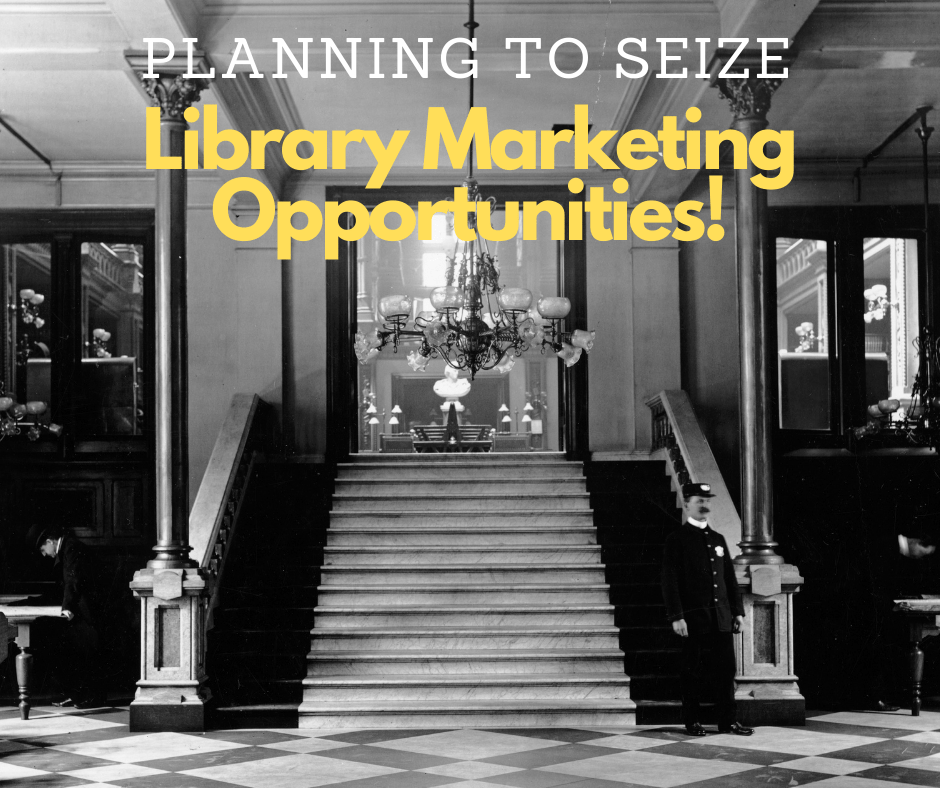
Planning for Magic! How To Keep Your Eyes (and Your Schedule) Open for Unexpected Library Promotional Opportunities

Courtesy Public Library of Cincinnati and Hamilton County. Check out their digital library here: https://digital.cincinnatilibrary.org/digital/collection/p16998coll12?fbclid=IwAR3gV2a2TMW2DFTLlsU0shgVGKzEFtzSJBYpqyAircAHN3eh6wvoE-siipw

I have never been one for spontaneous excursions. When I travel (boy, do I miss travel!), I like to have a plan.

I research restaurants. I research tourist attractions. I check to see if there’s a library in the area. I might even jump onto Google Street View and “walk” the area myself to make sure I’ll know where I’m going.

I do all of this because I want to get the most value out of the time I’m spending in a new place. I don’t want to miss anything fun, interesting, or historic.

But occasionally, I’ll stumble upon something amazing that I didn’t find in my research. Those discoveries always end up being completely amazing.

On my first few hours in Edinburgh, Scotland, I had lunch in a tavern. As I left a tour of Holyrood Palace, I realized I hadn’t eaten in 12 hours. I was starving. I didn’t feel like walking another mile to one of the restaurants I had chosen in my pre-trip planning.

I found Tolbooth Tavern tucked into a tiny corner of an ancient-looking wall near Holyrood Palace. It looked quiet and unassuming. And everything on the menu posted outside sounded delicious.

It was the best meal I had in Edinburgh. The haggis was spectacular and beautiful. The beer was perfect. The atmosphere was exactly what I imagined I’d find in that city. It’s one of my favorite memories of the trips.

What in the world does this have to do with library marketing?

On most occasions, I believe in planning. A well-executed marketing plan thatโ€™s strategic and focused is the best recipe for library marketing success.

But sometimes, you can stumble upon an amazing promotional opportunity that you didn’t plan for. And those unexpected opportunities can be surprisingly successful.

If inspiration strikes or you see a chance to grab a new marketing or promotional opportunity, you should absolutely do it. A quick pivot can lead to engaging and successful promotions.

Planning for the unpredictable

Anyone can include some flexibility in their marketing schedule. The key lies in planning… which sounds contradictory. But the trick is simple.โ€ฏโ€ฏ

When youโ€™re laying outโ€ฏyour regular marketing schedule, be sure to deliberately leave holes where you might be able to drop in promotions

In general, most of your editorial calendar, around 75 percent, will consist of promotions that have hard deadlines. The rest, 25 percent, can be open spaces for those opportunities that you cannot plan for.

How does this work, exactly?

Be on the lookout for opportunities to do some flexible marketing. Great promotional stories sometimes appear unexpectedly. They may include:

  • User-generated content on social media
  • A connection to an event happening in pop culture
  • A suggestion from a customer or staff member
  • An idea you got from another library
  • A last-minute opportunity from a vendor or a partner organization. 
  • A great event thatโ€™s been planned by a branch at the last minute. 

If you purposefully leave 25 percent of your editorial calendar open, you can seize these opportunities for the space you’ve deliberately set aside.

Example: My library turned around a movie promotionโ€ฏsent to us by a vendor, who offered a free first-run movie streaming on their site on the same day that the movie was released into theaters.

We got word a week before the movie premiere. The movie had a great cast that we thought might be popular with our cardholders.

We swung into gear. We created graphics for our website, social media, and an email campaign to let users of our digital services know about the promotion. We managed to do all of this in two days.

And the promotion was a success! On a normal day, we stream about 25 movies to cardholders. After this promotion, we streamed 244 copies of this first-rate movie alone. โ€ฏ

This happened because we left holes in our calendar for opportunities just like this.

You wonโ€™t have to turn a last-minute campaign around every week or even every month. But when you doโ€ฆ it will be worth it.โ€ฏ Sometimes the gold nuggets of promotion are the ones you canโ€™t plan of time! 

The benefits of flexibility in your library promotions

Flexible marketing can be fun. You may do some of your best work when you are formulating promotions in a few days or a few hours.โ€ฏA deadline or a great idea with a time limit can push you and your staff to be creative in ways youโ€™ve never imagined. 

Flexibility allows you to adapt to unforeseen shifts in your community’s needs and wants.

And flexible marketing makes it easy to continuously improve the way you do library marketing. It gives you an excuse to experiment.

And when you do that, you will learn new things about your audience, what they like, and what they dislike. Your marketing overall will improve.

What happens if I don’t have anything to fill my calendar holes?

Nothing.

Give yourself a break. Take that day off from promoting your library.

I know this is a crazy concept coming from a blog that is all about library marketing. But we need to spend more time in reflection if we want our library marketing to be amazing.

True creativity, the kind that adds value to your workplace and your life, is something that needs to be treasured and cultivated. If you want your library to succeed, you need to take time to be creative.

An unfilled hole in your editorial calendar is the perfect opportunity for that.


You May Also Want to Read These Articles

Part One of the Library Marketerโ€™s Definitive Guide to Creating an Editorial Calendar That Actually Works!

Fight for Your Ideas! Four Tips to Help You Get the Green Light for New Library Promotional Ideas

Latest Book Review

Subscribe to this blog and youโ€™ll receive an email every time I post. To do that, enter your email address and click on the โ€œFollowโ€ button in the lower left-hand corner of the page.

Your Summer Reading Challenge: How Your Library Can Use Big Events To Gather Compelling Content for Promotions During the Rest of the Year

Group of women at the Public Library of Cincinnati and Hamilton County, circa 1947. Photo courtesy Public Library of Cincinnati and Hamilton County.

โ€œThe only way we can differentiate ourselves is in how we communicate.โ€

I heard this quote at a conference six years ago and it’s never left me. I can’t remember who said it, but I remember that it changed the entire way I thought about library marketing.

We do a lot of push promotions in the library world. We try to inform our communities about what our library has to offer. We tell them why they should support the library.

Honestly, we do a lot of talking at people. And we end up sounding like every other advertiser.

When is the last time you asked yourself: how can I differentiate my library from the crowd of competitors?

Content marketing is a good place to start. It is, according to Content Marketing Institute founder Joe Pulizzi, โ€œa strategic approach focused on creating and distributing valuable, relevant, and consistent content to attract and retain a clearly defined audienceโ€“ultimately, to drive profitable consumer action.โ€

But what does that mean for a library?

It means we canโ€™t rely on disruptive marketing to capture the attention of our cardholders. If we want to attract and retain people who will use the library and support the library and convince others of the value of the library, we have to be more strategic.

Think about how you go about interacting with signs, ads, and social media. Do you give every message your full attention… or half of your attention… or even a glance?

Unless something is seriously compelling, you filter it out. So do our cardholders.

Content marketing sticks with your audience because it’s not an ad. It doesn’t push.

It is stories about your library, your staff, or your community. Your cardholders will remember these kinds of promotions because stories make us feel emotions. And emotions are memorable.

Summer Reading, or any large library event or initiative, is the best time to be purposeful about using content marketing to promote your library. It’s also the best time to gather stories for promotion later in the year.

Here’s what I want you to do.

  • Gather stories about how cardholders are using the library. How is your library improving their lives? How is your library helping people get back on their feet or back to normal in this phase of the pandemic? Ask your library workers to be on the lookout for great story ideas.
  • Gather stories about your staffโ€“who are they? What do they like to do in their spare time? What do they love about interacting with cardholders? How their approach to work changed during the pandemic?
  • Gather information about your cardholders. Survey your users or use social listening to create a list of the problems they are facing. Ask your cardholders specific questions like “Tell us about a time when your library helped you find some information you thought you’d never be able to uncover.” Or “Tell us your favorite library memory from your childhood.”
  • Set up a form on your website and solicit cardholder stories on social media, in your email, and printed newsletters. That list will be the basis for further content marketing your library can create down the road that answers those problems.

And then, tell those stories using the platforms you have available. Write them up for your blog. Create social media posts. Add them to your newsletters. Start a landing page on your website. Make videos.

There are three key pieces to look for in a good content marketing library story.

Emotion. The joy of finding a book, the fear of not getting a job, the frustration of another night of homework without any helpโ€ฆ these are all emotions felt by our libraryโ€™s customers. Other people can relate to these experiences and empathize.

A good emotional story activates many portions of the brain, including sensory, memory, and empathy sectors. The more active the brain is while reading, the more likely it is that the listener/reader will remember the story.

Emotion is the most important criteria of a good story. If it makes you feel something, itโ€™s worth pursuing.

Conflict and a resolution. A good story includes some conflict, whether minor or major, and a problem or situation that is resolved.  Without conflict, a story is flat and unmemorable.

Look for stories with a beginning, middle, and end including a story arc that leads to a resolution.

Simplicity. A story thatโ€™s direct, with less adjectives and more heartfelt and straightforward language is more likely to be remembered by the listener than a complex story with a long, winding narrative and lots of details and unnecessary description.

When writing content for marketing purposes, draw a straight line from beginning, middle, and end. Keep the story moving forward with clear language.

Content marketing gives you a chance to tell your library’s story without making a direct pitch. It increases brand awareness and affinity and improves your library’s image. And stories are fun to tell!

We cannot rely on this old disruptive marketing policy to be the driving force behind our library marketing efforts anymore. Weโ€™re better than that.

We work with stories every day. Letโ€™s start telling them.


Do you use content marketing in your library promotions? Do you have some great stories that you’ve gathered about your library and cardholders? Do you have questions about storytelling and how it works for libraries? Share your thoughts and questions in the comments below!

You Might Also Like These Posts

The Biggest Threat to Your Libraryโ€™s Content Marketing

Five Content Marketing Lessons Learned at the Construction Site

Angela’s Latest Book Review

Broken (in the best possible way) by Jenny Lawson

Subscribe to this blog and youโ€™ll receive an email every time I post. To do that, click on the โ€œFollowโ€ button in the bottom left-hand corner of the page. Connect with me on YouTubeTwitter, InstagramGoodreadsand LinkedIn.

The Ultimate Library Marketing Checklist: How to Decide When and Where to Promote Your Library

I am a list maker.

This is going to sound crazy but one of the most enjoyable parts of my day is the moment when I get to check something off my to-do list.

Recently, one of my readers asked me if I have a checklist for library marketing. She wanted to make sure she wasn’t missing any opportunities to promote her library.

Of course I do! Scroll down for the master checklist for library marketing.

But just because there are so many tactics available to market your library doesn’t mean that you should use every one. There is a bit of science involved in deciding when and where to run a library promotion.

To help you make these decisions, there is a series of questions you need to ask yourself. Do this every time you create a marketing campaign for anything at your library. This will ensure your promotions are effective and you are working efficiently.

How does this event, service, or item serve your library’s strategy?

Every piece of marketing you do needs to be in service of reaching your library’s strategic goals. They are the reason you come to work every morning. So make certain there is a solid connection between your promotional efforts and your library’s overall strategy.

What do you know about your current cardholders and the people who live in your community? 

A clear image of the person who will consume your marketing messages will help you do a better job of marketing to them.

Where do these cardholders live? How do they engage with your competitors like Amazon and other bookstores? Where do they get their news? Do they have access to Wi-Fi? Do they have children? What is their living situation like? Do they work? What is their transportation situation?

The answers to these questions will help you create promotions that resonate with your intended audience.

Click here to download the master checklist for library marketing.

Now it’s time to decide what to promote, how to promote, and when to promote. Here are three rules to live by when figuring out the best channel for your library marketing.

Don’t feast at the buffet of tactics.

You don’t have to use every tactic available to you. Choose which ones will work best for each promotion. It’s a smarter use of your time and energy.

For example, my library held a teen poetry contest in April every year. We know that teens are typically considered to be a really hard audience to reach. So I went after their parents and teachers!

I marketed the contest on our website, in social media, on the digital signs in branches, with posters, and with email. Notice all the categories I didnโ€™t use!

I didn’t send a press release because I had no evidence from past years to show that promoting this contest in the news would get us more entries. I didn’t use all the signage options available to me because teens donโ€™t pay attention to signs. And I didnโ€™t include the contest in our content marketing publication because the average reader of that publication was an older empty-nester–not the right audience for that promotion.

For each promotion, use only the tactics that work best for the intended target audience. You’ll be more efficient and effective!

Determine how you will measure success.

You must make sure that you accurately document the results of every promotion you do. This will help you to adjust your promotions to improve effectiveness. Keep meticulous records of data as it comes in.

As a starting point, you can measure every promotional request against two basic rules.

If the promotion doesn’t result in higher circulation, program attendance, or usage, donโ€™t do it.
If the promotion is not tied directly to the libraryโ€™s overall strategy, cut it.

When I worked at the Public Library of Cincinnati and Hamilton County, my marketing team conducted a year-long experiment to see if we could drive attendance at events. We hypothesized that emails sent to targeted cardholders would result in higher attendance.

We were wrong.

We did 118 branch promotional emails that year and only half were effective in boosting attendance AT ALL. With that data, we decided to cut way back on email branch promotions.

The next year, we sent only 34 emails promoting attendance at branches. Our effectiveness level increased to 68 percent. More than half of the programs saw a significant increase in attendance–at least ten percent–after their cardholders received an email. 

Why did the emails work the second year? When we cut down on the number we were sending, we were able to create messages that did a better job of resonating with people. Turns out, our audience responded to quality, not quantity!

At some point, you may realize there is an tactic that just doesnโ€™t seem to work. You have my blessing to drop anything that fails. Use only the things that can help you to achieve your goals and cut the rest.

Share your results.

Talk about the results with your colleagues and share your results with other departments. Transparency in marketing is a good thing. It helps your co-workers and administrators have a clearer understanding of what you do. And they may look at the results and find some new insight that you missed.

Failure is okay, by the way. Marketing is an experiment! Sometimes the stuff you do will work, sometimes it wonโ€™t. If something doesn’t work, don’t do it again. Spend your energy on the things that do work.

You may also like these posts

Going Live on Facebook? Here are Three Tips to Maximize the Reach of Your Libraryโ€™s Virtualย Programs

The Virtual Library Conference is Over and Now the Work Begins! Hereโ€™s What to do Once Youโ€™ve Closed Yourย Laptop

Latest Book Review

Caste: The Origin of Our Discontents by Isabel Wilkerson

Subscribe to this blog and youโ€™ll receive an email every time I post. To do that, click on the โ€œFollowโ€ button in the bottom left-hand corner of the page. Connect with me on YouTube, Twitter, Instagram, and LinkedIn.

Targeted Email Marketing for a New Era: The Pros and Cons of How Most Libraries Segment Their Audiences

Photo courtesy Public Library of Cincinnati and Hamilton County. Bond Hill Branch.

This is the first in a two-part series on email marketing for libraries. Part two is here.

If there is one thing that I know about library promotion, it’s this:

If you want to be successful in library email marketing, you must target your messages.

This isn’t just my personal belief. It is a method which worked, with impressive results, during my years at a public library. And I see it working now for hundreds of libraries around the country and around the world in my day job at NoveList.

Why are libraries hesitant to do targeted email marketing?

There are two big reasons that libraries fear the idea of segmenting their email audiences.

First, libraries are worried about email marketing in general. They feel it’s too promotional and that email messages from the library will be received as spam. They may even believe that people don’t want to receive email marketing from anyone, even a library.

This is not the case. The average consumer is accustomed to giving out their email address in exchange for marketing messages targeted specifically to them. Opt-in Monster research shows 99 percent of people with an email address check their inbox at least once a day.

Why? Because they are looking for messages from friends, family, and places they love. They love the library. Your cardholders and community members feel excitement when they receive an email from you.

Libraries worry that, by sending targeted messages to segmented audiences, they will miss out on the chance to get a message to all their cardholders. 

Many libraries are sending the same message to every cardholder, sometimes hundreds of thousands of people in one burst. It feels like the natural thing to do. “Everyone needs to know about this!”

The problem with that approach is that your cardholders are individuals. One message never fits them all.

This is particularly true if your service area covers a range of incomes and demographics. The needs and interests of your cardholders vary greatly.

By targeting your message, you are more likely to say something that matters significantly to your cardholders, which makes them more likely to take an action, which makes it more likely that your email will be successful.

Targeted email marketing for libraries is effective because it serves the right message to the right group of people. And it works for all kind of messages.

Do not let your fears about email set you up for failure. Your cardholders want to hear from you. There are not very many industries which can say that. Let’s take advantage of it and give the people what they want!

Libraries who do segment their audiences tend to use three main methods. There are benefits and drawbacks for each.

Segmenting by library card use

Some libraries group their cardholders by the type of material they most frequently check out: kids’ books, print books, e-books, etc. Then, they send targeted email messages about those formats or collection types to those specific users.

This was the method we used when I worked a public library. For example, we would send an email promoting three new e-books every month to people who appear to favor e-books.

Benefits: This method is great for collection marketing. Most libraries will notice holds and checkouts increase, sometimes exponentially, when they send messages about items to people who have shown a previous interest in those items.

Drawbacks: The way a person uses their library card may not correspond to their true library interests.

For instance, an adult who frequently checks out children’s books for their kids may also love to read e-books. By focusing solely on the fact that they more frequently check out children’s books, a library may miss a key opportunity to market e-books to that cardholder.

A second drawback is that your library will want to promote things besides your collection, like programs, big events, and advocacy messages. Segmenting audiences solely by their favorite collection format gives you no clue as to your cardholders other potential interests.

Finally, this kind of segmentation often requires sophisticated email marketing programs that are expensive and time-consuming to manage. Smaller libraries without a dedicated marketing department and libraries with limited budgets may find these programs cost prohibitive.

Letting people self-select

Many libraries have an opt-in page on their website listing email interest groups. Visitors can self-select which emails they prefer to receive.

Benefits: When a person chooses to receive an email from you about a certain subject, they are also likely to open and engage with that email. They have already indicated their interest by selecting it.

Most library email opt-in pages do not require a person to be a cardholder to sign up. So, a second benefit of this method is that you can send marketing messages to people who aren’t in your cardholder base but can be enticed to use your library. That’s a fantastic way to expand your cardholder base!

Drawbacks: A library using this method must commit to intentionally market the marketing lists. They must make sure the community knows the opt-in page exists and convince people to sign up.

Segmenting by cardholder location

Some libraries have sent messages to people who have indicated a certain branch is their home branch or to people who live in a certain portion of the community.

Benefits: This is a great method for in-person program promotion. People are more likely to attend events that are near their home. Segmenting your audience by their location is an efficient use of your time for program promotion.

Drawbacks: There is a certain set of library cardholders who are willing to travel to attend programs and events at branches far from their home. They may be interested in hearing from your library about certain types of events, no matter where they are held.

In addition, the branch a person most frequently uses may not actually be near their home! Many people frequent the library branch near their workplace or some other important and frequently visited location.

You may also find these posts helpful

Three SUPER Easy Ways to Get More Results from Your Library Email Marketing!

Are My Library Email Metrics Goodโ€ฆ. or Bad?! Here Are the Latest Stats to Help You Figure It Out.

Latest Book Reviews

The Little Book of Lykke: The Danish Search for the World’s Happiest People by Meik Wiking

The Bear by Andrew Krivak

Find more 60-second Book Reviews here.

Subscribe to this blog and youโ€™ll receive an email every time I post. To do that, click on the โ€œFollowโ€ button in the bottom left-hand corner of the page. Connect with me on YouTube, Twitter, Instagram, and LinkedIn.

Show, Don’t Tell: Why Infographics are an Essential Component in Your Library Marketing

Infographics are visual marketing pieces that help explain facts and figures or lay out a complex set of information in a way that is easy to understand. They’re an incredibly effective marketing tactic.

Until recently, I thought infographics were a relatively new marketing tactic. I remember deciding in 2013 to create an infographic, the first for my library, to promote a readalikes list. I thought I was so innovative!

Turns out, infographics have been around for hundreds of years. Fun fact: The first known instance of infographics as we know them today dates to the late 1700s with a chart of wheat process and labor wages.

Frankly, I love infographics. They appeal to my visual and creative nature. They work well on social media. But they take a lot of time and planning. So, for libraries with a limited marketing staff, it can seem daunting to create one. But itโ€™s worth it.

Why use infographics in library marketing?

Infographics grab attention. Our brains are hard wired for visuals. The human eye can process 36,000 visual messages per hour. That’s 60,000 times faster than the brain can process text. 60,000 times. Whoa.

A good infographic will trigger a reaction in the human brain, sometimes even before the person consciously realizes and processes that reaction.

Think about what happens to you when you see a photograph of a beloved family member or friend. The photo instantly makes you cry, laugh, or long for that person to return to your life. An infographic can trigger the same kind of emotional response. And emotional responses are the best kind of marketing, because they are memorable.

Infographics can explain complex ideas and convey a lot of information in a simple way that is accessible to many audiences. Libraries deal with a lot of data. Our products and services are sometimes difficult to break down into steps. A good infographic will take facts and figures, difficult instructions, or confusing concepts and present them in a way that everyone can understand.

Infographics will position your library as an expert in a way that words can’t. A good visual will demonstrate your library’s subject-matter expertise. It can boost your credibility. It shows that you care about effective communication with your community. And that builds trust with your visitors, community members, and stakeholders in a way that feels more genuine that fancy words.

Three ways to use infographics in your library marketing

Promote your collection. Use infographics to promote a themed collection series, such as new dystopian fiction, the best book club reads, or mystery authors.

You can recruit your collection development department to come up with a list or, if your library is a NoveList client, you can use the NoveList database to find books within a theme. Use the infographic to drive traffic to those titles in your catalog.ย This works really well on social media.

Explain difficult information. Create an infographic to help you explain something to your cardholders, like how to download an eBook, how to pay a fine, how your library uses taxpayer funding, or why summer reading is vital to childhood literacy.

Infographic template from LibraryAware

Show that your library is fun! Have your content team come up with a great idea for a fun promotion, like 20 signs that you might be a bookworm or how to make a bookmark out of an old book.

How to design a library marketing infographic

Create an outline. An outline can help you to lay out the pieces of the infographic and cut your ideas down to the essential elements.

Decide which points are essential for getting your message across. Is there a story to be told in the data or concept you are trying to convey? Is there a beginning, a middle, and an end to that story?

Once your outline is set, your other design elements will become clear to you. What is your theme? Will you use charts or graphics, lists or numbered elements, photos, shapes, or icons? Write those decisions down next to each section in the outline to help you organize your thoughts.

Plan your layout. Youโ€™ll want to make sure all the elements of your infographic are balanced. But that doesnโ€™t mean everything has to be symmetrical!

For instance, if your infographic is explaining something that has a lot of considerations at the beginning of the process and works toward one end result, you could consider a funnel-design: making the number of visuals heavy at the top and lighter as the eye moves down.

If you are explaining something on a timeline, you can arrange your elements evenly from top to bottom but not directly across from one another.

It’s good to sketch your layout out before you go into a design program. This saves time in the actual process of creation and gives you space to make changes at a stage where itโ€™s easy to fix.

You will also want to plan out any places in your infographic where you might need a visual break, like a solid block of color or a line or shape. Finally, be sure to leave white space. You want your infographic to look uncluttered.

Decide your color scheme. A good rule of thumb is to design your infographic with two or three main colors. Then choose a few minor color accents.

The subject of your infographic will have a bearing on your color decision. Some colors work better for explaining data, and some work better for explaining processes.

Infographic template in LibraryAware

Take your branding into consideration when you decide on your color scheme, to avoid clashing with your logo.

Pick your fonts. Youโ€™ll want to make sure your type is accessible to all audiences. Avoid script-type fonts. Keep in mind that an infographic is visual, and the amount of text will be minimal, so the font you choose must compliment the design elements of the infographics.

Limit your use of fonts to just two or three types. Itโ€™s good design to pick a font for the header, one for the main body text, and a third for the complimentary or subtext.

Write a headline that hooks your target audience. As you would with emails or blog articles, the headline or title of your infographic will need to convey the general theme of your visual and catch the attention of your potential audience. Be descriptive and catchy. The title should be shorter than a headline you may use for other contentโ€”only a few words long.

Subscribe to this blog and youโ€™ll receive an email every time I post. To do that, click on the โ€œFollowโ€ button in the bottom left-hand corner of the page. Connect with me on YouTube, Twitter,ย Instagram, and LinkedIn. ย 

A WordPress.com Website.

Up ↑