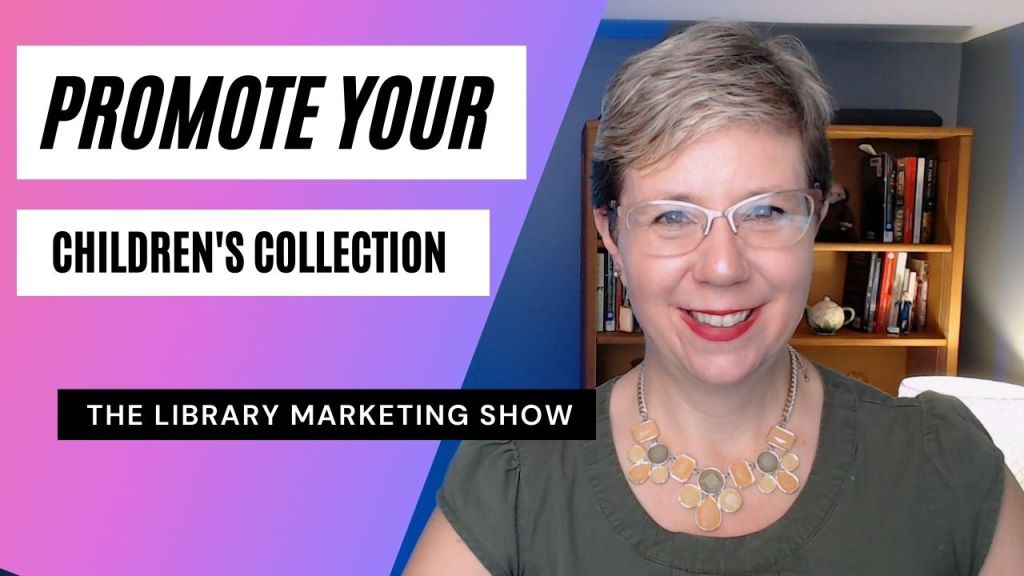
In this video, I’ll share four ways you can make sure the public knows about the many wonderful children’s books you have in your library’s collection.
Kudos in this episode go to the Bridges Library System, which has a wonderful and funny newsletter signup and confirmation process.
Do you have a suggestion for a topic for a future episode? Want to nominate someone for kudos? Let me know in the comments.
And subscribe to this series to get a new video tip for libraries each week.
Thanks for watching!
Subscribe to this blog and you’ll receive an email every time I post. To do that, click on the “Follow” button in the bottom left-hand corner of the page.
In just a few weeks, the annual summer reading program will kick off at libraries in the U.S., Canada, and the U.K. And for the second year in a row, libraries are struggling to create a program that engages the community without risking their safety.
Last year’s pandemic Summer Reading program was a challenge (boy, that’s the understatement of the decade). Many libraries were physically closed. We were still learning about how the virus spread and trying to figure out how to mitigate the risk with physical materials. Staff members were doing virtual programming for the first time. We counted any participation as a success.
I think 2021 is going to be the first rebuilding year for summer reading. Attendance and participation numbers are not going to return to pre-pandemic levels this year. Many libraries are still dealing with limited service. Zoom fatigue is real. Vaccines are not widely available. It’s going to take us a couple years to get back to “normal.”
It’s okay. Do the best you can. Celebrate any growth you see this year. And use these ten tips to make your summer reading program as successful as possible.
Drop the library card requirement.
Let anyone in your community participate in summer reading, not just library cardholders.
Dropping the requirement to get a library card sounds counterintuitive. But it opens your program up to a whole population of people who don’t regularly use the library, particularly those in under-served communities. It makes your program more inclusive. It’s a goodwill gesture.
Of course, at registration and check-in, your front-line library staff should still suggest participants get a card. Doing so will grow your cardholder numbers. But don’t make it a requirement to register or get prizes.
Make participation super easy.
Don’t ask your participants to jump through complicated steps to earn a prize. Summer reading should be three-step maximum– read, log your reading, claim a prize.
If you want to push participation in programs, I suggest making that a bonus: let people earn extra prizes or points toward prizes by attending virtual programs or in-person events, if that can be done safely in your area. You can also reward people for watching a streaming video or listening to free streaming music.
Let adults participate.
It still surprises me when I see a library that limits their summer reading program to only teens and kids. Children who see the adults in their lives reading are more likely to read themselves. So why not entice parents to participate?
This year is an opportunity to get more adults engaged with your library. Plus, the adults in your community deserve to have some fun! If you can provide that for them, they will be grateful and supportive of your library.
Add experiences to your participation elements.
Create themes for each week of your summer program, like DIY, arts, nature, and sports. Make suggestions for activities people can complete to earn participation credit, like cooking a recipe from a cookbook they got at the library, going on a nature walk, visiting the zoo or a park, painting a picture or making sidewalk art, building something with LEGOs, writing a story… the possibilities are endless.
If a participant doesn’t read 20 minutes a day but still completes an experience activity, they should get credit. This is another way to make your program more inclusive and enticing to people.
Offer both print and digital tracking options.
Many libraries have an app or an online software platform that participants use to track their reading. But your under-served community members don’t have access to a computer or Wi-Fi at home. They can’t log in to track their reading and they can’t download or use an app.
In addition, many of your connected participants may find the process of downloading the app, putting in their information, and then using it to log their reading to be cumbersome. Add a paper tracking option to ensure everyone can participate.
Print copies of your tracking log and add them to your curbside pickup bags or slip them into holds. Let participants bring it back to your drive-thru or curbside window for credit.
Ask partner organizations to help you promote summer reading.
Now is the time to “call in favors” with your partner organizations. Ask them to show support and help rebuild your summer reading program.
If you don’t have partners, you can use summer reading to build partnerships! Ask local realtors and rental agencies if they can hand out a summer reading promotional piece to prospective homeowners or new renters. Give information and promotional pieces to day care providers, teachers, summer camps, recreational centers, your local zoo, your local park board, and other civic organizations. You can even ask restaurants to include a summer reading promotional piece in their takeout bags!
Use your email list to its full potential.
If your summer goal is to increase the number of readers and the amount of materials they read, then keep suggesting things for them to read! This is a great time to promote parts of your collection that don’t get a lot of use, like online graphic novels, as well as your backlist titles.
Build a template with whatever email service you use and fill in the blanks. Send two to three suggestions to your cardholders every two weeks during your summer program. It’s a great way to re-engage cardholders. You can also use email to remind your cardholders to participate in summer reading and boost your circulation numbers for the year.
Spend money on targeted social media ads.
This is the most efficient and cost-effective way to reach people and summer is the perfect time to buy social media ads. You barely need a budget to get started. $25 is all you need to get started.
Summer reading is also a great opportunity to buy ads on several platforms and compare results. The platforms will guide you through the process of picking your target audience. If you see success on one platform, you can use that data to create other small budget campaigns for your library during the year.
Incentivize user-generated content.
Hold contests to encourage people to post photos and videos of themselves using your library and participating in summer reading. Offer a chance to win a prize drawing for submitting reviews and testimonials about your library. You can use that content to further promote summer reading.
You may discover someone who is a super-fan of your library. That person could be an “influencer” for a future library promotional campaign!
Put good customer service on display.
Even with the pandemic, you’ll likely see a boost in visits to your library for curbside or holds pickup during the summer. You’ll definitely get more visitors to your website. Make sure everything is in tip-top shape, attractive, and easy-to-use.
Stress the importance of good customer service to staff, including those who work on responding to comments and questions via email, chat, and social media. Give them talking points to help them promote a few year-round services and challenge them to pick one to mention during every customer interaction.
Put your expertise on display front and center on the website. Is your staff great at readers’ advisory? Do you have an amazing e-newsletter? Are your virtual programs fun and innovative? Use summer reading to promote the best of your year-round services and collection items.
Is your library doing anything innovative this year for summer reading? What concerns do you have about the program this year? Share your thoughts in the comments!
Subscribe to this blog and you’ll receive an email every time I post. To do that, click on the “Follow” button in the bottom left-hand corner of the page. Connect with me on YouTube, Twitter, Instagram, Goodreads, and LinkedIn.
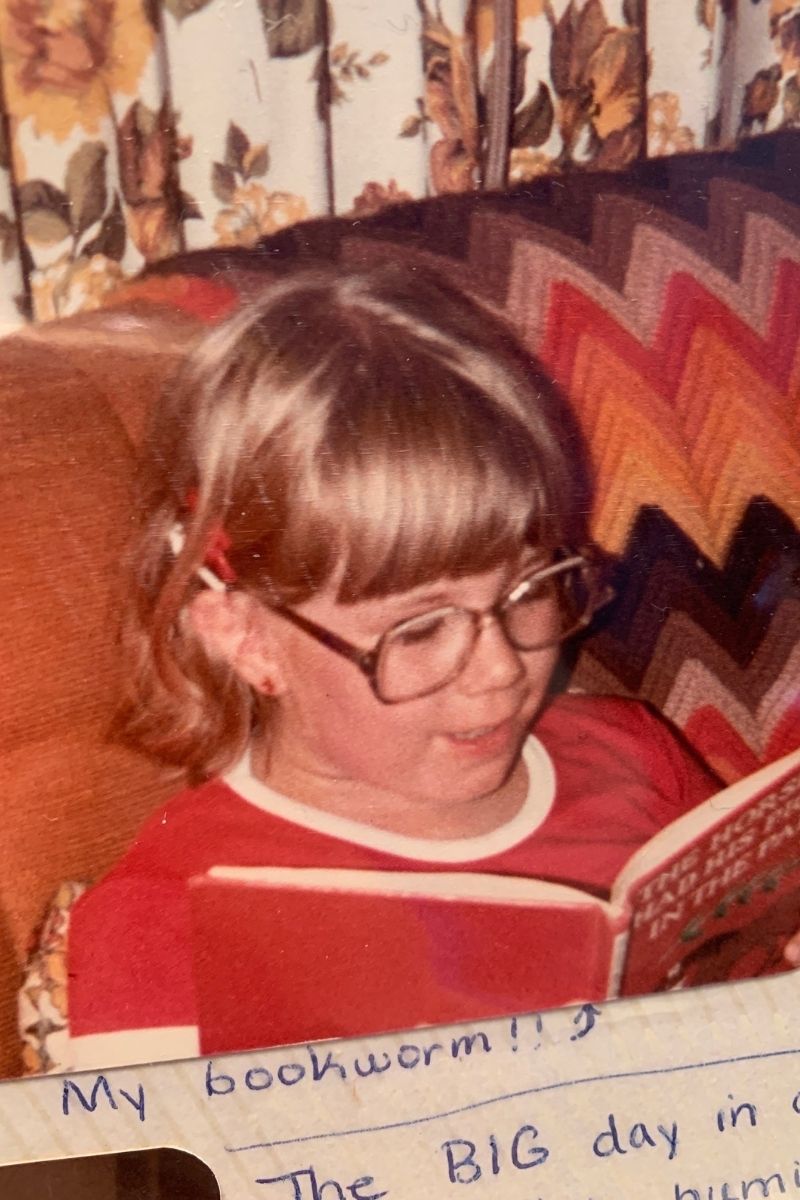
I was recently looking through some old photo albums when I came across this gem.
You can see my mother wrote the words “My bookworm” under this photo of me, age 7, reading “The Horse That Had His Picture in the Paper” by Helen Stone. I have always loved fiction.
Of all the people in the world, I am certain I really don’t have to explain to my readers why fiction is amazing. You work in a building stuffed with fiction!
But, if I were to ask you what you’ve read lately that will help improve your work skills, my guess is that you would not name a work of fiction.
Of course, your work will be improved by reading a great business or career-oriented book. I can think of a few inspiring examples, like Ann Handley’s Content Rules, which literally changed my life, or Unmarketing by Scott Stratten. You can get a chance to read books like these and talk about them with other library staffers if you join the Library Marketing Book Club on Facebook. There is a lot of value in reading advice on marketing.
But reading fiction will also make you a better marketer. Here are the six reasons why reading fiction will improve your ability to promote your library.
Fiction is good for your brain. A study by researchers at Emory University, published in the journal BrainConnect, found that reading a novel can increase connectivity in the brain and improve brain function. Lead researcher Gregory Berns concluded, “At a minimum, we can say that reading stories—especially those with strong narrative arcs—reconfigures brain networks for at least a few days. It shows how stories can stay with us.”
Storytelling requires the work of different areas of your brain in order to help you understand the dialogue, plot, and characters. A work of fiction will train your brain will do a better job of processing complex problems in your library work.
Fiction teaches you to empathize with your community. That same study from Emory University found that reading fiction improved the readers’ ability to view the world from another person’s perspective.
Researchers theorize the act of reading forces the brain to process the emotions and physical actions of the protagonist. That processing leads to a greater compassion.
Activating compassion will cause you to create better service for your community. When you can put yourself in the shoes of your patrons, you are more likely to see their needs and find ways that your library can meet those needs.
Fiction activates your imagination. Reading fiction improved the imagination of the Emory University study subjects. It teaches you to think outside the normal boundaries of your life. It shows you the possibilities that exist when you don’t constrain yourself. It’s also a great way to forget your troubles for a few hours, and we could all use a little of that!
Fiction expands your vocabulary. A novel will expose your brain to a larger variety of words than you might run across in normal conversation or emails. The more your brain is exposed to this increased mass of vocabulary, the more you absorb it and incorporate it into your own work.
That doesn’t mean you have to write in a verbose manner in order to prove how your vocabulary has expanded. Rather, it means you’ll have a greater bank of words in your native vocabulary to choose from when you are trying to convey the perfect sentiment in your marketing pieces.
Fiction teaches you the difference between a great story and a terrible story. When’s the last time you started reading a novel and couldn’t stop? (For me, it was last month.) Now, when’s the last time you started reading a book and had to quit three chapters in because you couldn’t stand it anymore? (Again, this happened to me last month!)
The more fiction you read, the more you understand what a great story looks like. You’ll start to recognize good stories you can use as marketing for your library.
Reading fiction from your own library gives you a sense of your patrons’ experience. In the business world, companies and entrepreneurs are encouraged to go through the buying process for their own products to get a sense of what their customers experience. Library staff should do the same.
Look at the whole experience through the eyes of your community. Is your catalog easy to find on your website? Are there plenty of reading suggestions on your website, in your emails, and social media platforms? Can you find the books you love in the genre you prefer? How long do you have to wait to get your holds? Does your catalog suggest read-a-likes to keep your readers engaged while you wait for your holds? Is the process of checking out a book easy and painless?
Using your own collection can give you valuable insight. Your patrons’ delight and frustrations become your own delight and frustrations. The delights can become promotional tools for you to use in your marketing pieces. And the frustrations will prompt your library to make improvements that will increase circulation.
What are you reading right now? Do you prefer fiction or nonfiction books? Why or why not? Share your thoughts about reading and books in the comments section.
Subscribe to this blog and you’ll receive an email every time I post. To do that, click on the “Follow” button in the bottom left-hand corner of the page. Connect with me on YouTube, Twitter, Instagram, Goodreads, and LinkedIn.
In this episode, Angela explains why she believes that marketing your library’s collection will keep your library afloat during these trying times. She’ll lay out three reasons why at least 50 percent of your marketing should be promoting your collection.
Kudos in this episode go to Stacey Desroisers and Melissa Mannon who launched “The Curious Reader” podcast, a collaboration between the Goffstown Public Library and the local high school.
Do you have a suggestion for a topic for a future episode? Want to nominate someone for kudos? Let me know in the comments. And subscribe to this series to get a new video tip for libraries each week!
In this episode, I’ll share why reading for escape is important! Libraries are so focused on learning and connecting people to resources to help them with the transition to remote learning that we might forget we don’t always have to be educational. Here’s a great article from Jordan Kisner in the New York Times about why people fall in love with reading.
Here are some places to find booklists for “escape” reading that you can share with your patrons.
Also Kudos to the Schlow Library in State College, Pennsylvania. They’ve come up with a way to extend a public meeting space to patrons even though their physical library is closed. They’re helping people reserve Zoom meeting rooms!
Check the Upcoming Events page to see where I’ll be soon. Let’s connect!
This blog consists of my own personal opinions and may not represent those of my employer. Subscribe to this blog and you’ll receive an email every time I post. To do that, click on “Follow” button in the bottom left-hand corner of the page. Connect with me on Twitter,Instagram, and LinkedIn.
This week, we talk about the work of Becky Spratford from RaForAll.Blogspot.com. She is a reader’s advisory expert. Her seminar made me think about how to improve library book promotion. You’ll learn four things that can help you with your library collection promotion.
Also, KUDOS in this episode go out to Greenfield Public Library in Greenfield, Massachusetts which recently received great press for their pop-up library initiative. Get out of your building and reach out to the community. That’s good marketing!
If you have a topic for the show, kudos to share, or want to talk to me about library marketing, email me at ahursh@ebsco.com.
Check the Upcoming Events page to see where I’ll be soon. Let’s connect!
This blog consists of my own personal opinions and may not represent those of my employer. Subscribe to this blog and you’ll receive an email every time I post. To do that, click on “Follow” button in the bottom left-hand corner of the page. Connect with me on Twitter,Instagram, and LinkedIn. Need help with your library marketing? Email me at ahursh@ebsco.com.
In my previous role at a major metropolitan system serving a population of nearly a million people, I thought I knew people who were wild about books. But these folks at my new company love books on a whole new level.
I have learned so much in my first month. And I’ve come to realize that, as much as I loved collection marketing, I was making mistakes. In fact, I did a lot of things wrong.🤷
Because promoting the collection should be the core of any library’s marketing efforts, I want to make sure I pass on what I’ve learned.
Seven Mistakes to Avoid When Promoting Books
What I did wrong: I recommended books. What you should do instead: Suggest books.
It sounds like semantics, but there is a real difference between recommending and suggesting books to potential readers.
Readers advisory consultant Becky Spratford of RA for All points out that library anxiety is a real thing. People come into your building or log onto your website to find a book they love. But they have a certain amount of anxiety. They feel like they absolutely must read a book that is recommended to them by a library staff worker. If they don’t finish it, they worry that we will judge them.
So, let your library users know that your book recommendations are just suggestions. No one will judge them for not reading the titles you suggest. And let your customers know it’s okay to return books unread!
What I did wrong: I used plot to promote books. What you should do instead: Use story elements to promote books.
Most readers advisory experts rely on something called the Vocabulary of Story Appeals to make books suggestions. This is a way of describing the book without talking about the plot.
When picking their next book, readers don’t look for a certain plot line. They are looking for factors that appeal to them, including pacing, characters, tone, style, and the story line. Story line, I have learned, is different from plot in that it focuses on the WAY the story is told, as opposed to what happens in the story. Mind blown.
It’s so much more interesting to describe a book in terms of story elements. It intrigues readers and may lead them to place holds on books they would otherwise ignore.
What I did wrong: Promoting only new books. What you should do instead: Promote new books AND offer a readalike available right now on the shelf to help soften the hold wait.
At my library job, I stopped promoting older books because the data told me that new books were the ones that got the most circulation from my targeted email marketing.
My change in philosophy doesn’t mean that the data was wrong. But there was a piece I was missing.
Sometimes, the most popular books are also the ones with the longest hold list. Most library lovers are, in my experience, okay with waiting awhile for a book they really want to read.
In the meantime, library marketers can do a better job of suggesting a currently available readalikes to our readers. This helps to create satisfaction for our readers. It also can expand their worldview. It keeps them engaged with the library while they wait for the new title. And, it helps our circulation numbers!
What I did wrong: Thinking I really didn’t have the skills to suggest books. What you should do instead: Everyone in your library can suggest books. And I mean everyone!
I had a real hang-up with suggesting books to others. I can’t tell you how many times I said the words, “I’m not a real librarian but…”
But what I’ve come to learn is that I am a book expert because I love reading! I don’t have a degree, but I do read… a lot.
I also read about books a lot. I listen to podcasts about books. I talk to other book lovers. I have resources at my disposal that I can use like NoveList and Goodreads.
You don’t have to have a degree to be passionate about books or connect with another reader.
What I did wrong: Limiting the book genres I suggest to what I have know or read. What you should do instead: Use resources to make recommendations from genres you’re not familiar with.
Consciously push yourself to suggest books outside your own comfort zone. It’s better for you, for your friends, your fellow readers, and for the world in general, when we broaden our horizons to suggest books outside our comfort zone. We should strive for equity, diversity, and inclusion in all areas of our lives—and that includes our reading materials.
By using more than just one list of bestsellers, I could have gotten a better idea about what was truly a best seller. Lists from USA Today and Amazon include books from every age, genre, and publishing house.
Don’t discount sales of a book. If a book is making money, it’s popular. And your community is full of people who can’t afford to buy those books. But that doesn’t mean that people don’t want to read those books. We need to let them know they have access.
What I did wrong: Not asking my readers often enough what kind of books they like. What you should do instead: Ask your readers about the books they love!
Survey your patrons. And do it regularly, because their tastes change. Your population changes. You don’t even have to do this using a formal survey. Just ask on social media. People love to talk about what they’re reading or what they want to read!
Subscribe to this blog and you’ll receive an email every time I post. To do that, click on the “Follow” button in the bottom left-hand corner of the page. Connect with me on YouTube, Twitter,Instagram, and LinkedIn. For more help with your library marketing, email me at ahursh@ebsco.com.
Infographics are visual marketing pieces that help explain facts and figures or lay out a complex set of information in a way that is easy to understand. They’re an incredibly effective marketing tactic.
Until recently, I thought infographics were a relatively new marketing tactic. I remember deciding in 2013 to create an infographic, the first for my library, to promote a readalikes list. I thought I was so innovative!
Turns out, infographics have been around for hundreds of years. Fun fact: The first known instance of infographics as we know them today dates to the late 1700s with a chart of wheat process and labor wages.
Frankly, I love infographics. They appeal to my visual and creative nature. They work well on social media. But they take a lot of time and planning. So, for libraries with a limited marketing staff, it can seem daunting to create one. But it’s worth it.
Why use infographics in library marketing?
Infographics grab attention. Our brains are hard wired for visuals. The human eye can process 36,000 visual messages per hour. That’s 60,000 times faster than the brain can process text. 60,000 times. Whoa.
A good infographic will trigger a reaction in the human brain, sometimes even before the person consciously realizes and processes that reaction.
Think about what happens to you when you see a photograph of a beloved family member or friend. The photo instantly makes you cry, laugh, or long for that person to return to your life. An infographic can trigger the same kind of emotional response. And emotional responses are the best kind of marketing, because they are memorable.
Infographics can explain complex ideas and convey a lot of information in a simple way that is accessible to many audiences. Libraries deal with a lot of data. Our products and services are sometimes difficult to break down into steps. A good infographic will take facts and figures, difficult instructions, or confusing concepts and present them in a way that everyone can understand.
Infographics will position your library as an expert in a way that words can’t. A good visual will demonstrate your library’s subject-matter expertise. It can boost your credibility. It shows that you care about effective communication with your community. And that builds trust with your visitors, community members, and stakeholders in a way that feels more genuine that fancy words.
Three ways to use infographics in your library marketing
Promote your collection. Use infographics to promote a themed collection series, such as new dystopian fiction, the best book club reads, or mystery authors.
You can recruit your collection development department to come up with a list or, if your library is a NoveList client, you can use the NoveList database to find books within a theme. Use the infographic to drive traffic to those titles in your catalog. This works really well on social media.
Explain difficult information. Create an infographic to help you explain something to your cardholders, like how to download an eBook, how to pay a fine, how your library uses taxpayer funding, or why summer reading is vital to childhood literacy.
Infographic template from LibraryAware
Show that your library is fun! Have your content team come up with a great idea for a fun promotion, like 20 signs that you might be a bookworm or how to make a bookmark out of an old book.
How to design a library marketing infographic
Create an outline. An outline can help you to lay out the pieces of the infographic and cut your ideas down to the essential elements.
Decide which points are essential for getting your message across. Is there a story to be told in the data or concept you are trying to convey? Is there a beginning, a middle, and an end to that story?
Once your outline is set, your other design elements will become clear to you. What is your theme? Will you use charts or graphics, lists or numbered elements, photos, shapes, or icons? Write those decisions down next to each section in the outline to help you organize your thoughts.
Plan your layout. You’ll want to make sure all the elements of your infographic are balanced. But that doesn’t mean everything has to be symmetrical!
For instance, if your infographic is explaining something that has a lot of considerations at the beginning of the process and works toward one end result, you could consider a funnel-design: making the number of visuals heavy at the top and lighter as the eye moves down.
If you are explaining something on a timeline, you can arrange your elements evenly from top to bottom but not directly across from one another.
It’s good to sketch your layout out before you go into a design program. This saves time in the actual process of creation and gives you space to make changes at a stage where it’s easy to fix.
You will also want to plan out any places in your infographic where you might need a visual break, like a solid block of color or a line or shape. Finally, be sure to leave white space. You want your infographic to look uncluttered.
Decide your color scheme. A good rule of thumb is to design your infographic with two or three main colors. Then choose a few minor color accents.
The subject of your infographic will have a bearing on your color decision. Some colors work better for explaining data, and some work better for explaining processes.
Infographic template in LibraryAware
Take your branding into consideration when you decide on your color scheme, to avoid clashing with your logo.
Pick your fonts. You’ll want to make sure your type is accessible to all audiences. Avoid script-type fonts. Keep in mind that an infographic is visual, and the amount of text will be minimal, so the font you choose must compliment the design elements of the infographics.
Limit your use of fonts to just two or three types. It’s good design to pick a font for the header, one for the main body text, and a third for the complimentary or subtext.
Write a headline that hooks your target audience. As you would with emails or blog articles, the headline or title of your infographic will need to convey the general theme of your visual and catch the attention of your potential audience. Be descriptive and catchy. The title should be shorter than a headline you may use for other content—only a few words long.
Subscribe to this blog and you’ll receive an email every time I post. To do that, click on the “Follow” button in the bottom left-hand corner of the page. Connect with me on YouTube, Twitter,Instagram, and LinkedIn.
For more than a year now, I’ve been amid an internal struggle that caused me some anguish. It started when I realized that I was hearing the same phrase from many administrators and staff in public libraries, both here in the U.S. and abroad.
Here’s what I kept hearing, over and over: In order to stay relevant, libraries must change completely.
The fear that the public perceives libraries as old-fashioned and unnecessary is not new. But it seemed to reach a kind of fever pitch last year. Everyone was writing about it. Everyone was talking about. There were whole conference sessions and webinars dedicated to library relevancy.
I thought maybe I was imagining it at first. So, I did what any normal person does when they’re looking for validation. I did a Google search.
I clicked on the first result, “library relevance.” There are 314 million results.
I understand why libraries are worried about relevancy. It’s the media narrative. (For a great perspective on that, read this fabulous opinion piece from Public Libraries Online). It’s also the argument made by those who want to cut funding and services for libraries.
But here’s the thing. The public at large doesn’t think libraries are irrelevant. In fact, they think quite the opposite.
I’m sure you saw the new Gallup poll released this past Friday (Jan. 24, 2020) that shows “Visiting the library remains the most common cultural activity Americans engage in, by far. The average 10.5 trips to the library U.S. adults report taking in 2019 exceeds their participation in eight other common leisure activities.”
Public libraries have bought into the notion that we have a brand perception problem. But we don’t. We’re doing a great job. And people see it.
What we have is a fear problem. Public libraries are afraid to market the fact that they have books.
Why? Because they’re terrified that talking about our collection will reinforce a notion that libraries are a dusty, old, unsophisticated repository of classics. They may even believe that marketing the collection will distract people from the other great services that the library offers.
I vehemently disagree.
Libraries should market their collection. In fact, they should do a lot of collection marketing. Instead of limiting the conversation to non-collection services, libraries should expand the conversation to show the connection between the books, literacy, and all the other amazing work they do.
Your collection makes it possible for you to offer social services. Your collection makes it possible for you to create programming around workforce development. Your collection makes it possible for your library to offer support to educational institutions in your community. Your collection makes it possible for your library to be a thriving, open, welcoming, and inclusive public space.
Literacy is tied, undeniably and inextricably, with all the things libraries do outside the realm of books.
Data tells us that most people who sign up for a library card do so to get free and open access to the collection. The collection is the gateway to get community members in the door of your library, where they’ll experience the other services you provide.
If you were to look at the Google Analytics data for your website, or the usage data provided by your library’s app developer, I’ll bet my bottom dollar that the number one activity for online use of your library is collection-based. That’s why your library spends most of its non-facility related, non-staff related budget on collections.
Studies of library usage by the Pew Research Institute shows that 66 percent of library cardholders use their card to check out items including books, magazines, CDs, and more. Only 17 percent of library cardholders say they use their card to attend programs, classes, or lectures.
People are still reading books. People believe libraries have transformed themselves into tech hubs. People see that libraries offer digital services. People hear about the social service help offered by libraries. Libraries are winning the relevancy war (good job, you!). The community knows and understands that we are more than a place for books. It’s why your library gets regular requests from organizations looking for a partner in important outreach work and advocacy.
The message is out there that libraries are more than books. But make no mistake, most of the folks who walk through your doors or interact with your library online, are there for the collection.
Before I was a library marketer, I worked as a television news producer. That means I put together each night’s newscast, decided which stories were told, in what order, and how they were told.
Every year, our news director would bring in a consulting firm to help us improve our shows and increase our viewership. I was proud of my work as a journalist. But when I was presented with the feedback from focus groups, it was clear that most viewers were watching my show for the weather. I spent a lot of time writing insightful, informed, well-sourced investigative pieces. But my viewers only wanted to know was whether it would rain the next day.
In television news, weather is king. In libraries, the collection is king. That’s why your library spends the majority of it’s non-staff and non-facility money on the collection.
Now, please understand me. I’m not saying you stop promoting your non-collection related activities. Far from it. Library programs and outreach nourish the soul of our community and offer cultural and educational opportunities for those who might not otherwise have access to them. And they must be given attention through marketing.
But don’t stop talking about your collection. Don’t hide your collection below the fold on your website. Mention your collection when you talk with the media. Write about your collection on your blog. Send emails to your cardholders with reading suggestions.
If we want to compete with Amazon, Audible, Netflix, Hulu, and other paid content providers, we must promote our main asset. If you want to attract new cardholders and keep the ones we have happy and using their library, market the collection. If you want to have a part in making the world more informed, more educated, and more empathetic, market the collection. Share this infographic to help spread the word!
Check the Upcoming Events page for a list of webinars and conferences where I’ll be next. Let’s connect! Plus, subscribe to this blog and you’ll receive an email every time I post. To do that, click on the “Follow” button in the bottom left-hand corner of the page. Connect with me on YouTube, Twitter,Instagram, and LinkedIn.








 Super Library Marketing: Practical Tips and Ideas for Library Promotion