Search

Super Library Marketing: Practical Tips and Ideas for Library Promotion

Category

library marketing advice

This May Be the Most Difficult Part of Library Marketing: 5 Steps To Manage the Expectations of Your Library Co-Workers

Photo courtesy Cincinnati and Hamilton County Public Library

A few weeks ago, as part of a post about exhaustion in marketing, I asked you to share your experience with burnout on the job.

To be honest, I didn’t want to get any responses.

I was hoping my fears about the prevalence of burnout were totally unwarranted and off base.

Butโ€ฆ.

I received more than a dozen anonymous messages. All were thoughtful. And incredibly heartbreaking.

My readers love their job. They love the library. They are trying their best.

Butโ€ฆ

They are freaking tired. They are overworked. They feel disrespected and unappreciated.

There was a common denominator in all the responses. Many of my readers are dealing with unrealistic deadlines and results expectations.

Here is a sampling of responses.

โ€œI have observed a lack of comprehension among management regarding the substantial time investment necessary to fulfill their expectations. It is crucial that we cultivate a deeper understanding of the challenges faced by library marketing professionals and foster a supportive environment that prioritizes their well-being.โ€

โ€œIf a program or event is a success it’s the people who ran the program that made it a success. If it’s a flop it is because it wasn’t marketed well.”

Libraries in general do not respect marketing. They look at us as glorified flyer makers. If you aren’t a librarian, then your opinions and recommendations on how to best promote something are not as valid as theirs. Regardless of how many years of professional experience you have, it doesn’t matter.”

Oof.

I know you are not a miracle worker. You know you are not a miracle worker.

Butโ€ฆ

You are expected to be a miracle worker.

And while I cannot promise you that I can completely fix this issue, I can relate. I faced these same issues in my time at a library.

I do have a 5-step guide, created from my experience.

This will not erase your burnout. But it can make your work environment more tolerable. It will do that by building respect and understanding of your library marketing position.

Step #1: Erase the mystery of your job.

Iโ€™ll never forget a conversation I had at the Library Marketing and Communications Conference. One of the attendees told me she was so happy to be amongst people who understood her job.

โ€œI feel like I work on an island,โ€ she told me. โ€œEveryone just thinks I sit around playing on social media.โ€

Your co-workers, supervisors, and library administrators donโ€™t understand your job, just as you might not fully grasp what it means to work in collection development or cataloging.

So, the first step in managing their expectations is to give them an idea of what it is you do every day. Create an internal communications plan to explain, in simple terms, how promotions work to make their job easier.

You can do this by writing a post for your internal staff website, sending an email to staff, in casual conversations with your co-workers, and requesting time at the next staff meeting, as Chris Boivin of the Jacksonville Public Library did.

Iโ€™d also suggest you consider allowing co-workers to shadow you for a day, I did that during my time at the Cincinnati and Hamilton County Public Library and it was incredibly effective.

In each of these interactions, explain to your co-workers the timeframe a good library marketer needs to:

  • Research a target audience for a library program or service.
  • Create promotions, including writing creative, impactful copy, making graphics, creating an email newsletter, etc.
  • Tell them about the Marketing Rule of 7 and how you compete with all the other content in the world.
  • Show them how you set success measures for your promotions. 

You might also think about creating an infographic or a timeline chart to visualize the process for them. And then, invite them to collaborate with you. As one of my readers said,

โ€œMarketing is not a solitary endeavor but rather a collective effort that benefits from the ability to bounce ideas and thoughts off one another. Encouraging teamwork not only enhances the quality of marketing initiatives but also fosters a sense of camaraderie and support among library professionals.โ€

In your conversations with co-workers or supervisors, ask for their ideas. Can they picture a certain graphic? Do they think the audience on a certain social media channel will align with the promotion? What would they write about it if they oversaw the copy?

Step #2: Consider their needs and fears.

Let your staff members and supervisors tell you what they need from promotions.

Much of the criticism of library marketing comes from a place of fear.

Is your co-worker worried about losing funding? Is program attendance tied to their job performance-rated problems? Is the director worried about losing a ranking or their job due to low circulation numbers? Are they worried about being embarrassed when no one shows up for their promotions?

In all your conversations with your fellow staff members, make certain you ask them what a successful promotion would look like to them. That gives you a chance to understand how to explain how doing library marketing right will help them to avoid bad outcomes.

Step #3: Set promotional guidelines.

Now that you and your staff have a clear understanding of each other, itโ€™s time to set expectations.

As you do this, be sure to explain that these guidelines are in the best interest of both you and your fellow library staff members. You are all on the same team and working for the same goals.

Set a clear timeline for when information needs to be submitted to create effective promotions. If your library allows your co-workers to review work related to their department, let them know when they can expect those drafts and what the timeline is.

In every back and forth with co-workers, repeat these expectations and make sure your deadlines are clear. In my job, I use email to ask for review and feedback and I set a day and time, which I highlight in bold lettering.

Step #4: Share your successes AND failures with context.

Reporting is one of the clearest ways to demonstrate to your co-workers why a promotion does or does not work.

You donโ€™t have to share the results of every promotion you do for your library. Pick two each month to highlight: one that was successful, and one that didnโ€™t do as well as you hoped.

“Wait, you want us to talk about our failures?”

Yes. I do.

Share the basics of the promotion. Where did you release it? Was there any positive or negative feedback from the community? How effective was it? What would you do differently next time? ย 

Step #5: Repeat.

The Marketing Rule of 7 also applies to your internal audience. ย And turnover is heavy at libraries. Youโ€™ll need to keep working on erasing the mystery of your work, talking with your staff about their needs and fears, explaining your guidelines, and sharing your successes and failures, every month.


More Advice

Effective Library Internal Communication Is Not Impossible! Libraries Share Tips for Keeping Staff Up to Date, Engaged, and Happy

Hats Off to Great Library Marketing

Kudos to…

York Public Library for this email.

Public Library of Cincinnati and Hamilton County for this blog post.

Upcoming Appearances

Will I see you soon?

Subscribe to this blog and youโ€™ll receive an email whenever I post. To do that, enter your email address and click on the โ€œFollowโ€ button in the lower left-hand corner of the page. You can also follow me on the following social media platforms:

๐Ÿ†Details in New Report Can Help You Create More Effective Social Media Posts for Your Library!

Watch the video

The #LibraryMarketing Show, Episode 193

One of the websites I use to learn about social media has just published an industry report. And there are some very interesting details in there that have big implications for your work in library marketing.

I’ll explain how this new data can help you make your library’s social media promotions more effective.

Plus we give away kudos. Watch the video to find out which library is being recognized.

Do you have a suggestion for a topic for a future episode? Want to nominate someone for kudos? Let me know here.

Thanks for watching!


Subscribe to this blog and youโ€™ll receive an email whenever I post. To do that, enter your email address and click on the โ€œFollowโ€ button in the lower left-hand corner of the page. You can also follow me on the following social media platforms:

The Behind-the-Scenes Story of How One Library Marketing Team Executed a Grand Opening of Epic Proportions for Their New Library Building

Photo courtesy Cincinnati and Hamilton County Public Library

On a mild night in April 2019, I arrived at a steak restaurant in Schaumburg Township, Illinois to have dinner with a group of people Iโ€™d never met.

I had been invited to speak at an event put on by the Illinois Library Association. I was set to meet some of the library marketers who conspired to bring me to their event.

Thatโ€™s the first time I laid eyes on Sue Wilsey. Sue is the gregarious, dynamic Director of Strategic Communications and Marketing for Helen Plum Library.

Sue is a lot of fun. She has a set of eyeglasses to match every single outfit. And sheโ€™s a fierce advocate and supporter of libraries.

At that table, I first heard her talk about her work to help bring a new library building to her community. Now, four years later, the new Helen Plum Library is finally open. I asked Sue and her team to share how they managed the final piece of that journey: the communication surrounding the buildingโ€™s opening.

Sue works with Marketing Content Coordinator Emily Bradshaw, who volunteered at Champaign Public Library for a short time during her undergrad.

โ€œI will never forget during my orientation tour, a proud library staff member showed me their new automated materials-sorting machine,” remembered Emily. “They had placed a Sorting Hat from Harry Potter on top of the platform where it scanned in the books. I knew I had found my people.โ€

Kristie Leslie is Marketing Manager for Helen Plum. She and her twin sister met their current adult groups of friends at a library storytime as preschoolers.

The final member of the team is Graphic Designer Steph Koblich, who grew up browsing picture books at the library, and admiring their illustrations, which led her to a career in illustration and design.

โ€œMy high school was a few blocks from a library, so I would walk there after school almost daily to read or study,โ€ said Steph.

As for Sue, she’s been an avid library user since she was a pre-teen.

โ€œMy local branch library was more than a mile away, but my two younger sisters and I happily clomped through the snow or dripped with sweat carrying arms full of Nancy Drew and Bobbsey Twins books,โ€ recalled Sue. โ€œSo, it was natural that decades later while needing to research a new career move, I visited my suburban neighborhood library. There are saw a job opportunity posted for a Marketing Supervisor. I knew I had found the final chapter of my life.โ€

The Helen Plum Library dates to 1928. The original building was the home of Colonel William and Helen Plum. A new library was constructed and opened in 1963, then renovated in 1978.

But in 1999, a space needs study called for an expansion that would more than double the size of the library building to 79,000 square feet. It took another 17 years for the library to secure the funding and property they needed for the construction and operation of a new facility.

Then the project hit a snag. After several years of negotiation with the libraryโ€™s neighboring Park District, the two parties were unable to come to a suitable agreement regarding air rights and other construction issues. The Library Board decided to relocate to a new site that would best suit the needs of the community. There was an upside to this approach: the new building could be constructed without interruption to day-to-day operations.

โ€œThe key to this story is how we were able to convince a Chicago suburban community to vote in favor of a referendum that would raise their taxes,โ€ said Sue. โ€œI personally spoke to folks in the community at nearly 50 different places. We held meet and greets at local watering holes, met with parents and teachers at their schools and organizations, and went to churches, clubs, and service organizations. We recruited believers to help fundraise for lawn signs and ads. Our supporters received a great amount of guidance from John Chrastka and EveryLibrary.โ€

And that hard work paid off. The new facility, which opened in April, includes a drive-up window, a maker space, and lots of room for patrons to browse and mingle.

โ€œThe access to equipment and all of the possibilities for creating that our Studio 411 maker space provides is what I am personally most excited about,โ€ exclaimed Steph. โ€œFrom color and fabrics to natural light, every spot in the library is aesthetically pleasing and welcoming.

โ€œIโ€™m personally quite excited for our new fireplace as well as the two outdoor spaces, a childrenโ€™s garden, and outdoor patio,โ€ said Emily. โ€œEverything will be so beautiful, and Iโ€™m really looking forward to taking gorgeous Instagram pics!โ€

The library created a landing page to communicate everything involved with the move.

โ€œThe inspiration for the โ€˜dashboardโ€™ approach came from our COVID-era communications,โ€ explained Kristie. โ€œWe wanted one place for patrons to be able to see everything at-a-glance during our closure in 2020, with the bonus of also keeping the content updates focused on one spot rather than the headache of having to hunt throughout the site for making changes.

“We started with everything we thought necessary and considered it a living document. “If we received a question that we consider other patrons likely to have, we would add it to the page.โ€

And there were lots of other communication channels to consider as the project progressed.

โ€œOur communications plan included myriad facets, from regularly updated videos of the ongoing construction posted on our website and linked in our social media, to print mailers to the community,โ€ said Sue. โ€œWe also held a series of virtual โ€˜Community Conversationsโ€™ for the public with our architects and administrators. Recordings of those meetings are available online.โ€

โ€œBefore and during the move, we made information available at services desks as well as in our email newsletter and social media channels detailing which services would and would not be available during the closure,โ€ explained Emily. โ€œWe encouraged patrons to sign up for reciprocal borrowing at nearby libraries and promoted our digital materials and resources heavily.โ€

As you can imagine, there were lots of challenges for the marketing staff at Helen Plum, starting with the uncertainty of the construction schedule. Supply chain issues and other construction glitches caused delays. But the team decided to be open and transparent about the process with the community to help combat concerns and complaints.

โ€œWhat has gone smoothly is the abundance of community support we have received and the resilience of our staff members,โ€ said Sue. โ€œThe flexibility and pivoting that was learned during the pandemic has been valuable in this process.โ€

As the move-in day approached, the marketing team began prepping for the grand opening celebration.

โ€œWe sent a printed invitation to the residents of Lombard and posted Grand Opening information on our website, social media, and email newsletters,โ€ explained Emily. โ€œWe also sent out press releases and got coverage from several local newspapers. We partnered with local restaurants to provide small bites throughout the Grand Opening weekend, and several of those restaurants posted about us on social media, as well as some other local businesses whom we didnโ€™t partner with but who were so excited to see us open!โ€

โ€œOne of the most fun collaborations was with two local breweries who created special library-themed brews for the occasion,โ€ continued Emily. โ€œWe took some photos and videos with them and made custom coasters which we included in gift bags at the Grand Opening and at their breweries.โ€

Emily also helped produce a video in which prominent community members pass the libraryโ€™s copy of Mo Willemโ€™s Waiting is Not Easy from the old library to the new library.

โ€œIt made many of our followers emotional,โ€ shared Emily.

The libraryโ€™s grand opening weekend drew a whopping 5,508 attendees, far more than the marketing team expected! Guests received a swag bag, participated in a scavenger hunt, and munched on local snacks.

โ€œIt was amazing to see the place come alive with patrons who were so thrilled to finally step inside their new library,โ€ remembered Emily. โ€œWe were overwhelmed by the amount of joy and support we received that weekend. I think everyone was a bit shocked โ€“ in the best way!โ€

The library recently sent an extra-large version of their summer newsletter featuring building photos to all residents, to make sure everyone who couldnโ€™t attend the grand opening understands the value this new building brings to the community.

Now, as the library staff settles into the building, the marketing staff of Helen Plum is planning for a new, busier normal. There are still areas of the library undergoing construction, so theyโ€™ll continue to provide updates on building developments as the space comes to life.

โ€œFor example, since opening, weโ€™ve added a fire table to our outdoor patio space, bike racks, a coffee machine, and some beautiful wallpaper murals,โ€ explained Emily. โ€œOur maker space, Studio 411, is still adding new equipment, and we hope to launch programs in that space in the fall. We are also kicking off our 2023 Summer Reading Program on June 1, and weโ€™re looking forward to using that as an opportunity to welcome patrons who havenโ€™t gotten a chance to stop by yet.โ€

โ€œAs we all get the hang of things in the new space, we plan to dip our toes into exhibits and library-wide events that can bring the whole community in and give us village-wide exposure,โ€ planned Kristie. โ€œIโ€™m so excited to have seen such a huge uptick in new cardholdersโ€”from April 22 to May 22, we registered 1,133 new cardholders, an over 600 percent increase from the previous year.โ€


More Advice

Marketing Done Differently: How To Use the Next Two Months To Build Library Brand Awareness and Affinity

Subscribe to this blog and youโ€™ll receive an email whenever I post. To do that, enter your email address and click on the โ€œFollowโ€ button in the lower left-hand corner of the page. You can also follow me on the following social media platforms:

๐ŸคฏInstagram Reels Is Wildly Different From TikTok! How To Decide Which Platform Is Best for Your Library

Watch this video

The Library Marketing Show, Episode 190

A few weeks ago, I revealed the results of an experiment I did by posting videos to TikTok. What I didn’t tell you at the time was that I was conducting the same experiment on Instagram Reels.

And WOW. The results were so different! I’ll share what happened, and what it means for your library, in this episode.

Plus we give away kudos! Watch the video to find out which library is being recognized.

Do you have a suggestion for a topic for a future episode? Want to nominate someone for kudos? Let me know in the comments.

Thanks for watching!


Subscribe to this blog and youโ€™ll receive an email whenever I post. To do that, enter your email address and click on the โ€œFollowโ€ button in the lower left-hand corner of the page. You can also follow me on the following social media platforms:

Your Library Might Be Making a HUGE Mistake With Your Email Promotions butโ€ฆ It Can Be Fixed! Hereโ€™s How.

The #LibraryMarketing Show, Episode 189

Your library may be making a gigantic mistake when it comes to email marketing!

But don’t worry, it’s not too late to fix it. ๐Ÿ˜Š I’m going to talk about how to make sure your emails are exactly what your community needs in this episode.

Plus we give away kudos! Watch the video to find out which library is being recognized.

Do you have a suggestion for a topic for a future episode? Want to nominate someone for kudos? Let me know in the comments. Thanks for watching!


Subscribe to this blog and youโ€™ll receive an email whenever I post. To do that, enter your email address and click on the โ€œFollowโ€ button in the lower left-hand corner of the page. You can also follow me on the following social media platforms:

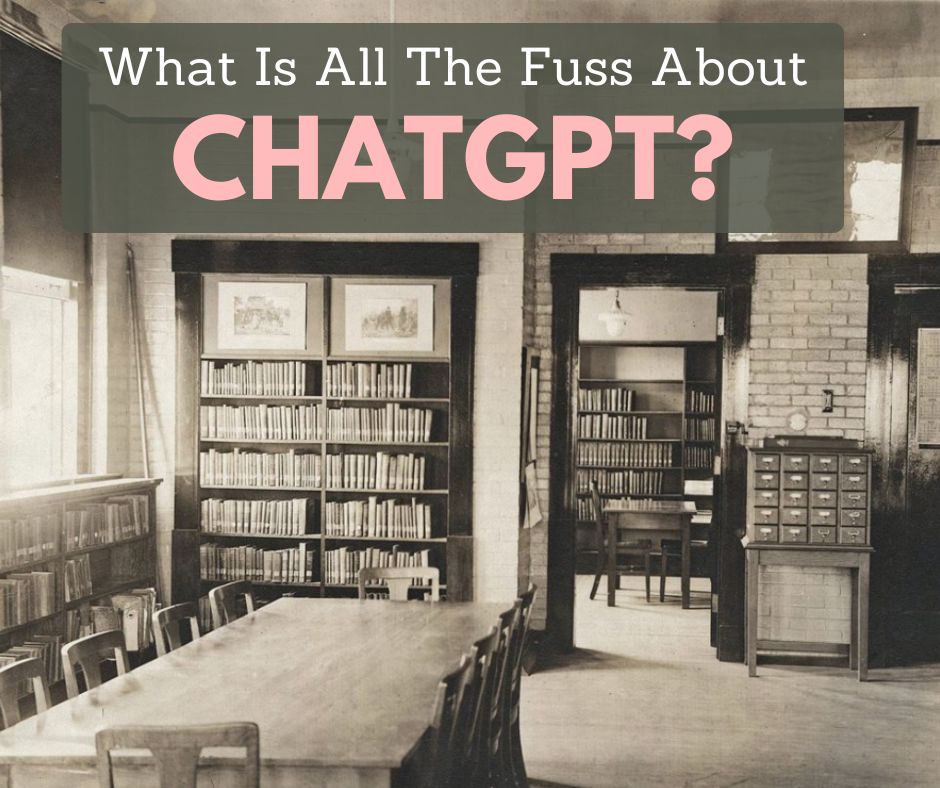
What Is All the Fuss About ChatGPT? An Introductory Guide for Using AI in Library Promotions

Photo courtesy Cincinnati and Hamilton County Public Library

In my freshman year of college, a woman came to my Intro to Communications class to talk about the future of the Internet.

She told us that someday, the internet would keep track of our previous searches and purchases. She predicted that we would see ads for products and be offered discounts based on our search and purchase history.

I remember being simultaneously awed, intrigued, and scared by this vision of the future. Iโ€™m having that same feeling lately as I read and learn more about ChatGPT.

It’s likely your news and social media feeds have been filled with chatter about Chat Generated Paragraph Techniques or ChatGPT. Launched six months ago, itโ€™s become the center of every tech article and philosophical debate.

What is ChatGPT?

ChatGPT is an advanced natural language processing tool that provides text or information to a user based on prompts.

Itโ€™s different from a chatbot in that it can remember past conversations and provide more sophisticated answers as it โ€œlearns.โ€ It allows users to provide follow-up corrections. It can reject inappropriate prompts and, allegedly, it can admit its mistakes. 

ChatGPT is free for now. There is a Plus version that promises to be โ€œavailable when demand is high,โ€ โ€œfaster response speedโ€, and โ€œpriority access to new features.โ€ It costs $20 a month.

Testing ChatGPT

I recently started playing with ChatGPT.

The very first prompt I gave it was What is library marketing? Here is the response.

Library marketing refers to the strategies and activities that libraries use to promote their services, collections, and programs to their target audience, which could be the local community or a specific group of users. The aim of library marketing is to increase the usage and visibility of library resources and services by building relationships with patrons, increasing awareness of library offerings, and creating engagement with library users.

Library marketing may involve a range of activities, such as creating promotional materials such as flyers, brochures, and newsletters, organizing events and programs, creating social media campaigns, developing partnerships with local organizations, and conducting outreach to underserved or marginalized communities. The goal is to reach potential users where they are, whether that be online or in person, and to communicate the value and relevance of the library’s offerings. By using effective marketing strategies, libraries can attract new users, retain existing patrons, and ultimately improve the overall impact of the library in the community.

ChatGPT

It’s a bit professorial but accurate.

Next, I asked ChatGPT to give me a social media post that would convince teenagers to participate in my libraryโ€™s summer reading program.

Hang on to your hats, folks.

Attention all teenagers! ๐Ÿ“ข๐Ÿ“š๐ŸŒž

Are you ready for an exciting summer filled with adventure, knowledge, and prizes? Join our library’s summer reading program and discover the joy of reading! ๐Ÿ“–๐ŸŒŸ

Not only will you get access to a wide variety of books and resources, but you’ll also have the chance to win awesome prizes for reaching your reading goals! ๐ŸŽ๐Ÿ†

Plus, reading is the perfect way to unwind, escape into different worlds, and improve your vocabulary and critical thinking skills. ๐Ÿง ๐Ÿ’ญ

So, what are you waiting for? Sign up for our summer reading program today and let the fun begin! ๐ŸŽ‰๐ŸŒž๐Ÿ“š #SummerReading #LibraryLove #TeenReads

ChatGPT

Itโ€™s long. And why so many emojis??

I donโ€™t think Iโ€™ve ever heard a teen use the word โ€œaccess.โ€

And, in my experience, anytime you say, โ€œAttention all teenagersโ€, teens immediately run for the exits. So, it’s not perfect. That’s because it’s not human. And there are other problems with ChatGPT.

Downsides of ChatGPT

There are limitations and concerns about ChatGPT. Some are disturbing, especially for libraries. 

  • It may generate incorrect information.
  • It may occasionally produce harmful instructions or biased content.
  • It also has limited knowledge of the world and events after 2021. That’s because the original data feed provided by its creators happened that year. 

One major concern for libraries

For libraries, there is also a privacy concern.

In its privacy policy, Open AI, the creators of ChatGPT, say the application may collect personal information from your messages, any files you upload, and any feedback you provide. Conversations may be reviewed by OpenAI to improve the chat. This article has more information on the potential privacy and security risks.

There is also a healthy debate happening now about whether Google will penalize online content creators, including library websites and blogs, for using machine-generated text.

Google can detect website copy and blog posts that may contain ChatGPT content. They use machine learning algorithms (ironic!) to detect text patterns that are indicative of AI content.

Under current guidelines, Google considers AI content to be โ€œspammyโ€. Specifically, its guidelines say โ€œโ€ฆcontent thatโ€™s been generated programmatically without producing anything original or adding sufficient value: instead, that itโ€™s been generated for the primary purpose of manipulating search rankings and not helping users.โ€

There does not appear to be a penalty at this time from Google for using ChatGPT to help with social media posts, emails, or ads.

So, should libraries use ChatGPT?

ChatGPT canโ€™t replace people (at least, not yet). The tool canโ€™t strategize or empathize. And it doesnโ€™t know the human experience of your cardholders.

But it can save you time. It can jumpstart the creative process and help you move past writer’s block.

And many library marketers are beginning to experiment with ChatGPT.

Ready to learn more? Read this post!


More Advice

But Iโ€™m Not a Writer! 10 Free Tools To Help You With Library Blog Posts, Speeches, Emails, and More.

Subscribe to this blog and youโ€™ll receive an email whenever I post. To do that, enter your email address and click on the โ€œFollowโ€ button in the lower left-hand corner of the page. You can also follow me on the following social media platforms:

Push Play and Record: The Libraryโ€™s Guide to Video Production (including a list of equipment to fit your budget!)

Photo courtesy Cincinnati and Hamilton County Public Library

There is nothing like putting a face on a story.

In my television news days, we worked hard to get on-camera interviews for every story. We knew that there was no better way to express emotion and build empathy for the subjects of our stories than to show their faces and hear their voices.

Your library can and should be producing videos for library marketing to build empathy and connection with your organization.

To be clear, I am not talking about TikTok or Instagram Reels videos. TikTok or Reels are fun and give you a chance to engage new audiences. And those videos do build brand awareness for your library.

But that should not be the only video your library is creating. Your library should produce some longer-form videos, lasting a minute or more, that tell a specific story or have a specific library marketing goal. These are videos you will embed on your website, and post natively to Facebook, LinkedIn, YouTube, or Vimeo (or all the above if youโ€™re smart!)

Why?

Videos help you rank higher in searches.

According to Oberlo, more than 82 percent of global internet traffic comes from videos. That means video can be a powerful tool for driving community members to your website to check out your services.

Demand for video is increasing.

According to a survey conducted among consumers worldwide by Statista, people watched an average of 19 hours of online video content per week in 2022. That hourly total has been steadily rising since the survey was first conducted in 2018.

Every major social media platform will reward you for producing longer-form videos.

They boost video posts organically. And the more video your library posts to those platforms, the more organic reach your other posts will get.

Video makes your marketing memorable.

Video is the closest you can get to experiencing something without being physically present. Itโ€™s relatable. As I mentioned earlier, seeing faces and hearing voices builds empathy and allows people to really feel the emotions your videos convey.

And if you use staff in videos, community members will end up recognizing those staff members as they come into the library. They’ll feel more comfortable because they will “know” the person behind the desk.

Your libraryโ€™s long-form video strategy doesnโ€™t have to be complicated. And you donโ€™t have to break the bank to buy equipment. So, letโ€™s lay out a plan in three parts.

Set goals and brainstorm video ideas to meet those goals.

The easiest way to decide which videos to create is to refer to your libraryโ€™s strategic goals. What does your library wish to accomplish? Your videos should serve to make those strategic goals a reality. For this section, let’s pretend your library has a strategic goal to increase visits to the Makerspace by 10 percent in the next year.

Once you decide which of your libraryโ€™s overall goals to focus on, the next step is to set your own marketing goal for your videos. For example:

Your video marketing goals:

  • 1000 views on YouTube
  • 200 views on the library website
  • 50 Makerspace sessions booked by people who watched the videos.

Setting your video marketing goals before you decide what videos you want to create might feel backward. But youโ€™ll have more success if you set your marketing goals first. Thatโ€™s because youโ€™ll be asking yourself: What kind of videos will help me achieve these goals?

If you have trouble coming up with video ideas, try searching your website analytics to see what your cardholders are looking for when they visit your site. Do they have specific questions or use specific keywords or terms to search for information related to the strategic goal youโ€™re focusing on?

You can also check keywords used in Google searches in connection with your libraryโ€™s strategic goal. This keyword research will uncover the questions your community has related to the goal youโ€™re trying to accomplish. You can use video to answer those questions!

For our MakerSpace example, letโ€™s say you look at Google Analytics for your library website and you do Google keyword research. And you discover that people in your community are searching, for โ€œ3D printers near me.โ€  If your Makerspace includes a 3D printer, youโ€™ll want to make sure some of your videos are about that piece of equipment.

Letโ€™s say you also discover many searches of the phrase โ€œcost of 3D printingโ€.  Now you know that cost may be a barrier to use for some community members. You can address that with a video.

Plan and produce.

With your goals and keyword research in hand, itโ€™s time to make more concrete plans. Start brainstorming and make a list of ideas. Depending on your goal, you may want to produce more than one video.

Letโ€™s go back to our previous example of increasing visits to your Makerspace. Your library may decide to make a series of videos to reach your goal of 50 Makerspace sessions booked.

  • Interview a patron who made something unusual on the 3D printer.
  • Interview a patron who used your 3D printer for their small business.
  • Showcase Makerspace staff using the 3D printer to make common items, like repair parts, for a fraction of the cost of buying those parts.
  • Show how to book the Makerspace.
  • Show how a typical Makerspace session runs, from greeting to finished product.

It took me about five minutes to come up with that list! If you are having trouble coming up with ideas on your own, ask your co-workers. For our Makerspace example, it would make total sense to ask the staff working in the Makerspace to help you come up with ideas.

Plan your production.

Itโ€™s time to create a production schedule. Youโ€™ll want to add your videos to your regular editorial calendar, giving yourself plenty of time to produce them. In general, it will take you about a month to produce a video lasting one minute or longer. Hereโ€™s a sample schedule:

  • A week to write an outline or a script if necessary.
  • A week to get your outline or script approved.
  • A day to shoot the video.
  • A week to edit a draft.
  • A week for approvals and edits.

With this schedule, you could release one longer form video each month.

Refer to your video style guide as you begin the work of bringing each video to reality.

Now youโ€™re ready to shoot and edit your videos. Then, itโ€™s time to make some important decisions.

Choose the thumbnail picture for your video carefully.

The thumbnail picture is the billboard advertisement for your video. Research shows that faces are more likely to draw viewers. If you can, choose a face showing an emotion.

If you are creating a series of videos, be consistent with the look of your thumbnails. Youโ€™ll want your audience to recognize the video as being from your library and part of a series.

Use keyword research to come up with video titles. 

Video titles should be 100 characters or less, so youโ€™ll need to use that limited space to your best advantage. Do a few test searches to see what keywords lead viewers to popular videos. Then try to work those keywords into your video title.

Include a Call to Action and track results with special codes.

When you create and promote your videos, include a Bitly link to drive viewers to your website, catalog, or other owned property.

Promote your videos.

Itโ€™s not enough to post your video and forget it. Youโ€™ll make sure people see your video once itโ€™s released.

Within the first 24 hours of uploading and releasing a video, send an email to promote your video. Youโ€™ll want to match the content of your video to the segmented email list that will be most likely to want to view it. 

The exception to this rule would be system-wide video announcements, like the opening of a new branch or a change in service for your entire library system. You can send an email to your entire list, letting them know thereโ€™s a video available with exciting information! 

Email notifications about your video will alert your audience that the video exists. More people will watch the video. And the more views you get in the first 24 hours after youโ€™ve uploaded a video, the higher your video will appear in search rankings. 

Bonus: Affordable equipment list for library marketing videos

  • Camera: Canon EOS 2000D is great for beginners. It also has a Wi-Fi connection, so you can easily share your videos. And it gets great ratings. This package from Walmart is fairly priced and includes extras like memory cards, a backpack, and a tripod.
  • Ring light: The Sensyne Ring Light is an affordable option for libraries and it comes with its own tripod.
  • Wireless Lavalier microphones: Youโ€™ll want to buy at least two. This model from ZMOTG can be used with phones and a DSLR camera and gets great reviews.    
  • Editing software: Here’s a great list of free editing software.

More Advice

5 Easy and Surefire Ways To Decide What Videos You Should Create for Your Libraryโ€™s YouTube Channel

Subscribe to this blog and youโ€™ll receive an email whenever I post. To do that, enter your email address and click on the โ€œFollowโ€ button in the lower left-hand corner of the page. You can also follow me on the following social media platforms:

My Boss Said โ€œNo!โ€ How To Get Buy-In From Senior Staff for Your Library Marketing Decisions

Watch this video

The #LibraryMarketing Show, Episode 186: One of my viewers is facing a conundrum.

They have been tracking data on posts on one social media platform. The data tells them that viewers are NOT responding to posts about events. They want to drive attendance at events. So, they want to switch tactics. But…

Their boss said “No.”

So, now what do they do?

I’ve been in this situation before. I’ll share my tips in this episode.

Plus we give away kudos! Watch the video to find out which library is being recognized.

Do you have a suggestion for a topic for a future episode? Want to nominate someone for kudos? Let me know in the comments.

Thanks for watching!


Subscribe to this blog and youโ€™ll receive an email whenever I post. To do that, enter your email address and click on the โ€œFollowโ€ button in the lower left-hand corner of the page. You can also follow me on the following social media platforms:

๐Ÿค4 Secret Ways To Maximize Views and Engagement for Your Libraryโ€™s TikTok Videos

Watch this video

The #LibraryMarketing Show, Episode 185: The best way to learn is by doing, right?

I have been extremely active on TikTok recently, as I try to figure out the algorithm. And I sure did learn some things! In the episode, I reveal the four specific things you can do to make certain your library’s TikTok videos get noticed.

Plus we give away kudos to the Longview Public Library.

Do you have a suggestion for a topic for a future episode? Want to nominate someone for kudos? Let me know in the comments.

Thanks for watching!


Subscribe to this blog and youโ€™ll receive an email whenever I post. To do that, enter your email address and click on the โ€œFollowโ€ button in the lower left-hand corner of the page. You can also follow me on the following social media platforms:

A WordPress.com Website.

Up ↑