Search

Super Library Marketing: Practical Tips and Ideas for Library Promotion

Category

library marketing advice

Will Anyone Come to Library Programs Ever Again? Eight Ideas for Reimagining Programming in the Age of โ€œThe Next Normalโ€

This week, I learned a new term used to describe the way the world is transforming in the wake of the pandemic.

โ€œThe Next Normalโ€ was coined by workplace consulting firm McKinsey & Company. It describes the changes which continue to emerge in every industry in the post-viral era.

A return to normal after an event like the pandemic is extremely challenging. It calls for libraries to reimagine and reform the work they do to meet their communityโ€™s needs in new ways.

Libraries seem to have the most angst about this change with regards to programming.

I have talked with many library staff members who truly enjoy creating and presenting programs. The process brings them fulfillment and purpose. And the idea that the pandemic may have permanently changed the way the public engages with library programming makes them sad and nervous.

I’ve been thinking about this a lot lately.

Change is scary and uncomfortable. But it also gives us an opportunity to approach library programs in a way that is more strategic. We have the chance to make sure our programming is creating deep relationships with our community.

Here are eight things to keep in mind as you begin to re-create your library programs in the age of The Next Normal.

Be realistic about the hurdles

Before the pandemic, libraries got a lot of program and event traffic from people who walked in to check out a book or browse the collection. They noticed an event or program happening in the library and joined in.

Because of the pandemic, libraries have implemented convenience services, like curbside pickup and book bundles. The community needs those services. But they also impact the number of physical visits to your library and in turn, the number of people who come across a program impulsively.  

There is also a significant portion of the community who is not comfortable (yet) with going back to a public indoor space. Others discovered virtual programming during the lockdown and now prefer it.

We must acknowledge that the pandemic may have changed the way people interact with library programming. When you give yourself and your library permission to accept that premise, you can begin to rebuild and reimagine the way your library creates and promotes programs.

Plan fewer, but more quality programs

The Next Normal is a great time for libraries to re-evaluate the programs they offer.  

I propose that libraries reduce the number of programs that they do. Instead, spend more money and more time planning quality programs that are unique to your community.

Set your promotional boundaries and stick to them

Library marketers are often expected to promote every program at a library, months in advance. The Next Normal is a great time to set down some ground rules for which programs get promoted and how those promotions will be carried out.

As you are determining the boundaries that will work best for your library, you may have to experiment with how far in advance you promote programs and on what channels.

Remember that your community’s schedule and expectations have changed in the wake of the pandemic. The promotions you did before the pandemic may not work in The Next Normal.

Track the results of your promotions so you can identify those changes and create new ground rules for your promotional work. Once you set those rules, stick to them.

You may be pressured to make exceptions. And there may be co-workers who donโ€™t appreciate the effort you are making to do the best job of marketing for your library. Thatโ€™s okay.

If you create a plan that puts the interest of your community and your library at its core, you will be successful.

Make promotions part of your program planning

As you begin to put your program together, make it a habit to think about the marketing piece. Ask yourself:

  • Who will be your target audience?
  • What is the best way to reach them?
  • How much time will it take you (or your co-workers who help with marketing) to create the pieces youโ€™ll need to promote your event properly? ย ย 
  • What will your event hashtag be?

If there are other library staff who will be involved in promotions, make sure you give them a heads up in plenty of time. For example, if your library has a social media manager, try meeting with them once a month to let them know about the programs youโ€™re putting together.

Choose your promotional platforms carefully.

Community members may ignore promotions because they are overwhelmed by the sheer number of marketing messages they receive. Libraries tend to want to promote everything on all channels. Letโ€™s be more intentional.

If your community actively engages with your Facebook posts, use that to your advantage. Create events on Facebook for your programs so that potential attendees get a reminder as the day of your program draws near. You can also buy Facebook ads or boost your posts to target specific demographics, even if you have a small budget.

If your community prefers interaction on another social media platform, like Instagram, spend your time and energy promoting your events there. Instagram Stories are a great way to build excitement.

Perhaps your library has a receptive and engaged email list. Add a program suggestion to your reading recommendation emails. Or send an email with a program announcement to a targeted audience.

Leverage your presenters

The Next Normal is the time to get as much promotion out of your speakers, presenters, and sponsors as possible. They likely have a ready-made audience that may like to attend your event. Ideally, this kind of collaborative promotion should be a part of your agreement with each participant.

You can make it easy on presenters by sending them a pre-written social media post or blurb for their email newsletter promoting their appearance. Supply them with copy, images, video, print assets, and anything else they need to help you spread the word.

Create some FOMO (fear of missing out)

FOMO is a powerful tool for getting more attendance at your programs. Your registered patrons and past program attendees can provide social proof that your event is going to be amazing.  Let them help you build hype.

About a week before the event, send an email reminder or a social media message to everyone who has registered or shown interest in your program. Encourage them to brag that theyโ€™ll be attending. Include a pre-written social media message to make it easy to share.

Remember your real goal

At the end of the day, programs should help your library create a relationship with those cardholders. We want them to come to us for all their problems, and all their questions, and all their needs.  

This is a more holistic approach than merely counting attendance numbers. Creating that engaged community will make your work worth all the effort.  


More Marketing and Promotional Help

Your Library Can Reach Teens With Programming and Marketing! A Look Inside the Lives and Minds of the Elusive Generation Z

Library Programming and Promotions SHOULD Be BFFs! Hereโ€™s Why They Must Work Together.

Angela’s Latest Book Review

Subscribe to this blog and youโ€™ll receive an email every time I post. To do that, enter your email address and click on the โ€œFollowโ€ button in the lower left-hand corner of the page.
Planning for Magic! How To Keep Your Eyes (and Your Schedule) Open for Unexpected Library Promotional Opportunities

Courtesy Public Library of Cincinnati and Hamilton County. Check out their digital library here: https://digital.cincinnatilibrary.org/digital/collection/p16998coll12?fbclid=IwAR3gV2a2TMW2DFTLlsU0shgVGKzEFtzSJBYpqyAircAHN3eh6wvoE-siipw

I have never been one for spontaneous excursions. When I travel (boy, do I miss travel!), I like to have a plan.

I research restaurants. I research tourist attractions. I check to see if there’s a library in the area. I might even jump onto Google Street View and “walk” the area myself to make sure I’ll know where I’m going.

I do all of this because I want to get the most value out of the time I’m spending in a new place. I don’t want to miss anything fun, interesting, or historic.

But occasionally, I’ll stumble upon something amazing that I didn’t find in my research. Those discoveries always end up being completely amazing.

On my first few hours in Edinburgh, Scotland, I had lunch in a tavern. As I left a tour of Holyrood Palace, I realized I hadn’t eaten in 12 hours. I was starving. I didn’t feel like walking another mile to one of the restaurants I had chosen in my pre-trip planning.

I found Tolbooth Tavern tucked into a tiny corner of an ancient-looking wall near Holyrood Palace. It looked quiet and unassuming. And everything on the menu posted outside sounded delicious.

It was the best meal I had in Edinburgh. The haggis was spectacular and beautiful. The beer was perfect. The atmosphere was exactly what I imagined I’d find in that city. It’s one of my favorite memories of the trips.

What in the world does this have to do with library marketing?

On most occasions, I believe in planning. A well-executed marketing plan thatโ€™s strategic and focused is the best recipe for library marketing success.

But sometimes, you can stumble upon an amazing promotional opportunity that you didn’t plan for. And those unexpected opportunities can be surprisingly successful.

If inspiration strikes or you see a chance to grab a new marketing or promotional opportunity, you should absolutely do it. A quick pivot can lead to engaging and successful promotions.

Planning for the unpredictable

Anyone can include some flexibility in their marketing schedule. The key lies in planning… which sounds contradictory. But the trick is simple.โ€ฏโ€ฏ

When youโ€™re laying outโ€ฏyour regular marketing schedule, be sure to deliberately leave holes where you might be able to drop in promotions

In general, most of your editorial calendar, around 75 percent, will consist of promotions that have hard deadlines. The rest, 25 percent, can be open spaces for those opportunities that you cannot plan for.

How does this work, exactly?

Be on the lookout for opportunities to do some flexible marketing. Great promotional stories sometimes appear unexpectedly. They may include:

  • User-generated content on social media
  • A connection to an event happening in pop culture
  • A suggestion from a customer or staff member
  • An idea you got from another library
  • A last-minute opportunity from a vendor or a partner organization. 
  • A great event thatโ€™s been planned by a branch at the last minute. 

If you purposefully leave 25 percent of your editorial calendar open, you can seize these opportunities for the space you’ve deliberately set aside.

Example: My library turned around a movie promotionโ€ฏsent to us by a vendor, who offered a free first-run movie streaming on their site on the same day that the movie was released into theaters.

We got word a week before the movie premiere. The movie had a great cast that we thought might be popular with our cardholders.

We swung into gear. We created graphics for our website, social media, and an email campaign to let users of our digital services know about the promotion. We managed to do all of this in two days.

And the promotion was a success! On a normal day, we stream about 25 movies to cardholders. After this promotion, we streamed 244 copies of this first-rate movie alone. โ€ฏ

This happened because we left holes in our calendar for opportunities just like this.

You wonโ€™t have to turn a last-minute campaign around every week or even every month. But when you doโ€ฆ it will be worth it.โ€ฏ Sometimes the gold nuggets of promotion are the ones you canโ€™t plan of time! 

The benefits of flexibility in your library promotions

Flexible marketing can be fun. You may do some of your best work when you are formulating promotions in a few days or a few hours.โ€ฏA deadline or a great idea with a time limit can push you and your staff to be creative in ways youโ€™ve never imagined. 

Flexibility allows you to adapt to unforeseen shifts in your community’s needs and wants.

And flexible marketing makes it easy to continuously improve the way you do library marketing. It gives you an excuse to experiment.

And when you do that, you will learn new things about your audience, what they like, and what they dislike. Your marketing overall will improve.

What happens if I don’t have anything to fill my calendar holes?

Nothing.

Give yourself a break. Take that day off from promoting your library.

I know this is a crazy concept coming from a blog that is all about library marketing. But we need to spend more time in reflection if we want our library marketing to be amazing.

True creativity, the kind that adds value to your workplace and your life, is something that needs to be treasured and cultivated. If you want your library to succeed, you need to take time to be creative.

An unfilled hole in your editorial calendar is the perfect opportunity for that.


You May Also Want to Read These Articles

Part One of the Library Marketerโ€™s Definitive Guide to Creating an Editorial Calendar That Actually Works!

Fight for Your Ideas! Four Tips to Help You Get the Green Light for New Library Promotional Ideas

Latest Book Review

Subscribe to this blog and youโ€™ll receive an email every time I post. To do that, enter your email address and click on the โ€œFollowโ€ button in the lower left-hand corner of the page.

How to Avoid Three Big (But Totally Understandable) Library Marketing Mistakes

Watch Now

The Library Marketingโ€‹โ€‹โ€‹โ€‹โ€‹โ€‹โ€‹โ€‹ Show, Episode 106

In this episode, I’ll answer a question I got from a library staffer: What are the biggest mistakes you see library staff making in their marketing and promotions?

I’ll talk about the three most common boo-boos and give you ideas for avoiding these pitfalls. Don’t worry… you can do it!

Watch to find out who gets kudos!

Do you have a suggestion for a topic for a future episode? Want to nominate someone for kudos? Let me know in the comments.

And subscribe to this series to get a new video tip for libraries each week.

Thanks for watching!

Subscribe to this blog and youโ€™ll receive an email every time I post. To do that, click on the โ€œFollowโ€ button in the bottom left-hand corner of the page.

Prioritize! How to Decide Where To Spend Library Marketing Time and $$$

The Library Marketingโ€‹โ€‹โ€‹โ€‹โ€‹โ€‹โ€‹โ€‹ Show, Episode 104

Watch Now

In this episode, I answer a question from Tovah Anderson about how to decide how much time and money should be spent on the three buckets of library marketing: programs, services, and the collection.

Kudos in this episode go to the Monroe County Public Library for their new testing kitchen.

Do you have a suggestion for a topic for a future episode? Want to nominate someone for kudos? Let me know in the comments. And subscribe to this series to get a new video tip for libraries each week.

Thanks for watching!

Breaking News: Make Sure Your Library Gets More Press Coverage with These Six Tips from a Former Journalist

Photo courtesy Public Library of Cincinnati and Hamilton County

Before I worked in library marketing, I spent nearly 20 years as a broadcast television journalist.

I was a newscast producer for a local TV station. I created a nightly newscast from scratch. I decided which stories would be told, who would tell them, how long they would be, and more.

Every day, I was part of the newsroom decision-making process. I know why certain stories get airtime and others don’t (ratings). I know why important facts end up “on the cutting room floor” (time constraints). I know why online media outlets and newspapers write sensational headlines (clicks).

For the last eight years, I’ve been on the other side of that world. I’ve been the one sending press releases and asking, sometimes begging, for coverage of my library or for the libraries I work with in my current job.

A library blog and a video marketing strategy are the best ways to control the narrative and tell your own library story on your terms.

But let’s be honest… media coverage can be great for your library.

So here are my top six tips to help get more positive press for your library.

Did your library get amazing press coverage? How did you do it? Share your story by clicking on the feedback button in the lower left-hand corner of your screen.

Send news releases early.

For events like author visits, grand openings, and other programs, send press releases four to six weeks before the event. Then, send a reminder to the media again about a week before the event.

If your library is unveiling a new service, send your press release one to two weeks before the new service launches.

For big announcements, like awards, send the press release one week before the official announcement and include a line that embargos the release. That means the news outlet can’t cover the story in print or on air until the day the embargo ends. Put the embargo right in the sub-headline of the press release, to be sure the journalists see it.

Write a news story instead of writing a press release.

If you send the newsroom a publishable piece of content with photos or video, you win on two levels.

First, you’ll increase the chances that your library will get coverage. Second, the narrative is exactly as you want it! You make the important points. You have control.

So, write a story which the media outlet can copy and paste into a script or column. Use Associated Press style and these four basic journalistic principles:

  • A catchy lead sentence;
  • The who-what-where-when-why sequence,ย interspersed withย a quote or two;
  • Clear writing without library jargon or technical terms. If you must use a technical term, explain it clearly. And,
  • A concise ending.

Make your quotes sound like they come from a real person.

Reporters and editors can spot a manufactured quote a mile away.

I know a manufactured quote is often a necessity in libraries. So, if you must make up a quote from your director, don’t write: “Our dynamic approach to customer service is central to our strategic initiatives. We are scheduled to implement more of these forward-thinking tactics.”

This is so much better: “We are adding an online, real-time reading recommendations service because we wanted to do a better job of answering our patrons’ questions and help them find the books they want. We’re hoping to really shake up the service experience. But mostly, we want to make it easy for people to get personal attention and a great book.”

Don’t send your press release in a mass email.  

A reporter is much less likely to follow up with you for a story if they are part of a large group of journalists who’ve all received the same story. Journalists want the “exclusive,” even on small things. So don’t let on that you are also sending your release to other outlets.

When you create your list of media contacts, include information about that outlet’s target audience, the kind of stories they usually cover, and the reporters with whom you have a personal connection.

Then, match your potential story with the right reporter rather than sending your release to every reporter you know. It’s a better use of your time and energy, and you’re more likely to get media coverage.

Find good interview subjects ahead of time.

Reporters are looking for compelling quotes that add depth to a story.

They’ll love a quote or a soundbite from a child who finally catches up in reading because of extra tutoring from a children’s librarian. They’ll jump at the chance for a quote or soundbite from an immigrant who got help at his library filling out a naturalization form.

Arrange diverse interviews, including people from all different backgrounds and walks of life. Most newspapers, TV, and radio stations will tell you their target audience is women, ages 25-54. Your interview subjects should be relatable to people in that demographic.

Pick interview subjects who are comfortable on camera and can “talk in soundbites”. That means they can make a point in three to four sentences.

Respect the reporters’ deadline.

When I was a journalist, it was frustrating to call an organization hoping for an interview or answers to questions only to be told that the person was out of the office or wouldn’t be able to call me back until late in the day.

If a reporter is calling you, chances are that they’re working on the story for today’s edition or newscast, which means they’d really like to have all the elements by early afternoon at the latest, to give themselves time to craft the story. Tomorrow is too late.

Move heaven and earth to accommodate the reporter as much as possible. When you do that, you’re more likely to get coverage every time you ask for it.

Newsrooms often have crews available at odd hours, like 10 a.m. or 8 p.m. Sometimes reporters will squeeze in a story during a very limited window in their day. They may call you and say they can come to the library in 10 minutes. Make sure you and your interview subjects can accommodate those last-minute requests.

I have a special request.

I’m putting together a conference presentation and I’m looking for some examples.

  • Libraries that have reopened and have had some success drawing people back into the physical branch.
  • Libraries who believe they’ve figured out the hybrid program model.
  • Libraries who are trying to turn their pandemic digital users on to other services now that the library has reopened.

I’ve created a form so you can brag about your library.

I know you are doing amazing work. I want to highlight you on a national stage! Thank you in advance.


Subscribe to this blog and youโ€™ll receive an email every time I post. To do that, click on the โ€œFollowโ€ button in the bottom left-hand corner of the page.
You May Also Want to Read These Posts

You Donโ€™t Need a Press Release to Get Good Media Coverage of Your Library! Hereโ€™s the Secret Trick From a Former Journalist.

Lessons From The Greatest Press Release Ever Written!

Angela’s Latest Book Review

The Indifferent Stars Above by Daniel James Brown

How To Turn Your Library’s Frequently Asked Questions Into a Marketing Opportunity!

Watch Now

The Library Marketingโ€‹โ€‹โ€‹โ€‹โ€‹โ€‹โ€‹โ€‹ Show, Episode 102

In this episode, I share some tips for how to use your library’s FAQ’s into marketing opportunities. This idea can be a great way to establish your library as a place of answers.. And it can help you fill holes in your promotional schedule with valuable content.

Kudos in this episode go to Eileen Button of Genesee Public Library who wrote an open love letter to libraries that made me a little teary-eyed!

Do you have a suggestion for a topic for a future episode? Want to nominate someone for kudos? Let me know by clicking on the feedback tab.

And subscribe to this series to get a new video tip for libraries each week. Thanks for watching!

Read Now! Seven Surefire Tips To Create an Effective Call to Action for Any Library Marketing Piece.

Photo courtesy Public Library of Cincinnati and Hamilton County Digital Library. Catalog Department approx. 1946.

If you want your community members to do something, you must tell them what you want them to do. Explicitly.

That means you must add an amazing call to action for every promotional piece you create.

What Is a Call to Action?

A Call to Action, or a CTA, is a phrase that is used to tell the someone exactly what action to take and how to take it. ย It also implicitly provides the motivation for the recipient to take the action.ย 

A CTA can be as simple as two words โ€œRead Now.โ€ It may be longer: โ€œWant to take the next step in your career? Take a free career assessment test on our libraryโ€™s website.โ€

It may be a link to your website, catalog, chat service, or email box. It may tell community members to call a special phone number to speak with a librarian or visit a certain desk at the library to talk with staff.

The call to action gives the person consuming the promotional material the instructions for taking the next step to use library resources. It must be strong, clear, and commanding.

For most of us, the CTA is the last thing we think about when creating a promotional piece. Staff put their time and energy into creating the layout, adding the right image, making sure all the text details are correct, and timing the promotion for the perfect release.

But I encourage you to spend some time thinking through your CTAs early in the process of creating any marketing piece. Here are seven tips to remember when you create a CTA for any piece. Practice going through this list every time you do a promotion. ย 

Use positive, active language in your call to action. 

Think of your CTA like a commandment. If you could order your community member to do something, what would you say?

Some examples of positive, active language which apply to libraries are:

  • Read
  • Watch
  • Download
  • Create
  • Join
  • Learn
  • Donate
  • Explore
  • Discover
  • Enter

You can also add a sense of urgency to your CTAs by adding the word โ€œNowโ€ as in โ€œRead Nowโ€ or โ€œWatch Nowโ€.

Make your call to action as concise as possible.

For emails and digital signage try to keep your CTA between one and three words.

For flyers, bookmarks, posters, and videos, you can add a few more words like:

  • Register for this program
  • Place a hold on this book
  • Reserve your spot
  • Get the details
  • Sign up now
  • Read our step-by-step guide

For social media posts, a full sentence is good. But, on social media, put your sentence-long CTA into the text of your post, not as text inside the graphic or image you are attaching. If your CTA is in the image, use the one-to-three-word rule.

For blog posts, your CTA can be a longform sentence. Consider using bold text to draw the eye to that sentence. Or you can use a button (see the section on buttons below).

Try using the first person.

The marketing agency Unbounce did a fascinating study on CTAs and found that changing the text from the second person (โ€œRegister your child todayโ€) to the first person (โ€œRegister my child todayโ€) resulted in a 90 percent increase in clicks.

Your library can experiment using CTAs that say, โ€œReserve my spotโ€ or โ€œGet my personalized reading recommendations.โ€ You may find that the change makes a difference in the number of people who take an action after seeing your promotional message.   

Put your call to action in a brightly colored box or circle.

There is something psychological about the look of a button that will compel your recipients to click on it.

The color of the button matters. You want something thatโ€™s eye-catching. You may be limited in your color choices depending on your libraryโ€™s brand standards.

But, if you have room to experiment, read this fascinating post from marketing expert Neil Patel on color psychology. Then decide what kind of emotion or energy you want your CTA button to convey and choose the corresponding color.

CTA buttons work best in emails and newsletters. But try them also in promotions where you can’t click on a button, like bookmarks, flyers, posters, and digital sign promotions. The button will still serve the purpose of setting your CTA apart from the rest of the piece.

Put your call to action in the top one-third of whatever piece you are creating.

Moving your CTA โ€œabove the foldโ€ as itโ€™s called in the newspaper and magazine business, calls attention to the action you wish for your recipient to take.ย 

Add white space to the area around your call to action.

The extra white space helps create a visual break and draws the readerโ€™s attention right where you want it. Extra white space is also good for anyone reading your digital library promotional piece on a mobile device. It creates a clear area for fingers to click.

Try to use as few calls to action as possible.ย ย 

Youโ€™ll want to focus the energy of your reader on the next action you wish for them to take. If you offer them too many potential actions, theyโ€™ll be overwhelmed and less likely to do anything!

For most promotional pieces, youโ€™ll want only one CTA. This rule includes CTAs for email, digital signage, flyers, posters, bookmarks, social media posts, and videos.

The exceptions are blog posts and newsletters. For blog posts, my personal experience is that two or three CTAs work best. For newsletters, try to offer no more than five CTAs.

Did you notice where I took my own advice in this blog post?


Subscribe to this blog and youโ€™ll receive an email every time I post. To do that, click on the โ€œFollowโ€ button in the bottom left-hand corner of the page.
You May Also Find These Posts Helpful

Two Key Areas of Marketing Focus That Will Deepen Your Communityโ€™s Loyalty to Your Library and Create the Truly Engaged Library User

Try These Two Fun Tests To Improve the Effectiveness of Your Library Promotional Emails!

Looking for Guaranteed Email Marketing Success at Your Library? Here Are Four Essential Metrics To Track.

Image courtesy Public Library of Cincinnati and Hamilton County

Use the feedback button to share your most pressing email marketing question. I’ll answer these in a future blog post!

I love opening the “reports” tab on an email platform. There is a second or two of anticipation as the page loads that brings me a thrill.

What will the numbers say? Will they be better or worse than last month? Will they reveal a new trend that I can use to better serve my target audience?

I realize I sound a little nuts. But honestly, I love metrics.

They are clear and concise. They show you what’s working and what’s not working. They give you permission to stop doing promotions that don’t help your library at all. If you try something new, they’ll tell you whether your idea worked or not.

Tracked over time, email metrics will help you to take the 30,000-foot view of your library marketing. You can see if your emails are doing what they are supposed to do… moving your library toward its overall strategic goals.

There is a lot we could measure in terms of email marketing. It would be easy to get lost in the quagmire of numbers and analysis.

So, I want you to focus on four data points that really matter to library email marketing. Use these metrics to determine whether your messages are connecting with your audience and promoting your library’s overall strategic goals. And don’t miss the bonus tip at the end of this list!

“Email is the only place where people, not algorithms, are in control.โ€

Ann Handley, writer, digital marketing pioneer, and Wall Street Journal best-selling author 

1. Increase of raw circulation numbers.ย 

Recordย the number of checkouts and holds before you send the message and then again after the message is sent. You can generally wait about three days to check those numbers. Cardholders who want to act on an email will do so within a three-day period of receiving it.

What this metric will tell you: Raw circulation numbers will likely be of interest to anyone in collection development at your library. They are also the basis for the next two metrics, which will help you compare the effectiveness of your emails.

2. Percentage increase in circulation.

Once you start collecting data on raw holds and checkout increases, you will want to calculate the percentage increase in circulation.  

Let’s say on Monday, you send an email promoting one specific eBook. Before you send the email, you note that there are currently three holds or checkouts of this eBook. When you check on Tuesday, there are four new holds or checkouts placed on the eBook. In total, there are now seven holds or checkouts on this item.

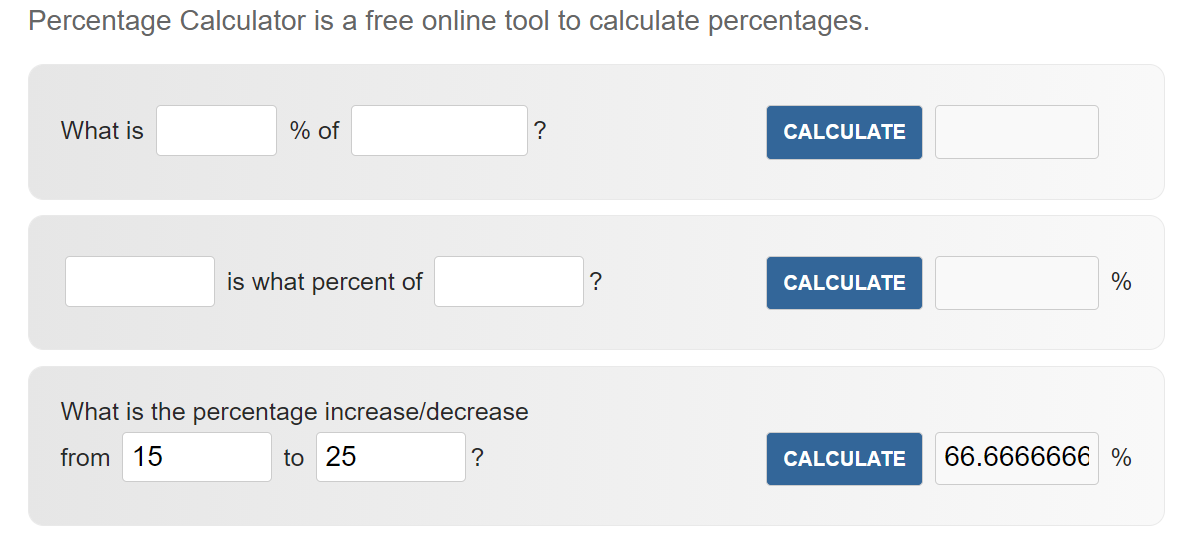
Use percentagecalculator.net to calculate the percentage increase in circulation. For this example, we use the third calculation tool on the page:

That’s a 133 percent increase in circulation.

Now, the next week, you decide to send another email promoting a different eBook. But this time, the eBook you choose to promote has 15 holds or copies before the email is sent. When you check 24 hours after sending the email, there are 10 new holds or checkouts. In total, there are now 25 holds or checkouts on the eBook.

The raw numbers for the second email are bigger (an increase of 4 holds/checkouts vs. an increase of 10 holds/checkouts). But the percentage increase for the second email is actually smaller, at 66%! That means email #1 was more effective.

What this metric will tell you: Percentage increase in circulation lets you compare your promotions more accurately. If you are short on time, this kind of comparison will help you determine which promotions will give you the most success with your limited resources.

3. Conversion rate.

This is the percentage of people who took an action after receiving your email.

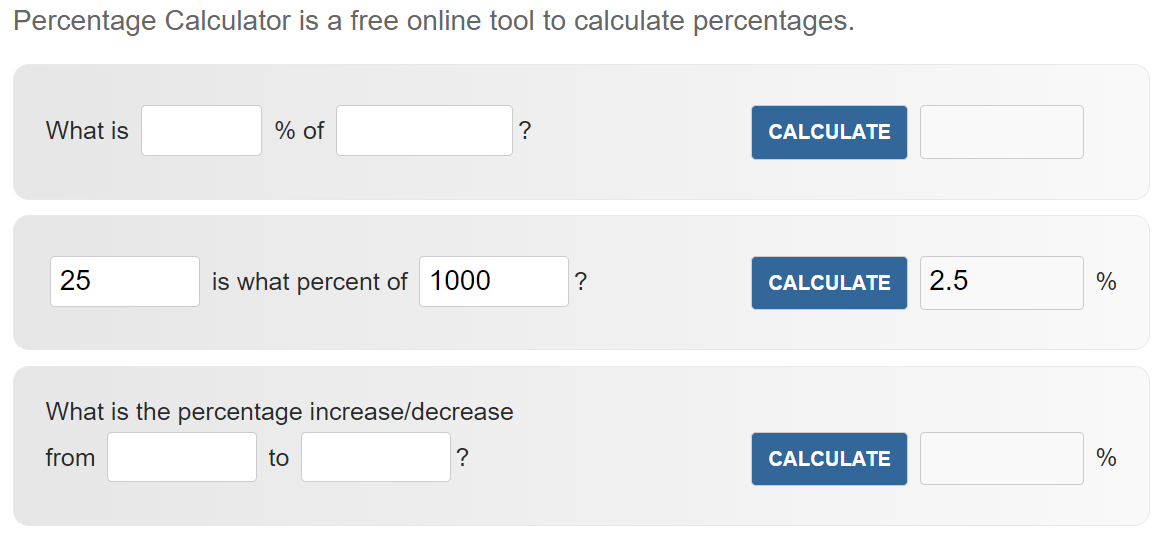
Let’s pretend that you’ve sent an email to 1000 people. The email promotes a streaming video on your library website that hasn’t had any views in the past couple of weeks.

When you check the streaming statistics for that video, you see that 25 people watched the video in the days immediately after you sent the email.

Using the second tool on our percentage calculator website, you can calculate the percentage of people who “converted” or took an action after your email.

What this metric will tell you: If you start tracking conversion rates on your emails, over time you’ll have a clear picture of the types of emails your audience responds to. You’ll be able to establish a good base percentage for your audience. This number will be different for every library.

If you are short on time, this metric will help you determine which promotions will give you the most success with your limited resources. When you find a certain type of email promotion works based on conversion rate, you should do it more often.

4. Amount of traffic driven to your website.

Track how much traffic is funneled to your public website by your emails. You can use Google Analytics to analyze how efforts on those platform translates into action by your cardholders. If you’ve never worked with Google Analytics, here is an easy guide to get you started.

What this metric will tell you: This is an important metric to share with administration, because it clearly demonstrates the value of the time and energy you have invested in email marketing.

Special bonus tip!

If you promote the same collection item or booklist on social media, email, and your website, put some space between those three promotions. A week is a good amount of time. That allows you to really pinpoint whether your increase in circulation is coming from email, your placement of the item on your website, or social media.

In fact, that’s a fun experiment to run. Can you drive higher circulation numbers by promoting your collection on your website, email, or social media?

You can even get more granular: which social media platform is best for collection promotion? Which page on your website is best for placing collection promotions? Which email list responds best? See, this is fun!


Subscribe to this blog and youโ€™ll receive an email every time I post. To do that, click on the โ€œFollowโ€ button in the bottom left-hand corner of the page.

You may also like these articles

Are My Library Email Metrics Goodโ€ฆ. or Bad?! Here Are the Latest Stats to Help You Figure It Out.

What Metrics Demonstrate Your Libraryโ€™s Social Media Marketing is Working?

Angelaโ€™s latest book review

Beautiful Things by Hunter Biden

A WordPress.com Website.

Up ↑