Search

Super Library Marketing: Practical Tips and Ideas for Library Promotion

Category

library marketing advice

Show, Don’t Tell: Why Infographics are an Essential Component in Your Library Marketing

Infographics are visual marketing pieces that help explain facts and figures or lay out a complex set of information in a way that is easy to understand. They’re an incredibly effective marketing tactic.

Until recently, I thought infographics were a relatively new marketing tactic. I remember deciding in 2013 to create an infographic, the first for my library, to promote a readalikes list. I thought I was so innovative!

Turns out, infographics have been around for hundreds of years. Fun fact: The first known instance of infographics as we know them today dates to the late 1700s with a chart of wheat process and labor wages.

Frankly, I love infographics. They appeal to my visual and creative nature. They work well on social media. But they take a lot of time and planning. So, for libraries with a limited marketing staff, it can seem daunting to create one. But it’s worth it.

Why use infographics in library marketing?

Infographics grab attention. Our brains are hard wired for visuals. The human eye can process 36,000 visual messages per hour. That’s 60,000 times faster than the brain can process text. 60,000 times. Whoa.

A good infographic will trigger a reaction in the human brain, sometimes even before the person consciously realizes and processes that reaction.

Think about what happens to you when you see a photograph of a beloved family member or friend. The photo instantly makes you cry, laugh, or long for that person to return to your life. An infographic can trigger the same kind of emotional response. And emotional responses are the best kind of marketing, because they are memorable.

Infographics can explain complex ideas and convey a lot of information in a simple way that is accessible to many audiences. Libraries deal with a lot of data. Our products and services are sometimes difficult to break down into steps. A good infographic will take facts and figures, difficult instructions, or confusing concepts and present them in a way that everyone can understand.

Infographics will position your library as an expert in a way that words can’t. A good visual will demonstrate your library’s subject-matter expertise. It can boost your credibility. It shows that you care about effective communication with your community. And that builds trust with your visitors, community members, and stakeholders in a way that feels more genuine that fancy words.

Three ways to use infographics in your library marketing

Promote your collection. Use infographics to promote a themed collection series, such as new dystopian fiction, the best book club reads, or mystery authors.

You can recruit your collection development department to come up with a list or, if your library is a NoveList client, you can use the NoveList database to find books within a theme. Use the infographic to drive traffic to those titles in your catalog. This works really well on social media.

Explain difficult information. Create an infographic to help you explain something to your cardholders, like how to download an eBook, how to pay a fine, how your library uses taxpayer funding, or why summer reading is vital to childhood literacy.

Infographic template from LibraryAware

Show that your library is fun! Have your content team come up with a great idea for a fun promotion, like 20 signs that you might be a bookworm or how to make a bookmark out of an old book.

How to design a library marketing infographic

Create an outline. An outline can help you to lay out the pieces of the infographic and cut your ideas down to the essential elements.

Decide which points are essential for getting your message across. Is there a story to be told in the data or concept you are trying to convey? Is there a beginning, a middle, and an end to that story?

Once your outline is set, your other design elements will become clear to you. What is your theme? Will you use charts or graphics, lists or numbered elements, photos, shapes, or icons? Write those decisions down next to each section in the outline to help you organize your thoughts.

Plan your layout. You’ll want to make sure all the elements of your infographic are balanced. But that doesn’t mean everything has to be symmetrical!

For instance, if your infographic is explaining something that has a lot of considerations at the beginning of the process and works toward one end result, you could consider a funnel-design: making the number of visuals heavy at the top and lighter as the eye moves down.

If you are explaining something on a timeline, you can arrange your elements evenly from top to bottom but not directly across from one another.

It’s good to sketch your layout out before you go into a design program. This saves time in the actual process of creation and gives you space to make changes at a stage where it’s easy to fix.

You will also want to plan out any places in your infographic where you might need a visual break, like a solid block of color or a line or shape. Finally, be sure to leave white space. You want your infographic to look uncluttered.

Decide your color scheme. A good rule of thumb is to design your infographic with two or three main colors. Then choose a few minor color accents.

The subject of your infographic will have a bearing on your color decision. Some colors work better for explaining data, and some work better for explaining processes.
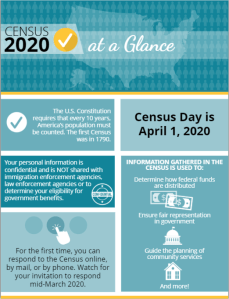
Infographic template in LibraryAware

Take your branding into consideration when you decide on your color scheme, to avoid clashing with your logo.

Pick your fonts. You’ll want to make sure your type is accessible to all audiences. Avoid script-type fonts. Keep in mind that an infographic is visual, and the amount of text will be minimal, so the font you choose must compliment the design elements of the infographics.

Limit your use of fonts to just two or three types. It’s good design to pick a font for the header, one for the main body text, and a third for the complimentary or subtext.

Write a headline that hooks your target audience. As you would with emails or blog articles, the headline or title of your infographic will need to convey the general theme of your visual and catch the attention of your potential audience. Be descriptive and catchy. The title should be shorter than a headline you may use for other content—only a few words long.

Subscribe to this blog and you’ll receive an email every time I post. To do that, click on the “Follow” button in the bottom left-hand corner of the page. Connect with me on YouTube, Twitter, Instagram, and LinkedIn.  

How to Reverse Engineer Your Library Marketing Social Media Audiences!

The Library Marketing Show: Episode 29

WATCH NOW

A Library Marketing show viewer recently asked me: Do you target specific audiences with different social media venues?

I do, but I reverse engineer it! I’ll explain in this video.

Also, kudos go out to Cesar from the Austin Public Library in Austin, Texas. He wrote an article in the Texas Library Journal on the topic of social media ambassadors, how they work and why your library needs them. We hear a lot about using influencers on social media but the traditional influencer model doesn’t really work for libraries. And this is a version that will work. These are volunteers who willingly help promote your library on their personal social media channels. We know social proof is really important in social media promotion-that idea that other people are really into this one particular thing, your library because it gives people FOMO and a sense that they might be missing out if they don’t get in on some library action! Cesar lays out how his library recruits and uses ambassadors and how they’ve helped the Austin Public Library.   

Want more Library Marketing Show? Watch previous episodes!

Check the Upcoming Events page to see where I’ll be soon. Let’s connect!

Subscribe to this blog and you’ll receive an email every time I post. To do that, click on “Follow” button in the bottom left-hand corner of the page. Connect with me on Twitter, Instagram, and LinkedIn.  

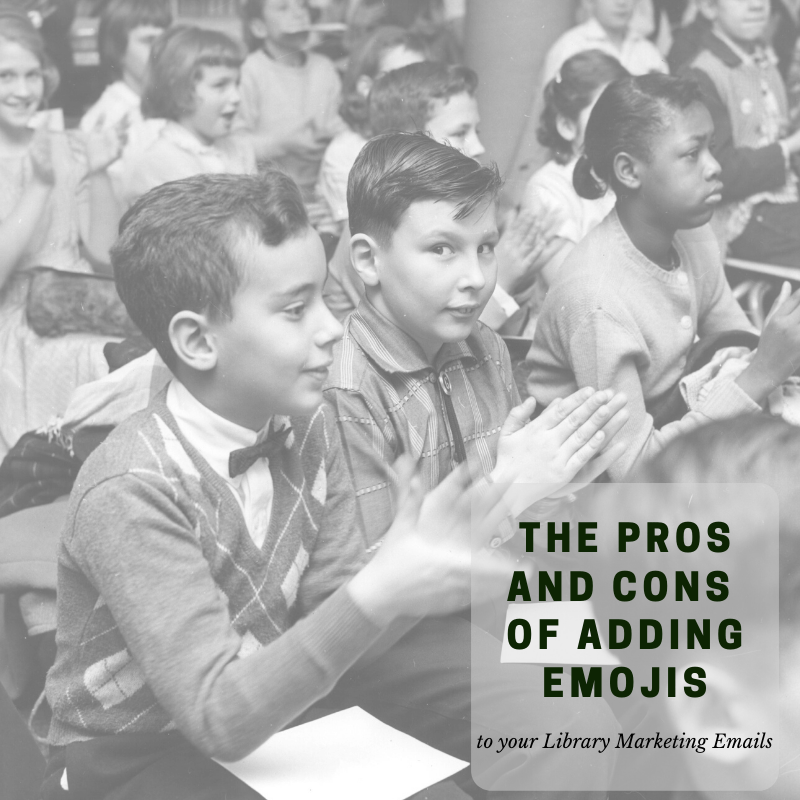
The Emoji Experiment: The Pros and Cons of Adding Emojis to Your Library Marketing Email Subject Lines

I notice it, groggy from sleep. I check my email, as one does, first thing in the morning before getting out of bed. 😉

The sight of it causes my heart to skip a beat. “It’s going to be a glorious day,” I think to myself as I jump out of bed. 🤩

What is the magical thing that makes getting up in the morning easier? 🌟

An emoji. To be specific, a set of headphones, situated in the subject line of an email. An email that comes from my library.⬇️⬇️

The headphones signal to my brain, before I can read the words that come after them, that my audiobook from Overdrive is ready for download.

After dozens of such emails, my body has an almost Pavlovian response to the tiny drawing of headphones.

I get giddy. I get excited. I am filled with anticipation to download and start the audiobook.

According to Salesforce, only two percent of emails sent by businesses to consumers in 2019 had an emoji in the subject line. That’s not a lot, really. And that means there is room for libraries to experiment.

I don’t think there is any doubt that emojis are here to stay. As of October 2019, there were 3,178 widely-recognized emojis, according to Emojipedia. And the major cell phone and digital marketing companies keep adding emojis to their libraries.

I want my cardholders to have the same reaction I have to the headphone emoji when I send them library marketing emails. The idea that an email from my library could energize someone or fill them with anticipation or cause them to do a mini-celebratory dance is one I can’t ignore.

Why might emojis work?

Emojis work because the brain processes visual information 60,000 times faster than text. More than 90 percent of the information that we process is visual.

The emoji drawing stands out in a line of letters. And if your recipient is using a device that adds color to the emoji, that also makes your subject line pop.

Your subject lines can also be shorter when you use an emoji because an emoji can do the work of some of the wording. And the shorter the subject line, the more effective the email. In 2018, 61 percent of emails were opened on mobile. Subject lines exceeding certain character counts can get cut off by mobile devices. And that impacts your open and conversion rates.

The experiment

I kept reading articles on the increased use of emojis in emails for brand marketing. There isn’t much data to suggest whether they are effective in converting customers to take any action on the email. And I thought, as I am apt to do, that someone should experiment with emojis in the library marketing space. Would my cardholders find them amusing? Would emojis help increase the effectiveness of my emails? Or would people think we had lost our mind and gone too far?

There was only one way to find out.

Over the course of six months, I sent 17 test emails to my cardholders with an emoji in the subject line. I used them in instances where I thought they added value to the subject line or helped me to make the subject line shorter. I also made sure I sent emojis to cardholders who tend to use digital services.

The results

After the six-month trial period, I crunched the numbers. And I discovered…

60 percent of the emails with an emoji in the subject line were effective. Ten of the 17 emails caused an increase in circulation, program attendance, or database usage for the item we promoted via email. That’s close to the average effective rate of my regular emails which do not include an emoji.

Emojis DID increase my open rate. The 17 messages I sent had an average open rate of 40 percent. Most of my regular emails have an open rate between 20 and 35 percent. So that was an improvement.

Emojis DID increase my click-through rate. The average click-through rate for the messages with emojis was eight percent. That is also slightly higher than normal. Most of my emails have a click-through rate of five percent.

Here are the subject lines from the four emails in the emoji test that had the highest open and click-through rates.

Ebook Publisher Policies
🚨New publisher policies will limit your access to eBooks.

This email had an 81 percent open rate and a 22 percent click-through rate.

Penguin Programs
🐧Make a date to visit the Library to see real live penguins this month!

This email had a 37 percent open rate and a 23 percent click-through rate.

Beach Reads 2019 Booklist
🏖️ Dreaming of sand, sun, surf, and great books? Here’s our 2019 vacation reading list!

This email had a 39 percent open rate and a 19 percent click-through rate.

Green Township Library Anniversary
🎈You’re invited to the Green Township 30th Anniversary celebration!

This email had a 54 percent open rate and a five percent click-through rate.

Now, there is something to consider and that is that the emoji may have had absolutely no effect on the overall effectiveness of these emails! Because my email marketing provider does not give me the ability to do true A/B testing, it may be that these emails had higher open, click-through, and conversion rates because of the wording of the subject line or the content of the email itself. The fact that there was an emoji in the subject line might be pure coincidence.🤷

Are there downsides to emojis?

There are some negative things to consider when you’re using emojis for email subject lines in library marketing.

Your emoji may not display correctly for your cardholder, depending on what kind of email platform they use.

Emojis can give the impression that your emails are not authentic. In some instances, users see an emoji and wonder if your library wrote it… or a robot.

Emojis can be overused. Finding the perfect emoji is fun. It makes you feel cool. But if you start putting an emoji in every subject line of every marketing email you send, you will likely find that they’ll soon have no impact or, worse, a negative impact.

That said, I think it’s worth it to experiment with emojis in your library’s email marketing. Your audience may love or hate them. There’s only one way to find out.

Remember to use them in the right context. Use emojis sparingly and make sure they add something to the message of your subject. And get your emojis from reliable sources like Emojipedia, GetEmoji, or your email platform.

Check the Upcoming Events page for a list of webinars and conferences where I’ll be next. Let’s connect! Plus, subscribe to this blog and you’ll receive an email every time I post. To do that, click on the “Follow” button in the bottom left-hand corner of the page. Connect with me on YouTube, Twitter, Instagram, and LinkedIn. 
The Seven-Step Process to Empower Your Branch Staff and Turn Them into Incredible Library Marketing Ambassadors

I realized something significant in the past few months. It has changed the way I think about library marketing.

I have built a pretty great team and I’ve been vigilant about using data to help me market my library with tactics like email, social, and video.

But there was one marketing tactic that I haven’t used. I haven’t thought about using it. And I need to correct this oversight to take my library marketing to a whole new level.

I need to empower my library’s front-line staff to be library marketing ambassadors.

In the Library Marketing Show, Episode 26, we discussed handing over some of the library marketing work to branch staff. There is work that can only be done by trained marketing and communications professionals. But there are things branch staff can do to offer personalized promotions of events, services, and collection items. They can also offer personalized customer service. And that’s the most important marketing tactic of all.

Back in 2017,  commerce platform Cloud IQ team research found that 69 percent of people want personalized customer service.

In 2018, Accenture Research found that 91 percent of consumers are more likely to shop brands that provide a personalized experience.

Providing personalized customer experience is important for library marketing success. This is difficult for libraries, given our strong commitment to the privacy of our cardholders and their data. But there is a way to do personalized customer service without data. And it could differentiate libraries from our competition.

Library staff must be empowered to think of themselves as marketing ambassadors for the library. If we give our branch staff the tools, training, and confidence, they can create a great customer experience for our visitors. And that can be a competitive advantage for libraries.

We don’t have the money for artificial intelligence or fancy automated marketing tools. But we do have people. Great people. People who are passionately committed to their communities and their customers.

This is really a change in mindset for libraries. This is not something that you’ll talk about once at a staff meeting and forget it. This is something we need to do every day, without fail.

Here is the seven-step process to get front line staff to think of their work as part of marketing.

Change your own thought process around marketing. Just as the front-line staff doesn’t often think that their interactions with customers have anything to do with marketing, the marketing staff often doesn’t consider putting front-line staff to use. Make it a habit to think about how to incorporate front-line staff in your marketing. Handing them some posters doesn’t count. You will want to plot out the specific ways staff can help you with each campaign. Then give them the tools to help them succeed.

Communicate with branch staff regularly about your marketing. If you have a library staff blog or another communication channel, use it to share what you’re doing in your marketing department. And share often.

Each time you start a new marketing campaign or initiative, share your plans with staff. Tell them exactly what the goals are, what tactics you’re using to achieve them, and how you’ll measure success. Always remind the staff about your library’s strategic goals. State how your marketing efforts are making those goals become a reality.

Set aside time in your regular schedule to have conversations with the librarians. This shouldn’t be a scripted interaction. Ask the staff about their work. Find out what they get asked by customers. You will learn something new and get plenty of ideas for what library offerings need more marketing support. Speaking of ideas…

Ask the branch staff for ideas.  An informal suggestion process will help staff feel like they’re part of the marketing department’s success or failure. It makes them more likely to help market the initiative. And you’re likely to find something amazing in their suggestions.

Never reject an idea outright, even if it seems crazy. You risk hampering the creativity of your library staff if they are worried that their suggestions will be silly or stupid. Tell the staff that all ideas are welcome and that library marketing staff will consider each idea carefully. Incorporate the ones that best suit the campaign, the library’s strategic goals, the budget, and the library’s resources.

Try to work at least one staff idea for your marketing into each campaign. If staff make suggestions but see that their ideas are never taken seriously, they’ll stop giving you feedback

Encourage your staff to think of themselves as ambassadors for the library system. They represent everything your library stands for. Your library staff knows their community. They know the needs of their customer base. And they can offer the best, personalized customer service to the people coming into their location.

Let the staff know that you appreciate their unique perspective on your customer base. Reinforce the idea that every part of their job, from shelving holds, to signing people up for cards, to running programs, is a form of marketing. Every interaction they have with a cardholder is a chance for promotion.

Encourage staff to interact with your library on social media if they feel comfortable doing so. Talk to senior leaders and see if it’s possible to grant library staff 15 minutes a week, on work time, to share library social media posts on their personal profiles.

Give staff specific ideas for how they can help spread the library’s message on social by sharing library posts, sharing their own stories or inspiring thoughts about the library, and tagging the library’s social media accounts, commenting or liking posts, inviting friends and family to follow the library on social media, and listing your library as their employer on their personal profiles.

If staff is regularly engaging and sharing content from your library’s social media profiles, you’ll see engagement increase. Algorithms reward libraries with engaged staff!

Lead by example and encourage other senior leaders in your organization to do the same. When staff sees senior leaders and marketing staff talking about the library and sharing their enthusiasm for their work on social, they’ll likely follow suit.

Check the Upcoming Events page for a list of webinars and conferences where I’ll be next. Let’s connect! Plus, subscribe to this blog and you’ll receive an email every time I post. To do that, click on the “Follow” button in the bottom left-hand corner of the page. Connect with me on YouTube, Twitter, Instagram, and LinkedIn.   


How to Use Tiered or Staggered Promotion in Your Library Marketing! The Library Marketing Show: Episode 25

Watch This Episode

In this episode of The Library Marketing Show, Angela answers a webinar question: “How do you keep the public informed about what the library has to offer? Often we promote a new product or service, but if patron missed that wave of new promotion they probably don’t know about it (especially databases and other electronic resources). Do you ‘re-promote’ and how?”

I was at a conference where I heard a marketing expert named Andrew Davis talk about tiered distribution. The approach takes advantage of a consumer cycle of excitement. I talk about that in the video!

Also kudos to Champaign Public Library for their “Why People Love the Library” video. The production value is beautiful, and they did a really good job showing the library as a diverse, welcome space. They really give you a sense that their library is modern and more than books. The last soundbite is the best! Watch the video here.

Have an idea for the next Library Marketing Live Show? Submit it now.

Want more Library Marketing Show? Watch previous episodes!

Check the Upcoming Events page to see where I’ll be soon. Let’s connect!

Subscribe to this blog and you’ll receive an email every time I post. To do that, click on “Follow” button in the bottom left-hand corner of the page. Connect with me on Twitter, Instagram, and LinkedIn.  

Welcome New Cardholders and Make Them ❤️ Your Library! The Library Marketing Show: Episode 24

Watch Now

Lisa at Oshkosh Public Library asks “Do you have any examples of libraries that do an exceptional job welcoming new cardholders? What do they focus on when someone signs up for a library card? How do they follow up to gauge their new cardholders’ experiences and ultimately turn them into regular library users? I’m talking about libraries that do a great job engaging with new cardholders – not just bombarding them with all the rules involved with using the library.”

I use an email drip campaign to introduce the best of what my library offers. But readers, help a sister out! Tell us what you do in the comments.

KUDOS this week to the Princh blog for their blog article “Why The Library Intimidates Me.” It was heartbreaking and great food for thought for library marketers. Read it here.

Have an idea for the next Library Marketing Live Show? Submit it now.

Want more Library Marketing Show? Watch previous episodes!

Check the Upcoming Events page to see where I’ll be soon. Let’s connect!

Subscribe to this blog and you’ll receive an email every time I post. To do that, click on “Follow” button in the bottom left-hand corner of the page. Connect with me on Twitter, Instagram, and LinkedIn.  

Don’t Forget This Important Step in Library Marketing! The Library Marketing Show: Episode 23

Watch Now

There is ONE THING that many libraries miss when they are making big decision. This thing is super important to marketing and to serving our communities. In this episode,  learn about this step is, why it matters, and how I almost missed an opportunity to put this one thing to use when making changes to my library’s print publication!

Also Kudos go out to NoveList for the free book The Secret Language of Books, which is incredibly helpful for marketing your collection. You can get a free print or digital copy!

Have an idea for the next Library Marketing Live Show? Submit it now.

Want more Library Marketing Show? Watch previous episodes!

Stay in Touch

Check the Upcoming Events page to see where I’ll be soon. Let’s connect!

Subscribe to this blog and you’ll receive an email every time I post. To do that, click on “Follow” button in the bottom left-hand corner of the page. Connect with me on Twitter, Instagram, and LinkedIn.  

The Top Five Reasons to Set Aside Time AND Budget to Attend #LMCC20! The Library Marketing Show: Episode 22

Watch Now

Straight off the end of #LMCC19, I ran back to my room and rattled off the top five reasons YOU need to make sure you attend the Library Marketing and Communications Conference in November, 2020. The conference will be in Indianapolis, Indiana.  For more about what I learned at this year’s conference, read this.

And kudos to the organizers of this year’s conference. It was top-notch. The venue, the food, the speakers, the app, the registration information, the speaker process… everything was well-organized and smooth. This was the best conference experience I’ve ever had!

Have an idea for the next Library Marketing Live Show? Submit it now.

Stay in Touch

Check the Upcoming Events page to see where I’ll be soon. Let’s connect!

Subscribe to this blog and you’ll receive an email every time I post. To do that, click on “Follow” button in the bottom left-hand corner of the page. Connect with me on Twitter, Instagram, and LinkedIn.  

Five Creative Ideas to Help You Beat the Blues, Get Inspired, and Create Amazing Library Marketing Campaigns Again!

It is hard to believe that in a building filled with the stories, a library marketer would need inspiration.

But alas, we are human. And sometimes we get stuck in a rut.

Library marketers are expected to be energetic and enthusiastic at all times. We must come to all meetings and be able to give a list on the fly of exciting and innovative ideas for promoting major developments and smaller decisions that affect the everyday cardholders.

I don’t know about you, but sometimes, I just too plain exhausted to be the marketing superwoman. The busyness of the library summer reading season seems to melt every year into the busyness of fall. There is little time to rest. And exhaustion makes it even more difficult to find creative inspiration.

We struggle to inspire our cardholders, both old and new. We want our customers to use our collection and enjoy our services every day, but we can’t seem to figure out a way to make them act. The tried and true methods of marketing no longer work and we’re frustrated, angry, and frankly, a little worried.

Here’s what I do when I find myself stuck in a marketing rut.

Define your workflow and make it the law of your marketing landscape. A defined outward-facing workflow sounds like the opposite of a creative endeavor. But in reality, it creates space for you to think. It ensures that you have time to be thoughtful so you can develop and deliver a quality product.

Set an expectation about who will manage workflow. That means all marketing requests go through one person on your team. That person is responsible for looking at the request and determining if it fits into the library’s overall strategic goals. That person sets clear expectations and goals for each project. That person communicates a plan of action based on realistic timelines and due dates.

Let me tell you: a defined workflow is a lifesaver. It reduces stress and anxiety for everyone on your team. When your staff understands what is expected of them, they can focus on the creative parts of the job.

If you are new to your library, it will take time to get a smooth workflow in place. Be patient with yourself and with others. Keep reinforcing your expectations. Eventually, your coworkers will be on board with you, especially when they start to see results.

Be generous with positive reinforcement. Positive reinforcement always creates an emotional experience for individuals or a team working together. Don’t just say, “Well done.” Write a note or a card praising specific actions or portions of work. Give yours staff unexpected breaks: team lunches and surprise treats can lift the spirit of your team and re-energize them.

Use your staff’s strengths to create passion for the work. I highly recommend that you invest in the Gallup Strengths Finders test. It gives you incredible and nuanced insight into yourself and your staff members. It shows you how to recognize the strengths of your team members and how to actually manage them to put those strengths to good use. You can find the book by Tom Rath at Walmart and Target for about $15. It includes a code that each team member uses to take the test online.

Through the Gallup process, I discovered my team members have a strong capacity for collaboration. This wasn’t much of a surprise to me. But the book also gave me suggestions for how to actually use that desire for collaboration to the advantage of my library. It also gave me greater insight and empathy for team members who prefer to work alone or who seem resistant to change. I can assign tasks to the best person for each job. It’s really changed the dynamics of my staff and made work easier for everyone.

Observe your customers. It helps me just to take a walk around the library or to visit the branches. I pretend to be browsing the books but really, I’m watching the way the cardholders browse the shelves, interact with staff, work the self-checkout machines and use the public computers. Do they look for a map? Do they look confused? Are they drawn to a particular book display? Do they linger over the new books or do they dash in for their holds and dash out? What questions do they ask? How do people actually move through the branch?

Observing the behavior of customers inside the library can give you an idea of what visitors love and what problems they encounter during their interaction with your system. Then, you can focus on creating new marketing ideas that spotlight the things your cardholders love, and answer the questions they have.

You can also observe online visitors. Spend some time poking around Google Analytics. Figure out which pages get the most visitors. Look for the pages where visitors stay for the longest period of time. Look for the landing pages with a high bounce rate. Page views and read time will help you focus effort on improving the customer experience for your website.

Check your statistics.  Our library makes circulation and programming stats available on our intranet. This little piece of data inspires me to find ways to help make their interaction with the library more worthwhile.

Sometimes a surprising trend emerges and that gives me a creative marketing idea. Sometimes a service takes a dip in usage, and it becomes clear that we need to shift our marketing focus to re-educating the public about that service. Data is such a valuable inspirational tool. Use whatever stats you can get your hands on!

More inspiration

11 Powerful Quotes for Marketing Inspiration

5 Ted Talks for Marketing Inspiration

Need Marketing Inspiration? It’s All Around You!

Subscribe to this blog and you’ll receive an email every time I post. To do that, click on “Follow” button in the bottom left-hand corner of the page. Connect with me on YouTube, Twitter, Instagram, and LinkedIn.  And check my list of upcoming events so we can connect.

A WordPress.com Website.

Up ↑