Search

Super Library Marketing: Practical Tips and Ideas for Library Promotion

Category

library marketing advice

How to Create a Library Marketing Strategy from Scratch! The Library Marketing Show: Episode 20

Watch now!

Your library has no strategic marketing plan in place! What do you do? Emily from Berks County Public Library System in Pennsylvania asked: “I’m the Community Relations Coordinator for the Berks County Public Library System. Our headquarters provides support services to the 19 member libraries in our county. As someone who stepped into this role two years ago where there was no strategic marketing plan in place, could you give some suggestions on best practices when creating a plan from scratch?”

Plus KUDOS go out to the Evanston Public Library in Illinois for their free book distribution centers. Find out why this is a great way to reach non-cardholders and get them introduced to the your library! Read all about their efforts here.

Stay in Touch

Check the Upcoming Events page to see where I’ll be soon. Let’s connect! I’m doing a webinar soon, so be sure to sign up… it’s free!

Have an idea for the next Library Marketing Live Show? Submit it now.

Subscribe to this blog and you’ll receive an email every time I post. To do that, click on “Follow” button in the bottom left-hand corner of the page. Connect with me on Twitter, Instagram, and LinkedIn.  

Attention! Here’s How to Write Headlines That People Simply Can’t Ignore for Any Piece of Content

In my former life as a web journalist for a television news station, crafting the best headline for each story was the most challenging part of my day. It was also the most crucial task.

A compelling headline for any piece of content–email, social media posts, blog posts, newsletters, posters, and signage is essential. The right headline will make it impossible for people to ignore your content.

It may seem silly to spend a lot of time, energy, and brainpower on a couple of words. But it’s a critical component of all your marketing efforts. Libraries should spend time crafting the best headline on every piece of content they publish. This applies to their website, blog, social media posts, press releases, and emails, including personal emails and mass emails to customers.

A good headline should give your readers a hint at the copy that lies ahead without giving away the whole story. It should trigger an emotional response that includes an irresistible urge to read more.

Think of your headline as the gateway to all the content you have poured energy into creating. It may seem tall order for a short succession of words but it can be done.

So how do you write a good headline? Here are my tips.

If someone held a gun to your head and demanded you describe the copy in one sentence, what would you say? This is my twisted yet effective technique for getting that first draft of a headline down on paper. It forces you to boil your work down to its main point or big idea. Go for the emotional core of your copy.

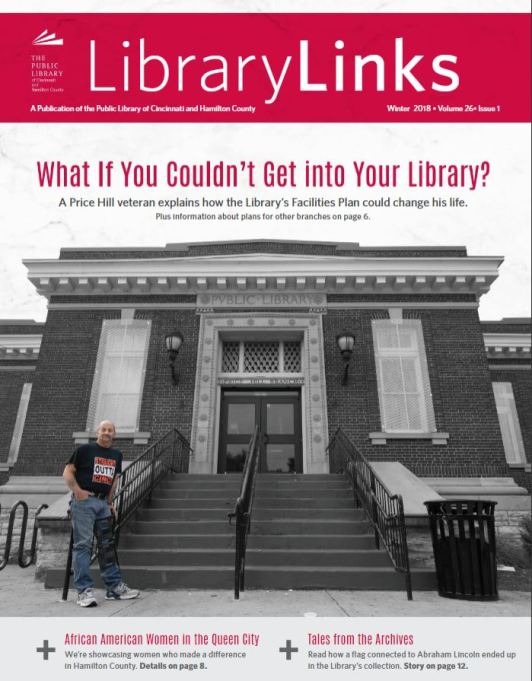
Example:  The title of this issue of our Library Links magazine. The lead story was about a veteran living with a disability. His neighborhood branch is a Carnegie library built in 1909. It’s never been renovated and it’s inaccessible to people living with mobility issues. We were about to ask voters to pass a levy to fund upgrades to this branch and more just like it.

I asked to interview him. He told me the story about how he can’t climb those stairs, and how fellow veteran friends who also live in his neighborhood have to drive their motorized wheelchairs to the next closest branch. The trip sometimes takes three hours. His story invoked a feeling of frustration and injustice. How the heck do you encapsulate that in a short sentence?

Keep the length manageable and the vocabulary conversational. Remember, you want to tease your readers into craving more information, not give away the whole story. You also don’t want to confuse them by using language they don’t understand.

Example: Our library recently made a pivotal switch in the way we market our storytimes. We want to emphasize the educational aspects.

It would be easy to get lost in a lot of technical language and big words to describe our focus on literacy and learning. I decided the best approach would be to write text that sounded like what I would say in person if I were talking to a parent about storytime.

This sounds like an easy step, but I see a lot of libraries and brands that get caught up in the technical language of their products and services. It makes us feel important when we use big words. But headlines and copy need to be simple in order to connect with the audience.

Headlines for press releases deserve as much attention as headlines for emails and blogs.  Library marketers must remember newsrooms are a target audience and journalists crave a good story just as much as the average Joe. You really have to dig deep to grab their attention and evoke your emotional response. You want them to go into their morning meeting and fight for the permission to cover your library’s story. So, give them enough ammunition.

Example:  This release triggered coverage by all the major media outlets in town. Its headline is very simple and straightforward but it got the job done.

Be versatile–it’s okay to change the headline based on the distribution platform. If you have a great blog post you want to share on Twitter, but the headline, when coupled with the URL and a photo, exceed the 280-character limit, re-craft the headline just for Twitter. You might also want to re-craft headlines for different social media audiences. Your Twitter fans may have a different perspective on your article than your LinkedIn fans. You can rewrite it for an email distribution too.

Example: This blog! I often change the headline for the different social media platforms. Sometimes I’ll repost a blog in a month or two with a different headline as well, just to freshen it up and catch viewers who might not have been interested by my first headline. Experimenting is good!

Use the tools. There are lots of fantastic tools to help you fine tune your headline. My absolute favorite is Sharethough’s Headline Analyzer. It’s easy to understand. Since I’ve been using it to craft headlines for this blog, my views have gone up about 10 percent!

For this particular post, Sharethrough gave me a 75 rating, which is above average. It says this headline works because it’s long, it has a human connection, and limited use of positive sentiment. It also gives suggestions on how to improve the headline to get a higher score.

Go with your gut.  Sometimes, all the tools and analysis can cloud your head. If you’ve composed a headline that you feel will do the best job at capturing your audience’s attention, use it. You know your audience best.

Subscribe to this blog and you’ll receive an email every time I post. To do that, click on “Follow” button in the bottom left-hand corner of the page. Connect with me on YouTube, Twitter, Instagram, and LinkedIn.  And check my list of upcoming events so we can connect.
How to Pick Amazing Library Marketing Swag That People Will Love AND Build Brand Awareness and Loyalty For Your Library!

One of my staff members has a request for every event, conference, and convention I attend. “Hey boss, bring me swag!”

Who doesn’t love free stuff? And seeing what other organizations give out to promote their institutions and brands is fun.

Most libraries and vendors stick to items like pens, notebooks, candy, cups, and stickers. We spend a lot of money on this free stuff, in the hopes that event attendees will love it and use it. We also use swag to increase awareness of our library and build loyalty with current cardholders and new folks!

When your budget is limited, picking the perfect swag is a big deal. Your swag has to be interesting, but it should also align with your strategy and helps your library achieve its overall marketing goals. That’s a tall order.

When a guest walks away with your swag and can’t stop raving about it, you will have done your job. And if it’s something a library cardholder or community member can use over and over again, and that makes them think of your library, your money will be well spent. A study done by Schreiber & Associates found 39 percent of all people who have received a promotional product can accurately remember the name of the company that it’s associated with as long as six months after the event!

There is another important reason for swag: it’s a conversation starter. Great swag can be a talking point for volunteers working your table to share information about services, collection items, and other related events at the library. Marketing studies show us that you have to get your message in front of your cardholder an average of SEVEN TIMES before they’ll be compelled to act on it. A direct conversation with a community member about your library counts as one of those “touches.”

A conversation between a library worker or volunteer and an event attendee is a highly effective means of marketing. According to Nielsen, 75 percent of people don’t believe the advertisements they read but 92 percent believe brand recommendations they receive from trusted sources.

Finally, giving good swag gives people a positive memory of your library. Memorable and useful items given freely and generously leaves people smiling and prompts sentiments like, “I love my library” and “I’ll always support my library.” You can’t beat that!

How to Pick Swag

Pick something functional and useful. I like to make sure the items I choose are necessary and can be used over and over again. That means that my library’s logo or name is an integral part of the life of my cardholder. I want them to constantly be seeing my library’s name or website. Some great ideas that fit this category are water bottles, kitchen utensils, ice scrapers, and pop-stoppers.

One word of caution: be aware that some attendees will take issue with certain types of swag. Many people don’t want to take a plastic bag at events because of environmental concerns. I’ve also had people turn away plastic bottles because of the possibility of harmful chemicals leaching into their water. Kids toys can be tricky because of small, removable parts.

Make sure your swag is unique and something that other organizations aren’t giving out regularly. Head to any library event or conference and you’ll find no shortage of pens, notebooks, stickers, tags, and buttons. And while all of these items are useful and cheap, I don’t want to buy any for my table because everyone is giving them out. Hand sanitizer, lip balm, license plate frames, and pet bandannas are all great examples of fun, useful swag that will set your library apart from other organizations.

Make sure your swag is relevant to the attendees of an event. Be sure to ask the organizers before you go who their attendees will be, how many people they expect, and what the event is focused around. Don’t bring all your swag to all events… pick and choose carefully. At my library, we buy different swag for different age groups. We have earbuds and multi-function charging hubs for teens, piggy banks and temporary tattoos for kids, and aluminum water bottles and drawstring totes for adults.

Make sure your swag can be branded. Check the space where logos or text can be printed on items to make sure your particular logo, tagline, or library website will fit and be legible. I’ve totally made this mistake: you spot a great piece of swag at a great price. But the area where your logo or tag line is imprinted is too small or oriented the wrong way. No one can tell it’s from your library! Pay special attention to the imprint area, especially if you have a long tagline or a logo that can’t easily be resized or re-oriented.

Watch The Library Marketing Show to see some of my favorite choices for swag and talk more about why it’s so important for marketing!

No budget for swag? Do a giveaway. I’ve often had leftover donated items like gift cards that I use as giveaways at events. A giveaway, when promoted ahead of time, will drive attendees to your table. Ask people to give their email address and add them to your newsletter or email subscription list in exchange for an entry in your contest.

Subscribe to this blog and you’ll receive an email every time I post. To do that, click on “Follow” button in the bottom left-hand corner of the page. Connect with me on YouTube, Twitter, Instagram, and LinkedIn.  And check my list of upcoming events so we can connect.


🤷If You’re New to Library Marketing, Where the Heck Do You Begin? The Library Marketing Show Episode 18

WATCH NOW

In this episode, we answer a question from Megan from the Redford Township District Library in Michigan. She asks, “I’m brand new! New to the Redford library and new to the Library realm in general. I am two years out of college and my most recent marketing experience is in the automotive field (very different ). I am wondering where do I start? Tips & tricks for just starting off?”

I offer some advice and starting tips for Megan. Be sure to add your advice to the comments! Let’s crowd source a great experience for Megan’s first year as a library marketer!

I also offer kudos to the King County Library system in the state of Washington for their brave decision to stop buying eBooks from Macmillan. They did it in response to Macmillan’s decision to embargo new eBook sales to libraries for two months. It’s brave and if we all band together and follow their lead, we might be able to make a difference! Read this great article from Publisher’s Weekly on their decision.

Stay in Touch

Check the Upcoming Events page to see where I’ll be soon. Let’s connect! I’m doing a webinar soon, so be sure to sign up… it’s free!

Have an idea for the next Library Marketing Live Show? Submit it now.

Subscribe to this blog and you’ll receive an email every time I post. To do that, click on “Follow” button in the bottom left-hand corner of the page. Connect with me on Twitter, Instagram, and LinkedIn.  

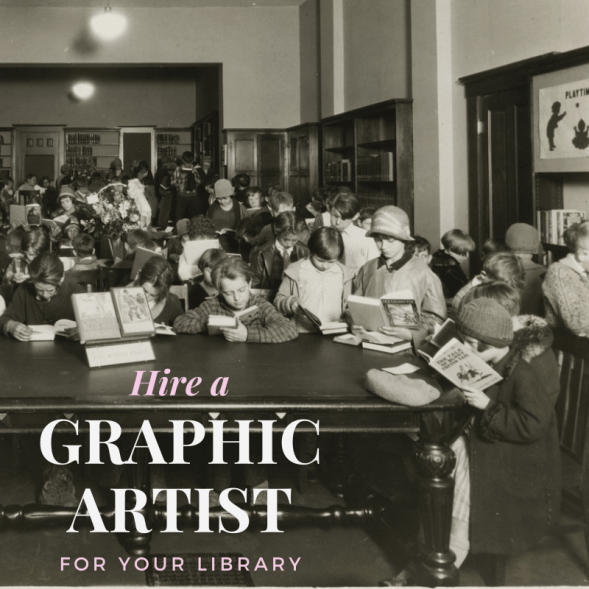
The Nine Things You Need to Look for to Hire the Best Graphic Artist for Your Library Marketing

Confession: When I took this job in library marketing, I knew nothing about graphic design. And I mean LITERALLY NOTHING.

I came from the world of TV news. There is no print element to that. All the graphics are done by a mysterious department located on the second floor of our station, where artists work in a dimly lit room surrounded by monitors. And their ability to get creative is limited by the fast pace of the workplace.

My first week in the library was a lesson in paper weight (text vs. cover?? What??), labels, printing terms, and equipment that I had never seen before, like a Baum Cutter that look a small tank with a blade like a guillotine. I was scared.

And I bet a lot of library marketers can relate. We have degrees in library science and communications, not design. Most of us do not have any training or background in graphic art. I don’t know about you, but I find it difficult and intimidating to manage an employee when I have no idea what their job is, how they do it, or how I could help them to improve.

I’m lucky to have two graphic artists at my library, serving a system of 41 locations and 600,000 cardholders. I can count on my artists to be a touchstone for all projects. They keep my library branches on brand. They help me turn ideas that seem stuck in my head into something clear and understandable to our cardholders.

Visuals are a key part of marketing. Your graphic designer is an invaluable member of your library marketing team. So it’s an important hire to make.

A great artist can create a consistent look and feel to everything surrounding your library’s brand. You want your customers to be able to recognize your visuals as being part of your brand, even before they spot your name or logo on the material.

A good artist can convey the message of your library without actually using your library’s name. They can listen to you explain a vague idea and create something visually stunning which helps enhance the customer experience.

When you’re in the market to add a graphic artist to your team, you may be dazzled by stunning portfolios and creative resumes (graphic artists create some of the best resumes I’ve ever seen!) But there are nine important qualities your candidates must have.

Someone with good customer service. Your artists will be working with multiple departments, branches, customers, and outside partner agencies. You need someone who can listen to whoever they are working with, understand their needs, and translate their vision.

Someone who can communicate with your customers. Ask your candidates how they will create pieces for different age groups, ethnic backgrounds, and interests. Make sure your artist can switch viewpoints and create visuals that speak to many different library audience segments.

Someone who can translate your library strategy and goals into visuals. These are complex concepts. A good artist will take big ideas and turn them into a visual the audience can understand. Ask for examples of infographics and annual reports from previous employers or internships. Can you understand what the message is? Are the statistics presented in a clear and interesting way?

Someone who can work with multiple formats. You’ll be asking your artist to create print and digital graphics, so they should be comfortable working with both. Ideally, you should also look with experience in web design, video production, and animation.

Someone with a vision. You’ll want to make sure your graphic designer will stay on top of the latest trends in design so your marketing material doesn’t look dated.

Someone with whom you can collaborate. Your work with design will be a back and forth, give and take, and you will need someone who can walk through that messy process with you. A good designer will be able to defend their design as well as adapt to ideas that aren’t expressly theirs.

Someone who seeks inspiration. My two designers have a common belief that their work gets better as they learn more. They both have a desire to attend creative sessions and try new mediums. They both work on creative endeavors outside of the library.

You don’t want a designer who simple comes into the office, does what you tell them, and then goes home for the day. Ask potential hires if they do anything artistic outside of the workplace to fuel their own creativity.

Someone who can think on their feet. Ask your candidates to critique a design piece and explain what they would have done differently. Their answer will tell you a lot about their creative process, their ability to articulate their vision, and how they think when they’re asked to do a project on the fly.

Someone who can handle criticism. This is true of every hire you make, but graphic artists are creatives and in my experience, creatives take their work seriously. They may feel precious about their designs and may be resistant to your opinions about them. Make sure you can give positive and constructive feedback to your potential hire without worrying that they’ll refuse to take your suggestions.

Subscribe to this blog and you’ll receive an email every time I post. To do that, click on “Follow” button in the bottom left-hand corner of the page. Connect with me on YouTube, Twitter, Instagram, and LinkedIn.  And check my list of upcoming events so we can connect.
Library Marketing Show Episode 17: 💰How to Convince Your Library to Get With the Times and Take Credit Card Donations!

WATCH NOW

In this episode, we take a question from Emily of North Kingstown Free Library in Rhode Island. She says, “I’m struggling with getting our organization to see the value of opening up online donations. They see the cost of the transactions (usually about 3%) and are scared off, but I argue that only accepting checks is hurting our overall potential. Do you have any experience and advice about this?”

Also we hand out Kudos to Varnum Memorial Library in Jeffersonville, Vermont for their unique fundraiser–a calendar of nude local authors!  Here’s an NPR story about the calendar with photos… they’re are safe for work, I promise.

Stay in Touch

Check the Upcoming Events page to see where I’ll be soon. Let’s connect! I just added a webinar so be sure to sign up… it’s free!

Have an idea for the next Library Marketing Live Show? Submit it now.

Subscribe to this blog and you’ll receive an email every time I post. To do that, click on “Follow” button in the bottom left-hand corner of the page. Connect with me on Twitter, Instagram, and LinkedIn.  

You Can Fix It! If Your Library Marketing Is Failing, Here are the Top Eight Solutions

Do you remember when you learned to read?

I was in the first grade. The school was holding a contest to find a student to deliver a public service announcement about education on a local radio station. I was determined to win.

My mother, who was a first-grade teacher, was incredulous when I shared my plan for my broadcast debut. How could a kid who hadn’t learned to read yet get good enough to get that radio spot? She thought I was crazy.

And maybe I was. But I proved my mother wrong through sheer will and determination, and with a little help from the “Dick and Jane” series. By the end of first grade, I was reading well enough to tackle Laura Ingalls Wilder’s Little House in the Big Woods. And I was on the radio.

Twenty years later, I was working weekends as a newscast producer at a television station. That meant every Saturday and Sunday, I had to 8 hours to produce two shows… the 6 p.m. news and the 11 p.m. news. On a good night, it was a fast-paced and stressful proposition.

One day, the television station suffered a huge power failure. The station had backup generators that were supposed to kick on to keep us on the air. But a surge had fried the wiring and we were dead… really most sincerely dead. We had no way to get on the air. And the newscast had to get on the air.

Failure was not an option. We needed to get the show on the air because thousands of homes were also without power and those people looked to us for information. We also needed to get on the air because when the ads that are supposed to be a part of the newscast don’t air, the station loses money.

With airtime fast approaching, we came up with a plan. We would broadcast live from the parking lot using our live truck. It was crude but it worked. We felt like heroes. Journalism won the day and after that, I felt like there was no problem that I could not solve.

We all face obstacles during our work every day. Some are big, some are small. Your attitude plays a huge role in determining whether you overcome them, particularly for those of us working in the library marketing space. Many of our problems are unique to this industry. But trust me when I tell you that you are smart and you can figure anything out!

To prove it, here are the top five problems we face in Library Marketing along with eight solutions… because there are always more solutions than problems!

Problem: we simply don’t have enough time to do all the stuff we’re asked to do. The library year is kind of like the “lazy river” at my local YMCA… a constant swirling movement of events that keeps pushing us forward. It takes some force and a change of direction to break free. When you’re under pressure to promote each big event, it can leave you feeling like you never have enough time for your collection or services. You might feel like you don’t even have enough time to think or be creative.

Solution: a strategy gives you freedom. It not only helps you drive your marketing for the year in a measurable way, it will also provide a concrete reason the next time you have to say “no.”

Say “no” to promotions that don’t serve to drive your library’s strategic mission. Say “no” to promoting every exhibit, program, and author visit at your branches. Empower your branches to do some of their own promotion by providing them with simple guidelines for doing their own community marketing and set them free so you can focus on the big picture… your library as a whole.

Problem: we don’t have enough money. Tiny budgets really separate us most from the for-profit marketers. I do see more libraries spending big budgets but they’re doing it in smart and strategic ways, for re-branding and full production media ad buys, slick content marketing magazines, and direct mail to non-cardholders.

If you don’t have a big media budget, you can spend a little money to boost the effectiveness of your social media posts. Honestly, you can’t get much social media reach without a little spending.

Solution: social media advertising is cheaper than traditional ad buys. Your administrators might not realize how super effective targeted ads can be. You can easily prove that you can make a good return on their investment.

Solution: partnership opportunities to promote more than the big programs. At my library, we created media sponsorship guidelines which list the action items we’d like our potential sponsors to fulfill and what benefits we can offer them in return. Why not pitch a media sponsorship to promote your digital collection or your fantastic database resources?

Solution: find super library fans or influencers in your marketplace and invite them to write about your organization. At my library, when we opened our new MakerSpace and got lots of publicity outside the traditional media (this article is a good example).

Problem: we don’t have enough staff. If your handling a one-person marketing department, trying to take on marketing can be a scary proposition. You probably feel like you’re already just hanging on by the skin of your teeth.

Solution: use the talents of non-marketing co-workers. There are likely a number of librarians who have an interest and a proficiency for social media, writing, video, and design. Ask around and recruit those staff members to help you create content. Ask for permission to recruit interns. You’ll have someone to handle the grunt work and you’ll have the joy that comes with mentoring and encouraging the career of young marketers.

Problem: we don’t know enough about our cardholders to target them effectively with messages they will love. I suffer from this and many of my library marketing friends do too! It’s not a hard one to solve.

Solution: create a new cardholder survey to gauge the interests of people just entering your library system.

Solution: a yearly satisfaction survey for all cardholders is also extremely helpful, particularly when you can take the results and split them into your different persona groups. From there, you can map your customer’s journey. When they get a card, how long does it take them to use it? Are they checking out books or using your digital collection or your computers, or do they simply let it languish? Do you have some customers who got a card years ago, used it a specific way, and then stopped altogether? Do you have some customers who are making the transition from print items to digital materials? Do you have some customers who are only interested in one particular kind of item–DVDs, audio books, or computers?

Break your customers into groups based on what they do with the card and start creating pieces of content that target those groups. Maybe you’ll want to focus your efforts at first on one group in particular. At my library, we’re targeting a persona we call “Occasionals” which are people who use their cards once every six months. We focus on moving people from that cluster into a more active user persona, by targeting them with messages about the convenience of our digital collection.

Problem: we are resistant to change. This problem is the biggest, in my opinion. We are too set in our ways. How many times have you heard someone in your library say, “But that’s the way we’ve always done it!” It’s the phrase I dread most.

It takes an enormous amount of effort and energy to change the minds of our fellow library staff members and our administration. It seems like it would just be easier to stay the course.

Do. Not. Give. In. Marketers have a reputation for being talkative, a little eager, a bit bold, and maybe a tad whacky, and these are all GOOD traits! We have to remember our main objective–to get customers to move through the cardholder journey and engage with the library. Without that engagement, the people who argue that libraries are obsolete will win! We can’t have that.

Solution: with patience and persistence, you can thoughtfully steer your library into the future. It works best when you start small. Think of it like a staircase. On the bottom step, you make a small argument and you try a new thing. You see results. You report the results and chances are, you’ll get to climb to the next step.

The more you do this, the faster you’ll get up the stairs–at some point, you might even be allowed to take the stairs two at a time. Keep the end goal in mind but set smaller goals that help you to get there.

Subscribe to this blog and you’ll receive an email every time I post. To do that, click on “Follow” button in the bottom left-hand corner of the page. Connect with me on YouTube, Twitter, Instagram, and LinkedIn.

Library Marketing Show Episode 16: How to Gently But Firmly Get Any Department to Let You Handle Marketing Messages!

Watch Now

In this episode, we talk about an anonymous question from a reader who has a little problem: The departments in their library get upset when they re-write their text suggestions for marketing messages. I’ll talk about how I handle this situation at my library. We’re all in this boat, right??

As promised, some articles to help convince your skeptical programming co-workers about the importance of writing library marketing text.

Why Marketers Must Learn to Write

KISS Bad Writing Goodbye: How to Save Your Marketing

Why Writing Skills Are Necessary in Marketing

Also kudos to the West Gippsland Libraries in Australia for their hilarious new brand awareness video.

Stay in Touch

Check the Upcoming Events page to see where I’ll be soon. Let’s connect! More events are coming soon.

Have an idea for the next Library Marketing Live Show? Submit it now.

Subscribe to this blog and you’ll receive an email every time I post. To do that, click on “Follow” button in the bottom left-hand corner of the page. Connect with me on Twitter, Instagram, and LinkedIn.  

The Four Library Marketing Myths That Need to Die RIGHT NOW!

One of my staffers wrote a post for our Library’s blog recently about common library myths. You can read it here. That post got me to thinking about library marketing myths, and how library marketing professionals can “bust” them. Here are my top four choices.

My library marketing video/blog post/article needs to be short because people will only consume “snackable content.” This one is really prevalent for all kind of companies and institutions, and it’s so, so wrong!

At the beginning of 2019, I started to write longer blog posts. Did you notice?? I went from 500-700 words to between 1000 and 1500 words.

And what happened? My site stats jumped. Already in October of 2019, I’ve exceeded the number of views and visitors for the site in 2018. I’ve had twice the number of people reading each post as I did in 2018.

When you write long form, more people will read your posts. People stay on the site longer. They read multiple posts. This is also true for longer blogs written for our library’s website.

I made the switch to longer posts because I’d read a lot of research about long form content and its benefits. It’s not easy. I spend more time on each post. I have to do more research. I have to be careful not to add words or sentences just to fill this imaginary word count goal in my head. It’s sometimes difficult. But it’s worth it.

The smart people at a company call serpIQ did a study of the average length of the content in the top ten results of search queries. The company found that the top-rated posts usually were more than 2,000 words long.

If your post is written well, helpful, educational, interesting, and builds interest or suspense, people will stay on your site longer. This will boost your library’s web page rankings in Google and drive more traffic to your site. Long form content also builds trust in the authority of your library. There’s no downside to longer pieces.

The only exception to this myth is email. The text inside mail marketing messages should be short, because evidence shows people will not read emails that are longer than 200 words (sorry, fans of the newsletter). Your short email can and should link to a longer piece but the actual text body itself should be 50-200 words max.

A high open rate is the best way to tell that my library email marketing is successful. So many libraries focus on high open rates for their emails. It’s sometimes hard to contradict that measure. But I’m going to do it because I want your work to matter. And if your open rates are high, you may still be failing at email marketing. Hear me out.

Open rates do mean something. They are a sign of customer loyalty. A high open rate means that your cardholders are eager to see what you’ve sent them. And that’s good. You are writing compelling email subject lines (Good job, you!). You have a loyal and eager audience.

But it’s what happens AFTER your cardholders open your email that counts. If your click-thru rate is low, you’ll know the content you are sending to your cardholders isn’t what they want.

The higher the click-thru rate is, the more excited I get. It means that my cardholders opened an email, saw something they liked, and acted!

Most of the time, my library emails direct cardholders to do one of two things: click a link for a specific item in our collection or go to the event calendar where they can register or put an upcoming event on their calendar.

If a cardholder takes one of those actions is a huge victory. It gives me data about what that particular cardholder is interested in. And I can use that information to craft future emails that are also compelling for that cardholder.

As happy as I get over a high email click-thru rate, a high conversion rate is the most accurate way to measure email effectiveness. It is the percentage of people who take an action after clicking through.

For example, let’s say 100 people click-through to look at a book I promote by email. If 50 of those 100 people put the book on hold, my conversion rate is 50 percent.

Conversion rate is the gold standard for the success of any email campaign. Your goal should always be to get people to act!

I need to grow my Twitter/Facebook/Pinterest followers. I’m not saying that a huge social media following wouldn’t be nice. But in the age of algorithms, it’s not as important as it once was.

What you really want is a large audience of ENGAGED followers. You don’t just want people to see your posts. You want them to compel people to take an actual: like, share, subscribe, comment, post emojis, and generally jump up and down virtually.

It’s kind of like speaking at a conference. You might be thrilled at the prospect of talking to a huge group of people. But it’s disheartening if half of your audience is yawning or looking at their phones. It’s much more meaningful to speak in front of a small room of people who are riveted by what you have to say.

I don’t care how many followers my library has on any social account. I want to see people engage with our content. Focus on actions and not the number of followers.

If you need to tell your cardholder something, just make a sign. No one reads signs. Seriously, we just don’t. I lead the team that makes signs at my library FOR A LIVING and I don’t read them.

Too many signs in a branch, particularly in a small location, can create clutter and confusion. And too much signage can annoy your cardholders, particularly if most of your signs are bombarding them with marketing messages.

Just as white space works to create breadth and depth for a website or a graphic, well-spaced signage in a branch creates flow. About 75 percent of the signs in your library locations should be wayfaring only, directing cardholders to important service points in the building. The other 25 percent can be selective marketing–promoting services and items that are of interest to your cardholders.

Don’t rely on signs to convey everything you want to tell the customer. Hire staff who are willing to speak with customers and show customers where items are located.

Do you have a myth you encounter in your work? Let me know about it, and how you’re busting it in the comments.

Subscribe to this blog and you’ll receive an email every time I post. To do that, click on “Follow” button in the bottom left-hand corner of the page. Connect with me on YouTube, Twitter, Instagram, and LinkedIn.

A WordPress.com Website.

Up ↑