Search

Super Library Marketing: Practical Tips and Ideas for Library Promotion

Category

Library Marketing Strategy

Videos Can Reach Library Users at Home Now and in the Future. Here’s Your Starter Kit.

In a time of social isolation, video is a great way to communicate with patrons. A video can help you provide service to the community without having an open physical building.

If you are nervous about using video for marketing, I’ve got a secret for you. Video, whether live or recorded and edited, is easy and relatively inexpensive. During the COVID-19 crisis, it’s now necessary for you to produce videos. And, when things return to normal (and they will) you will have the skills to extend the reach of your library to home-bound customers through video.

Using video for library outreach

This list will help you brainstorm specific videos to fill your library marketing content editorial calendar.

Demos: You can show library users how to navigate your digital resources. You can show them how to use specific platforms, like Overdrive, LearningExpress Library, or Lynda.com. Demonstrate how to search a database, like NoveList or Consumer Reports. Make a video to show how patrons can talk to a librarian through chat or email while buildings are closed.

Programs: Many libraries are moving their planned program presents online right now. And this is a great video opportunity. You can record a teaser video, then the actual event, and a highlight reel for further promotion of more presenters. You can also move your story times to video format.

If you do these videos live on Facebook, Instagram, or YouTube, your viewers can still ask questions by commenting. In fact, live videos are a great option for library reach.  Viewers spend up to eight times longer with live video than with video-on-demand.

Book reviews: Turn the camera on yourself or a fellow book lover and record a review! I have started doing this on my YouTube channel. It took me about five minutes, once I figured out what I was going to say. Writing a Goodreads review of the book first helped me to organize my thoughts.

What equipment do you need?

In the past, producing video was expensive and difficult. But that is no longer the case. If you have a smartphone, you’re set. You can also record video on most DSLR cameras.

If you have an Adobe Creative Suite license already, you can use that to edit. You can also use iMovie or a host of other online editing software pieces, many of which are free. Here’s a great list. I edit the Library Marketing Show videos on my iPhone or using YouTube studio. And that’s really all you need!

Before you begin

Before you record anything, it’s important to identify who your target audience will be, and what the goal of the video will be. What do you want your audience to do after watching the video? This will help you plan the script, the call to action, the setting, and the goals by which you’ll measure the video’s success.

You should also decide where the video will live… on Facebook, on Instagram’s IGTV, on your library’s webpage, on YouTube, etc. Decide on one target location for your video.

Writing a script or outline

Most library videos will need a script or, at the very least, an outline. If you skip this step, you’ll may spend more time than you want editing. You may even discover you have to re-record certain sections. Your video might end up being longer than necessary. It might not be as engaging as you hope.

When I do the Library Marketing Show, I write a script. Sometimes it’s just an outline with key points. And sometimes it’s a word-for-word account of what I want to say. The script or outline helps me to formulate my thoughts. It also helps me time the video so I’m sure I’m not babbling on for longer than I need to be. But I don’t memorize my script. You know those cards with key points that I hold up during the video? Those are like slides in a conference presentation–they are visual cues to me so I can remember what I need to say.

As with any kind of library marketing, the language of your video should be relaxed, clear, and conversational. Avoid complex sentences and industry jargon or buzzwords. Speak to your video audience as you would to a customer at the front desk.

Also remember that the written word will sound different when you read it out loud. I rediscover this every time I do a webinar or a video! Be sure to read your script out loud before you record.

If your video features an outside presenter, write an introduction, as you would if you were doing the program in person. Be sure to tell your viewers how they can contact you with questions or comments during the video, if it’s live, or later if they are watching on-demand.

Time to record

Before you start recording, be sure your device has enough storage. If you’re using your smartphone, turn on the “Do Not Disturb” feature to avoid distracting notifications. When I shoot my videos, I also do a few test recordings to make sure the lighting, the background, and the sound are the best they can be.

Record horizontally. This gives your video the best viewing experience on most platforms. If you are recording yourself speaking, be sure your camera is on a level surface and won’t fall over! And don’t forget to focus on the object that’s most important, like your face.

If you are shooting a video of yourself, be sure to look at your phone’s camera… not at yourself on the screen. This may feel like the weirdest thing ever. But it looks more normal because it mimics looking someone in the eye.

It may take a couple of takes to get a video right. Don’t despair… and don’t erase any bad takes until you publish your finished video officially. You never know what footage you may need in editing.

If your video needs music

The right music can set the mood and tone for your video. Do you need background music or something that will manipulate the mood of your viewers? Will someone be speaking in the video? What kind of pace should your music have–fast, steady, ethereal, dramatic? These are all factors to consider when choosing your music.

Most music isn’t free. If you use an artist’s music without permission or proper licensing, you risk legal action against your library and your video may be removed from social media channels. Look for royalty free tunes to fill your music needs.

Royalty free songs aren’t free to use; they’re quality songs available for a single flat fee. This means you don’t have to worry about paying additional licensing fees or royalties in the future. YouTube, Shutterstock, and Epidemic Sound are all great sites to find royalty free music.

Posting your video

You’ve got a couple of good options for housing your finished video. YouTube is the largest video hosting platform It’s free to upload your videos to YouTube and optimize them for search. I created this guide for optimizing your videos on YouTube.

Vimeo is another choice. There is a free option, with limited storage space. During the COVID-19 crisis, videos on Vimeo might be higher quality because YouTube has reduced its streaming quality to deal with bandwidth issues.

You can also post videos on Facebook, IGTV (this is Instagram’s version of YouTube), and of course, your library’s own website.

Pick one spot to house the full-length video. Then use your other marketing channels to drive traffic to your video on that one, main location.

It doesn’t have to be perfect

We all have this idea that the video must be narrated by the perfect person with the perfect hair in front of the perfect background. That’s old school TV thinking and it’s no longer necessary. In fact, the best videos are the ones that show your library’s authentic self. Don’t worry about getting every little hair to lie in place, having the right clothes, or always saying the right thing. You’re talking to real people, even if they are on the other end of a video screen. And they’ll forgive you–and love you–if you aren’t robotic. You will find fans will love you just for being you!

More Library Marketing Help During the COVID-19 Crisis

Recording of live session on promoting your online resources through social media.

Self-Care for Library Social Media Staff in the Midst of a Crisis like #COVID-19

Library Marketing During a Pandemic: Tips for Working from Home or the Office and Dealing with the Stress of a Crisis

How #COVID-19 is Impacting Social Media Marketing and What That Means for Libraries

Subscribe to this blog and you’ll receive an email every time I post. To do that, click on the “Follow” button in the bottom left-hand corner of the page. Connect with me on YouTube, Twitter, Instagram, and LinkedIn.  


Seven Big Revelations I Had About Library Collection Marketing and How You Can Avoid Making the Same Mistakes

Photo Courtesy Public Library of Cincinnati and Hamilton County

Four weeks ago, I started my new job.

In my previous role at a major metropolitan system serving a population of nearly a million people, I thought I knew people who were wild about books. But these folks at my new company love books on a whole new level.

I have learned so much in my first month. And I’ve come to realize that, as much as I loved collection marketing, I was making mistakes. In fact, I did a lot of things wrong.🤷

Because promoting the collection should be the core of any library’s marketing efforts, I want to make sure I pass on what I’ve learned.

Seven Mistakes to Avoid When Promoting Books

What I did wrong: I recommended books.
What you should do instead: Suggest books.

It sounds like semantics, but there is a real difference between recommending and suggesting books to potential readers.

Readers advisory consultant Becky Spratford of RA for All points out that library anxiety is a real thing. People come into your building or log onto your website to find a book they love. But they have a certain amount of anxiety. They feel like they absolutely must read a book that is recommended to them by a library staff worker. If they don’t finish it, they worry that we will judge them.

So, let your library users know that your book recommendations are just suggestions. No one will judge them for not reading the titles you suggest. And let your customers know it’s okay to return books unread!

What I did wrong: I used plot to promote books.
What you should do instead: Use story elements to promote books.

Most readers advisory experts rely on something called the Vocabulary of Story Appeals to make books suggestions. This is a way of describing the book without talking about the plot.

When picking their next book, readers don’t look for a certain plot line. They are looking for factors that appeal to them, including pacing, characters, tone, style, and the story line. Story line, I have learned, is different from plot in that it focuses on the WAY the story is told, as opposed to what happens in the story. Mind blown.

Library marketers can learn about story elements by requesting a free copy of The Secret Language of Books. I got my copy at the 2019 Library Marketing and Communications Conference. It expanded my vocabulary and gave me new words to use when marketing my library’s collection.

It’s so much more interesting to describe a book in terms of story elements. It intrigues readers and may lead them to place holds on books they would otherwise ignore.

What I did wrong: Promoting only new books.
What you should do instead: Promote new books AND offer a readalike available right now on the shelf to help soften the hold wait.

At my library job, I stopped promoting older books because the data told me that new books were the ones that got the most circulation from my targeted email marketing.

My change in philosophy doesn’t mean that the data was wrong. But there was a piece I was missing.

Sometimes, the most popular books are also the ones with the longest hold list. Most library lovers are, in my experience, okay with waiting awhile for a book they really want to read.

In the meantime, library marketers can do a better job of suggesting a currently available readalikes to our readers. This helps to create satisfaction for our readers. It also can expand their worldview. It keeps them engaged with the library while they wait for the new title. And, it helps our circulation numbers!

What I did wrong: Thinking I really didn’t have the skills to suggest books.
What you should do instead: Everyone in your library can suggest books. And I mean everyone!

I had a real hang-up with suggesting books to others. I can’t tell you how many times I said the words, “I’m not a real librarian but…”

But what I’ve come to learn is that I am a book expert because I love reading! I don’t have a degree, but I do read… a lot.

I also read about books a lot. I listen to podcasts about books. I talk to other book lovers. I have resources at my disposal that I can use like NoveList and Goodreads.

You don’t have to have a degree to be passionate about books or connect with another reader.

What I did wrong: Limiting the book genres I suggest to what I have know or read.
What you should do instead: Use resources to make recommendations from genres you’re not familiar with.

Consciously push yourself to suggest books outside your own comfort zone. It’s better for you, for your friends, your fellow readers, and for the world in general, when we broaden our horizons to suggest books outside our comfort zone. We should strive for equity, diversity, and inclusion in all areas of our lives—and that includes our reading materials.

What I did wrong: Putting more weight on New York Times bestsllers list for book suggestions.
What you should do instead: Promote books on the USA Today best seller list and on Amazon.

By using more than just one list of bestsellers, I could have gotten a better idea about what was truly a best seller. Lists from USA Today and Amazon include books from every age, genre, and publishing house.

Don’t discount sales of a book. If a book is making money, it’s popular. And your community is full of people who can’t afford to buy those books. But that doesn’t mean that people don’t want to read those books. We need to let them know they have access.

What I did wrong: Not asking my readers often enough what kind of books they like.
What you should do instead: Ask your readers about the books they love!

Survey your patrons. And do it regularly, because their tastes change. Your population changes. You don’t even have to do this using a formal survey. Just ask on social media. People love to talk about what they’re reading or what they want to read!

Subscribe to this blog and you’ll receive an email every time I post. To do that, click on the “Follow” button in the bottom left-hand corner of the page. Connect with me on YouTube, Twitter, Instagram, and LinkedIn. For more help with your library marketing, email me at ahursh@ebsco.com.

Libraries are Winning the Relevancy War! Why Now is the Perfect Time to Banish Your Fear and Promote Your Books

I have a confession to make.

For more than a year now, I’ve been amid an internal struggle that caused me some anguish. It started when I realized that I was hearing the same phrase from many administrators and staff in public libraries, both here in the U.S. and abroad.

Here’s what I kept hearing, over and over: In order to stay relevant, libraries must change completely.

The fear that the public perceives libraries as old-fashioned and unnecessary is not new. But it seemed to reach a kind of fever pitch last year. Everyone was writing about it. Everyone was talking about. There were whole conference sessions and webinars dedicated to library relevancy.

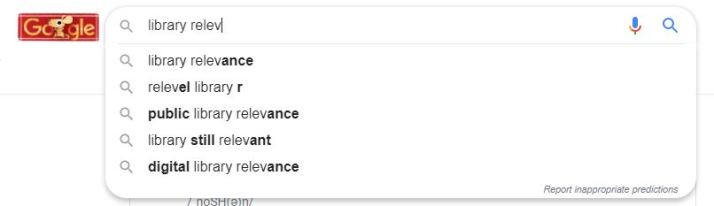
I thought maybe I was imagining it at first. So, I did what any normal person does when they’re looking for validation. I did a Google search.

I clicked on the first result, “library relevance.” There are 314 million results.

I understand why libraries are worried about relevancy. It’s the media narrative. (For a great perspective on that, read this fabulous opinion piece from Public Libraries Online). It’s also the argument made by those who want to cut funding and services for libraries.

But here’s the thing. The public at large doesn’t think libraries are irrelevant. In fact, they think quite the opposite.

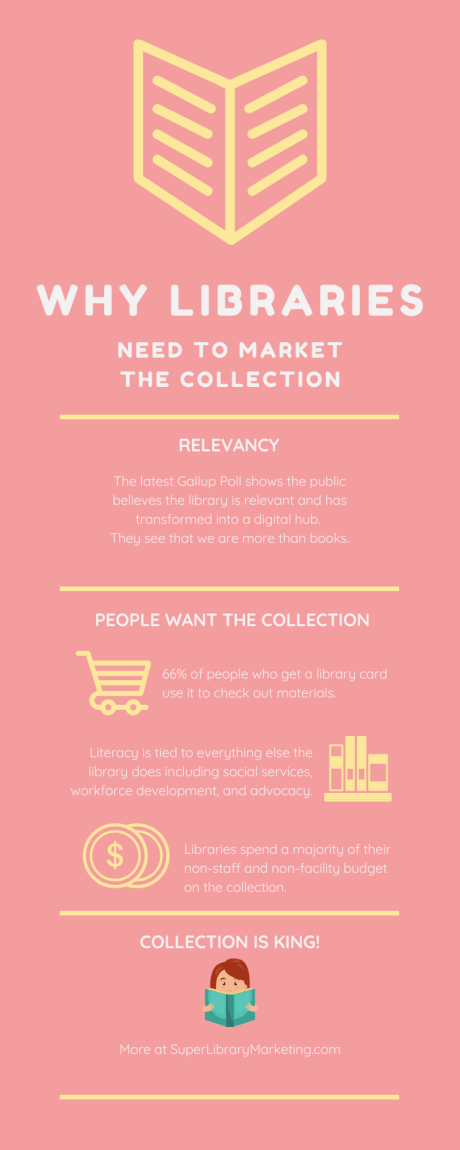
I’m sure you saw the new Gallup poll released this past Friday (Jan. 24, 2020) that shows “Visiting the library remains the most common cultural activity Americans engage in, by far. The average 10.5 trips to the library U.S. adults report taking in 2019 exceeds their participation in eight other common leisure activities.”  

Public libraries have bought into the notion that we have a brand perception problem. But we don’t. We’re doing a great job. And people see it.

What we have is a fear problem. Public libraries are afraid to market the fact that they have books.

Why? Because they’re terrified that talking about our collection will reinforce a notion that libraries are a dusty, old, unsophisticated repository of classics. They may even believe that marketing the collection will distract people from the other great services that the library offers.

I vehemently disagree.

Libraries should market their collection. In fact, they should do a lot of collection marketing. Instead of limiting the conversation to non-collection services, libraries should expand the conversation to show the connection between the books, literacy, and all the other amazing work they do.

Your collection makes it possible for you to offer social services. Your collection makes it possible for you to create programming around workforce development. Your collection makes it possible for your library to offer support to educational institutions in your community. Your collection makes it possible for your library to be a thriving, open, welcoming, and inclusive public space.  

Literacy is tied, undeniably and inextricably, with all the things libraries do outside the realm of books.

Data tells us that most people who sign up for a library card do so to get free and open access to the collection. The collection is the gateway to get community members in the door of your library, where they’ll experience the other services you provide.

If you were to look at the Google Analytics data for your website, or the usage data provided by your library’s app developer, I’ll bet my bottom dollar that the number one activity for online use of your library is collection-based. That’s why your library spends most of its non-facility related, non-staff related budget on collections.

Studies of library usage by the Pew Research Institute shows that 66 percent of library cardholders use their card to check out items including books, magazines, CDs, and more. Only 17 percent of library cardholders say they use their card to attend programs, classes, or lectures.

People are still reading books. People believe libraries have transformed themselves into tech hubs. People see that libraries offer digital services. People hear about the social service help offered by libraries. Libraries are winning the relevancy war (good job, you!). The community knows and understands that we are more than a place for books. It’s why your library gets regular requests from organizations looking for a partner in important outreach work and advocacy.

The message is out there that libraries are more than books. But make no mistake, most of the folks who walk through your doors or interact with your library online, are there for the collection.

Before I was a library marketer, I worked as a television news producer. That means I put together each night’s newscast, decided which stories were told, in what order, and how they were told.

Every year, our news director would bring in a consulting firm to help us improve our shows and increase our viewership. I was proud of my work as a journalist. But when I was presented with the feedback from focus groups, it was clear that most viewers were watching my show for the weather. I spent a lot of time writing insightful, informed, well-sourced investigative pieces. But my viewers only wanted to know was whether it would rain the next day.

In television news, weather is king. In libraries, the collection is king. That’s why your library spends the majority of it’s non-staff and non-facility money on the collection.

Now, please understand me. I’m not saying you stop promoting your non-collection related activities. Far from it. Library programs and outreach nourish the soul of our community and offer cultural and educational opportunities for those who might not otherwise have access to them. And they must be given attention through marketing.

But don’t stop talking about your collection. Don’t hide your collection below the fold on your website. Mention your collection when you talk with the media. Write about your collection on your blog. Send emails to your cardholders with reading suggestions.

If we want to compete with Amazon, Audible, Netflix, Hulu, and other paid content providers, we must promote our main asset. If you want to attract new cardholders and keep the ones we have happy and using their library, market the collection. If you want to have a part in making the world more informed, more educated, and more empathetic, market the collection. Share this infographic to help spread the word!

Check the Upcoming Events page for a list of webinars and conferences where I’ll be next. Let’s connect! Plus, subscribe to this blog and you’ll receive an email every time I post. To do that, click on the “Follow” button in the bottom left-hand corner of the page. Connect with me on YouTube, Twitter, Instagram, and LinkedIn. 
The Top Eight Free Websites to Spy on Competitors and Get Ahead in the Library Marketing Game!

Eight Free Websites to Use to Spy on Your Library Marketing Competition

Library marketers are asked to make a lot of miracles happen. We are asked to grow circulation, drive attendance at programs, and increase the visibility of our libraries.

To reach your goals for 2020, your library marketing needs to stay ahead of your competitors. Who are you competing with? You’re fighting with independent bookstores, Amazon, Audible.com, video streaming services like Netflix, museums or other local attractions, genealogy websites like Ancestry.com, language apps like Duolingo, retail stores, and co-working spaces for your cardholders’ time and attention.

But don’t be discouraged! You can spy on your competitors and identify their areas of weakness. Then, you can use those weaknesses as an opportunity to promote your library. And you don’t have to pay to find out how to target your competitors.

I found eight websites that will help you gather intelligence on your competition’s website and social media presence. Most of these sites require you to sign up with an email and password for free access but their information is extensive. They also have paid plans (most are very affordable) that give you access to more data. I use all of them.

Here are my top picks to help you spy on your competitors in 2020!

SEMrush: This is my favorite tool. I check it frequently. Their analytics are incredibly robust. You can compare your own website and your competitors’ website in several areas, including keywords, traffic, where your page ranks on Google, what websites are sending traffic to your library’s website, and so much more. The colorful charts will tell you how well your website is positioned on the internet in comparison with your competitors. And it will even show you the cost, in dollars, that your library is losing in traffic to other websites. That’s a great statistic to have if you’re trying to advocate for additional resources for your library’s online presence.

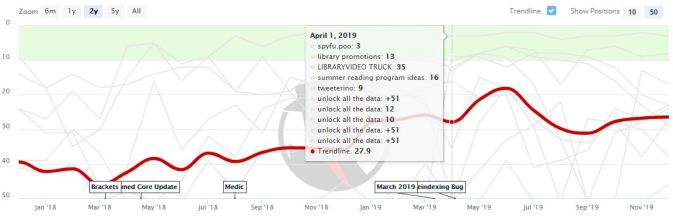
SpyFu:  Use this tool to check how high your competitors rank in SEO keyword search. Get insight on keywords that lead people to your competitors’ site, including any paid keywords they may be using. You can plot the reach of any website on a timeline, giving you an idea of when the site is seeing a spike in traffic. The graphic below shows you what that looks like for this website!

My favorite feature on SpyFu is the keyword analysis. I found out that people searching for “free downloads,” “free download music,” and “free faxing” are most likely to end up at my library’s website. Now I know that I need to make sure the word “free” appears frequently on every page of my library’s website to drive more traffic!

Social Searcher: This real-time social media search engine allows you to quickly pull all recent mentions of a competitor from the major social media platforms and the internet together into one dashboard. You can search for keywords and hashtags to see recently published posts. You can also set up email alerts to keep track of what people are saying about your library, a competitor, or a service, like Audible or DuoLingo.

SimilarWeb: This tool reminds me of Google Analytics, but with prettier graphics. You can see all kinds of useful information about your competitors including where their customers live, how much of their website traffic comes from social media, what keywords people are using to find their website and more. You can also see the top five “interests” of visitors to your competitors’ websites. And of course, you can compare that with your library’s website.

Moz: The site is focused on links and can tell you how other websites are linking to your competitors’ website, and how your competitor is using anchor text to drive traffic. You can also download their reports for free as a CSV file. You can also find out your website’s Spam Score!

Alexa:  This site will show you how your bounce rate and traffic sources compare with your competitors, as well as how much of your audience overlaps with that of your competition. Best of all, Alexa will identify keywords to drive more traffic to your website, based on what people in your area are searching for on Google and Amazon (Alexa is owned by Amazon).

TalkWalker: An alternative to Google Alerts, it lets you search blogs, websites, and news for posts about your competitors. You can have the alerts delivered to your inbox once a day or once a week.

MarketGrader: This free tool from Hubspot grades your website or your competitors on factors like how fast the pages load, keyword ranking, and security.

I did an analysis of this website and found that 30 percent of my traffic comes from mobile devices. That’s incredibly important information because that means that I must make sure everything I do on this website is responsive. This tool also gave me tips on how to increase my SEO ranking and security. All of those tips would be invaluable for my library’s website as well.

Check the Upcoming Events page for a list of webinars and conferences where I’ll be next. Let’s connect! Plus, subscribe to this blog and you’ll receive an email every time I post. To do that, click on the “Follow” button in the bottom left-hand corner of the page. Connect with me on YouTube, Twitter, Instagram, and LinkedIn.   
How to Create a Library Marketing Strategy from Scratch! The Library Marketing Show: Episode 20

Watch now!

Your library has no strategic marketing plan in place! What do you do? Emily from Berks County Public Library System in Pennsylvania asked: “I’m the Community Relations Coordinator for the Berks County Public Library System. Our headquarters provides support services to the 19 member libraries in our county. As someone who stepped into this role two years ago where there was no strategic marketing plan in place, could you give some suggestions on best practices when creating a plan from scratch?”

Plus KUDOS go out to the Evanston Public Library in Illinois for their free book distribution centers. Find out why this is a great way to reach non-cardholders and get them introduced to the your library! Read all about their efforts here.

Stay in Touch

Check the Upcoming Events page to see where I’ll be soon. Let’s connect! I’m doing a webinar soon, so be sure to sign up… it’s free!

Have an idea for the next Library Marketing Live Show? Submit it now.

Subscribe to this blog and you’ll receive an email every time I post. To do that, click on “Follow” button in the bottom left-hand corner of the page. Connect with me on Twitter, Instagram, and LinkedIn.  

You Can Fix It! If Your Library Marketing Is Failing, Here are the Top Eight Solutions

Do you remember when you learned to read?

I was in the first grade. The school was holding a contest to find a student to deliver a public service announcement about education on a local radio station. I was determined to win.

My mother, who was a first-grade teacher, was incredulous when I shared my plan for my broadcast debut. How could a kid who hadn’t learned to read yet get good enough to get that radio spot? She thought I was crazy.

And maybe I was. But I proved my mother wrong through sheer will and determination, and with a little help from the “Dick and Jane” series. By the end of first grade, I was reading well enough to tackle Laura Ingalls Wilder’s Little House in the Big Woods. And I was on the radio.

Twenty years later, I was working weekends as a newscast producer at a television station. That meant every Saturday and Sunday, I had to 8 hours to produce two shows… the 6 p.m. news and the 11 p.m. news. On a good night, it was a fast-paced and stressful proposition.

One day, the television station suffered a huge power failure. The station had backup generators that were supposed to kick on to keep us on the air. But a surge had fried the wiring and we were dead… really most sincerely dead. We had no way to get on the air. And the newscast had to get on the air.

Failure was not an option. We needed to get the show on the air because thousands of homes were also without power and those people looked to us for information. We also needed to get on the air because when the ads that are supposed to be a part of the newscast don’t air, the station loses money.

With airtime fast approaching, we came up with a plan. We would broadcast live from the parking lot using our live truck. It was crude but it worked. We felt like heroes. Journalism won the day and after that, I felt like there was no problem that I could not solve.

We all face obstacles during our work every day. Some are big, some are small. Your attitude plays a huge role in determining whether you overcome them, particularly for those of us working in the library marketing space. Many of our problems are unique to this industry. But trust me when I tell you that you are smart and you can figure anything out!

To prove it, here are the top five problems we face in Library Marketing along with eight solutions… because there are always more solutions than problems!

Problem: we simply don’t have enough time to do all the stuff we’re asked to do. The library year is kind of like the “lazy river” at my local YMCA… a constant swirling movement of events that keeps pushing us forward. It takes some force and a change of direction to break free. When you’re under pressure to promote each big event, it can leave you feeling like you never have enough time for your collection or services. You might feel like you don’t even have enough time to think or be creative.

Solution: a strategy gives you freedom. It not only helps you drive your marketing for the year in a measurable way, it will also provide a concrete reason the next time you have to say “no.”

Say “no” to promotions that don’t serve to drive your library’s strategic mission. Say “no” to promoting every exhibit, program, and author visit at your branches. Empower your branches to do some of their own promotion by providing them with simple guidelines for doing their own community marketing and set them free so you can focus on the big picture… your library as a whole.

Problem: we don’t have enough money. Tiny budgets really separate us most from the for-profit marketers. I do see more libraries spending big budgets but they’re doing it in smart and strategic ways, for re-branding and full production media ad buys, slick content marketing magazines, and direct mail to non-cardholders.

If you don’t have a big media budget, you can spend a little money to boost the effectiveness of your social media posts. Honestly, you can’t get much social media reach without a little spending.

Solution: social media advertising is cheaper than traditional ad buys. Your administrators might not realize how super effective targeted ads can be. You can easily prove that you can make a good return on their investment.

Solution: partnership opportunities to promote more than the big programs. At my library, we created media sponsorship guidelines which list the action items we’d like our potential sponsors to fulfill and what benefits we can offer them in return. Why not pitch a media sponsorship to promote your digital collection or your fantastic database resources?

Solution: find super library fans or influencers in your marketplace and invite them to write about your organization. At my library, when we opened our new MakerSpace and got lots of publicity outside the traditional media (this article is a good example).

Problem: we don’t have enough staff. If your handling a one-person marketing department, trying to take on marketing can be a scary proposition. You probably feel like you’re already just hanging on by the skin of your teeth.

Solution: use the talents of non-marketing co-workers. There are likely a number of librarians who have an interest and a proficiency for social media, writing, video, and design. Ask around and recruit those staff members to help you create content. Ask for permission to recruit interns. You’ll have someone to handle the grunt work and you’ll have the joy that comes with mentoring and encouraging the career of young marketers.

Problem: we don’t know enough about our cardholders to target them effectively with messages they will love. I suffer from this and many of my library marketing friends do too! It’s not a hard one to solve.

Solution: create a new cardholder survey to gauge the interests of people just entering your library system.

Solution: a yearly satisfaction survey for all cardholders is also extremely helpful, particularly when you can take the results and split them into your different persona groups. From there, you can map your customer’s journey. When they get a card, how long does it take them to use it? Are they checking out books or using your digital collection or your computers, or do they simply let it languish? Do you have some customers who got a card years ago, used it a specific way, and then stopped altogether? Do you have some customers who are making the transition from print items to digital materials? Do you have some customers who are only interested in one particular kind of item–DVDs, audio books, or computers?

Break your customers into groups based on what they do with the card and start creating pieces of content that target those groups. Maybe you’ll want to focus your efforts at first on one group in particular. At my library, we’re targeting a persona we call “Occasionals” which are people who use their cards once every six months. We focus on moving people from that cluster into a more active user persona, by targeting them with messages about the convenience of our digital collection.

Problem: we are resistant to change. This problem is the biggest, in my opinion. We are too set in our ways. How many times have you heard someone in your library say, “But that’s the way we’ve always done it!” It’s the phrase I dread most.

It takes an enormous amount of effort and energy to change the minds of our fellow library staff members and our administration. It seems like it would just be easier to stay the course.

Do. Not. Give. In. Marketers have a reputation for being talkative, a little eager, a bit bold, and maybe a tad whacky, and these are all GOOD traits! We have to remember our main objective–to get customers to move through the cardholder journey and engage with the library. Without that engagement, the people who argue that libraries are obsolete will win! We can’t have that.

Solution: with patience and persistence, you can thoughtfully steer your library into the future. It works best when you start small. Think of it like a staircase. On the bottom step, you make a small argument and you try a new thing. You see results. You report the results and chances are, you’ll get to climb to the next step.

The more you do this, the faster you’ll get up the stairs–at some point, you might even be allowed to take the stairs two at a time. Keep the end goal in mind but set smaller goals that help you to get there.

Subscribe to this blog and you’ll receive an email every time I post. To do that, click on “Follow” button in the bottom left-hand corner of the page. Connect with me on YouTube, Twitter, Instagram, and LinkedIn.
The Secret of the 60-Minute Meeting: Six Tips to Keep Your Library Marketing Team On Track and Stay Productive!

I dread Wednesdays.

On that day of the week, I usually have between five and seven meetings. I basically spend the day hopping from one conference room to another.

Not so long ago, most of those meetings would last beyond 60 minutes. Tangents were pursued. Ideas were dissected in great detail. My team and I were often blind-sided by requests to come up with an entire marketing campaign for an idea we’d only learned of moments before. It was unproductive.

As a marketing manager responsible for proving the bottom-line benefits of your marketing, it can be tempting to rely on recurring team meetings and regular check-ins to make sure you know exactly what’s going on with your team. But when long meetings evolve into habit, their value tends to plummet.

No meeting should ever last beyond 60 minutes. There are a couple of reasons for this. After 60 minutes of intense discussion, participants begin to lose interest. Their creativity and energy wanes. And the more time you spend in meetings, the less time you and your team have to do ACTUAL work.

Obviously you can’t control every meeting. But when you’re running the agenda, you can create an atmosphere of productivity and creativity while setting an example of efficiency for the rest of the library staff.

I don’t remember how it started but someone in my library’s senior leadership team took the initiative to institute a more efficient meeting structure. Suddenly, everyone was following this person’s lead. It was amazing and liberating.

I started instituting the 60-minute or less meeting rule about a year ago in my department and it’s worked so well that I recently introduced it in another setting.

I’m the chair of my school district’s bond issue campaign and our core committee meetings are 60 minutes or less. It was funny how many people from that group have commented about my 60-minute meeting pledge! It had never occurred to them that meetings, even ones where important decisions are made, could last less than an hour.

If you want to increase productivity in your library, here’s how to execute a 60-minute meeting.

Super prioritize your agenda.  For my library team, I divide action items into categories: the weekly schedule, immediate concerns, future concerns, and individual tasks. These four categories appear on the agenda every single week. Under each category, I list the items that need to be discussed in order of their priority. Next to each item, I list the name of the person in charge of that item or project. For the bond issue committee meetings, I simply list items in order of their priority without categories.

Time it out ahead of time. Try to estimate how much time you’ll need to discuss each item. If your total discussion time is more than 60 minutes, do some more prioritizing with your agenda. Once your agenda is set, make sure everyone attending the meeting has a copy so they can follow along and stay focused.

Set expectations at the beginning of the meeting. As the leader, set the example and start on time. Remind the team that the meeting will last 60 minutes and that you’ll be working to keep discussions on track. Assure them that if further discussions are needed on a particular item, you will schedule a side meeting. Off-topic discussions will be tackled outside of the formal meeting time.

The first time I made this announcement at the bond issue meeting, everyone looked shocked. I was worried that people would start watching the clock and timing me, thus cutting the productivity. But because I set firm expectations, the group trusts me to stick to them. They end up focusing more on the items we need to discuss. It’s funny how that works!

Watch your agenda word choices. Use words like “update” rather than “discussion” to help frame the conversation and give mental cues to attendees that work for the meeting will need to be done before the meeting actually happens. If a key decision needs to be made in the meeting, use the word “decision” in your action item to cue the attendees that you plan to come to a consensus at this meeting.

Take notes. Make note of who is assigned to each project. Give clear deadlines and expectations for each action item and include those in the notes. After the meeting, send out a copy of the meeting notes so everyone is clear about what they’re responsible for and when it’s due.

Continue to give time updates throughout the meeting. It’s OK to say, “We have 15 minutes left so we’re going to discuss one more item that is a priority to us. The rest of the items on this agenda will be discussed at a later meeting.” This will help keep discussions on track.

The LIVE LIBRARY MARKETING TALK ON INSTAGRAM is changing format. I have decided to pre-record my segments and post them to YouTube! I still want your email questions and topic suggestions ahead of time. Just fill out this form. If I pick your topic, I’ll send you a personal link to the video after it’s posted. I’m going to start posting my video segments on Thursdays so watch your email for that. Thank you to everyone who weighed in on the video decision!

And check out these upcoming events and webinars where we can connect and discuss library marketing. Registration links included.

Subscribe to this blog and you’ll receive an email every time I post. To do that, click on “Follow” button in the bottom left-hand corner of the page. Connect with me on Twitter, Instagram, and LinkedIn.  

The Step-by-Step Method for Figuring Out the Best Time to Send Library Marketing Emails and Why You Should Never Stop Experimenting!

I spend a good portion of my day as a library marketer trying to figure out how my cardholders live their lives. What do they do? When to they do it? What parts of their life are difficult? What parts are enjoyable? When do they have free time?

We do know a lot about the people who use the library, thanks to our own library surveys and great organizations like Pew Research Center. But you can also figure out what your cardholders are doing by email marketing experimentation. And your findings can increase the effectiveness of your marketing.

On the Library Marketing Live Instagram show, Dari from Cook Memorial Public Library District wanted to know how to figure out the best time to schedule marketing email to different audiences. The answer, in general terms, is between 6 p.m. and midnight. But I want to dive a little deeper into how I came to this conclusion and why this might NOT be the case for the people using your library!

If you’re just starting out with email marketing, check with the experts. There are a lot of companies (mostly email marketing software companies) which publish research on the best time of day and the best day of the week to send marketing emails, plus a bunch of other data points. So, start by gathering the latest research from these companies. Some of my favorites are Hubspot, AWeber, and Convertful.

Think about the daily life of your cardholder. If you are sending an email to a group of people who use a particular branch, or who are in a particular age group, try to imagine what they do all day. This generalization method will help you identify points in the day in which your target audience might have time to check their email.

Here’s an example: When I’m sending emails to parents of school-age children, I avoid 7 a.m. to 9 a.m., when parents are usually racing to get their kids ready to go to school. I also avoid 2:30 p.m. to dinner time, because many parents are picking up their kids, running them to extra-curriculars, and tackling homework.  I send marketing emails very early in the morning, like 5 a.m., so they are sitting in their inbox when they wake up but before their kids are up. I also send them after 8 p.m. when most school-age kids are in bed.

When I send emails to teenagers, I never, ever, ever send them in the morning. I exclusively email teenagers at night, and the later the better. That’s because most teens don’t have time to relax until 9:30 p.m. or later, after homework and after-school activities. They will likely check their email right before they fall to sleep at night, and they’re more likely to act on email in the late evenings.

Experiment. Send emails for a 3-6 months period of time. If you’re just starting out, try all hours of the day and night. Keep meticulous records of the results including open, click through, and conversion rates on all your emails.

After your allotted experimentation time, comb through the data and figure out which times of day resulted in the most click-throughs and conversions. Those are your optimum times to send emails! Focus most of your email scheduling on your proven best time of day.

And never stop experimenting. Start another experimentation period of 3-6 months, and then re-analyze data. If you notice a decline in click-through and conversion rates, go back to the drawing board.

My latest six-month analysis shows the best time to send email is between 6 p.m. and midnight, for all age categories and for all card types. This was not always the case. Two years ago, I could send my emails any time of the day EXCEPT between 7 a.m. and noon. But, at the end of 2018, that changed and the only emails that did well were the ones I sent at night.

Why did the effective time change? Because people’s lives change. Your cardholder base changes. The way that email gets delivered by various email providers changes. All of these factors mean that you’ll need to be in a constant state of experimentation. Don’t get married to any one time of day. Have an open mind and be ready to change your email scheduling strategy when the data tells you it’s time to change.

The most important thing is to have good content. If your emails contain stuff that your email audience wants to know about, they will engage with them, no matter what time of day it is. Try and keep your emails short. Focus on a few lines of really compelling text and one or two clear calls to action.

Bonus controversial opinion: I am not a fan of email newsletters. They usually contain too much information and too many calls to action. Their subject matter is usually too broad for their audience. I know a lot of us have to send them because senior leaders love them. But they aren’t an efficient use of email marketing. It would be better to take each section of your newsletter and send it separately to a targeted audience.

Don’t forget to join us for the LIVE LIBRARY MARKETING TALK ON INSTAGRAM every Tuesday at noon ET. We’ll talk about library marketing topics for about 20 minutes each week. My handle is Webmastergirl. You can email questions and topic suggestions ahead of time. Just fill out this form.

Subscribe to this blog and you’ll receive an email every time I post. To do that, click on “Follow” button in the bottom left-hand corner of the page. Connect with me on Twitter, Instagram, and LinkedIn.  
The Five Most Pressing Social Media Problems Faced by Every Library Marketer

This may mean I’m weird but one of my favorite things to do is check for information about social media on the Social Media Today website. And I’m a little obsessed with their monthly statistics report, which they publish in easy-to-digest infographic form. I spend a few minutes each month looking that report over just to make sure my library is still justified in posting on social media. I can also get new ideas for library marketing engagement on social media based on trends. This is fun for me. So yeah, I’m weird.

Data is always helpful. But social media is moving target. And many library marketers are busy doing other tasks as part of their job descriptions. We want to use our time efficiently.  And we want to be effective.

I’ve gathered the most pressing questions about social media from some of my readers. Let’s lay out some answers and resources to help make your job easier.

What social media platforms should we post on? The answer to this really comes down to your strategy. What is your library trying to accomplish? Who is your target audience?

I love that monthly report from Social Media Today because it tells me why people use each social media platform. You can use that report to decide where you should post based on your library’s strategy and goals.

You must also consider how much time your library is willing to invest on social media. My library posts on Twitter, Facebook, Instagram, LinkedIn, and Pinterest because each of those platforms aligns with some portion of our library’s overall strategy. But I am not going to lie to you: that’s a lot of work. I’m lucky to have several staffers who work together to post. And it’s still really hard for us to keep up.

Smaller libraries will want to concentrate on the platform or platforms that will give their library the most benefit. Quality is better than quantity. It’s okay to only post on one platform!

Further reading

The Top 21 Social Media Sites to Consider

How often should I post on social media? Posting on social media is a scientific attempt. You should set a reliable cadence. You’ll want to be consistent with your posts. Track the results and adjust your posting schedule based on the results.

Based on our experience at my library, here’s what I recommend as a starting point:

Facebook: No more than once a day

LinkedIn: Once or twice a day

Instagram stories: At least once a day

Instagram feed: Two to three times a week

Twitter: Five to 12 Tweets a day, plus retweets and responses. On Twitter, you should repeat tweets at intervals. The feed is a moving target and unless someone is scrolling through at the exact moment your tweet goes out, they’ll miss it. Users rarely go to a page to see a library’s full schedule of Tweets!  It’s also okay to post 24 hours a day. There are people who are awake at 2 a.m. scrolling through Twitter!

Pinterest: Several organic Pins each day (something created by you and leading to your library’s website) plus as many curated Pins as you need to stay aligned with your strategy. An easy way to get those organic Pins onto your boards is to Pin the best new books from your collection. If you have a blog, you can also post content from that.

Further reading

How Often to Post on Social Media

The Truth about How Often to Post on Social Media

Does our library need to buy a Facebook ad to get any organic reach and, if so, how much should we spend? The short answer to this is yes. You’ll need to spend money on Facebook ads or boost your Facebook posts to see any significant organic traffic for your other Facebook posts. That’s the sad fact of it. (can you tell my enthusiasm for Facebook is waning?)

That said, you don’t have to spend much money at all. Most libraries can spend about $2-3 a day to boost a post or promote an event and see results. Facebook gives you a lot of control and help in choosing a target audience. As always, you’ll have to look at your library’s overall strategy to determine which posts to spend money on.

Further reading

Facebook for Nonprofits-10 Tips

Why Facebook is a Waste of Time and Money for Nonprofits

How can I get more followers on my social media accounts? Please stop focusing on follower counts. I want libraries to focus instead on engagement. It’s kind of like speaking at a conference. You might be thrilled at the prospect of talking to a huge group of people. But if half of your audience is yawning or looking at their phones, what is the point? It’s much more meaningful to speak in front of a small room of people who are riveted by what you have to say.

That’s how I look at social media followers. I don’t care how many followers my library has on any social account. I want people who want to engage with our content. Focus on shares, likes, and comments for posts and not the number of followers.

Further reading

Why You Social Media Follower Count Doesn’t Matter

Should we have a team of people posting to social media or should we take a centralized approach? I am an advocate of centralized social media posting. If you have one or two staffers who post to all your social media accounts, you can preserve the brand voice and protect the security of your accounts. However, one or two people cannot know everything that’s going on in your library system. So create a team of contributors, who send post suggestions, photos, and videos.

Further reading

Protect Your Library Social Media Accounts From a Security Breach

Subscribe to this blog and you’ll receive an email every time I post. To do that, click on “Follow” button in the bottom left-hand corner of the page. Connect with me on Twitter, Instagram, and LinkedIn. I talk about library marketing on all those platforms!

A WordPress.com Website.

Up ↑