Search

Super Library Marketing: Practical Tips and Ideas for Library Promotion

Category

Marketing Basics

Direct Foot Traffic in Your Library Branch Using These Six Secrets for Helpful Wayfaring Signage

Photo courtesy Public Library of Cincinnati and Hamilton County

There is a romantic notion attached to wandering the stacks of the library, aimlessly lost in a sea of books for hours on end.

But for a portion of our community, efficiency is the name of the game. They’re hoping to pop into your branch, find what they need, and get out as quickly as possible.

This is especially true in the Next Normal. Some community members just don’t feel comfortable spending a lot of time inside our buildings.

That’s where wayfaring signage comes into play.

Wayfaring signs help direct human traffic, making it easy for people to navigate our buildings. But the signs can do more than move bodies.

Wayfaring signage is a key marketing opportunity for libraries. An efficient and well-planned system of directional signs will make it easier for visitors to discover new or underused portions of your collection or services.

Unfortunately, for many libraries, wayfaring signage is an afterthought. Creating the best signage seems intimidating.

But now, when library buildings are just reopening for full service, we have an opportune time to reimagine and reshape the way the public moves through and uses our physical libraries. And this work doesn’t have to be complicated.

Here are six tips to help you create the traffic flow that is best for your community, your staff, and your library statistics.

Start with a signage audit.

Your first step will be to go through your library and make a list of all the wayfaring signs you currently have. Take photos to go with your list so that you can have an accurate record of your current signage situation.

Next, study how people are using your space. Pick an hour each day for three days and sketch a “heat map” of people entering and exiting your library. You’ll use a blueprint or map of your library. Watch how people enter the building, move through the space, and exit. As they move, trace a line on your map to indicate where they’ve been.

Using your heat map, you’ll be able to see how your current signage is affecting the way people move through your branch. This will help you identify which parts of the building are underused. You can start to imagine how to configure your new signage to move people into those key areas.

For instance, if you have a heat map that shows people are drawn to your computers and your holds shelf but are missing your Makerspace or your fiction collection, you’ll want to consider how you can use wayfaring signage to change the traffic pattern and draw people to those underused spaces.

Less is more. 

It seems counterintuitive, but you don’t want to label every single shelf in every single section of your library. Too many signs areย a distraction–the eye doesn’t know where to look and the brain gets overloaded.

Use your signs to point customers to underused areas. And consider leaving the other spaces blank. If a space is already popular and your customers know how to reach it, it likely doesn’t need any wayfaring signage.

Rely on a simple, consistent design.

Your library’s brand is your starting point for great wayfaring signage. Your logo use, color selection, font style, and wording should all be within brand guidelines.

Next, decide whether you’ll incorporate symbols, arrows, words, or a mix of all three. Moderation is key, but a well-placed arrow can help ease confusion and build confidence in your timid customers. 

If your library has more than one branch, standardize wayfaring signs and signage terminology for all locations. Your customers will know exactly what to look for, no matter which branch they visit.

If your library doesn’t have clear branding, remember this: good signage isn’t fancy. It’s functional. Use a simple, accessible font in a neutral color like white or black with a plain background to make the sign pop. A clean, simple design will also add longevity to your signs and keep them from looking outdated.

You’ll also want to ask yourself whether your signs convey friendliness and helpfulness. Exclamation points, capitalized letters, and red font or a red background may come off as angry or unfriendly.

Ditch the library jargon. ย 

In 2012, a reference librarian at the University of Berkley reviewed more than fifty library usability studies to pinpoint library terms that are generally not understood by the customer. His review uncovered problems with terms like “database”, “e-journals”, “periodical”, “serial”, and “reference.”

Whenever possible, we should be clearย when we create our wayfaring signs. Instead of saying “reference”, you can use the word “research.” Instead of “periodicals”, say “magazines.”ย 

Change the sign above your reference desk to say, “Ask us a question here!” The sign at your circulation might read “Check out your books here!”

Train staff to help with wayfaring.

Staff who know to look for signs of confusion in a community member are providing good customer service.

If an employee spots a customer who walks around directionless for a long time or who keeps looking around, staff can delight and surprise the cardholder by gently approaching them and offering to help find what they need.

It sounds simple but there is such an emphasis in our society on self-sufficiency that we often forget, sometimes our customers just need a little extra help.

Be flexible.

Good signage is always a work in progress. Wayfaring signage can be updated, taken down, or added to as your community needs change.

Re-evaluate your signage every 2-3 years. If you find that you need to make some changes, and you began with a simple, consistent design, it will be easy to correct any issues and create new traffic patterns that benefit your library and your community.


You May Also Want to Read These Posts

Five Excellent Ways To Improve Every Sign in Your Library

What I Learned About Library Marketing From an Amusement Park

Subscribe to this blog and youโ€™ll receive an email every time I post. To do that, enter your email address and click on the โ€œFollowโ€ button in the lower left-hand corner of the page.

The Secret to Writing Engaging Copy for Any Library Promotion AND Getting Results Starts With a โ€œKISSโ€!

	
Delivery room (2nd floor of intermediate building) - in 1898-1899 Annual Report. Moved here from first floor in 1898-1899. Photo courtesy Public Library of Cincinnati and Hamilton County.

In 1960, Kelly Johnson was the lead engineer at a division of Lockheed that made spy plans.

One day, he handed a team of design engineers a handful of tools. Then he told the engineers that they must design a jet aircraft that would be repairable by the average mechanic in the field under combat conditions using only those tools.

At that moment, the popular design phrase “Keep it Simple, Stupid” or KISS was born. It describes the idea that most systems will work better if they are designed simply.

I first heard this phrase in journalism school. Reporters, marketers, ad agents, and public relations employees are all taught the power of simplified language in copy.

Simplified copy is easy to read and understand. It sounds authentic. Conversational copy subconsciously signals to your audience that you are a person, and people like communicating with other people.

Librarians are intelligent and sophisticated people. They have a deep understanding and appreciation of complex concepts. They’re driven by accuracy and information. It’s challenging to write clearly when you’re an expert in your field!

But our cardholders may have a difficult time understanding library brochures, posters, blogs, and websites with convoluted and confusing language. They may be tune out if the wording of your promotions isn’t conversational.

Your job as a library marketer is to translate complex thoughts and concepts into a concise and clear language your audience can understand and appreciate.ย You must present information in a way that the cardholder can understand.

It’s easier said than done, but here is some guidance you can put into practice any time you’re asked to write a piece of library marketing.

Identify your target audience and the action you want them to take.  

Before you even write the first draft of any promotion, pinpoint your audience as precisely as possible.

Are you writing for teens ages 13-15? Are you writing for women, ages 25-54, who love to read cozy mysteries? Are you aiming your message at parents of preschoolers who need help finding books to read to their children?

When you’ve settled on your target audience, write a sentence about them at the top of the page. Be as descriptive as possible.

Underneath that, write a sentence that describes the point of your marketing material. Are you trying to persuade someone to try a new service? Do you want to increase participation in a preschool storytime? Are you trying to get teens to enter an art contest?

Once you know precisely who your audience is and what you want them to do after they’re read your marketing material, you’ll have an easier job of writing clearly.

Define unfamiliar or difficult words, titles, or services. 

Go through the draft of your material and highlight words or terms that may confuse your audience. Then, find a better way to say or explain those words.

Never take it for granted that your reader has been a lifelong user or follower of the library. Words used by librarians to describe services, programs, catalogs, and databases, which may seem common and every day to you and your staff, may not be so to your reader.

Shorten your sentences and paragraphs. 

You may have noticed that, about 18 months ago, I started writing shorter sentences and paragraphs here on the blog. Views rose by 118 percent!

That’s because shorter sentences and paragraphs make it easier for your reader to understand and absorb what you are saying. Long paragraphs look thick and off-putting. Multiple studies show readers will skip lengthy paragraphs. And the Poynter Institute’s Eyetrack Study shows people are more likely to read an entire webpage when the paragraphs are short.

There are two rules you can remember to help you get into the habit of shortening sentences and paragraphs.

  • Ziomek’s 1-2-3-4-5 rule: Created by Jon Ziomek, a professor at the Medill School of Journalism. The rule says each paragraph must contain: 1 idea, expressed in 2 to 3 short sentences, taking 4 to 5 lines.
  • Nityesh Agarwal‘s 80-20 rule: You can convey 80 percent of the information in any piece of writing using 20 percent of the words.

Get into the habit of hitting your return key more often. You can also break your writing up using bullet points or lists.

Use online writing tools.

There are lots of free tools that can help you craft sentences that are clear and concise, even when the subject matter is not! They can help you figure out a headline that will draw readers in. They can help you discover just the right word to make your meaning clear.

Here’s a list of my favorite online writing tools. The Grammarly extension for Windows is also extremely helpful.

Ask a non-library employee to read your work.

I often ask my family members to read my writing. If they find anything to be confusing or convoluted, I know I need to change it.

Bonus Tip: Read or listen to the bookย Everybody Writesย by Ann Handley. It’s life-changing. Check your library collection first. If you have Overdrive, you’ll have the audiobook version. You MUST read this. It will make you a better writer.

Do you have tips for writing more clearly or examples where you have taken a complex library concept and simplified it for an audience? Share your experience or questions in the comments.  

Related Posts

Library Blogs are the Best! How to Use Your Website to Amplify Your Library Marketing Message on Your Own Terms

Breaking News: Make Sure Your Library Gets More Press Coverage with These Six Tips from a Former Journalist

Angela’s Latest Book Review

The Office of Historical Corrections by Danielle Evans


Subscribe to this blog and youโ€™ll receive an email every time I post. To do that, enter your email address and click on the โ€œFollowโ€ button in the lower left-hand corner of the page.
How to Avoid Three Big (But Totally Understandable) Library Marketing Mistakes

Watch Now

The Library Marketingโ€‹โ€‹โ€‹โ€‹โ€‹โ€‹โ€‹โ€‹ Show, Episode 106

In this episode, I’ll answer a question I got from a library staffer: What are the biggest mistakes you see library staff making in their marketing and promotions?

I’ll talk about the three most common boo-boos and give you ideas for avoiding these pitfalls. Don’t worry… you can do it!

Watch to find out who gets kudos!

Do you have a suggestion for a topic for a future episode? Want to nominate someone for kudos? Let me know in the comments.

And subscribe to this series to get a new video tip for libraries each week.

Thanks for watching!

Subscribe to this blog and youโ€™ll receive an email every time I post. To do that, click on the โ€œFollowโ€ button in the bottom left-hand corner of the page.
Prioritize! How to Decide Where To Spend Library Marketing Time and $$$

The Library Marketingโ€‹โ€‹โ€‹โ€‹โ€‹โ€‹โ€‹โ€‹ Show, Episode 104

Watch Now

In this episode, I answer a question from Tovah Anderson about how to decide how much time and money should be spent on the three buckets of library marketing: programs, services, and the collection.

Kudos in this episode go to the Monroe County Public Library for their new testing kitchen.

Do you have a suggestion for a topic for a future episode? Want to nominate someone for kudos? Let me know in the comments. And subscribe to this series to get a new video tip for libraries each week.

Thanks for watching!

Timing Is Everything: How To Determine the Perfect Day and Time To Send Library Emails

Photo of a woman on a computer courtesy Public Library of Cincinnati and Hamilton County

The plain fact is: Next to the face-to-face interaction between librarians and community, an email list is your most effective library marketing tactic.

How do your cardholders learn about new services? How do they find their next great read? How do they figure out how to use parts of the collection they didn’t even know existed, like video streaming or eAudiobooks? You can tell them all about your library’s awesome resources by talking with them in their inbox.

If your library isn’t already collecting cardholder email addresses, please start now.

You’ll create emails with an enticing subject line. Your emails will contain great content that your recipients will want to read. And you’ll be tracking metrics so you can build on your successes.

As your finger hovers over the send button, you may find yourself facing another important decision.

When should I send the email?

Does the timing really matter?

The simple answer is yes.

A great headline and great content are only half the battle for your cardholders’ attention. You’re also competing with their personal schedule, other messages sitting in their inbox, and social media.

Your message is more likely to catch their attention if it lands in their inbox at the right time of day.

Your library is fighting with others for urgency. You want your recipient to say to him or herself, “I need to read this and act on it, right now!”

Getting that message in front of your audience at the right moment increases the open, click-through, and conversion rate becauseย it takes advantage of that sense of urgency.

What the data tells us about the best time to send emails

I’ve done a lot of experimenting with time of day emailing over the course of my library marketing career.

There are three times of day to send messages for the most effective results.

  • Really early in the morning (by 5 a.m.)
  • Lunchtime (11 a.m. to 1 p.m.)
  • Before bed (between 8 and 10 p.m.)

The website Optinmonster calls these “key transition times.” And their research confirms what I learned.

A message sent in the early morning will be sitting in your cardholders mailbox when they first wake up. It’ll be among the first things they check. An email sent at lunch means it’ll be sitting there when they check their messages over their tunaย sandwich. An email before bedtime means it’ll be there when they scroll through their emails while they watch a show or before they get ready for bed.

Optinmonster also recommends sending emails at 4 p.m., when people need a little distraction as they get through the last hours of their workday.

As for day of the week, most libraries should avoid sending emails on Mondays and weekends. The agency Wordstream says their data agrees with that assessment.

Your recipients inbox may be flooded with emails on Mondays. And on weekends, many people are running errands and doing other things with their friends and family. They’re less likely to check their inbox on a Saturday or Sunday. Case in point: I’m writing this on a Saturday. It’s 9 a.m. and I just realized I haven’t checked my email yet today!

But what works for me and what works for Optinmonster and Wordstream might not work for you.

It’s crucial that you do your own experimentation.

Try this Four Email Experiment to narrow down the best day and time for your audience.

For this experiment, use the same email for your test. Perhaps you have a weekly newsletter you send to parents, or a bi-weekly email that you send to people who regularly visit a certain library branch. Those emails will work perfectly for this experiment.

Try to keep the subject line for each of the four emails in your experiment similar. You’re testing for the best day and time, so you want to rule out other factors that may make an email more or less likely to be engaging.

Start by sending your email on Tuesday at 4 a.m. The next time you send it, schedule the email for Tuesday at noon. The following send, try Tuesday at 4 p.m. and finally, Tuesday at 8 p.m.

Track your open, click-through, and conversion rates on all these messages to see which is most effective. Work through each day of the week to see which days get you the most traction.

When you find a day and time that works best for your audience, stick to it for about six months. Continue to track your metrics over that six-month period to ensure you’re not seeing a slip in the numbers.

If, after six months, that day and time continues to be effective for you, you don’t need to run the experiment again.

But the habits of your audience may change during that time. Outside forces (like the pandemic) may affect the daily rituals of your recipients. You may need to run the experiment again if you see numbers slipping.


I have a special request.

I’m putting together a conference presentation and I’m looking for some examples.

  • Libraries that have reopened and have had some success drawing people back into the physical branch.
  • Libraries who believe they’ve figured out the hybrid program model.
  • Libraries who are trying to turn their pandemic digital users on to other services now that the library has reopened.

I’ve created a form so you can brag about your library.

I know you are doing amazing work. I want to highlight you on a national stage! Thank you in advance.


Subscribe to this blog and youโ€™ll receive an email every time I post. To do that, click on the โ€œFollowโ€ button in the bottom left-hand corner of the page.
You May Also Want to Read These Posts

Looking for Guaranteed Email Marketing Success at Your Library? Here Are Four Essential Metrics To Track.

Try These Two Fun Tests To Improve the Effectiveness of Your Library Promotional Emails!

Angela’s Latest Book Review

The Southern Book Club’s Guide to Slaying Vampires by Grady Hendrix

How To Turn Your Library’s Frequently Asked Questions Into a Marketing Opportunity!

Watch Now

The Library Marketingโ€‹โ€‹โ€‹โ€‹โ€‹โ€‹โ€‹โ€‹ Show, Episode 102

In this episode, I share some tips for how to use your library’s FAQ’s into marketing opportunities. This idea can be a great way to establish your library as a place of answers.. And it can help you fill holes in your promotional schedule with valuable content.

Kudos in this episode go to Eileen Button of Genesee Public Library who wrote an open love letter to libraries that made me a little teary-eyed!

Do you have a suggestion for a topic for a future episode? Want to nominate someone for kudos? Let me know by clicking on the feedback tab.

And subscribe to this series to get a new video tip for libraries each week. Thanks for watching!

Read Now! Seven Surefire Tips To Create an Effective Call to Action for Any Library Marketing Piece.

Photo courtesy Public Library of Cincinnati and Hamilton County Digital Library. Catalog Department approx. 1946.

If you want your community members to do something, you must tell them what you want them to do. Explicitly.

That means you must add an amazing call to action for every promotional piece you create.

What Is a Call to Action?

A Call to Action, or a CTA, is a phrase that is used to tell the someone exactly what action to take and how to take it. ย It also implicitly provides the motivation for the recipient to take the action.ย 

A CTA can be as simple as two words โ€œRead Now.โ€ It may be longer: โ€œWant to take the next step in your career? Take a free career assessment test on our libraryโ€™s website.โ€

It may be a link to your website, catalog, chat service, or email box. It may tell community members to call a special phone number to speak with a librarian or visit a certain desk at the library to talk with staff.

The call to action gives the person consuming the promotional material the instructions for taking the next step to use library resources. It must be strong, clear, and commanding.

For most of us, the CTA is the last thing we think about when creating a promotional piece. Staff put their time and energy into creating the layout, adding the right image, making sure all the text details are correct, and timing the promotion for the perfect release.

But I encourage you to spend some time thinking through your CTAs early in the process of creating any marketing piece. Here are seven tips to remember when you create a CTA for any piece. Practice going through this list every time you do a promotion. ย 

Use positive, active language in your call to action. 

Think of your CTA like a commandment. If you could order your community member to do something, what would you say?

Some examples of positive, active language which apply to libraries are:

  • Read
  • Watch
  • Download
  • Create
  • Join
  • Learn
  • Donate
  • Explore
  • Discover
  • Enter

You can also add a sense of urgency to your CTAs by adding the word โ€œNowโ€ as in โ€œRead Nowโ€ or โ€œWatch Nowโ€.

Make your call to action as concise as possible.

For emails and digital signage try to keep your CTA between one and three words.

For flyers, bookmarks, posters, and videos, you can add a few more words like:

  • Register for this program
  • Place a hold on this book
  • Reserve your spot
  • Get the details
  • Sign up now
  • Read our step-by-step guide

For social media posts, a full sentence is good. But, on social media, put your sentence-long CTA into the text of your post, not as text inside the graphic or image you are attaching. If your CTA is in the image, use the one-to-three-word rule.

For blog posts, your CTA can be a longform sentence. Consider using bold text to draw the eye to that sentence. Or you can use a button (see the section on buttons below).

Try using the first person.

The marketing agency Unbounce did a fascinating study on CTAs and found that changing the text from the second person (โ€œRegister your child todayโ€) to the first person (โ€œRegister my child todayโ€) resulted in a 90 percent increase in clicks.

Your library can experiment using CTAs that say, โ€œReserve my spotโ€ or โ€œGet my personalized reading recommendations.โ€ You may find that the change makes a difference in the number of people who take an action after seeing your promotional message.   

Put your call to action in a brightly colored box or circle.

There is something psychological about the look of a button that will compel your recipients to click on it.

The color of the button matters. You want something thatโ€™s eye-catching. You may be limited in your color choices depending on your libraryโ€™s brand standards.

But, if you have room to experiment, read this fascinating post from marketing expert Neil Patel on color psychology. Then decide what kind of emotion or energy you want your CTA button to convey and choose the corresponding color.

CTA buttons work best in emails and newsletters. But try them also in promotions where you can’t click on a button, like bookmarks, flyers, posters, and digital sign promotions. The button will still serve the purpose of setting your CTA apart from the rest of the piece.

Put your call to action in the top one-third of whatever piece you are creating.

Moving your CTA โ€œabove the foldโ€ as itโ€™s called in the newspaper and magazine business, calls attention to the action you wish for your recipient to take.ย 

Add white space to the area around your call to action.

The extra white space helps create a visual break and draws the readerโ€™s attention right where you want it. Extra white space is also good for anyone reading your digital library promotional piece on a mobile device. It creates a clear area for fingers to click.

Try to use as few calls to action as possible.ย ย 

Youโ€™ll want to focus the energy of your reader on the next action you wish for them to take. If you offer them too many potential actions, theyโ€™ll be overwhelmed and less likely to do anything!

For most promotional pieces, youโ€™ll want only one CTA. This rule includes CTAs for email, digital signage, flyers, posters, bookmarks, social media posts, and videos.

The exceptions are blog posts and newsletters. For blog posts, my personal experience is that two or three CTAs work best. For newsletters, try to offer no more than five CTAs.

Did you notice where I took my own advice in this blog post?


Subscribe to this blog and youโ€™ll receive an email every time I post. To do that, click on the โ€œFollowโ€ button in the bottom left-hand corner of the page.

You May Also Find These Posts Helpful

Two Key Areas of Marketing Focus That Will Deepen Your Communityโ€™s Loyalty to Your Library and Create the Truly Engaged Library User

Try These Two Fun Tests To Improve the Effectiveness of Your Library Promotional Emails!

Looking for Guaranteed Email Marketing Success at Your Library? Here Are Four Essential Metrics To Track.

Image courtesy Public Library of Cincinnati and Hamilton County

Use the feedback button to share your most pressing email marketing question. I’ll answer these in a future blog post!

I love opening the “reports” tab on an email platform. There is a second or two of anticipation as the page loads that brings me a thrill.

What will the numbers say? Will they be better or worse than last month? Will they reveal a new trend that I can use to better serve my target audience?

I realize I sound a little nuts. But honestly, I love metrics.

They are clear and concise. They show you what’s working and what’s not working. They give you permission to stop doing promotions that don’t help your library at all. If you try something new, they’ll tell you whether your idea worked or not.

Tracked over time, email metrics will help you to take the 30,000-foot view of your library marketing. You can see if your emails are doing what they are supposed to do… moving your library toward its overall strategic goals.

There is a lot we could measure in terms of email marketing. It would be easy to get lost in the quagmire of numbers and analysis.

So, I want you to focus on four data points that really matter to library email marketing. Use these metrics to determine whether your messages are connecting with your audience and promoting your library’s overall strategic goals. And don’t miss the bonus tip at the end of this list!

“Email is the only place where people, not algorithms, are in control.โ€

Ann Handley, writer, digital marketing pioneer, and Wall Street Journal best-selling author 

1. Increase of raw circulation numbers.ย 

Recordย the number of checkouts and holds before you send the message and then again after the message is sent. You can generally wait about three days to check those numbers. Cardholders who want to act on an email will do so within a three-day period of receiving it.

What this metric will tell you: Raw circulation numbers will likely be of interest to anyone in collection development at your library. They are also the basis for the next two metrics, which will help you compare the effectiveness of your emails.

2. Percentage increase in circulation.

Once you start collecting data on raw holds and checkout increases, you will want to calculate the percentage increase in circulation.  

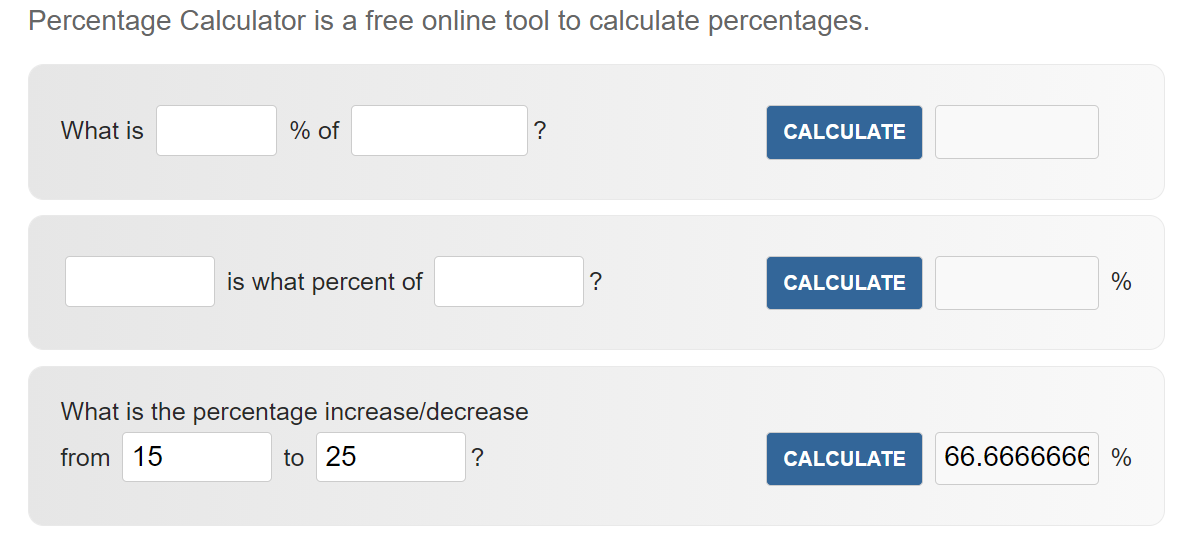
Let’s say on Monday, you send an email promoting one specific eBook. Before you send the email, you note that there are currently three holds or checkouts of this eBook. When you check on Tuesday, there are four new holds or checkouts placed on the eBook. In total, there are now seven holds or checkouts on this item.

Use percentagecalculator.net to calculate the percentage increase in circulation. For this example, we use the third calculation tool on the page:

That’s a 133 percent increase in circulation.

Now, the next week, you decide to send another email promoting a different eBook. But this time, the eBook you choose to promote has 15 holds or copies before the email is sent. When you check 24 hours after sending the email, there are 10 new holds or checkouts. In total, there are now 25 holds or checkouts on the eBook.

The raw numbers for the second email are bigger (an increase of 4 holds/checkouts vs. an increase of 10 holds/checkouts). But the percentage increase for the second email is actually smaller, at 66%! That means email #1 was more effective.

What this metric will tell you: Percentage increase in circulation lets you compare your promotions more accurately. If you are short on time, this kind of comparison will help you determine which promotions will give you the most success with your limited resources.

3. Conversion rate.

This is the percentage of people who took an action after receiving your email.

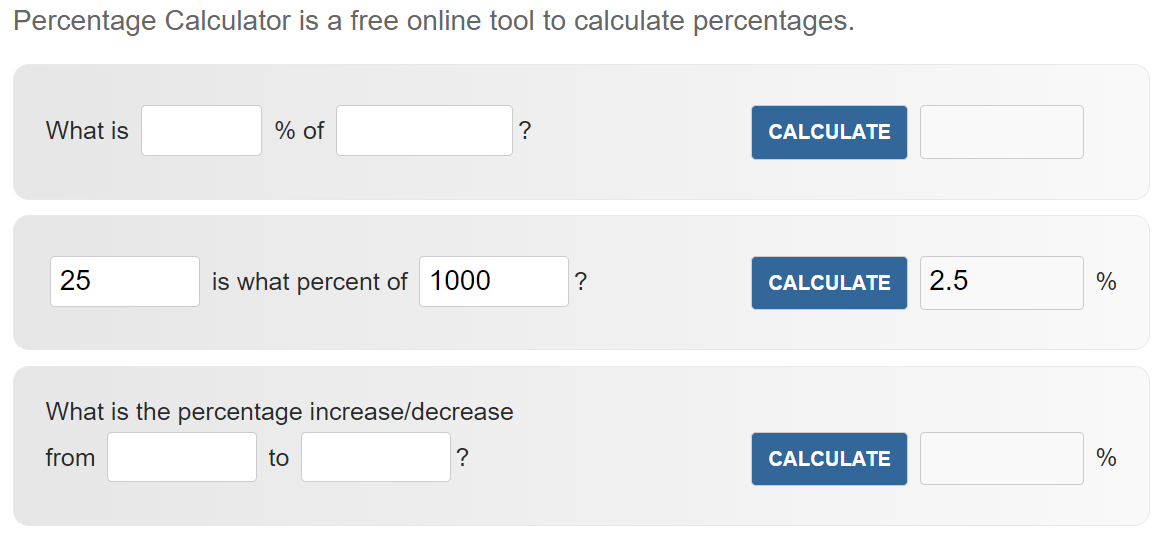
Let’s pretend that you’ve sent an email to 1000 people. The email promotes a streaming video on your library website that hasn’t had any views in the past couple of weeks.

When you check the streaming statistics for that video, you see that 25 people watched the video in the days immediately after you sent the email.

Using the second tool on our percentage calculator website, you can calculate the percentage of people who “converted” or took an action after your email.

What this metric will tell you: If you start tracking conversion rates on your emails, over time you’ll have a clear picture of the types of emails your audience responds to. You’ll be able to establish a good base percentage for your audience. This number will be different for every library.

If you are short on time, this metric will help you determine which promotions will give you the most success with your limited resources. When you find a certain type of email promotion works based on conversion rate, you should do it more often.

4. Amount of traffic driven to your website.

Track how much traffic is funneled to your public website by your emails. You can use Google Analytics to analyze how efforts on those platform translates into action by your cardholders. If you’ve never worked with Google Analytics, here is an easy guide to get you started.

What this metric will tell you: This is an important metric to share with administration, because it clearly demonstrates the value of the time and energy you have invested in email marketing.

Special bonus tip!

If you promote the same collection item or booklist on social media, email, and your website, put some space between those three promotions. A week is a good amount of time. That allows you to really pinpoint whether your increase in circulation is coming from email, your placement of the item on your website, or social media.

In fact, that’s a fun experiment to run. Can you drive higher circulation numbers by promoting your collection on your website, email, or social media?

You can even get more granular: which social media platform is best for collection promotion? Which page on your website is best for placing collection promotions? Which email list responds best? See, this is fun!


Subscribe to this blog and youโ€™ll receive an email every time I post. To do that, click on the โ€œFollowโ€ button in the bottom left-hand corner of the page.

You may also like these articles

Are My Library Email Metrics Goodโ€ฆ. or Bad?! Here Are the Latest Stats to Help You Figure It Out.

What Metrics Demonstrate Your Libraryโ€™s Social Media Marketing is Working?

Angelaโ€™s latest book review

Beautiful Things by Hunter Biden

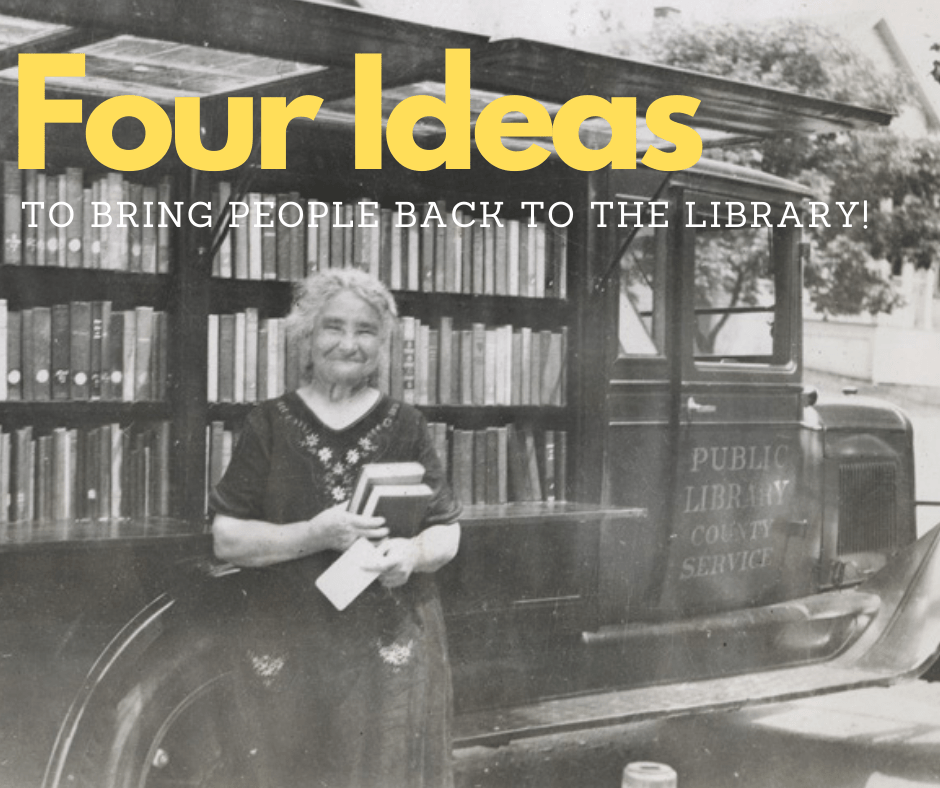
How Do We Get People To Come Back to the Library? Four Ideas That Can Help You Rebuild Use of Your Library

Here is something I’ve noticed in my conversations with library staff over the past six months.

Staff share a profound feeling of separation from their communities. They’ve been working for more than a year without the normal interactions with the public. And that has led to increased anxiety about whether things will ever return to normal.

The big questions I’m getting are: How long will it take before circulation returns to normal? How long will it take before program attendance is back to where it was before the pandemic?

I can’t answer those questions. I’m not sure anyone credibly can.

But what I can do is help you to rebuild use of your library through marketing and promotions.

Here are four ideas that libraries can strategically use to bring people back to the library, re-engage cardholders, and get new community members to use the library.

Renew everyoneโ€™s library cards automatically and incentivize people to use them. Then, use that interaction to re-connect.

If you have a system where cards need to be renewed, a blanket automatic renewal is a great promotional tactic. Automatic renewal of library cards is a customer service best practice. And doing so right now, when we are coming off more than a year of service limitations, is strategically smart.

If your senior leaders have concerns about a blanket renewal, ask them to read Cordelia Anderson’s book. It explains the advantages of this action.

The next step is to gather prizes from partners, like you would for summer reading. Let people know theyโ€™ll be entered into a drawing to win a prize if they use their card. If they check out a book or use an online resource, they can fill out an entry. If your priorities are to drive attendance at in-person programs or to get people to physically come into a branch, you can tell people they get two entries in the drawing!

Once they come back, make sure you do everything you can to re-connect with these cardholders. Have your staff do three things with every person they interact with.

  • Get their email address.
  • Get them to self-identify their interests. Are they looking for help solving a particular problem, like finding a job? Are they looking for books for entertainment and relaxation? Ask your public to name at least one topic they would want more information about.
  • Give them a print piece of marketing material to encourage further use of the library. Don’t let them leave this interaction without something in their hands. Remind them that the library is open and actively providing service to your community again.

Rebuild a sense of community.

One of the things that library users said they missed most during the pandemic was social interaction. This is another opportunity for libraries to rebuild.

Rather than re-starting our one-off programs, letโ€™s spend our energy putting together programs that everyone can participate in. Wider-ranging programs, which focus on getting large groups people to do an activity together, help to build a sense of community.

One idea: everyone reads the same book, or watches the same movie, or listens to the same piece of music. Then, your library creates ways for your community to share their thoughts and experiences around that group activity.

Another idea: ask your patrons to share their pandemic stories. Encourage them to share how they survived their time in lockdown, what they learned, and how the experience changed them.

Let the public know you’ll be posting their contribution on a special landing page of your website, and sharing them through social media and in email. You can even print short versions of the stories on a bookmark, which youโ€™ll slip into holds and checkouts to encourage other library users to share their stories.

Finally, hold an event where people can have the chance to read their stories to an audience.

A shared experience builds community. And a community that feels connected to your library, and to each other, will keep coming back to use your services.

Use your virtual programs and videos to encourage your community to expand their library use.

Since the beginning of the pandemic, libraries have embraced livestream and video programming. Now we can use the platforms and audiences we have built for promotions.

Do a livestream from inside your building. Show your audience one thing they can do in your library that they havenโ€™t been able to use since the building was closed or operating under limited services. Save the video and repost it later for on-demand viewing.

Do a livestream where the community can ask questions about the library… an “ask me anything” type event. During your livestream, be sure to mention programs or services that may be interesting to those asking questions.

It’s like working the front desk: people ask questions and you provide the answers. You’ll be demonstrating your staff’s expertise and reminding people that the library is there to help.

Buy two kinds of social media ads.

We know social media algorithms do not work in favor of organic posts. Use some of your budget to circumvent the system by purchasing ads. 

Your ad approach can have two methods. One ad should focus on followers. They donโ€™t necessarily see your posts because of the algorithm. But a purchased ad will make sure you are in their feeds. Use the ad to alert them to your expanded changes in service.

The other ad should be focused on people who arenโ€™t library users or followers. You can even split this audience into people you think might be interested in coming into a branch versus people who might want to use digital resources. Social media platforms do a great job of helping you to target specific audiences with your ads.

Spend $25 and see what kind of results you get. If you have more money, use the data youโ€™ve received from this smaller test to run larger, longer ads.


You Might Also Like These Posts

Why NOW Is the Time To Experiment With Your Library Marketing and Promotions!

Your Summer Reading Challenge: How Your Library Can Use Big Events To Gather Compelling Content for Promotions During the Rest of the Year

Angela’s Latest Book Reviews

Everything Sad is Untrue by Daniel Nayeri

A Certain Hunger by Chelsea Summers

Subscribe to this blog and youโ€™ll receive an email every time I post. To do that, click on the โ€œFollowโ€ button in the bottom left-hand corner of the page. Connect with me on YouTubeTwitter, InstagramGoodreadsand LinkedIn.

A WordPress.com Website.

Up ↑