Search

Super Library Marketing: Practical Tips and Ideas for Library Promotion

Category

Marketing Basics

How Much Library Marketing Should You Hand Over to Your Branches? The Library Marketing Show: Episode 26

Watch Now

Erin at Casey Cardinia Libraries in Casey, Victoria, Australia, asks: “Could you talk about how marketing can support the branch and then what the branch can do locally on their own. It’s a constant thing coming up in our service and I’m thinking a one-pager with some face to face training will help. Marketing teams (if the service is lucky to have one!!) are generally small and we need everyone to take ownership!”

Plus you’re gonna want to watch through the Kudos sections!

Have an idea for the next Library Marketing Live Show? Submit it now.

Want more Library Marketing Show? Watch previous episodes!

Check the Upcoming Events page to see where I’ll be soon. Let’s connect!

Subscribe to this blog and you’ll receive an email every time I post. To do that, click on “Follow” button in the bottom left-hand corner of the page. Connect with me on Twitter, Instagram, and LinkedIn.  

How to Use Tiered or Staggered Promotion in Your Library Marketing! The Library Marketing Show: Episode 25

Watch This Episode

In this episode of The Library Marketing Show, Angela answers a webinar question: “How do you keep the public informed about what the library has to offer? Often we promote a new product or service, but if patron missed that wave of new promotion they probably don’t know about it (especially databases and other electronic resources). Do you ‘re-promote’ and how?”

I was at a conference where I heard a marketing expert named Andrew Davis talk about tiered distribution. The approach takes advantage of a consumer cycle of excitement. I talk about that in the video!

Also kudos to Champaign Public Library for their “Why People Love the Library” video. The production value is beautiful, and they did a really good job showing the library as a diverse, welcome space. They really give you a sense that their library is modern and more than books. The last soundbite is the best! Watch the video here.

Have an idea for the next Library Marketing Live Show? Submit it now.

Want more Library Marketing Show? Watch previous episodes!

Check the Upcoming Events page to see where I’ll be soon. Let’s connect!

Subscribe to this blog and you’ll receive an email every time I post. To do that, click on “Follow” button in the bottom left-hand corner of the page. Connect with me on Twitter, Instagram, and LinkedIn.  

Five Creative Ideas to Help You Beat the Blues, Get Inspired, and Create Amazing Library Marketing Campaigns Again!

It is hard to believe that in a building filled with the stories, a library marketer would need inspiration.

But alas, we are human. And sometimes we get stuck in a rut.

Library marketers are expected to be energetic and enthusiastic at all times. We must come to all meetings and be able to give a list on the fly of exciting and innovative ideas for promoting major developments and smaller decisions that affect the everyday cardholders.

I don’t know about you, but sometimes, I just too plain exhausted to be the marketing superwoman. The busyness of the library summer reading season seems to melt every year into the busyness of fall. There is little time to rest. And exhaustion makes it even more difficult to find creative inspiration.

We struggle to inspire our cardholders, both old and new. We want our customers to use our collection and enjoy our services every day, but we can’t seem to figure out a way to make them act. The tried and true methods of marketing no longer work and we’re frustrated, angry, and frankly, a little worried.

Here’s what I do when I find myself stuck in a marketing rut.

Define your workflow and make it the law of your marketing landscape. A defined outward-facing workflow sounds like the opposite of a creative endeavor. But in reality, it creates space for you to think. It ensures that you have time to be thoughtful so you can develop and deliver a quality product.

Set an expectation about who will manage workflow. That means all marketing requests go through one person on your team. That person is responsible for looking at the request and determining if it fits into the library’s overall strategic goals. That person sets clear expectations and goals for each project. That person communicates a plan of action based on realistic timelines and due dates.

Let me tell you: a defined workflow is a lifesaver. It reduces stress and anxiety for everyone on your team. When your staff understands what is expected of them, they can focus on the creative parts of the job.

If you are new to your library, it will take time to get a smooth workflow in place. Be patient with yourself and with others. Keep reinforcing your expectations. Eventually, your coworkers will be on board with you, especially when they start to see results.

Be generous with positive reinforcement. Positive reinforcement always creates an emotional experience for individuals or a team working together. Don’t just say, “Well done.” Write a note or a card praising specific actions or portions of work. Give yours staff unexpected breaks: team lunches and surprise treats can lift the spirit of your team and re-energize them.

Use your staff’s strengths to create passion for the work. I highly recommend that you invest in the Gallup Strengths Finders test. It gives you incredible and nuanced insight into yourself and your staff members. It shows you how to recognize the strengths of your team members and how to actually manage them to put those strengths to good use. You can find the book by Tom Rath at Walmart and Target for about $15. It includes a code that each team member uses to take the test online.

Through the Gallup process, I discovered my team members have a strong capacity for collaboration. This wasn’t much of a surprise to me. But the book also gave me suggestions for how to actually use that desire for collaboration to the advantage of my library. It also gave me greater insight and empathy for team members who prefer to work alone or who seem resistant to change. I can assign tasks to the best person for each job. It’s really changed the dynamics of my staff and made work easier for everyone.

Observe your customers. It helps me just to take a walk around the library or to visit the branches. I pretend to be browsing the books but really, I’m watching the way the cardholders browse the shelves, interact with staff, work the self-checkout machines and use the public computers. Do they look for a map? Do they look confused? Are they drawn to a particular book display? Do they linger over the new books or do they dash in for their holds and dash out? What questions do they ask? How do people actually move through the branch?

Observing the behavior of customers inside the library can give you an idea of what visitors love and what problems they encounter during their interaction with your system. Then, you can focus on creating new marketing ideas that spotlight the things your cardholders love, and answer the questions they have.

You can also observe online visitors. Spend some time poking around Google Analytics. Figure out which pages get the most visitors. Look for the pages where visitors stay for the longest period of time. Look for the landing pages with a high bounce rate. Page views and read time will help you focus effort on improving the customer experience for your website.

Check your statistics.  Our library makes circulation and programming stats available on our intranet. This little piece of data inspires me to find ways to help make their interaction with the library more worthwhile.

Sometimes a surprising trend emerges and that gives me a creative marketing idea. Sometimes a service takes a dip in usage, and it becomes clear that we need to shift our marketing focus to re-educating the public about that service. Data is such a valuable inspirational tool. Use whatever stats you can get your hands on!

More inspiration

11 Powerful Quotes for Marketing Inspiration

5 Ted Talks for Marketing Inspiration

Need Marketing Inspiration? It’s All Around You!

Subscribe to this blog and you’ll receive an email every time I post. To do that, click on “Follow” button in the bottom left-hand corner of the page. Connect with me on YouTube, Twitter, Instagram, and LinkedIn.  And check my list of upcoming events so we can connect.

Attention! Here’s How to Write Headlines That People Simply Can’t Ignore for Any Piece of Content

In my former life as a web journalist for a television news station, crafting the best headline for each story was the most challenging part of my day. It was also the most crucial task.

A compelling headline for any piece of content–email, social media posts, blog posts, newsletters, posters, and signage is essential. The right headline will make it impossible for people to ignore your content.

It may seem silly to spend a lot of time, energy, and brainpower on a couple of words. But it’s a critical component of all your marketing efforts. Libraries should spend time crafting the best headline on every piece of content they publish. This applies to their website, blog, social media posts, press releases, and emails, including personal emails and mass emails to customers.

A good headline should give your readers a hint at the copy that lies ahead without giving away the whole story. It should trigger an emotional response that includes an irresistible urge to read more.

Think of your headline as the gateway to all the content you have poured energy into creating. It may seem tall order for a short succession of words but it can be done.

So how do you write a good headline? Here are my tips.

If someone held a gun to your head and demanded you describe the copy in one sentence, what would you say? This is my twisted yet effective technique for getting that first draft of a headline down on paper. It forces you to boil your work down to its main point or big idea. Go for the emotional core of your copy.

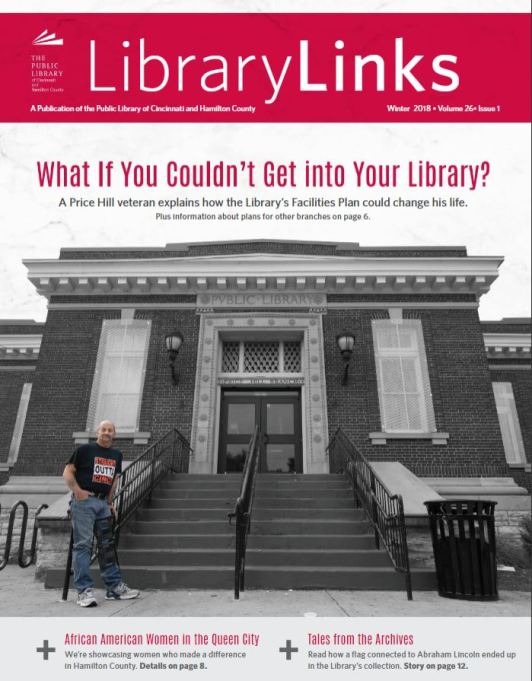
Example:  The title of this issue of our Library Links magazine. The lead story was about a veteran living with a disability. His neighborhood branch is a Carnegie library built in 1909. It’s never been renovated and it’s inaccessible to people living with mobility issues. We were about to ask voters to pass a levy to fund upgrades to this branch and more just like it.

I asked to interview him. He told me the story about how he can’t climb those stairs, and how fellow veteran friends who also live in his neighborhood have to drive their motorized wheelchairs to the next closest branch. The trip sometimes takes three hours. His story invoked a feeling of frustration and injustice. How the heck do you encapsulate that in a short sentence?

Keep the length manageable and the vocabulary conversational. Remember, you want to tease your readers into craving more information, not give away the whole story. You also don’t want to confuse them by using language they don’t understand.

Example: Our library recently made a pivotal switch in the way we market our storytimes. We want to emphasize the educational aspects.

It would be easy to get lost in a lot of technical language and big words to describe our focus on literacy and learning. I decided the best approach would be to write text that sounded like what I would say in person if I were talking to a parent about storytime.

This sounds like an easy step, but I see a lot of libraries and brands that get caught up in the technical language of their products and services. It makes us feel important when we use big words. But headlines and copy need to be simple in order to connect with the audience.

Headlines for press releases deserve as much attention as headlines for emails and blogs.  Library marketers must remember newsrooms are a target audience and journalists crave a good story just as much as the average Joe. You really have to dig deep to grab their attention and evoke your emotional response. You want them to go into their morning meeting and fight for the permission to cover your library’s story. So, give them enough ammunition.

Example:  This release triggered coverage by all the major media outlets in town. Its headline is very simple and straightforward but it got the job done.

Be versatile–it’s okay to change the headline based on the distribution platform. If you have a great blog post you want to share on Twitter, but the headline, when coupled with the URL and a photo, exceed the 280-character limit, re-craft the headline just for Twitter. You might also want to re-craft headlines for different social media audiences. Your Twitter fans may have a different perspective on your article than your LinkedIn fans. You can rewrite it for an email distribution too.

Example: This blog! I often change the headline for the different social media platforms. Sometimes I’ll repost a blog in a month or two with a different headline as well, just to freshen it up and catch viewers who might not have been interested by my first headline. Experimenting is good!

Use the tools. There are lots of fantastic tools to help you fine tune your headline. My absolute favorite is Sharethough’s Headline Analyzer. It’s easy to understand. Since I’ve been using it to craft headlines for this blog, my views have gone up about 10 percent!

For this particular post, Sharethrough gave me a 75 rating, which is above average. It says this headline works because it’s long, it has a human connection, and limited use of positive sentiment. It also gives suggestions on how to improve the headline to get a higher score.

Go with your gut.  Sometimes, all the tools and analysis can cloud your head. If you’ve composed a headline that you feel will do the best job at capturing your audience’s attention, use it. You know your audience best.

Subscribe to this blog and you’ll receive an email every time I post. To do that, click on “Follow” button in the bottom left-hand corner of the page. Connect with me on YouTube, Twitter, Instagram, and LinkedIn.  And check my list of upcoming events so we can connect.
The Nine Things You Need to Look for to Hire the Best Graphic Artist for Your Library Marketing

Confession: When I took this job in library marketing, I knew nothing about graphic design. And I mean LITERALLY NOTHING.

I came from the world of TV news. There is no print element to that. All the graphics are done by a mysterious department located on the second floor of our station, where artists work in a dimly lit room surrounded by monitors. And their ability to get creative is limited by the fast pace of the workplace.

My first week in the library was a lesson in paper weight (text vs. cover?? What??), labels, printing terms, and equipment that I had never seen before, like a Baum Cutter that look a small tank with a blade like a guillotine. I was scared.

And I bet a lot of library marketers can relate. We have degrees in library science and communications, not design. Most of us do not have any training or background in graphic art. I don’t know about you, but I find it difficult and intimidating to manage an employee when I have no idea what their job is, how they do it, or how I could help them to improve.

I’m lucky to have two graphic artists at my library, serving a system of 41 locations and 600,000 cardholders. I can count on my artists to be a touchstone for all projects. They keep my library branches on brand. They help me turn ideas that seem stuck in my head into something clear and understandable to our cardholders.

Visuals are a key part of marketing. Your graphic designer is an invaluable member of your library marketing team. So it’s an important hire to make.

A great artist can create a consistent look and feel to everything surrounding your library’s brand. You want your customers to be able to recognize your visuals as being part of your brand, even before they spot your name or logo on the material.

A good artist can convey the message of your library without actually using your library’s name. They can listen to you explain a vague idea and create something visually stunning which helps enhance the customer experience.

When you’re in the market to add a graphic artist to your team, you may be dazzled by stunning portfolios and creative resumes (graphic artists create some of the best resumes I’ve ever seen!) But there are nine important qualities your candidates must have.

Someone with good customer service. Your artists will be working with multiple departments, branches, customers, and outside partner agencies. You need someone who can listen to whoever they are working with, understand their needs, and translate their vision.

Someone who can communicate with your customers. Ask your candidates how they will create pieces for different age groups, ethnic backgrounds, and interests. Make sure your artist can switch viewpoints and create visuals that speak to many different library audience segments.

Someone who can translate your library strategy and goals into visuals. These are complex concepts. A good artist will take big ideas and turn them into a visual the audience can understand. Ask for examples of infographics and annual reports from previous employers or internships. Can you understand what the message is? Are the statistics presented in a clear and interesting way?

Someone who can work with multiple formats. You’ll be asking your artist to create print and digital graphics, so they should be comfortable working with both. Ideally, you should also look with experience in web design, video production, and animation.

Someone with a vision. You’ll want to make sure your graphic designer will stay on top of the latest trends in design so your marketing material doesn’t look dated.

Someone with whom you can collaborate. Your work with design will be a back and forth, give and take, and you will need someone who can walk through that messy process with you. A good designer will be able to defend their design as well as adapt to ideas that aren’t expressly theirs.

Someone who seeks inspiration. My two designers have a common belief that their work gets better as they learn more. They both have a desire to attend creative sessions and try new mediums. They both work on creative endeavors outside of the library.

You don’t want a designer who simple comes into the office, does what you tell them, and then goes home for the day. Ask potential hires if they do anything artistic outside of the workplace to fuel their own creativity.

Someone who can think on their feet. Ask your candidates to critique a design piece and explain what they would have done differently. Their answer will tell you a lot about their creative process, their ability to articulate their vision, and how they think when they’re asked to do a project on the fly.

Someone who can handle criticism. This is true of every hire you make, but graphic artists are creatives and in my experience, creatives take their work seriously. They may feel precious about their designs and may be resistant to your opinions about them. Make sure you can give positive and constructive feedback to your potential hire without worrying that they’ll refuse to take your suggestions.

Subscribe to this blog and you’ll receive an email every time I post. To do that, click on “Follow” button in the bottom left-hand corner of the page. Connect with me on YouTube, Twitter, Instagram, and LinkedIn.  And check my list of upcoming events so we can connect.

The Four Library Marketing Myths That Need to Die RIGHT NOW!

One of my staffers wrote a post for our Library’s blog recently about common library myths. You can read it here. That post got me to thinking about library marketing myths, and how library marketing professionals can “bust” them. Here are my top four choices.

My library marketing video/blog post/article needs to be short because people will only consume “snackable content.” This one is really prevalent for all kind of companies and institutions, and it’s so, so wrong!

At the beginning of 2019, I started to write longer blog posts. Did you notice?? I went from 500-700 words to between 1000 and 1500 words.

And what happened? My site stats jumped. Already in October of 2019, I’ve exceeded the number of views and visitors for the site in 2018. I’ve had twice the number of people reading each post as I did in 2018.

When you write long form, more people will read your posts. People stay on the site longer. They read multiple posts. This is also true for longer blogs written for our library’s website.

I made the switch to longer posts because I’d read a lot of research about long form content and its benefits. It’s not easy. I spend more time on each post. I have to do more research. I have to be careful not to add words or sentences just to fill this imaginary word count goal in my head. It’s sometimes difficult. But it’s worth it.

The smart people at a company call serpIQ did a study of the average length of the content in the top ten results of search queries. The company found that the top-rated posts usually were more than 2,000 words long.

If your post is written well, helpful, educational, interesting, and builds interest or suspense, people will stay on your site longer. This will boost your library’s web page rankings in Google and drive more traffic to your site. Long form content also builds trust in the authority of your library. There’s no downside to longer pieces.

The only exception to this myth is email. The text inside mail marketing messages should be short, because evidence shows people will not read emails that are longer than 200 words (sorry, fans of the newsletter). Your short email can and should link to a longer piece but the actual text body itself should be 50-200 words max.

A high open rate is the best way to tell that my library email marketing is successful. So many libraries focus on high open rates for their emails. It’s sometimes hard to contradict that measure. But I’m going to do it because I want your work to matter. And if your open rates are high, you may still be failing at email marketing. Hear me out.

Open rates do mean something. They are a sign of customer loyalty. A high open rate means that your cardholders are eager to see what you’ve sent them. And that’s good. You are writing compelling email subject lines (Good job, you!). You have a loyal and eager audience.

But it’s what happens AFTER your cardholders open your email that counts. If your click-thru rate is low, you’ll know the content you are sending to your cardholders isn’t what they want.

The higher the click-thru rate is, the more excited I get. It means that my cardholders opened an email, saw something they liked, and acted!

Most of the time, my library emails direct cardholders to do one of two things: click a link for a specific item in our collection or go to the event calendar where they can register or put an upcoming event on their calendar.

If a cardholder takes one of those actions is a huge victory. It gives me data about what that particular cardholder is interested in. And I can use that information to craft future emails that are also compelling for that cardholder.

As happy as I get over a high email click-thru rate, a high conversion rate is the most accurate way to measure email effectiveness. It is the percentage of people who take an action after clicking through.

For example, let’s say 100 people click-through to look at a book I promote by email. If 50 of those 100 people put the book on hold, my conversion rate is 50 percent.

Conversion rate is the gold standard for the success of any email campaign. Your goal should always be to get people to act!

I need to grow my Twitter/Facebook/Pinterest followers. I’m not saying that a huge social media following wouldn’t be nice. But in the age of algorithms, it’s not as important as it once was.

What you really want is a large audience of ENGAGED followers. You don’t just want people to see your posts. You want them to compel people to take an actual: like, share, subscribe, comment, post emojis, and generally jump up and down virtually.

It’s kind of like speaking at a conference. You might be thrilled at the prospect of talking to a huge group of people. But it’s disheartening if half of your audience is yawning or looking at their phones. It’s much more meaningful to speak in front of a small room of people who are riveted by what you have to say.

I don’t care how many followers my library has on any social account. I want to see people engage with our content. Focus on actions and not the number of followers.

If you need to tell your cardholder something, just make a sign. No one reads signs. Seriously, we just don’t. I lead the team that makes signs at my library FOR A LIVING and I don’t read them.

Too many signs in a branch, particularly in a small location, can create clutter and confusion. And too much signage can annoy your cardholders, particularly if most of your signs are bombarding them with marketing messages.

Just as white space works to create breadth and depth for a website or a graphic, well-spaced signage in a branch creates flow. About 75 percent of the signs in your library locations should be wayfaring only, directing cardholders to important service points in the building. The other 25 percent can be selective marketing–promoting services and items that are of interest to your cardholders.

Don’t rely on signs to convey everything you want to tell the customer. Hire staff who are willing to speak with customers and show customers where items are located.

Do you have a myth you encounter in your work? Let me know about it, and how you’re busting it in the comments.

Subscribe to this blog and you’ll receive an email every time I post. To do that, click on “Follow” button in the bottom left-hand corner of the page. Connect with me on YouTube, Twitter, Instagram, and LinkedIn.
The Library Marketing Show Episode 15: 🤷What to Do If You’re a Librarian Who HAS to Do Marketing!

WATCH NOW

In this short video, we talk about what you should do if your a librarian and your library has asked/forced/demanded/requested that you also handle the marketing. If you don’t have a communications degree, what should you do? Can you do it? Answer: YES!
(Watch episode 14 to see why I generally don’t hire librarians to do marketing).

Also KUDOS to Chicago Public Library for going fine free!

Talk to me! Share thoughts about this video in the comments, LIKE it, SHARE it, and subscribe (Pretty please!). Let’s grow this channel together.

Stay in Touch

Check the Upcoming Events page to see where I’ll be soon. Let’s connect! More events are coming soon.

Have an idea for the next Library Marketing Live Show? Submit it now.

Subscribe to this blog and you’ll receive an email every time I post. To do that, click on “Follow” button in the bottom left-hand corner of the page. Connect with me on Twitter, Instagram, and LinkedIn.  

Frustrated with Your Library Marketing Newsletter? Here’s Why You’re Not Getting the Results You Want AND How to Fix It

I hold a controversial opinion. Newsletters are an ineffective tool for library marketing.

I totally understand why libraries create them. Our customers are a wide and diverse audience and our budget is limited. Newsletters are an easy and efficient way to get information to our audience.

But many libraries are frustrated by the lack of demonstrable results from their newsletters, both the print and email versions. And there’s a reason you can’t get good results from a newsletter.

The mistake is: You’re sending the same message to all of your cardholders.

It’s understandable. It feels like the natural thing to do. Your library has great stuff and you want everyone to know about everything.

The problem with that approach is that your cardholders are individuals. One message never fits them all. The needs and interests of your cardholders vary greatly.

I’m not suggesting you ditch your newsletter. By transforming the way you approach your current print and e-newsletter, you can make it actually work! The trick is to make changes that increase your newsletter’s value by refining the message.

Tips that work for both print and e-newsletters

Give your cardholders LOTS more of what THEY want. I know you’ve been keeping track of attendance at events and holds or checkouts of books you promoted in your previous newsletters. If you notice that your newsletter audience turns out for a particular type of event or that they like a particular genre of books or collection items, put MORE of those in your newsletters.

Library marketers are often pressured to promote what their co-workers or bosses think is interesting. Or worse, what their co-workers think the audience NEEDS to hear.

I’ve actually had to gently explain to my colleagues that, while reading classic authors like Ernest Hemingway and Jane Austen are good for the brain, most people are not looking for an intellectual challenge when they reach for a book. It’s like getting kids to eat their vegetables. Veggies are healthy, but if your child doesn’t like them, they’ll clamp their mouth shut and refuse to take a bite.

The newsletter audience is the same. You can’t make people attend events or read books because they’re healthy or intellectual. Library marketers sometimes have to be an advocate for their audience; you have to be persistent in your defense of what your cardholders want.

At my library, we pivoted our newsletter to focus more on our the parts of our collection that our cardholders like. We had the data to back it up. We know that our cardholders really love content about coding and coding classes. We know they love mystery books. We know they love workshops about writing and publishing their own books. We learned all of these nuanced preferences by carefully measuring our audience’s response to marketing in all areas. Patterns emerge. And now, we do a lot of promotion around these areas because we know, for a fact, that our cardholders love this kind of content.

Make your content helpful, not promotional. Your cardholders are regularly bombarded with offers, sales, and promotions, both in their inbox and in your mailbox. To get people to read your newsletter, the content needs to be interesting, useful, or helpful.

Hundreds of studies and surveys about consumer behavior show us that content that is educational or entertaining gets better results that content that is promotional. So how can you promote something while being entertaining or informative? Content marketing in the answer.

Content marketing is a strategic approach focused on creating and distributing valuable, relevant, and consistent content to attract and retain a clearly defined audience–ultimately, to drive profitable consumer action.

Content marketing breaks through the noise and the clutter by providing compelling, useful information for your cardholder–any type of information. It addresses whatever pain points your cardholders have. It positions your library as the go-to place for information. It builds trust.

And through content marketing, your library gets a better and deeper understanding of your cardholders. You can use that understanding to do a better job of addressing your cardholders’ needs. It’s a constant circle of giving and it carries more weight for a longer period than a traditional newsletter promotion.

Stop thinking of your publication as a newsletter. Start creating news magazines. Most library newsletters that come to my inbox or mailbox are long and contain a ton of text and images. There isn’t much white space and scanning them is difficult, because there is so much to scan.

At my library, we increased the effectiveness of our print newsletter by transforming it into a magazine. We trimmed it from 16 to 12 pages. My graphic artists started to give the publication a magazine feel in layout, using bolder visuals and shorter, more engaging articles. We left some white space. We changed the balance of the articles from 100 percent promotional to 50 percent informational and 50 percent promotional (even I have to fight the battle with my library to be less overtly promotional!).

What happened when we made these changes? Our news magazine became a must-read. People started asking when the next issue would be out. We had to order more copies. Library staff and outside partners vie for space in the publication. The news magazine is popular!

Tips specific to e-newsletters

Keep the text short and scannable. Your e-newsletter is a touch point, not the end of a conversation. Readers should get enough to be left with the feeling of wanting to know more about a particular subject. Drive your recipients to your website or another platform where they can get more information with compelling text and enticing calls to action.

Make it easy to share your e-newsletter. Include social share buttons that link directly to your library’s social pages.

Segment your e-newsletters. You can segment your e-newsletter in a number of ways… by age, by interest, and by location. This means you’ll need to create more than one e-newsletter. But each one will be targeted to a specific audience, which increases effectiveness. This step will be more work for you but it’s worth it for better results.

By targeting your message, you are more likely to say something that matters significantly to your cardholders. That individualized message makes them more likely to take an action, which makes it more likely that your newsletter will be successful.

More help for library marketers

How the Best Newsletters Get-and Keep-Reader’s Attention from Content Marketing Institute

NoveList’s Guide to Best Practices for Library Newsletters

7 Tips for Creating Engaging Newsletters from Mailjet

Great examples of targeted library newsletters

Dallas Public Library’s Young Black Readers Newsletter

Indian Prairie Public Library’s DVD Preview

Subscribe to this blog and you’ll receive an email every time I post. To do that, click on “Follow” button in the bottom left-hand corner of the page. Connect with me on Twitter, Instagram, and LinkedIn.
 

The Secret of the 60-Minute Meeting: Six Tips to Keep Your Library Marketing Team On Track and Stay Productive!

I dread Wednesdays.

On that day of the week, I usually have between five and seven meetings. I basically spend the day hopping from one conference room to another.

Not so long ago, most of those meetings would last beyond 60 minutes. Tangents were pursued. Ideas were dissected in great detail. My team and I were often blind-sided by requests to come up with an entire marketing campaign for an idea we’d only learned of moments before. It was unproductive.

As a marketing manager responsible for proving the bottom-line benefits of your marketing, it can be tempting to rely on recurring team meetings and regular check-ins to make sure you know exactly what’s going on with your team. But when long meetings evolve into habit, their value tends to plummet.

No meeting should ever last beyond 60 minutes. There are a couple of reasons for this. After 60 minutes of intense discussion, participants begin to lose interest. Their creativity and energy wanes. And the more time you spend in meetings, the less time you and your team have to do ACTUAL work.

Obviously you can’t control every meeting. But when you’re running the agenda, you can create an atmosphere of productivity and creativity while setting an example of efficiency for the rest of the library staff.

I don’t remember how it started but someone in my library’s senior leadership team took the initiative to institute a more efficient meeting structure. Suddenly, everyone was following this person’s lead. It was amazing and liberating.

I started instituting the 60-minute or less meeting rule about a year ago in my department and it’s worked so well that I recently introduced it in another setting.

I’m the chair of my school district’s bond issue campaign and our core committee meetings are 60 minutes or less. It was funny how many people from that group have commented about my 60-minute meeting pledge! It had never occurred to them that meetings, even ones where important decisions are made, could last less than an hour.

If you want to increase productivity in your library, here’s how to execute a 60-minute meeting.

Super prioritize your agenda.  For my library team, I divide action items into categories: the weekly schedule, immediate concerns, future concerns, and individual tasks. These four categories appear on the agenda every single week. Under each category, I list the items that need to be discussed in order of their priority. Next to each item, I list the name of the person in charge of that item or project. For the bond issue committee meetings, I simply list items in order of their priority without categories.

Time it out ahead of time. Try to estimate how much time you’ll need to discuss each item. If your total discussion time is more than 60 minutes, do some more prioritizing with your agenda. Once your agenda is set, make sure everyone attending the meeting has a copy so they can follow along and stay focused.

Set expectations at the beginning of the meeting. As the leader, set the example and start on time. Remind the team that the meeting will last 60 minutes and that you’ll be working to keep discussions on track. Assure them that if further discussions are needed on a particular item, you will schedule a side meeting. Off-topic discussions will be tackled outside of the formal meeting time.

The first time I made this announcement at the bond issue meeting, everyone looked shocked. I was worried that people would start watching the clock and timing me, thus cutting the productivity. But because I set firm expectations, the group trusts me to stick to them. They end up focusing more on the items we need to discuss. It’s funny how that works!

Watch your agenda word choices. Use words like “update” rather than “discussion” to help frame the conversation and give mental cues to attendees that work for the meeting will need to be done before the meeting actually happens. If a key decision needs to be made in the meeting, use the word “decision” in your action item to cue the attendees that you plan to come to a consensus at this meeting.

Take notes. Make note of who is assigned to each project. Give clear deadlines and expectations for each action item and include those in the notes. After the meeting, send out a copy of the meeting notes so everyone is clear about what they’re responsible for and when it’s due.

Continue to give time updates throughout the meeting. It’s OK to say, “We have 15 minutes left so we’re going to discuss one more item that is a priority to us. The rest of the items on this agenda will be discussed at a later meeting.” This will help keep discussions on track.

The LIVE LIBRARY MARKETING TALK ON INSTAGRAM is changing format. I have decided to pre-record my segments and post them to YouTube! I still want your email questions and topic suggestions ahead of time. Just fill out this form. If I pick your topic, I’ll send you a personal link to the video after it’s posted. I’m going to start posting my video segments on Thursdays so watch your email for that. Thank you to everyone who weighed in on the video decision!

And check out these upcoming events and webinars where we can connect and discuss library marketing. Registration links included.

Subscribe to this blog and you’ll receive an email every time I post. To do that, click on “Follow” button in the bottom left-hand corner of the page. Connect with me on Twitter, Instagram, and LinkedIn.  

A WordPress.com Website.

Up ↑