Search

Super Library Marketing: Practical Tips and Ideas for Library Promotion

Tag

library marketing data

Time Well Spent: How One Library Marketing Team Analyzes Metrics and Uses That Data To Prove Their Value

Ann Malthaner spent her childhood visiting the library where she now works, Stow-Munroe Falls Public Library.

โ€œMy office is where the Children’s Department used to be,โ€ recalls Ann. โ€œWhen I started working here 18 years ago, some of the librarians from my childhood still worked here, and I remember feeling excited to meet them on my first day, almost as if I were meeting celebrities.โ€

โ€œI consider myself very lucky that I have been able to work in a library. Itโ€™s not hard to market a product you love.”

Ann is the libraryโ€™s Marketing and Public Relations Manager. Her team includes a full-time graphic designer, a part-time writer, and an assistant.  Her library has one location, which has a distinct benefit, according to Ann.

โ€œItโ€™s very easy to get information and collaborate with co-workers,โ€ she notes. โ€œI work closely with our director, and fortunately, our library did a strategic plan two years ago. It was quite a process, but it has made my job easier in that there is a clear path forward with our marketing efforts.โ€

Ann is a rare library marketer in that she and her team have been tracking metrics on her library promotions for nearly two decades!

โ€œThe metrics we gather have evolved over time with the advancements in technology,โ€ explains Ann. โ€œWe are now able to gather more information about the tools we use to achieve our marketing goals. And the dashboards on targeted emailing, social media performance, and Google Analytics are very telling.โ€

That data not only informs the promotions that Ann and her colleagues create, but it also helps stakeholders to understand the value and impact of their library marketing.

โ€œWe share these reports with the Board of Trustees monthly to inform them about our work and how we make data-driven decisions,โ€ says Ann. โ€œThis helps them better understand our department’s operations.โ€

โ€œI used these reports to justify my departmentโ€™s size and marketing efforts. Our reports also include the number of printed brochures, rack cards, bookmarks, and more we produce. I used this information to advocate for adding an electric trimmer, folder, banner printer, and our departmentโ€™s industrial copier. I was able to justify these purchases when I compared them to outside costs and estimated saved staff time.โ€

Her team uses many tools to create reports and analyze monthly metrics, including their email dashboard, social media scheduling platform, and website analytics dashboard. The whole process takes about 8 hours from start to finish.

โ€œYou might think that sounds like a lot, but this is time and effort thatโ€™s well spent,โ€ states Ann. โ€œWe analyze the results and plan our path forward with this information. We can see whatโ€™s working and just as importantly, whatโ€™s not. We can quickly adjust to make our time more productive and impactful.โ€ย 

โ€œEvery time your leadership team reads these, you are documenting the value of what you are doing. Their importance cannot be overstated.โ€

Those metrics come in handy as Ann plans marketing for the rest of the year. Her library recently purchased a bookmobile and is creating a new Outreach department.

โ€œOur department is responsible for creating the bookmobile wrap, which is fun!โ€ exclaims Ann. โ€œWe are in the process of a massive parking lot reconfiguration and addition. And we are also doing a tear out and reconfiguration of our circulation department.โ€

โ€œKeeping our customers informed and up to date with these changes has been our first priority. And itโ€™s our 100th anniversary this year. We have our work cut out for us!โ€

For inspiration, Ann just keeps her eyes open all the time.

โ€œIโ€™m always looking for great design and marketing,โ€ says Ann. โ€œItโ€™s all around us! And thereโ€™s some bad stuff too. The trick is how to incorporate the good in your library efforts.โ€


P.S. You might also find this helpful

A Message for You and Your Supervisor on the Most Difficult, Complicated, and Important Step in Library Marketing

Subscribe to this blog and youโ€™ll receive an email whenever I post. To do that, enter your email address and click on the โ€œFollowโ€ button in the lower left-hand corner of the page. You can also follow me on the following social media platforms:

๐Ÿ›‘A Message for You and Your Supervisor on the Most Difficult, Complicated, and Important Step in Library Marketing

Watch this video now

#LibraryMarketing Show, episode 233

There’s a specific library marketing task that I admit I personally struggle to make time to do. It’s complicated and tedious. But it is so important that I dedicate this episode to it. Note: scroll to the 2:00 mark for a special message for managers of library marketers.

Plus, kudos go to a library that got press coverage of a fun event that didn’t involve any “real” visitors to the library!

Do you have a suggestion for a topic for a future episode? Want to nominate someone for kudos? Let me know here. And thanks for watching!โ€‚


Miss the last episode? No worries!

Will I see you soon?

Subscribe to this blog and youโ€™ll receive an email whenever I post. To do that, enter your email address and click on the โ€œFollowโ€ button in the lower left-hand corner of the page. You can also follow me on the following social media platforms:
What the Heck Is the Difference Between Library Statistics and Marketing Metrics? Hereโ€™s the Full Explanation and Why They Are BOTH Important!

Watch the Video Now

The Library Marketingโ€‹โ€‹โ€‹โ€‹โ€‹โ€‹โ€‹โ€‹ Show, Episode 156: In this episode, we’ll explain the difference between library statistics and library metrics.

We use the terms interchangeably. But the exact definition is really important to the success of your library marketing.

Kudos in this episode go to the Prince George’s County Memorial Library System.

Do you have a suggestion for a topic for a future episode? Want to nominate someone for kudos? Let me know in the comments.

And subscribe to this series to get a new weekly video tip for libraries.

Thanks for watching!


Subscribe to this blog and youโ€™ll receive an email every time I post. To do that, enter your email address and click on the โ€œFollowโ€ button in the lower left-hand corner of the page.

Are You Sure Your Digital Library Promotions Are Working? Gain Confidence and Take the Guesswork Out of Marketing in Five Minutes a Day!

Photo of the Old Main Library reading room for the blind, courtesy Cincinnati & Hamilton County Library

The Town Hall Library in North Lake, Wisconsin occupies a quaint white building with black shutters that looks like it might have once been a church. It serves a population of about 10,000 residents and its website says itโ€™s โ€œknown for its friendly service and varied collectionโ€.

The library’s summer reading program has two more weeks to go. But Town Hall Library is already taking the data from the program and putting it to use in its promotions.

The Library created a Facebook post that leads to an infographic, which lays out the number of participants, visitors, programs, and pages or books read in plain, easy-to-understand details.

Libraries have long counted circulation statistics, program attendance, minutes logged during summer reading, and the number of visitors who walk in and out of their building on any given day.

Theyโ€™ve taken those stats and created videos and infographics. They’ve used those numbers to win awards. And they share that data to prove their value to their community, donors, legislators, and whoever controls their budget.

I wish libraries would measure their digital marketing with the same dedication. That data is crucial to figuring out which library promotions are working.

Metrics are the key to confidence in library marketing.

When I ask libraries if they measure their digital promotions, here are the three most common answers I receive.

โ€œMeasurement is hard.โ€

โ€œWe think weโ€™re reaching our community.โ€

โ€œIt seems like our promotions are effective.โ€

My co-workers often describe me as โ€œa data nerd.โ€ And itโ€™s true. But Iโ€™ll share a secret with you. My love of numbers is rooted in insecurity.

Thatโ€™s because promoting your library can be scary. I often donโ€™t know exactly which of my choices will work.

And when Iโ€™m facing a decision that could either lead me to a successful promotion or a total failure, I lean on the numbers to help me decide.

If you are not tracking the results of your digital library marketing, you are setting yourself up for failure. You may think you are doing a decent job.

But the only way to know if you are truly connecting with your community is through the consistent measurement of your digital promotions.

Measurement of digital library marketing is necessary and transformative.

Metrics are a game changer for your digital marketing.

They tell you what is working so you can replicate that success. They tell you what isnโ€™t working so you can stop doing those things.

They give you the proof, in the form of data, to back up your decisions. They can justify more budget for things you need to reach your audience.

And most important, data holds information about when and where your specific audience wants to receive promotional messages from your library. Youโ€™ll also learn their favorite types of content.

Digital marketing metrics every library must track

On a basic level, every library should consistently track the following metrics.

Email

  • Open rate: the percentage of people who receive your email and open it.
  • Click-thru rate: the percent of people who click on something inside your email.
  • Actions taken by email subscribers: did they register for a program, check out a book, or use a database after receiving your email?

Social media

  • Reach: total number of people who see your content.
  • Impressions: the number of times your content is displayed. Impressions will always be higher than reach because your content may be displayed more than once to the same people. That might sound like a waste of time. But a high impression count means the social media platform you are using thinks your content is so good, that they want to make certain people see it!
  • Engagement: the number of times people take an action, such as liking, commenting, or sharing your post.

Website

  • Number of visitors to your website
  • Number of new visitors versus the number of returning visitors
  • The length of time visitors spend on your website
  • Traffic sources that determine how visitors find your website

What this data will reveal about your digital library promotions

At the basic level, measuring your promotions will ensure that you are using your valuable time and energy in the place where it will be the most effective.

Data can also help you make sure you create more effective promotions! Leslie Marinelli is Communications Manager at Forsyth County Public Library. Sheโ€™s been closely monitoring the data around her email marketing.

She noticed her libraryโ€™s subscriber list got smaller and smaller each month, even though her library was signing up a substantial number of new cardholders every month.

Because she was monitoring her email metrics, she was able to uncover a hole in her subscriber list process. Fixing that process led to an increase in subscribers to her email list each month. And that means more people in her community will discover what the library can offer them.

Make measurement part of your daily library work schedule.

Block off five minutes in every workday to gather or analyze the metrics of your marketing and promotions. Honestly, it only takes five minutes a day.

Check the basic numbers listed above. Every. Single. Day.

Pretty soon, you’ll notice patterns. You’ll be able to predict the types of content that get the most engagement. You might also notice that promotions on certain days of the week get better results.

At the end of your first month, ask yourself what is working and what isn’t. And adjust your promotions accordingly.

Tracking metrics will lead to more effective promotions. It’s that simple!

Don’t Skip This Important Library Marketing Step


More Library Marketing Advice

Are My Library Email Metrics Goodโ€ฆ. or Bad?! Here Are the Latest Stats to Help You Figure It Out.

You Donโ€™t Have to Choose Between Print and Digital Books: How to Promote Your Collection to Patrons Who Use BOTH Formats

Subscribe to this blog and youโ€™ll receive an email every time I post. To do that, enter your email address and click on the โ€œFollowโ€ button in the lower left-hand corner of the page.

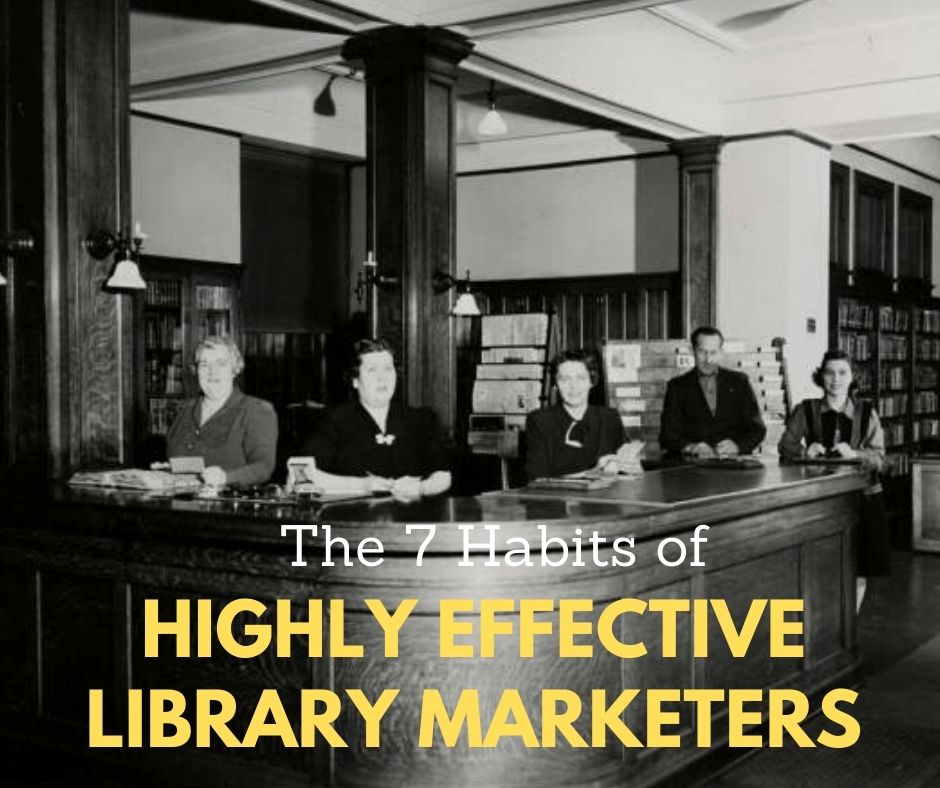
Want To Improve Your Productivity and Feel Pride in Your Work? Here Are the 7 Essential Habits of Highly Effective Library Marketers.

Photo courtesy Public Library of Cincinnati and Hamilton County.  Photo of West End Branch Staff, circa 1940.

I’m 100 percent certain that everyone who reads this blog has heard of the book, “The 7 Habits of Highly Effective People” by Stephen Covey. Written in 1989, this self-help book has sold more than 25 million copies worldwide.

Covey’s approach to attaining goals is to follow what he calls “true north” principles. Those principles are based on seven character ethics that he says are universal and timeless.

It’s a great book. But, because I’m a weirdo, I read it and thought, “There needs to be a list like this specifically for people who work in library promotion.” No joke. My internal monologue is strange.

We need some true north principles for library marketing now more than ever. We face uncertainty in every corner. Algorithms and budget shortfalls and virus variants can make our job seem impossible.

It may feel like the whole world is working against you and your library. So here are my true north principles for doing your best and most effective work.

Be good to yourself.

This is first on my list because it’s the most important and frankly, most library staffers could use a little morale boost. This year, I want you to celebrate the work you do. Every. Single. Week.

By the way, my boss gets full credit for this idea.

It’s pretty simple: At the end of the week, write down all the things you did. Then, pick a “gold star moment“: one thing that you did that stands out for some extra recognition.

Send your list to your boss or keep it for yourself. It doesn’t matter. What matters is that you take the time to acknowledge all the work you’ve done in the last week.

And, rather than focusing on what you didn’t get done from your to-do list, recognize all the work you did do.

You’ll be surprised at how much better you’ll feel at the end of a workweek. And you’ll be motivated or excited about the work coming in the following week.

Be constantly learning.

I know that most library staffers are incredibly overworked. You’re promoting your library in addition to 100 other tasks, including cleaning the restrooms and acting as security. The idea of spending any time learning more about marketing feels overwhelming.

How does someone fit personal professional development into their schedule?

Set a learning appointment for yourself every single day. All you need is five minutes. Spend that very short but important block of time reading a blog, a book on marketing, or an email newsletter on marketing. If you’re a visual learner, watch a YouTube tutorial on marketing or work on a self-paced marketing course online.

For the typical, full-time library staffer working five days a week with two weeks of vacation, that will add up to 1,150 minutes or 19 hours of learning in a year! That’s plenty of time to stay on top of marketing and social media trends and learn new ways to engage your audience more effectively on all channels.

Best of all, at the end of that year of learning, you’ll feel more confident in your work and of course, your library’s promotional efforts will improve.

Need help finding places to learn about marketing in a short amount of time? Here’s a great list.

Be hyper-focused on your library’s overall goals.

What is your library trying to accomplish right now? Are you hoping to increase your circulation to pre-pandemic numbers? Are you helping to bridge the pandemic educational gap for elementary school students? Are you implementing a step-by-step plan to ensure your library is truly accessible to everyone? Are you undergoing a facilities improvement project?

Your promotions should be centered on whatever your library is trying to accomplish this year.

When you focus your marketing with precision on your libraryโ€™s strategy, your marketing will be more effective. You will avoid spreading your message thin. You’ll be using your precious time and energy more efficiently.

Every piece of marketing you do needs to be in service of reaching your libraryโ€™s strategic goals. They are the reason you come to work every morning. Make certain there is a solid connection between your promotional efforts and your libraryโ€™s overall strategy.

Be a fan of data.

Block off five minutes in every workday to gather or analyze the metrics of your marketing and promotions. Just like with the professional development appointment you’re making each day, schedule this into your calendar.

This simple step will give you a very clear sense of what is working and what isn’t. You’ll have the numbers to back yourself up when you make decisions about which promotions to do and which ones to drop.

Be constantly experimenting.

One of my favorite parts of working in marketing is experimentation. There are so many ways we can test promotions to find the most effective means of communicating with our audiences.

I want you to think of yourself as a kind of scientist. Your experiments don’t have to be complicated.

For example, when you send emails, try sending on different days of the week and different times of the day.

When you want to promote an item in your collection or a service provided by your library, post on all your library’s social media channels. Then look at the insights to see where you get the highest engagement.

When you write blog posts, try experimenting with the length of the post, the length of the title, or the number of images you insert in the piece. Then look at views to see if your metrics are impacted by changing any of those factors.

Experimenting is fun. And it can lead you to create more effective promotions. Need some ideas about where to experiment with your promotions? Here’s a list of things to try.

Be open to change.

How many times have you heard someone say, “But we’ve always done it that way” in your library? Reject this phrase.

I think many times we get stuck promoting our library the same way we always have. Don’t be afraid to look at the data and say to your boss or co-workers, “This isn’t working. Let’s try this instead.”

In library marketing, change isn’t a bad thing. It means you are being responsive to your community’s needs and meeting them where they are as their lives are changing.

Be patiently persistent.

Sometimes it takes a while for fellow co-workers, senior staff, and your community members to respond to your ideas.

Effective library marketers set a timeline for how long they think it will take to increase engagement or reach a certain target audience with a message across multiple channels. A good rule of thumb is to give any new promotion about three months to catch on. If it’s not working by then, experiment with something else.


You May Also Want to Read These Posts

Three Easy Ways for the Exhausted Librarian to Figure Out What Your Community Needs AND Find Promotional Inspiration!

Fight for Your Ideas! Four Tips to Help You Get the Green Light for New Library Promotional Ideas

Angela’s Latest Book Review

Going There by Katie Couric

Subscribe to this blog and youโ€™ll receive an email every time I post. To do that, enter your email address and click on the โ€œFollowโ€ button in the lower left-hand corner of the page.

Looking for Guaranteed Email Marketing Success at Your Library? Here Are Four Essential Metrics To Track.

Image courtesy Public Library of Cincinnati and Hamilton County

Use the feedback button to share your most pressing email marketing question. I’ll answer these in a future blog post!

I love opening the “reports” tab on an email platform. There is a second or two of anticipation as the page loads that brings me a thrill.

What will the numbers say? Will they be better or worse than last month? Will they reveal a new trend that I can use to better serve my target audience?

I realize I sound a little nuts. But honestly, I love metrics.

They are clear and concise. They show you what’s working and what’s not working. They give you permission to stop doing promotions that don’t help your library at all. If you try something new, they’ll tell you whether your idea worked or not.

Tracked over time, email metrics will help you to take the 30,000-foot view of your library marketing. You can see if your emails are doing what they are supposed to do… moving your library toward its overall strategic goals.

There is a lot we could measure in terms of email marketing. It would be easy to get lost in the quagmire of numbers and analysis.

So, I want you to focus on four data points that really matter to library email marketing. Use these metrics to determine whether your messages are connecting with your audience and promoting your library’s overall strategic goals. And don’t miss the bonus tip at the end of this list!

“Email is the only place where people, not algorithms, are in control.โ€

Ann Handley, writer, digital marketing pioneer, and Wall Street Journal best-selling author 

1. Increase of raw circulation numbers.ย 

Recordย the number of checkouts and holds before you send the message and then again after the message is sent. You can generally wait about three days to check those numbers. Cardholders who want to act on an email will do so within a three-day period of receiving it.

What this metric will tell you: Raw circulation numbers will likely be of interest to anyone in collection development at your library. They are also the basis for the next two metrics, which will help you compare the effectiveness of your emails.

2. Percentage increase in circulation.

Once you start collecting data on raw holds and checkout increases, you will want to calculate the percentage increase in circulation.  

Let’s say on Monday, you send an email promoting one specific eBook. Before you send the email, you note that there are currently three holds or checkouts of this eBook. When you check on Tuesday, there are four new holds or checkouts placed on the eBook. In total, there are now seven holds or checkouts on this item.

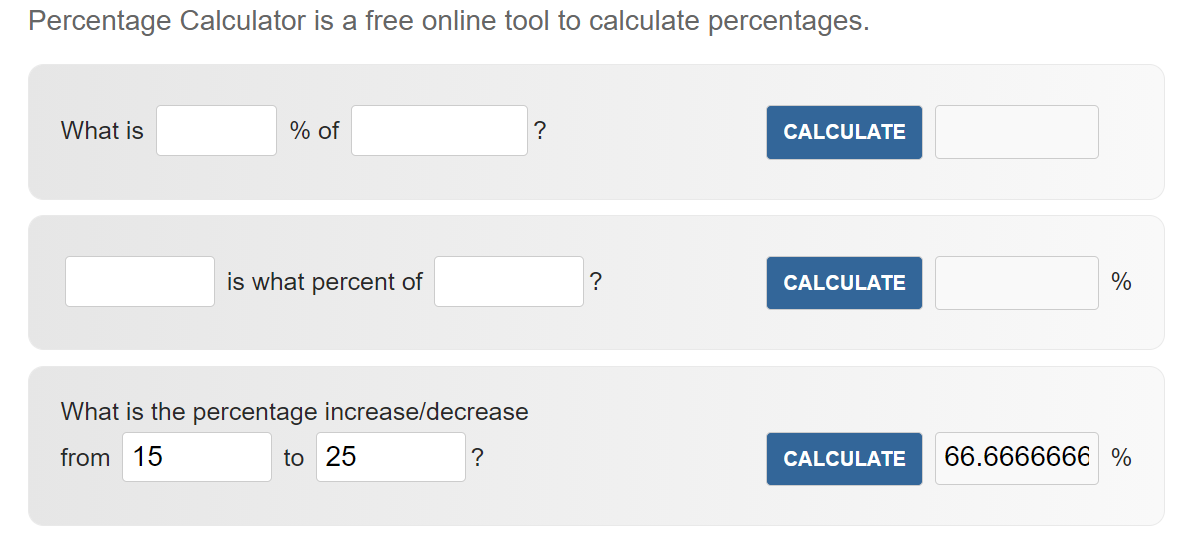
Use percentagecalculator.net to calculate the percentage increase in circulation. For this example, we use the third calculation tool on the page:

That’s a 133 percent increase in circulation.

Now, the next week, you decide to send another email promoting a different eBook. But this time, the eBook you choose to promote has 15 holds or copies before the email is sent. When you check 24 hours after sending the email, there are 10 new holds or checkouts. In total, there are now 25 holds or checkouts on the eBook.

The raw numbers for the second email are bigger (an increase of 4 holds/checkouts vs. an increase of 10 holds/checkouts). But the percentage increase for the second email is actually smaller, at 66%! That means email #1 was more effective.

What this metric will tell you: Percentage increase in circulation lets you compare your promotions more accurately. If you are short on time, this kind of comparison will help you determine which promotions will give you the most success with your limited resources.

3. Conversion rate.

This is the percentage of people who took an action after receiving your email.

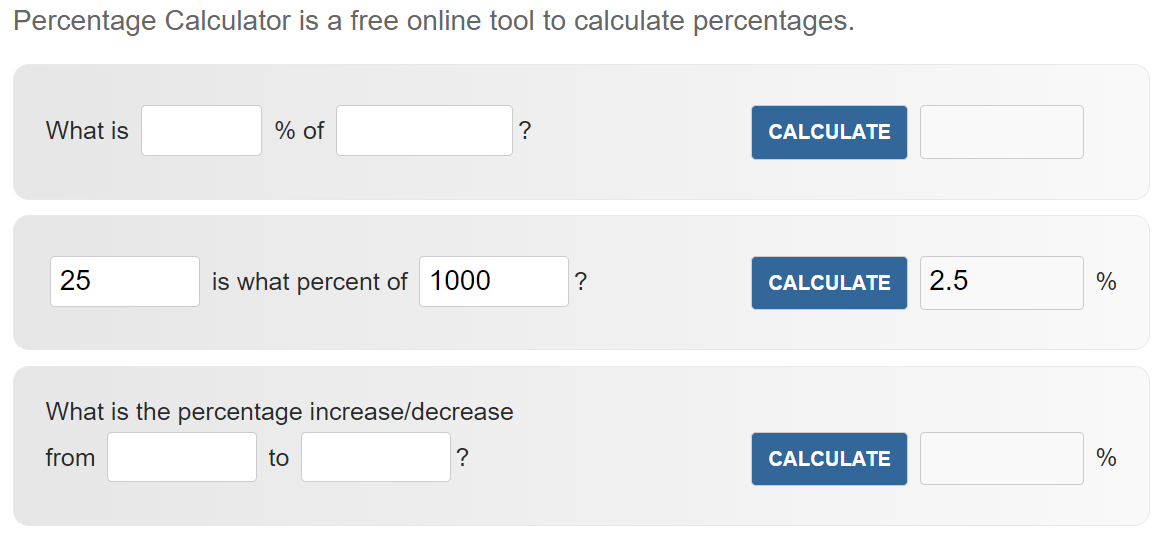
Let’s pretend that you’ve sent an email to 1000 people. The email promotes a streaming video on your library website that hasn’t had any views in the past couple of weeks.

When you check the streaming statistics for that video, you see that 25 people watched the video in the days immediately after you sent the email.

Using the second tool on our percentage calculator website, you can calculate the percentage of people who “converted” or took an action after your email.

What this metric will tell you: If you start tracking conversion rates on your emails, over time you’ll have a clear picture of the types of emails your audience responds to. You’ll be able to establish a good base percentage for your audience. This number will be different for every library.

If you are short on time, this metric will help you determine which promotions will give you the most success with your limited resources. When you find a certain type of email promotion works based on conversion rate, you should do it more often.

4. Amount of traffic driven to your website.

Track how much traffic is funneled to your public website by your emails. You can use Google Analytics to analyze how efforts on those platform translates into action by your cardholders. If you’ve never worked with Google Analytics, here is an easy guide to get you started.

What this metric will tell you: This is an important metric to share with administration, because it clearly demonstrates the value of the time and energy you have invested in email marketing.

Special bonus tip!

If you promote the same collection item or booklist on social media, email, and your website, put some space between those three promotions. A week is a good amount of time. That allows you to really pinpoint whether your increase in circulation is coming from email, your placement of the item on your website, or social media.

In fact, that’s a fun experiment to run. Can you drive higher circulation numbers by promoting your collection on your website, email, or social media?

You can even get more granular: which social media platform is best for collection promotion? Which page on your website is best for placing collection promotions? Which email list responds best? See, this is fun!


Subscribe to this blog and youโ€™ll receive an email every time I post. To do that, click on the โ€œFollowโ€ button in the bottom left-hand corner of the page.

You may also like these articles

Are My Library Email Metrics Goodโ€ฆ. or Bad?! Here Are the Latest Stats to Help You Figure It Out.

What Metrics Demonstrate Your Libraryโ€™s Social Media Marketing is Working?

Angelaโ€™s latest book review

Beautiful Things by Hunter Biden

A WordPress.com Website.

Up ↑