Search

Super Library Marketing: Practical Tips and Ideas for Library Promotion

Tag

metrics

Your Library Promotions Are Probably Missing One Essential Step for Success. No Sweat! ๐Ÿ˜… Hereโ€™s How To Fix It.

Photo courtesy Cincinnati and Hamilton County Public Library

This week I want you, my dear reader, to make me a promise.

Please, for the love of all that is wonderful and majestic about libraries, add one critical step to your library marketing and promotions.

I want you to start setting goals.

Now, I know this may make you sigh/scream/cry/get angry at me. I know you are incredibly busy. I know you are trying your best every day to create effective library promotions. And I want you to have ALL the success possible.

Which is why I am asking this tiny but incredibly important thing of you.

Goals are an absolute necessity for library marketing success. Full stop.

And they will make your work EASIER for you. I promise.

Why you should set goals for your library promotions

Goals will help you:

  • Focus your efforts, allowing you to measure your progress and determine whether your promotions are successful.
  • Establish priorities so you can show your supervisors, your co-workers, your community, your donors, and yourself where your energy is best spent.
  • Stay motivated. Goals will help you identify your successful promotions so you can repeat them and create more success!
  • Reach your libraryโ€™s overall strategic goals more quickly.

Where to start with goal setting for library promotions

Your marketing goals should align with and support your libraryโ€™s overall strategic goals.

For example, let’s say your libraryโ€™s strategic plan includes an objective to improve the kindergarten readiness of children in your service area. A goal you could set for your library marketing is:

To increase the circulation of our library’s picture book collection.

But that goal isn’t quite good enough. To turn this from an okay goal to an effective, meaningful marketing goal, you have to add two things:

  • A number to reach for
  • A time frame for reaching your goal.

Here’s your new, more meaningful goal:

To increase circulation of our library’s picture book collection by at least 10 percent before June 30, 2024.

Hereโ€™s another example from a real library. The Buda Public Libraryโ€™s strategic plan includes this objective: โ€œCreate and circulate Maker Kits, for wider accessibility of the libraryโ€™s technological resources.โ€

Their library will likely do all sorts of things to promote the Maker Kits: emails, social media posts, bookmarks, and more.

A meaningful goal they can (and should!) set is:

To get 100 checkouts of our library’s Maker Kits in a 12-month period.

See how easy that is?

The most important thing to remember about goal setting for library marketing is to define what you want to do specifically.  

Do you want to increase circulation? By how much? And in what time frame?

Are you looking to boost the use of a certain part of your collection, like your digital materials?  By how much? And by when?

Are you trying to get more people to participate in your event? What percentage increase in attendance do you wish to achieve in what amount of time?

You can set both long-term and short-term goals for library marketing success. A long-term goal might be to get 500 downloads of your libraryโ€™s new app by December 31st. A short-term goal might be to increase Kanopy streams by 25 percent before the end of the month.

One important question to ask yourself

A key element of library marketing goal setting is to make sure your goal is realistic. If your goal is too far-fetched, you and your coworkers may end up feeling demoralized when you fail to achieve it.

For example, if you try to double traffic to your library website in a month, you are likely setting yourself up for failure. Instead, ask yourself this question when you are setting goals: Is this goal ambitious AND achievable?

The final step

Once youโ€™ve set a goal, write it down. ย Why? Studies show the most successful people write their goals down on paper!ย ย 


More advice

Paid Partnership for the Win! How a Library System Turned a Holiday Tradition Into an Opportunity To Reach New Library Marketing Goals

Subscribe to this blog and youโ€™ll receive an email whenever I post. To do that, enter your email address and click on the โ€œFollowโ€ button in the lower left-hand corner of the page. You can also follow me on the following social media platforms:

What the Heck Is the Difference Between Library Statistics and Marketing Metrics? Hereโ€™s the Full Explanation and Why They Are BOTH Important!

Watch the Video Now

The Library Marketingโ€‹โ€‹โ€‹โ€‹โ€‹โ€‹โ€‹โ€‹ Show, Episode 156: In this episode, we’ll explain the difference between library statistics and library metrics.

We use the terms interchangeably. But the exact definition is really important to the success of your library marketing.

Kudos in this episode go to the Prince George’s County Memorial Library System.

Do you have a suggestion for a topic for a future episode? Want to nominate someone for kudos? Let me know in the comments.

And subscribe to this series to get a new weekly video tip for libraries.

Thanks for watching!


Subscribe to this blog and youโ€™ll receive an email every time I post. To do that, enter your email address and click on the โ€œFollowโ€ button in the lower left-hand corner of the page.

Are You Sure Your Digital Library Promotions Are Working? Gain Confidence and Take the Guesswork Out of Marketing in Five Minutes a Day!

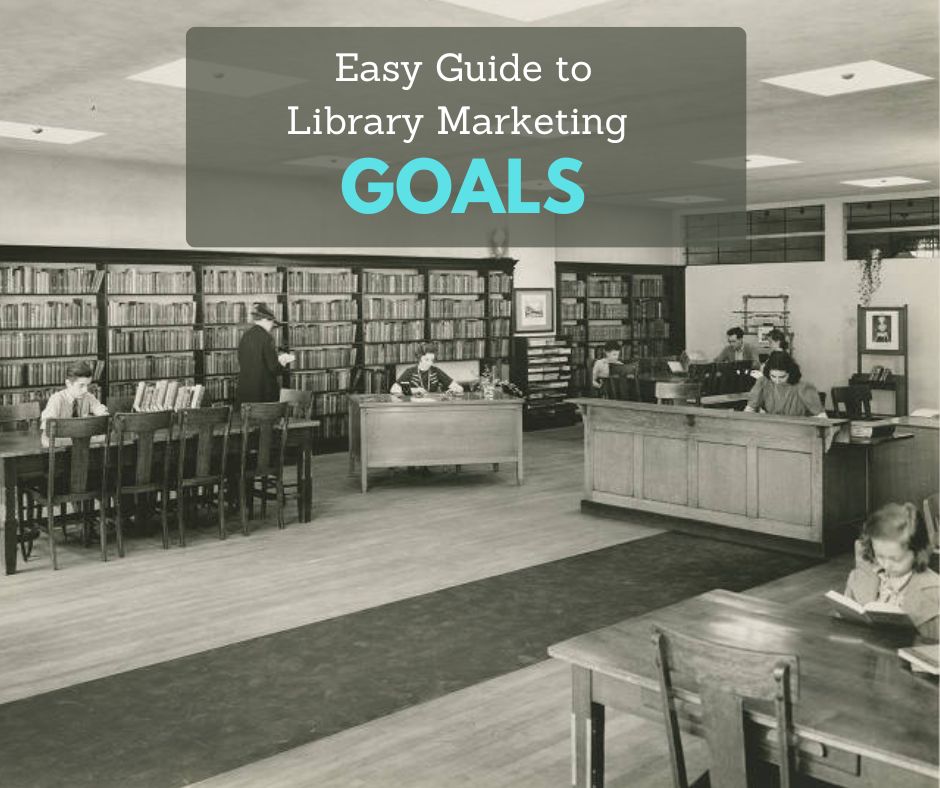
Photo of the Old Main Library reading room for the blind, courtesy Cincinnati & Hamilton County Library

The Town Hall Library in North Lake, Wisconsin occupies a quaint white building with black shutters that looks like it might have once been a church. It serves a population of about 10,000 residents and its website says itโ€™s โ€œknown for its friendly service and varied collectionโ€.

The library’s summer reading program has two more weeks to go. But Town Hall Library is already taking the data from the program and putting it to use in its promotions.

The Library created a Facebook post that leads to an infographic, which lays out the number of participants, visitors, programs, and pages or books read in plain, easy-to-understand details.

Libraries have long counted circulation statistics, program attendance, minutes logged during summer reading, and the number of visitors who walk in and out of their building on any given day.

Theyโ€™ve taken those stats and created videos and infographics. They’ve used those numbers to win awards. And they share that data to prove their value to their community, donors, legislators, and whoever controls their budget.

I wish libraries would measure their digital marketing with the same dedication. That data is crucial to figuring out which library promotions are working.

Metrics are the key to confidence in library marketing.

When I ask libraries if they measure their digital promotions, here are the three most common answers I receive.

โ€œMeasurement is hard.โ€

โ€œWe think weโ€™re reaching our community.โ€

โ€œIt seems like our promotions are effective.โ€

My co-workers often describe me as โ€œa data nerd.โ€ And itโ€™s true. But Iโ€™ll share a secret with you. My love of numbers is rooted in insecurity.

Thatโ€™s because promoting your library can be scary. I often donโ€™t know exactly which of my choices will work.

And when Iโ€™m facing a decision that could either lead me to a successful promotion or a total failure, I lean on the numbers to help me decide.

If you are not tracking the results of your digital library marketing, you are setting yourself up for failure. You may think you are doing a decent job.

But the only way to know if you are truly connecting with your community is through the consistent measurement of your digital promotions.

Measurement of digital library marketing is necessary and transformative.

Metrics are a game changer for your digital marketing.

They tell you what is working so you can replicate that success. They tell you what isnโ€™t working so you can stop doing those things.

They give you the proof, in the form of data, to back up your decisions. They can justify more budget for things you need to reach your audience.

And most important, data holds information about when and where your specific audience wants to receive promotional messages from your library. Youโ€™ll also learn their favorite types of content.

Digital marketing metrics every library must track

On a basic level, every library should consistently track the following metrics.

Email

  • Open rate: the percentage of people who receive your email and open it.
  • Click-thru rate: the percent of people who click on something inside your email.
  • Actions taken by email subscribers: did they register for a program, check out a book, or use a database after receiving your email?

Social media

  • Reach: total number of people who see your content.
  • Impressions: the number of times your content is displayed. Impressions will always be higher than reach because your content may be displayed more than once to the same people. That might sound like a waste of time. But a high impression count means the social media platform you are using thinks your content is so good, that they want to make certain people see it!
  • Engagement: the number of times people take an action, such as liking, commenting, or sharing your post.

Website

  • Number of visitors to your website
  • Number of new visitors versus the number of returning visitors
  • The length of time visitors spend on your website
  • Traffic sources that determine how visitors find your website

What this data will reveal about your digital library promotions

At the basic level, measuring your promotions will ensure that you are using your valuable time and energy in the place where it will be the most effective.

Data can also help you make sure you create more effective promotions! Leslie Marinelli is Communications Manager at Forsyth County Public Library. Sheโ€™s been closely monitoring the data around her email marketing.

She noticed her libraryโ€™s subscriber list got smaller and smaller each month, even though her library was signing up a substantial number of new cardholders every month.

Because she was monitoring her email metrics, she was able to uncover a hole in her subscriber list process. Fixing that process led to an increase in subscribers to her email list each month. And that means more people in her community will discover what the library can offer them.

Make measurement part of your daily library work schedule.

Block off five minutes in every workday to gather or analyze the metrics of your marketing and promotions. Honestly, it only takes five minutes a day.

Check the basic numbers listed above. Every. Single. Day.

Pretty soon, you’ll notice patterns. You’ll be able to predict the types of content that get the most engagement. You might also notice that promotions on certain days of the week get better results.

At the end of your first month, ask yourself what is working and what isn’t. And adjust your promotions accordingly.

Tracking metrics will lead to more effective promotions. It’s that simple!

Don’t Skip This Important Library Marketing Step


More Library Marketing Advice

Are My Library Email Metrics Goodโ€ฆ. or Bad?! Here Are the Latest Stats to Help You Figure It Out.

You Donโ€™t Have to Choose Between Print and Digital Books: How to Promote Your Collection to Patrons Who Use BOTH Formats

Subscribe to this blog and youโ€™ll receive an email every time I post. To do that, enter your email address and click on the โ€œFollowโ€ button in the lower left-hand corner of the page.

Looking for Guaranteed Email Marketing Success at Your Library? Here Are Four Essential Metrics To Track.

Image courtesy Public Library of Cincinnati and Hamilton County

Use the feedback button to share your most pressing email marketing question. I’ll answer these in a future blog post!

I love opening the “reports” tab on an email platform. There is a second or two of anticipation as the page loads that brings me a thrill.

What will the numbers say? Will they be better or worse than last month? Will they reveal a new trend that I can use to better serve my target audience?

I realize I sound a little nuts. But honestly, I love metrics.

They are clear and concise. They show you what’s working and what’s not working. They give you permission to stop doing promotions that don’t help your library at all. If you try something new, they’ll tell you whether your idea worked or not.

Tracked over time, email metrics will help you to take the 30,000-foot view of your library marketing. You can see if your emails are doing what they are supposed to do… moving your library toward its overall strategic goals.

There is a lot we could measure in terms of email marketing. It would be easy to get lost in the quagmire of numbers and analysis.

So, I want you to focus on four data points that really matter to library email marketing. Use these metrics to determine whether your messages are connecting with your audience and promoting your library’s overall strategic goals. And don’t miss the bonus tip at the end of this list!

“Email is the only place where people, not algorithms, are in control.โ€

Ann Handley, writer, digital marketing pioneer, and Wall Street Journal best-selling author 

1. Increase of raw circulation numbers.ย 

Recordย the number of checkouts and holds before you send the message and then again after the message is sent. You can generally wait about three days to check those numbers. Cardholders who want to act on an email will do so within a three-day period of receiving it.

What this metric will tell you: Raw circulation numbers will likely be of interest to anyone in collection development at your library. They are also the basis for the next two metrics, which will help you compare the effectiveness of your emails.

2. Percentage increase in circulation.

Once you start collecting data on raw holds and checkout increases, you will want to calculate the percentage increase in circulation.  

Let’s say on Monday, you send an email promoting one specific eBook. Before you send the email, you note that there are currently three holds or checkouts of this eBook. When you check on Tuesday, there are four new holds or checkouts placed on the eBook. In total, there are now seven holds or checkouts on this item.

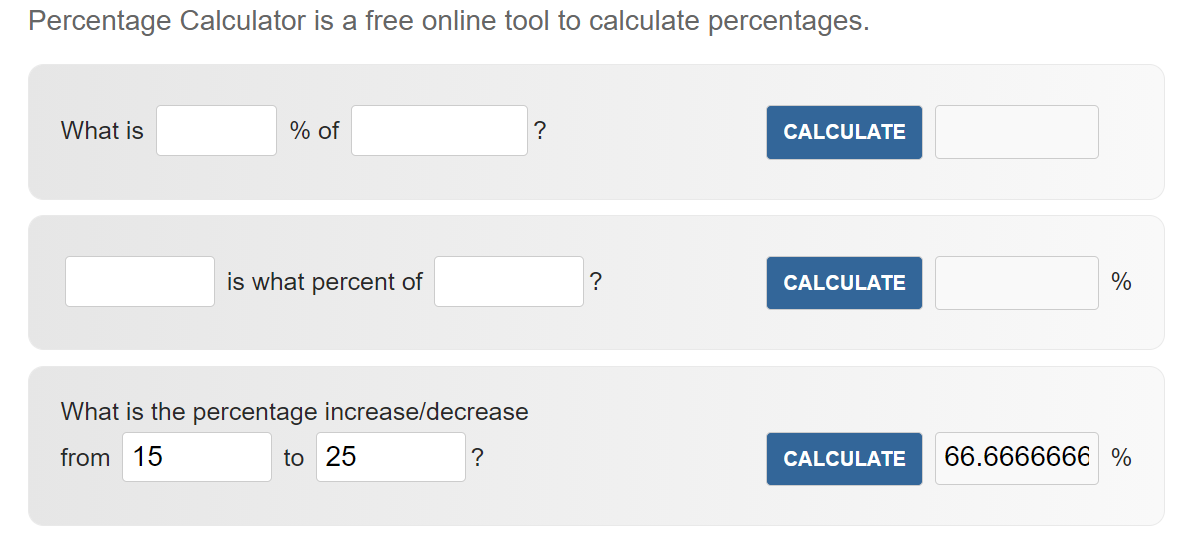
Use percentagecalculator.net to calculate the percentage increase in circulation. For this example, we use the third calculation tool on the page:

That’s a 133 percent increase in circulation.

Now, the next week, you decide to send another email promoting a different eBook. But this time, the eBook you choose to promote has 15 holds or copies before the email is sent. When you check 24 hours after sending the email, there are 10 new holds or checkouts. In total, there are now 25 holds or checkouts on the eBook.

The raw numbers for the second email are bigger (an increase of 4 holds/checkouts vs. an increase of 10 holds/checkouts). But the percentage increase for the second email is actually smaller, at 66%! That means email #1 was more effective.

What this metric will tell you: Percentage increase in circulation lets you compare your promotions more accurately. If you are short on time, this kind of comparison will help you determine which promotions will give you the most success with your limited resources.

3. Conversion rate.

This is the percentage of people who took an action after receiving your email.

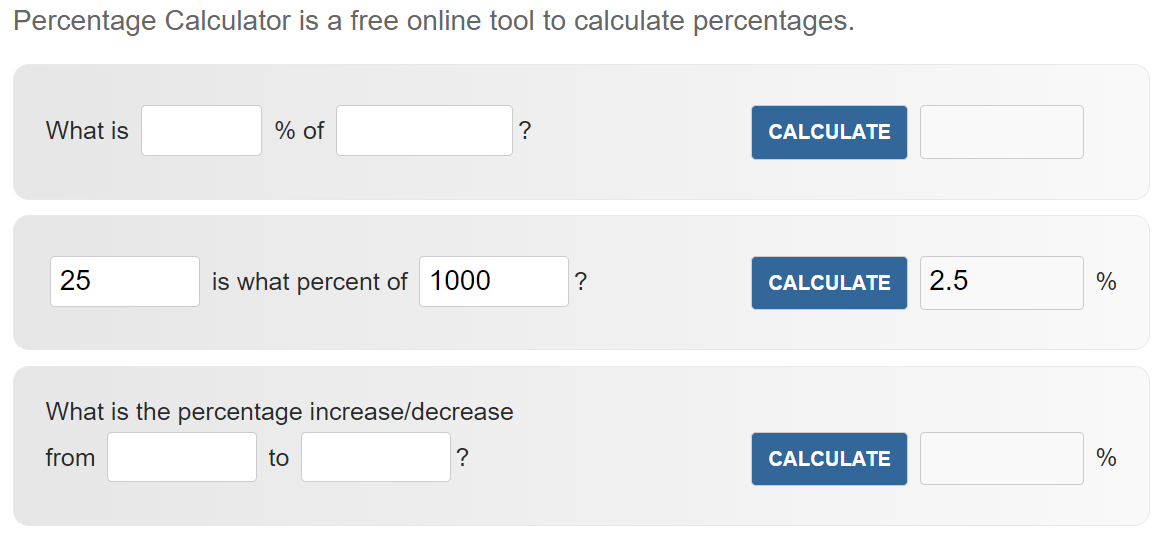
Let’s pretend that you’ve sent an email to 1000 people. The email promotes a streaming video on your library website that hasn’t had any views in the past couple of weeks.

When you check the streaming statistics for that video, you see that 25 people watched the video in the days immediately after you sent the email.

Using the second tool on our percentage calculator website, you can calculate the percentage of people who “converted” or took an action after your email.

What this metric will tell you: If you start tracking conversion rates on your emails, over time you’ll have a clear picture of the types of emails your audience responds to. You’ll be able to establish a good base percentage for your audience. This number will be different for every library.

If you are short on time, this metric will help you determine which promotions will give you the most success with your limited resources. When you find a certain type of email promotion works based on conversion rate, you should do it more often.

4. Amount of traffic driven to your website.

Track how much traffic is funneled to your public website by your emails. You can use Google Analytics to analyze how efforts on those platform translates into action by your cardholders. If you’ve never worked with Google Analytics, here is an easy guide to get you started.

What this metric will tell you: This is an important metric to share with administration, because it clearly demonstrates the value of the time and energy you have invested in email marketing.

Special bonus tip!

If you promote the same collection item or booklist on social media, email, and your website, put some space between those three promotions. A week is a good amount of time. That allows you to really pinpoint whether your increase in circulation is coming from email, your placement of the item on your website, or social media.

In fact, that’s a fun experiment to run. Can you drive higher circulation numbers by promoting your collection on your website, email, or social media?

You can even get more granular: which social media platform is best for collection promotion? Which page on your website is best for placing collection promotions? Which email list responds best? See, this is fun!


Subscribe to this blog and youโ€™ll receive an email every time I post. To do that, click on the โ€œFollowโ€ button in the bottom left-hand corner of the page.

You may also like these articles

Are My Library Email Metrics Goodโ€ฆ. or Bad?! Here Are the Latest Stats to Help You Figure It Out.

What Metrics Demonstrate Your Libraryโ€™s Social Media Marketing is Working?

Angelaโ€™s latest book review

Beautiful Things by Hunter Biden

The Absolute MOST Important Step in Library Marketing…Revealed!

Watch Now

The Library Marketing Show, Episode 79

In this episode, I’ll share the MOST IMPORTANT thing you need to do in library marketing and why you must make time for this step!

Kudos in this episode go to the Madison Library District for their commitment to marketing on Pinterest.

Do you have a suggestion for a topic for a future episode? Want to nominate someone for kudos? Let me know in the comments. And subscribe to this series to get a new video tip for libraries each week.

Thanks for watching!

What Metrics Demonstrate Your Library’s Social Media Marketing is Working?

The Library Marketing Show: Episode 32

WATCH NOW

In this episode, we answer a question from Tiffani from the St. Charles City-County Library. She asked, “What analytics are the most helpful to determine if social media is working?”

Angela shares the three big measures of success and ONE metric that doesn’t mean much anymore!

Also kudos go out to libraries taking part in the Dolly Parton meme. Find out why this fun project is so important to library marketing.

If you have a topic for the show, kudos to share, or want to talk to me more about library marketing, email me at ahursh@ebsco.com.

Want more Library Marketing Show? Watch previous episodes!

Check the Upcoming Events page to see where I’ll be soon. Let’s connect!

Subscribe to this blog and youโ€™llย receiveย an emailย every time I post. To do that, click on โ€œFollowโ€ button in the bottom left-hand corner of the page. Connect with me onย Twitter,ย Instagram, andย LinkedIn.ย ย 

A WordPress.com Website.

Up ↑