Your library’s digital signage is every bit as important as the print signs and posters you put up. But how can you maximize the effectiveness of your digital signs?
I have five tips to help you get the most out of that incredibly valuable space, all learned during my time with the Cincinnati and Hamilton County Public Library.
Plus we’ll give away kudos to a library doing outstanding work in library marketing. Watch the video to find out who is being recognized.
Do you have a suggestion for a topic for a future episode? Want to nominate someone for kudos? Let me know here.
Thanks for watching!
Subscribe to this blog and you’ll receive an email whenever I post. To do that, enteryouremail addressand click on the “Follow” button in the lower left-hand corner of the page. You can also follow me on the following social media platforms:
The #LibraryMarketing Show, Episode 179: It’s time to work on your calls to action!
How do you motivate people to interact with your library promotions? It’s time to supercharge your call to action or CTA game! You’ll find tips to do that in this episode.
Do you have a suggestion for a topic for a future episode? Want to nominate someone for kudos? Let me know in the comments.
And please subscribe to this series on YouTube to get a new weekly video tip for libraries.
Thanks for watching!
Subscribe to this blog and you’ll receive an email whenever I post. To do that, enter your email address and click on the “Follow” button in the lower left-hand corner of the page.
Photo courtesy Cincinnati and Hamilton County Public Library
Trenton Smiley’s job in a library is what you might call a full-circle moment.
At the age of 21, Trenton went to the library with his future wife to research careers. While inside the library, he decided to study communications in college.
Years later, he is working in communications for a library, specifically as Director of Marketing and Communications for Capital Area District Libraries (CADL). Located in Lansing, Michigan area, the library encompasses a service area of approximately 230,000 residents.
Every year, CADL does something extraordinary to reach new audiences. Beginning in 2020, the library launched a Christmas Eve Radio Storytime in partnership with 99.1 WFMK, one of the top radio stations in the Lansing market, especially among female listeners. During the holiday season, the station switches to an all-Christmas Music format, which provides a nice fit for storytime.
“We decided to read Clement Moore’s 1837 poem ‘Twas the night before Christmas because it was part of the public domain,” said Trenton. “Each year, we select one of our youth librarians to read the poem over a wonderfully produced music bed (done by the radio station) that also included special sound effects.”
“A holiday greeting from our executive director Scott Duimstra is always included along with a message from a special guest. Michigan Governor Gretchen Whitmer appeared in 2020 and 2022, while a cast member of Disney’s Broadway Show Frozen appeared in 2021 to promote the show, which was coming to our community a couple of weeks after the storytime aired.”
The radio storytime, which is about six minutes in length, aired twice on Christmas Eve. Listeners could also hear the storytime on sister station 1240 WJIM every hour until midnight. To become more inclusive, CADL launched a Spanish version of the storytime which airs on two NPR radio stations and a Spanish podcast owned by WKAR.
The cost is about $500 to air the storytime, but the station helps promote the special through free commercials and placement on the website and social media.
In addition to promotion on the radio, CADL began working with a local TV station WILX TV-10 to promote their reindeer visits and other holiday events.
“In addition to on-air ads, we also run homepage takeovers of WILX.com,” said Trenton. “A homepage takeover allows us to have 100 percent share of voice by using all available ad positions for a 24-hour period. We use this practice often to generate a great deal of web traffic over a short period of time.”
The library has taken that one step further by sponsoring the station’s broadcast of How the Grinch Stole Christmas and 5 More Sleeps Til Christmas. It’s a fantastic opportunity to reach people who never interact with the library.
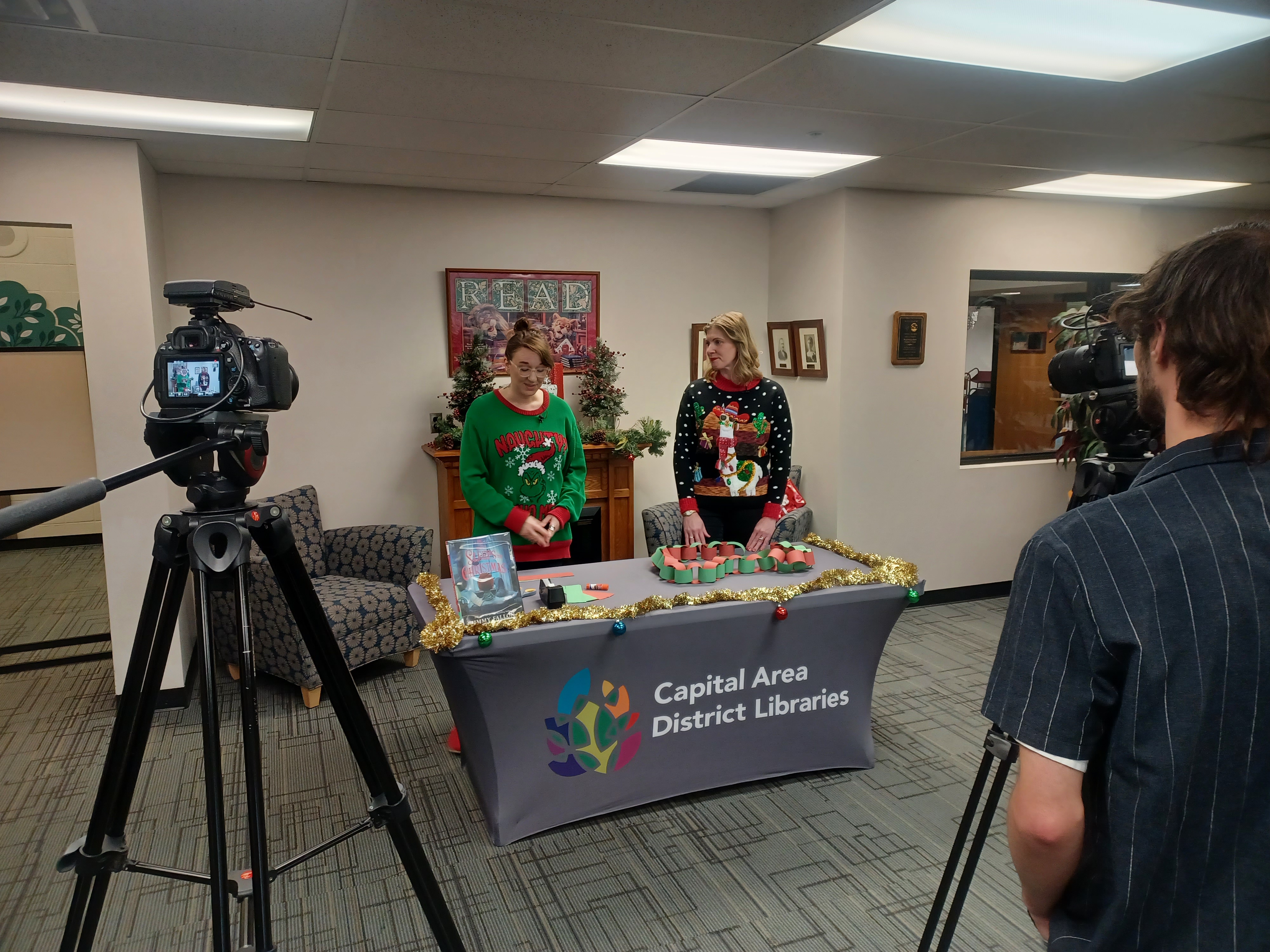
“The idea to sponsor the holiday block of specials is really based on the homepage takeover concept,” explained Trenton. “We would secure all the available local ad positions during the hour block of holiday specials, which translated to two minutes. We would use this ad time to air 2, one-minute segments featuring a duo of librarians demonstrating a craft that was related to one of the holiday specials.”
It only took one day for the library to receive clearance from station management. The station also offered to help produce the library segments and promotional ads, as well as help create awareness of this special program the week leading up to the air date. It took another hour to shoot the segments and promos for the event.
Trenton said his library had specific goals for this paid partnership: to find ways to share the library experience. Specifically, Trenton had three main goals.
Increase marketing reach and frequency. “We focus on a more outward approach to our marketing. The larger pool of people we can engage with the greater chance we have to convert them to users of the library. The same is true of how they are seeing and hearing our messages and content. “
Strengthen brand awareness. “These programs provide us with an opportunity to highlight our expertise, create awareness of CADL, and position the library differently in the minds of the viewers and listeners.”
Expand promotional inventory. “Creation of programs like these provide CADL with content in which to promote other services and generate sponsorships.”
“Since the specials aired during primetime on Friday evening, December 23, we were confident that there would be a large viewing audience and worthy of the $800 price tag,” shared Trenton. “The total planning time on our part was about an hour.”
The television and radio events were marketed via email, social media, branch digital signage, press releases, a holiday guide, and promos on radio and television stations. “All the tactics helped spread the word about the specials,” said Trenton. “But I favor the digital ones because they provide real-time reporting on engagement.”
And, the partnership was indeed a success. “Based on the audience sizes of both our television and radio programs, we were able to accomplish our goal of increased marketing reach,” shared Trenton.
“Through the partnerships with both the television station and three radio stations, we received free promotional ads which helped with our goals of increased frequency, strengthened brand awareness, and more content in which to use to cross-promote services and use for sponsorships. Discussions have also begun about expanding the number of radio stations airing our special storytime.”
Trenton says his library marketing inspiration comes from the for-profit world including Disney and retail outlets.
He has advice for library marketers looking to leverage events to promote their libraries.“Negotiate from a position of strength,” he said. “Libraries have so much they can leverage including their expertise, content, goodwill, footprint (digital & physical), and customer base.”
Subscribe to this blog and you’ll receive an email every time I post. To do that, enter your email address and click on the “Follow” button in the lower left-hand corner of the page.
The Library Marketing Show, Episode 166: This episode is all about click-thru rates for digital promotions!
This topic was suggested by a viewer named Lily who says, “We have a super high open rate and super low click-through rate. Could you talk CTRs?” I sure can!
Do you have a suggestion for a topic for a future episode? Want to nominate someone for kudos? Let me know in the comments. And subscribe to this series to get a new weekly video tip for libraries.
Subscribe to this blog and you’ll receive an email whenever I post. To do that, enter your email address and click on the “Follow” button in the lower left-hand corner of the page.
Photo courtesy Public Library of Cincinnati and Hamilton County
The house I grew up in was surrounded by cornfields.
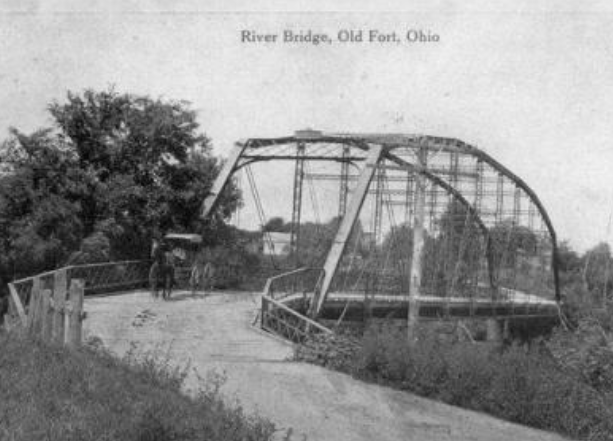
The nearest town was four miles away. It featured a grain elevator, a tiny country store, a barber shop, and a post office. A traffic light was installed after a tractor damaged the bridge from the town to the surrounding area.
Photo of the old bridge, courtesy BridgeHunter
I’m a product of small-town America. So small towns fascinate me. So do small libraries.
According to the Institute of Museum and Library Services’ annual Public Library Survey, 57 percent of libraries in the United States have five or fewer staff members. 27 percent have one or fewer full-time employees!
If you are working in a small library, you are doing everything, from working with readers to cleaning the bathrooms. Promoting your library is likely just one more thing on your to-do list, something you’ll get to if you get time.
But of course, we want people in our community to use our library. We need them to use it. So how do you market your library when you are pressed for time or staff resources?
Marketing is really not a job for one person. But that’s the reality for so many of my readers.
So here are the very focused, strategic steps you should take to consistently and effectively promote your library if you are working alone or with a tiny staff.
Set one, SMART goal.
You will need to be hyper-focused in your promotional efforts. Pick one thing you want to work on. Then set a Specific, Measurable, Attainable, Relevant, and Time-bound goal for that work.
The village of Wayne, Ohio has a population of about 900 people. It is very much like the small town I grew up in, with one notable exception: it has a library!
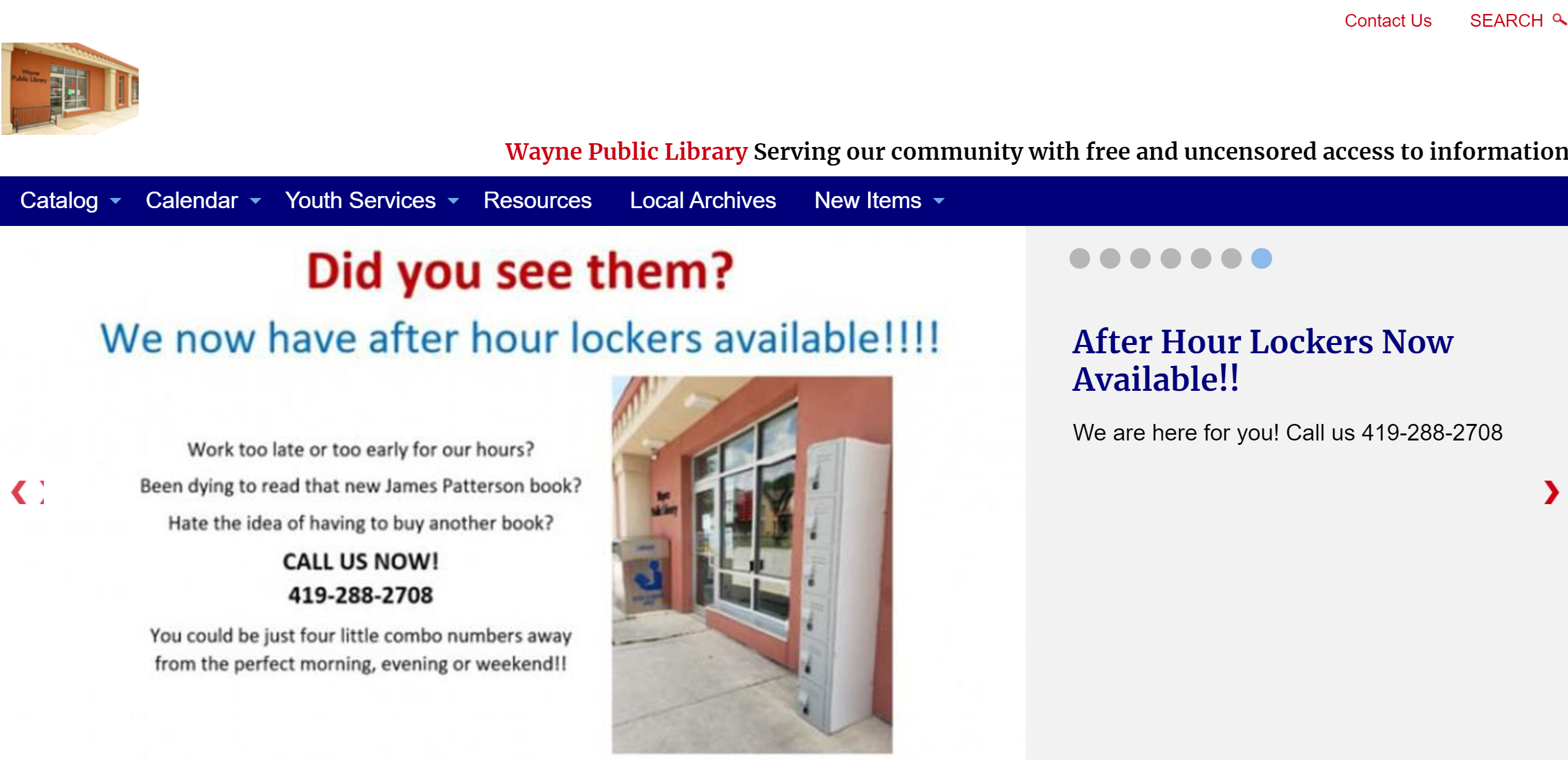
Driving through town a few weeks ago, I noticed the library has purchased an outdoor locker so patrons can pick up holds when the library isn’t open. They want people to use the locker, of course. So, they’ll want to promote it.
I don’t know anyone on the 7-person staff of the Wayne Library. But, if I were working with them, I would encourage them to set a SMART goal like this:
We will get 30 people a month to request their holds pickup via the outdoor locker. We’ll do this by promoting the locker on our website and by specifically asking patrons if they’d prefer to pick up their holds via the locker when we place holds for them. This goal is important because it will prove the value of this investment and will increase circulation. We’ll track and record the total the number of locker users at the end of each month.
You can see this goal contains specific numbers. It sets the context for why this promotion is important. And it lays out how the staff will measure success.
A SMART goal will help you organize your promotions and keep you accountable. It will give you a sense of direction for your work.
Focus on tactics that work best to reachsmall communities.
Make a list of all the ways you can promote your library: your website, email lists, social media, in-person interactions, print, partners, signs… etc. Then take a highlighter and pick the 2-3 things that work best for your community. Those are the tactics you should use to reach your SMART goal.
Every library community is different. And small libraries often find promotional success in places that are different from their larger counterparts.
For example, if your library is located by a major road, use outdoor signage to attract the attention of passing motorists. If your school is a significant community hub, ask teachers to send home promotional bookmarks and fliers in kids’ backpacks. If your town has a little restaurant where residents come for breakfast every Saturday, ask the restaurant owners to give out a promotional print piece like a bookmark or flier with the check.
Wayne Public Library uses its website to promote its lockers.
Live and die by an editorial calendar.
An editorial calendar will help you decide what, where, and when to publish. After those decisions are made, the editorial calendar will help you assign tasks and keep up to date on deadlines.
First, you’ll create your calendar. Then you’ll decide how to populate it with content that will ensure you reach your promotional goals.
Repurpose content.
When your staff is small, you’ll need to work smarter, not harder. A smart way to maximize your time and efforts is by repurposing content.
Repurposing content is the act of finding new ways to recycle your existing content. It’s basically taking one piece of content, say an email newsletter, and re-formatting it for different mediums like social media, a blog post, and an email
You can do this with any piece of content, from your website graphics to your annual report. Break the content down into pieces and spread them across all your available platforms. In this way, you can make sure everyone in your community sees your message. You also can make sure the work you are doing right now will have maximum impact.
Technology can be your best friend if you are working on promotion all by yourself. Schedule your emails, blog posts, and social media posts as far in advance as possible.
There are several great social media schedulers that have free plans. This post is an excellent list of each of those options.
For blogs, I recommend WordPress. You can get a free account and you can schedule posts to go out whenever you like. Plus, patrons who follow your blog will get an automatic email every time you post. That means you don’t have to create an email to let them know you’ve published new content.
You will have to invest in an email platform. But once you do, you can create and schedule emails to go out to your patrons as far in advance as you like.
Learn from larger libraries but don’t compare your success.
The success or failure of a library’s marketing has nothing to do with the size of its staff. In fact, I would argue it might be easier for a small library to create successful library promotions.
Small libraries have more freedom to experiment. Their staff tends to be personally connected with patrons. They have a deeper understanding of what their community wants and needs from their library.
So, follow those large library systems on social media. Sign up for their emails. Look at their websites. Visit large libraries when you travel. Make a list of ideas that you want to try at your smaller library.
But remember, the key to success is a library’s ability to connect with its own community. Any library can do that, no matter how large or small the staff.
I was recently the guest on a new podcast called Library Marketing for Library Marketers. Listen to that episode here.
Subscribe to this blog and you’ll receive an email every time I post. To do that, enter your email address and click on the “Follow” button in the lower left-hand corner of the page.
Photo courtesy Cincinnati and Hamilton County Public Library
For many of us, a hamburger is a delicious sandwich, no matter where you get it. No one can mess them up.
But there are things you can do to make your hamburger exceptional. For me, that means the addition of bacon, cheese, and avocado. I’ll still eat and thoroughly enjoy the hamburger if those ingredients aren’t available. But they make the hamburger go from good, to memorable.
Hamburgers are like marketing. Much of the work you do to promote your library is already good (because I know you’re doing good work!) Now, you’re on the path to maximizing the effectiveness of your marketing.
One of the ways you can ensure success is to make certain your marketing content is the perfect length. It may seem insignificant. But the right number of characters or words for a piece of content can make all the difference.
How do you know how long your tactics should be? I did the research, so you don’t have to.
Ideal length of a Facebook post: 100-259 characters
Research from experts on this one is mixed. Some studies suggest you keep captions at 50 characters or less.
But in my work with libraries, I try to pay attention to engagement rates and post length. And I personally think 50 characters is too short. So, I would suggest you try to write between 100 and 259 characters.
Ideal length of a Tweet: 240-259 characters
Most experts agree that using slightly less than 280 character limit on Twitter is ideal. That gives people the room to quote Tweet your library.
But you can do two other things to improve your library’s Twitter engagement.
Include rich media in your post, like photos, graphics, and video. In fact, multiple photos or a mix of photos and a video will help your Tweet get more engagement.
Use emojis at the beginning of your Tweet to capture attention and stop people from scrolling past your messages.
Ideal length of an Instagram post: 138-150 characters
Fun posts should have shorter captions. Information or educational posts should have longer captions.
There are other caption tricks that help with Instagram post engagement.
Add spaces between your sentences, so they look like paragraphs. Here’s an example from Amherst Town Library.
Weave in plenty of emojis. You can even substitute emojis for words to add character to your post.
Include multiple kinds of rich media, like photos and videos all in the same post, to increase the value.
Ideal length of a TikTok video or Instagram Reel: between 7 and 34 seconds
There is not a lot of data or research surrounding TikTok videos or Instagram Reels. It does appear that, even though the platforms allow you to create videos that are several minutes long, shorter videos lead to maximum engagement.
Ideal length of a LinkedIn post: Less than 210 characters
There is lots of dispute around this recommendation. I’ve picked the median number. And to help with engagement, I have a formula that’s worked well for me.
Construct a good, first teaser sentence, and then put a space between it and the rest of your post caption. This will cause your reader to have to click on “see more.” It works!
Good content on LinkedIn is also important. Videos natively uploaded to the platform get lots of engagement. Also, try polls to increase engagement.
Ideal length of an email: 100 words
Different types of emails should have different lengths. If you’re sending someone an onboarding email, you’re going to need to write more than if you’re sending an email promoting an upcoming event.
There are some scenarios where a couple of sentences is plenty to capture your cardholder’s attention and others where you’ll need several paragraphs to get your full point across.
In general, keep your email text as simple as possible. Be straightforward about the benefit of your library service or collection item or event. And drive recipients to your website for more information.
Ideal length of an email newsletter: 3-4 pieces of information
In my experience advising libraries, email newsletter recipients never click anything past the first 3-4 pieces of content in an email. I always recommend sending shorter, more frequent email newsletters rather than one long monthly version.
If you don’t have control over how long your email newsletter is, you can help engagement by placing the 3-4 most important things at the beginning of the email. If your email provider has a table of contents feature, use that to drive interest to content further down in the email.
Ideal length of an email subject line: either very short (30 characters) or very long (90 characters or more)
It appears that the extreme ends of length catch the attention of the inbox scroller.
Longer subject lines boost response rates, according to Adestra, a U.K.-based email service provider. Its analysis of more than one billion emails showed that subject lines of 90 characters and more produced the highest response rates. They theorize the added characters increase engagement because they can communicate more value to the recipient.
But their research also found that subject lines at 30 characters or less performed well. That’s because the full subject line can usually be seen by the recipient, both in desktop and mobile versions of mail provider apps.
Experiment with both ends of the length spectrum to see which your audience responds to. And keep in mind the other factors that can impact subject line effectiveness.
Ideal length of a YouTube video: Between 7 and 15 minutes
This stat comes from several sources, including Social Media Examiner.
It’s important to let your content dictate video length. A how-to video may need five minutes or more to show the process. An unboxing video can be shorter. If your video is interesting to watch, the length won’t really matter.
Ideal length of a podcast: 22 minutes
Your target audience will really dictate the perfect length for your library. Most research I found recommended 20 minutes for podcasts aimed at listeners who are doing chores or taking short walks, 40 minutes for people commuting or doing longer chores, or 60 minutes for those who want an extended listen.
Ideal blog post length: 2,000 words
That’s a lot of words! For context, the Monday articles here on Super Library Marketing run between 1,000 and 1,500 words each.
So, before you get anxious about word length, remember that quality blog posts will always do well, no matter how long. If your post contains valuable or interesting information that your reader wants and needs, it will do well.
If your blog is less than 2,000 words, there are some things you can do to make it feel meaty to the reader. You may have noticed these tricks in my blog posts.
Present information using bullet points or lists.
Write longer paragraphs at beginning of the article.
Insert scannable headlines.
Include images, especially those that explain concepts or demonstrate your point.
Finally, it’s important to include keywords in your title and frequently within your post. You may notice I use the terms library marketing and library promotion in almost every title and throughout my articles. That’s because I know those are used by library staff searching for help with their marketing.
Subscribe to this blog and you’ll receive an email every time I post. To do that, enter your email address and click on the “Follow” button in the lower left-hand corner of the page.
Photo of the Old Main Library reading room for the blind, courtesy Cincinnati & Hamilton County Library
The Town Hall Library in North Lake, Wisconsin occupies a quaint white building with black shutters that looks like it might have once been a church. It serves a population of about 10,000 residents and its website says it’s “known for its friendly service and varied collection”.
The library’s summer reading program has two more weeks to go. But Town Hall Library is already taking the data from the program and putting it to use in its promotions.
The Library created a Facebook post that leads to an infographic, which lays out the number of participants, visitors, programs, and pages or books read in plain, easy-to-understand details.
Libraries have long counted circulation statistics, program attendance, minutes logged during summer reading, and the number of visitors who walk in and out of their building on any given day.
They’ve taken those stats and created videos and infographics. They’ve used those numbers to win awards. And they share that data to prove their value to their community, donors, legislators, and whoever controls their budget.
I wish libraries would measure their digital marketing with the same dedication. That data is crucial to figuring out which library promotions are working.
Metrics are the key to confidence in library marketing.
When I ask libraries if they measure their digital promotions, here are the three most common answers I receive.
“Measurement is hard.”
“We think we’re reaching our community.”
“It seems like our promotions are effective.”
My co-workers often describe me as “a data nerd.” And it’s true. But I’ll share a secret with you. My love of numbers is rooted in insecurity.
That’s because promoting your library can be scary. I often don’t know exactly which of my choices will work.
And when I’m facing a decision that could either lead me to a successful promotion or a total failure, I lean on the numbers to help me decide.
If you are not tracking the results of your digital library marketing, you are setting yourself up for failure. You may think you are doing a decent job.
But the only way to know if you are truly connecting with your community is through the consistent measurement of your digital promotions.
Measurement of digital library marketing is necessary and transformative.
Metrics are a game changer for your digital marketing.
They tell you what is working so you can replicate that success. They tell you what isn’t working so you can stop doing those things.
They give you the proof, in the form of data, to back up your decisions. They can justify more budget for things you need to reach your audience.
And most important, data holds information about when and where your specific audience wants to receive promotional messages from your library. You’ll also learn their favorite types of content.
Digital marketing metrics every library must track
On a basic level, every library should consistently track the following metrics.
Email
Open rate: the percentage of people who receive your email and open it.
Click-thru rate: the percent of people who click on something inside your email.
Actions taken by email subscribers: did they register for a program, check out a book, or use a database after receiving your email?
Social media
Reach: total number of people who see your content.
Impressions: the number of times your content is displayed. Impressions will always be higher than reach because your content may be displayed more than once to the same people. That might sound like a waste of time. But a high impression count means the social media platform you are using thinks your content is so good, that they want to make certain people see it!
Engagement: the number of times people take an action, such as liking, commenting, or sharing your post.
Website
Number of visitors to your website
Number of new visitors versus the number of returning visitors
The length of time visitors spend on your website
Traffic sources that determine how visitors find your website
What this data will reveal about your digital library promotions
At the basic level, measuring your promotions will ensure that you are using your valuable time and energy in the place where it will be the most effective.
Data can also help you make sure you create more effective promotions! Leslie Marinelli is Communications Manager at Forsyth County Public Library. She’s been closely monitoring the data around her email marketing.
She noticed her library’s subscriber list got smaller and smaller each month, even though her library was signing up a substantial number of new cardholders every month.
Because she was monitoring her email metrics, she was able to uncover a hole in her subscriber list process. Fixing that process led to an increase in subscribers to her email list each month. And that means more people in her community will discover what the library can offer them.
Make measurement part of your daily library work schedule.
Block off five minutes in every workday to gather or analyze the metrics of your marketing and promotions. Honestly, it only takes five minutes a day.
Check the basic numbers listed above. Every. Single. Day.
Pretty soon, you’ll notice patterns. You’ll be able to predict the types of content that get the most engagement. You might also notice that promotions on certain days of the week get better results.
At the end of your first month, ask yourself what is working and what isn’t. And adjust your promotions accordingly.
Tracking metrics will lead to more effective promotions. It’s that simple!
Subscribe to this blog and you’ll receive an email every time I post. To do that, enter your email address and click on the “Follow” button in the lower left-hand corner of the page.
The Library Marketing Show, Episode 133: In this episode, I’ll address a recent discussion in the chat of a virtual conference I attended.
The commenter said, “I struggle with marketing our digital collection when my goal is getting people back in the Library. I am thankful for our digital collection and how it meets the needs of patrons, but when patrons mostly use our digital collection, they don’t come into the library. How should I be rethinking this?”
Kudos in this episode go to Rhone Talsma of the Chicago Public Library. Watch the video to find out why he’s being recognized.
Do you have a suggestion for a topic for a future episode? Want to nominate someone for kudos? Let me know in the comments. And subscribe to this series to get a new video tip for libraries each week.
Thanks for watching!
Subscribe to this blog and you’ll receive an email every time I post. To do that, enter your email address and click on the “Follow” button in the lower left-hand corner of the page.
In this episode, I’ll share three tips from some recent research that will shed light on how to communicate with Gen Z in your library marketing materials.
Kudos in this episode goes to the Pflugerville Public Library. Watch the video to find out why they’re being recognized!
Do you have a suggestion for a topic for a future episode? Want to nominate someone for kudos? Let me know in the comments. And subscribe to this series to get a new video tip for libraries each week.
Thanks for watching!
Subscribe to this blog and you’ll receive an email every time I post. To do that, enter your email address and click on the “Follow” button in the lower left-hand corner of the page.





 Super Library Marketing: Practical Tips and Ideas for Library Promotion