Search

Super Library Marketing: Practical Tips and Ideas for Library Promotion

Category

Professional Development

Six Truths Learned at #LMCC19 and What They Mean For the Future of Library Marketing

The Future of Library Marketing

Well, that was fun!

I am back from a three-day trip to St. Louis, Missouri, where I had the pleasure of attending and speaking at the fifth annual Library Marketing and Communications Conference.

It. Was. Amazing.

I learned stuff, made friends, and I felt supported as I was surrounded by 450 fellow library marketers. Here are the top six things I learned while at this spectacular event.

Library marketers everywhere are struggling with the same problems. We’re all fighting to keep our branding clear and consistent. We’re all stumped about the best way to market programs. We are searching for ways to find success in internal staff communications. And we all feel like we could use more support from senior leadership.

It doesn’t matter if you’re working at a public library or an academic library. It doesn’t matter where your funding comes from. It doesn’t matter how much money you have. It doesn’t matter how big your staff is! We’re all in the same boat.

Many of the people I talked with at the conference found these problems frustrating. But we also found some comfort in knowing that everyone is facing the same issues.

Library marketers are on the forefront of a major push to make our libraries more diverse, accessible, and inclusive. It seemed like every time I made a new friend, the conversation turned to diversity and inclusion. Library marketers are pushing staff and senior leaders to make service accessible to everyone. They are pushing to make sure people of all backgrounds have a seat at the table when it comes to important decisions. They want to make sure their marketing messages and their library’s service are open to as many members of the community as possible. It’s inspiring! And library marketers are tenacious. So, get ready, because we’re going to be changing things!

Library marketers are obsessed with data. I’m so heartened to see how many of my colleagues are in a constant search for data. They want to make sure their messages are getting to the right audience at the right time, and they’re using data to make sure that happens.

They use data to make the case for libraries to add services and to demonstrate the value and impact of programs and services. They’re using data to make work easier for front-line staff, to understand their current users, to find non-cardholders, and to send targeted messaging in various forms to diverse audiences.  It was fun to be surrounded by fellow data nerds!

Library marketers have conflicting emotions about social media. But they’re no longer afraid! Library marketers of all ages are willing and eager to learn how best to use each platform. but they’re also frustrated because most platforms make it so dang difficult to get any organic reach and don’t seem to have any plans to make life easier for nonprofits and social service agencies.

But we’re not giving up! The session on creating memes was one of the most popular at the conference! The insta-stories session also got a lot of buzz. And at my own session on social media success, I got a lot of in-depth questions from the audience. I also talked to some Gen X library marketers who were eager to learn about “younger” social media platforms like Instagram. I’m a Gen Xer! If I can do it, I have no doubt you can too!

And speaking of social media, one of the weird and frustrating things I’ve noticed about most library conferences is the lack of live-tweets, Facebook, and Instagram posts during the conferences. This was not the case at LMCC! If you were stuck in room sick, as a good friend of mine was, you would have still been able to learn from the attendees who used the hashtag.

The proliferation of social media posts were also helpful for attendees who are torn between attending two sessions. I was able to get a lot of tips from sessions I couldn’t attend by checking the hashtag feed.

And when one of the conference board members asked members to turn on a special LinkedIn feature to connect with other attendees, they did it! I made a lot of new connections.

Library marketers who don’t have a library science degree often feel judged and misunderstood by the librarians in their systems. This was really disheartening. I am lucky in that I don’t think the librarians at my library think less of me because I don’t have a masters in library science (or if they do, they don’t make me feel like they do!).

I spoke with a great many library marketers who came to this profession from journalism or from marketing jobs at big companies and brands. They have a sincere desire to do work that is meaningful and to give back to the community. I hope that librarians will begin to view the marketing staff at their libraries as advocates and partners. We are here to help make sure your work reaches a large audience and to help sustain the library industry by communicating its value to the public and to stakeholders. Let’s work together!

Librarians are too humble and don’t brag enough about the work they do. The clear consensus among library marketing professionals is that humility is holding back the industry.

We’re all working hard to make sure the great work of front-line staff gets noticed, applauded,  and rewarded. This important task is made harder when librarians aren’t willing to talk about what they do. We all agreed that librarians are amazing and their work doesn’t get enough recognition. Let us help with you that!

Check the Upcoming Events page for a list of webinars and conferences where I’ll be next. Let’s connect! Plus, subscribe to this blog and you’ll receive an email every time I post. To do that, click on “Follow” button in the bottom left-hand corner of the page. Connect with me on YouTube, Twitter, Instagram, and LinkedIn.  

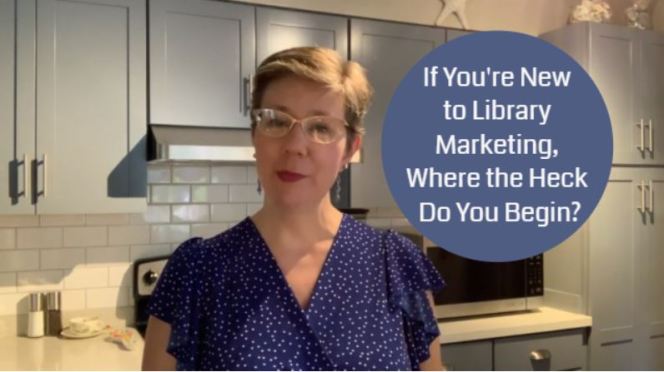
🤷If You’re New to Library Marketing, Where the Heck Do You Begin? The Library Marketing Show Episode 18

WATCH NOW

In this episode, we answer a question from Megan from the Redford Township District Library in Michigan. She asks, “I’m brand new! New to the Redford library and new to the Library realm in general. I am two years out of college and my most recent marketing experience is in the automotive field (very different ). I am wondering where do I start? Tips & tricks for just starting off?”

I offer some advice and starting tips for Megan. Be sure to add your advice to the comments! Let’s crowd source a great experience for Megan’s first year as a library marketer!

I also offer kudos to the King County Library system in the state of Washington for their brave decision to stop buying eBooks from Macmillan. They did it in response to Macmillan’s decision to embargo new eBook sales to libraries for two months. It’s brave and if we all band together and follow their lead, we might be able to make a difference! Read this great article from Publisher’s Weekly on their decision.

Stay in Touch

Check the Upcoming Events page to see where I’ll be soon. Let’s connect! I’m doing a webinar soon, so be sure to sign up… it’s free!

Have an idea for the next Library Marketing Live Show? Submit it now.

Subscribe to this blog and you’ll receive an email every time I post. To do that, click on “Follow” button in the bottom left-hand corner of the page. Connect with me on Twitter, Instagram, and LinkedIn.  

The Nine Things You Need to Look for to Hire the Best Graphic Artist for Your Library Marketing

Confession: When I took this job in library marketing, I knew nothing about graphic design. And I mean LITERALLY NOTHING.

I came from the world of TV news. There is no print element to that. All the graphics are done by a mysterious department located on the second floor of our station, where artists work in a dimly lit room surrounded by monitors. And their ability to get creative is limited by the fast pace of the workplace.

My first week in the library was a lesson in paper weight (text vs. cover?? What??), labels, printing terms, and equipment that I had never seen before, like a Baum Cutter that look a small tank with a blade like a guillotine. I was scared.

And I bet a lot of library marketers can relate. We have degrees in library science and communications, not design. Most of us do not have any training or background in graphic art. I don’t know about you, but I find it difficult and intimidating to manage an employee when I have no idea what their job is, how they do it, or how I could help them to improve.

I’m lucky to have two graphic artists at my library, serving a system of 41 locations and 600,000 cardholders. I can count on my artists to be a touchstone for all projects. They keep my library branches on brand. They help me turn ideas that seem stuck in my head into something clear and understandable to our cardholders.

Visuals are a key part of marketing. Your graphic designer is an invaluable member of your library marketing team. So it’s an important hire to make.

A great artist can create a consistent look and feel to everything surrounding your library’s brand. You want your customers to be able to recognize your visuals as being part of your brand, even before they spot your name or logo on the material.

A good artist can convey the message of your library without actually using your library’s name. They can listen to you explain a vague idea and create something visually stunning which helps enhance the customer experience.

When you’re in the market to add a graphic artist to your team, you may be dazzled by stunning portfolios and creative resumes (graphic artists create some of the best resumes I’ve ever seen!) But there are nine important qualities your candidates must have.

Someone with good customer service. Your artists will be working with multiple departments, branches, customers, and outside partner agencies. You need someone who can listen to whoever they are working with, understand their needs, and translate their vision.

Someone who can communicate with your customers. Ask your candidates how they will create pieces for different age groups, ethnic backgrounds, and interests. Make sure your artist can switch viewpoints and create visuals that speak to many different library audience segments.

Someone who can translate your library strategy and goals into visuals. These are complex concepts. A good artist will take big ideas and turn them into a visual the audience can understand. Ask for examples of infographics and annual reports from previous employers or internships. Can you understand what the message is? Are the statistics presented in a clear and interesting way?

Someone who can work with multiple formats. You’ll be asking your artist to create print and digital graphics, so they should be comfortable working with both. Ideally, you should also look with experience in web design, video production, and animation.

Someone with a vision. You’ll want to make sure your graphic designer will stay on top of the latest trends in design so your marketing material doesn’t look dated.

Someone with whom you can collaborate. Your work with design will be a back and forth, give and take, and you will need someone who can walk through that messy process with you. A good designer will be able to defend their design as well as adapt to ideas that aren’t expressly theirs.

Someone who seeks inspiration. My two designers have a common belief that their work gets better as they learn more. They both have a desire to attend creative sessions and try new mediums. They both work on creative endeavors outside of the library.

You don’t want a designer who simple comes into the office, does what you tell them, and then goes home for the day. Ask potential hires if they do anything artistic outside of the workplace to fuel their own creativity.

Someone who can think on their feet. Ask your candidates to critique a design piece and explain what they would have done differently. Their answer will tell you a lot about their creative process, their ability to articulate their vision, and how they think when they’re asked to do a project on the fly.

Someone who can handle criticism. This is true of every hire you make, but graphic artists are creatives and in my experience, creatives take their work seriously. They may feel precious about their designs and may be resistant to your opinions about them. Make sure you can give positive and constructive feedback to your potential hire without worrying that they’ll refuse to take your suggestions.

Subscribe to this blog and you’ll receive an email every time I post. To do that, click on “Follow” button in the bottom left-hand corner of the page. Connect with me on YouTube, Twitter, Instagram, and LinkedIn.  And check my list of upcoming events so we can connect.

The Library Marketing Show Episode 15: 🤷What to Do If You’re a Librarian Who HAS to Do Marketing!

WATCH NOW

In this short video, we talk about what you should do if your a librarian and your library has asked/forced/demanded/requested that you also handle the marketing. If you don’t have a communications degree, what should you do? Can you do it? Answer: YES!
(Watch episode 14 to see why I generally don’t hire librarians to do marketing).

Also KUDOS to Chicago Public Library for going fine free!

Talk to me! Share thoughts about this video in the comments, LIKE it, SHARE it, and subscribe (Pretty please!). Let’s grow this channel together.

Stay in Touch

Check the Upcoming Events page to see where I’ll be soon. Let’s connect! More events are coming soon.

Have an idea for the next Library Marketing Live Show? Submit it now.

Subscribe to this blog and you’ll receive an email every time I post. To do that, click on “Follow” button in the bottom left-hand corner of the page. Connect with me on Twitter, Instagram, and LinkedIn.  

The Secret of the 60-Minute Meeting: Six Tips to Keep Your Library Marketing Team On Track and Stay Productive!

I dread Wednesdays.

On that day of the week, I usually have between five and seven meetings. I basically spend the day hopping from one conference room to another.

Not so long ago, most of those meetings would last beyond 60 minutes. Tangents were pursued. Ideas were dissected in great detail. My team and I were often blind-sided by requests to come up with an entire marketing campaign for an idea we’d only learned of moments before. It was unproductive.

As a marketing manager responsible for proving the bottom-line benefits of your marketing, it can be tempting to rely on recurring team meetings and regular check-ins to make sure you know exactly what’s going on with your team. But when long meetings evolve into habit, their value tends to plummet.

No meeting should ever last beyond 60 minutes. There are a couple of reasons for this. After 60 minutes of intense discussion, participants begin to lose interest. Their creativity and energy wanes. And the more time you spend in meetings, the less time you and your team have to do ACTUAL work.

Obviously you can’t control every meeting. But when you’re running the agenda, you can create an atmosphere of productivity and creativity while setting an example of efficiency for the rest of the library staff.

I don’t remember how it started but someone in my library’s senior leadership team took the initiative to institute a more efficient meeting structure. Suddenly, everyone was following this person’s lead. It was amazing and liberating.

I started instituting the 60-minute or less meeting rule about a year ago in my department and it’s worked so well that I recently introduced it in another setting.

I’m the chair of my school district’s bond issue campaign and our core committee meetings are 60 minutes or less. It was funny how many people from that group have commented about my 60-minute meeting pledge! It had never occurred to them that meetings, even ones where important decisions are made, could last less than an hour.

If you want to increase productivity in your library, here’s how to execute a 60-minute meeting.

Super prioritize your agenda.  For my library team, I divide action items into categories: the weekly schedule, immediate concerns, future concerns, and individual tasks. These four categories appear on the agenda every single week. Under each category, I list the items that need to be discussed in order of their priority. Next to each item, I list the name of the person in charge of that item or project. For the bond issue committee meetings, I simply list items in order of their priority without categories.

Time it out ahead of time. Try to estimate how much time you’ll need to discuss each item. If your total discussion time is more than 60 minutes, do some more prioritizing with your agenda. Once your agenda is set, make sure everyone attending the meeting has a copy so they can follow along and stay focused.

Set expectations at the beginning of the meeting. As the leader, set the example and start on time. Remind the team that the meeting will last 60 minutes and that you’ll be working to keep discussions on track. Assure them that if further discussions are needed on a particular item, you will schedule a side meeting. Off-topic discussions will be tackled outside of the formal meeting time.

The first time I made this announcement at the bond issue meeting, everyone looked shocked. I was worried that people would start watching the clock and timing me, thus cutting the productivity. But because I set firm expectations, the group trusts me to stick to them. They end up focusing more on the items we need to discuss. It’s funny how that works!

Watch your agenda word choices. Use words like “update” rather than “discussion” to help frame the conversation and give mental cues to attendees that work for the meeting will need to be done before the meeting actually happens. If a key decision needs to be made in the meeting, use the word “decision” in your action item to cue the attendees that you plan to come to a consensus at this meeting.

Take notes. Make note of who is assigned to each project. Give clear deadlines and expectations for each action item and include those in the notes. After the meeting, send out a copy of the meeting notes so everyone is clear about what they’re responsible for and when it’s due.

Continue to give time updates throughout the meeting. It’s OK to say, “We have 15 minutes left so we’re going to discuss one more item that is a priority to us. The rest of the items on this agenda will be discussed at a later meeting.” This will help keep discussions on track.

The LIVE LIBRARY MARKETING TALK ON INSTAGRAM is changing format. I have decided to pre-record my segments and post them to YouTube! I still want your email questions and topic suggestions ahead of time. Just fill out this form. If I pick your topic, I’ll send you a personal link to the video after it’s posted. I’m going to start posting my video segments on Thursdays so watch your email for that. Thank you to everyone who weighed in on the video decision!

And check out these upcoming events and webinars where we can connect and discuss library marketing. Registration links included.

Subscribe to this blog and you’ll receive an email every time I post. To do that, click on “Follow” button in the bottom left-hand corner of the page. Connect with me on Twitter, Instagram, and LinkedIn.  

The Big Things You Must Do to Land a Job in Library Marketing

I never like to see a staff member resign. But when they do, it’s usually to take the next step in their marketing career, and that’s something to be proud of.

However, I suffer through several days of worry after I receive a resignation letter. Will I find a good person to fill this role? How long will it take? How hard will it be to orient them to the bureaucratic workings of my library?

In truth, despite the worry, I love to hire new people. A new employee can bring new ideas and energy to your library. Staff recruitment and nurturing is one of my favorite parts of the job. It’s also one of the hardest things to do. Hiring a manageable, long-term, qualified candidate who meshes well with your current team is crucial to the success of your library. The wrong hire can cause issues for you for a long time. So it’s important to get it right.

A job in library marketing is fun. It isn’t glamorous but it’s fulfilling. It’s also a popular field. For my last open position, I received more than 130 resumes in seven days. And many of those resumes were from candidates with the right degree and experience. But many of my candidates neglected to do some simple things that could have helped them land my open job.

I want to share some of the things I look for in a good library marketing candidate. These aren’t the things you’re told are important when you’re taking that college job placement class. Confession: I do want my candidates to have a degree but I don’t care where it’s from. These are the things that really, truly improve your chances of landing a job in library marketing.

And, if you hire library marketing candidates or hire for positions in your library in which marketing is part of the job description, look for candidates who have these qualifications.

A complete LinkedIn account. Your LinkedIn profile should include an updated photo of a professional nature. List your school and work experiences. Make sure you mention any professional organizations to which you belong. If you have writing or artistic samples, post them on your profile or include a link to your online portfolio or blog.

Most importantly, ask relevant professional peers to write recommendations of your work before you start applying for jobs. The candidates who got past my first round of resume culling where those who had at least one professional recommendation on their LinkedIn profile. And the more positive recommendations they had, the more likely I was to consider their resume.

A completed automatic application form. My library’s application asks questions that are usually answered in a candidates’ resume. Many of my candidates skipped the application step. I assume it’s because they felt it was redundant. However, it’s important to fill out the application for two reasons.

Many libraries use software to comb the online application for certain keywords to identify qualified candidates. They can’t do that search on a resume. If you don’t fill out the application, you’re automatically disqualified. Filling out the application form also shows you can follow directions.

A cover letter, particularly if the job you’re applying for involves writing. This is your chance to shine. Avoid using clichés such as “I’m a great fit for this position.” Write in your own voice. Be creative and personal.

The person I hired for my last open position began her cover letter by telling me the story of the library in her childhood–how her mother used to bring her to the library every night for activities and homework help because she was such an active and energetic child. That story stuck in my mind and demonstrated her writing skills. She wrote conversationally yet was professional in her tone. And it worked… she got the job!

Spelling and grammar are accurate on EVERYTHING, especially if your new job involves writing. This demonstrates professionalism and attention to detail. I eliminated some qualified candidates because they misspelled words or made grammar errors in their resume, application, or cover letter.

Writing samples. Generally, I would have two or three samples linked to your resume, and two or three more in your back pocket to send in if the recruiter needs them to help winnow down the pool of candidates. Prove you can write a variety of content including blog posts, press releases, emails, and long-form articles.

Social media accounts.  If you’ve worked on a social media account for another brand, nonprofit, or volunteer organization, include a link to those accounts in your resume. If you don’t have professional experience, you should have personal accounts and you need to be active on them. This demonstrates you have knowledge of how social media works. If you aren’t actively on social media, the recruiter will assume you don’t have a complete understanding of how the social landscape works.

Video examples. In TV news, we used to call this the “demo reel.” Make two or three videos to show your shooting style, and to show you know how to edit and upload videos. Put them on YouTube or your personal blog, and link to them in your resume.

Research the heck out of the library you want to work for. The more you know about the library, the better your chances will be of landing the job. Look at the library’s social media accounts, website, and mobile app, then visit a branch. Pick up some print marketing materials and pay attention to displays, signage, and customer service. This prepares you for the classic questions “What are we doing well and what would you like to improve on, if you were hired for this position?” The inability to answer that question is an automatic disqualifier for me.

Subscribe to this blog and you’ll receive an email every time I post. To do that, click on “Follow” button in the bottom left-hand corner of the page. Connect with me on Twitter, Snapchat, and LinkedIn. I talk about library marketing on all those platforms!

A WordPress.com Website.

Up ↑