Search

Super Library Marketing: Practical Tips and Ideas for Library Promotion

Tag

library marketing advice

Donโ€™t Release All Your Library Promotions at the Same Time: Why a Staggered Approach Reaches More People!

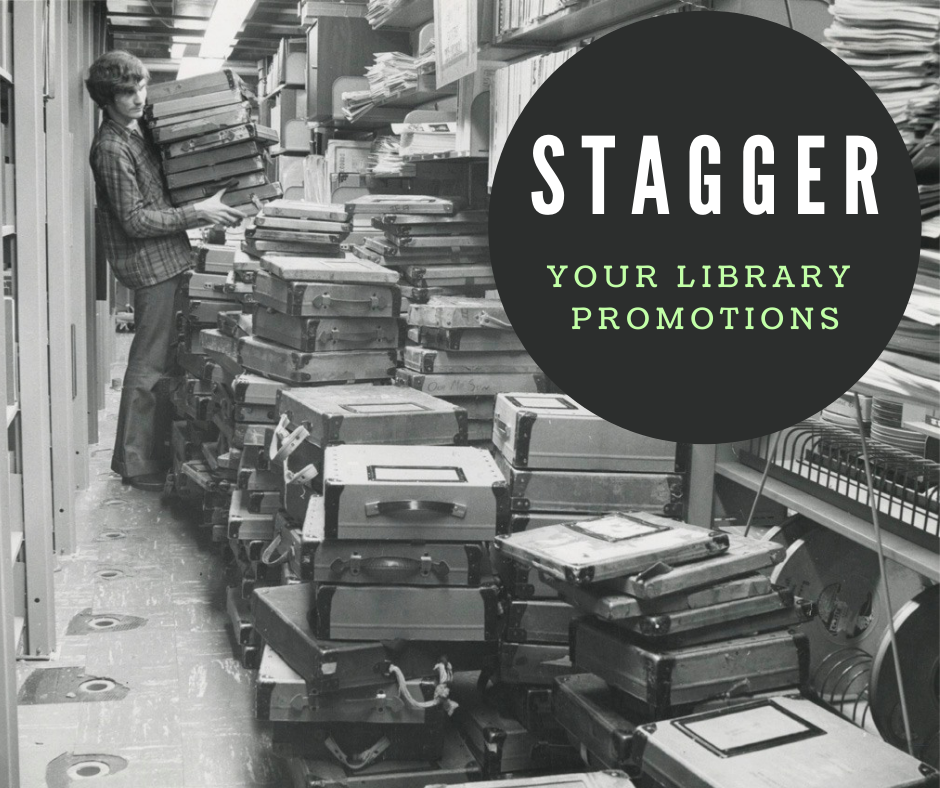
Shelver in the 16mm film area of the stacks, May 26th, 1974. Photo courtesy Public Library of Cincinnati and Hamilton County.

I am a new-ish fan of K-pop.

During quarantine, my 20-year-old daughter asked me to watch a reality series with her. It features her favorite Korean boy band, Stray Kids.

I was touched that she wanted to spend time together. I couldn’t say no, especially when I know she’ll be moving out of our house soon.

So during those dreary days of lockdown, I had something to look forward to: the point in the evening when she and I would make tea and snacks, and crawl into her bed to watch the members of Stray Kids compete to see who could sled down a hill holding a pitcher of water without spilling it or who could catch the most fish.

I became a fan of their music. And because I work in marketing, I started taking note of the way the promotion for Stray Kids, and other Korean musical groups, is coordinated.

Right now, six big K-pop groups are competing in a music variety reality show called Kingdom. It’s a master class in promotion. The marketing team builds excitement in the fan base by staggering promotional content over a specific period of time before each episode airs. Fans are seeing content at different times and days as they move across various platforms.

Libraries can learn something from K-pop.

Creating a compelling message, picking images, and deciding which tactics you will use to promote your library is important. But, deciding when you’ll release those promotions is just as critical.

When I started work in library marketing, I would create a marketing campaign and intentionally release all the promotions on all channels in the same day.

On the appointed day, my team sent an email and a press release. We added a homepage graphic and posted on all our social media platforms. We changed out the digital signage in our branches and put up posters.

And it was never very effective.

Then I heard marketing expert named Andrew Davis talk about staggered distribution. The approach takes advantage of the consumer cycle of excitement to expand your reach.

When you use staggered distribution, you release one or two promotional tactics at the beginning of your promotional cycle.ย Maybe you put up posters and send an email to your community.

Your promotion gets some play, and excitement builds in your community. People start talking about it. They might even share your promotion with their family and friends.

When the excitement dies out, you release your promotion on a second channel. The cycle of excitement and sharing begins again.

When that ends, you release your promotion on a third channel. You cycle through your promotion like this until you’ve used all the tactics planned.

When you use the staggered approach, you get a longer promotional thread. Your promotions will be more successful because the excitement around them builds over time, not in one big burst. Everyone in your audience sees the promotions. And more people take the action you want them to take!

For decades, my library used a traditional, all-at-once promotional approach to our Summer Reading program, which ran from June 1 through July 31. We released promotions using all our available tactics on May 1. And our registration numbers and check-in numbers were never as high as we wanted.

By the time we got to June 1, our audience was already tired of hearing about Summer Adventure. We used up all their excitement before we even got to the event!

So, we switched to a staggered approach.

We released promotions on our website on May 1 and installed yard signs. On May 15, we sent an email. On May 20, we put up all the signs around the inside of the library and started promotions on social media. From May 21 until June 1, we’d post once a day on one of our social media platforms. We started our ads on May 25. We sent a second email on June 1.

Throughout the course of our summer reading program, we would stagger promotions around all channels, so the message reached everyone in our audience, wherever they were consuming our content. We kept our audience excited, engaged, and interested.

And most importantly, it was effective. The first year we tried this staggered approach to distribution, we saw an 18 percent increase in registrations and a 67 percent increase in weekly check-ins.

This approach will work for your audience for any large-scale promotion. Stagger the elements of your promotion across various channels over time. More people will see your marketing and your efforts will be more effective.

I talked more about this idea in this episode of the Library Marketing Show. Try it and let me know if you see an increase in the effectiveness of your marketing work.


You Might Also Like These Posts

Everything You Need to Know to Create an Effective Marketing Plan for Any Library Promotion

Virtual Library Programmersโ€“Heads Up! Hereโ€™s a Super Easy, Step-by-Step Plan to Establish a Style Guide for Your Library Videos

Latest Book Reviews

How to Avoid a Climate Disaster by Bill Gates

Subscribe to this blog and youโ€™ll receive an email every time I post. To do that, click on the โ€œFollowโ€ button in the bottom left-hand corner of the page. Connect with me on YouTubeTwitter, InstagramGoodreadsand LinkedIn.

Library Blogs are the Best! How to Use Your Website to Amplify Your Library Marketing Message on Your Own Terms

Photo courtesy Public Library of Cincinnati and Hamilton County

One of the hardest and most rewarding things I ever did while working for the Public Library of Cincinnati and Hamilton County was to start a blog. It took me five years to get it off the ground. I wrote about that experience in this blog post.

I worked hard to get a library blog because I knew it would be a transformative and powerful communication asset.

A blog allows your library to tell your own story, create brand awareness, and promote your library to your own audience for free, without having to deal with the rules of someone else’s platform.

If your library has a blog, you will want to make sure you are doing everything in your power to grow your audience. In this post, I want to share the best practices Iโ€™ve learned from years of blogging.

Before you post

Create an editorial calendar for your library promotions that includes your blog post ideas. I wrote a two-part guide to help you through this step.

A calendar will let you see all the promotions your library is doing in one glance. It will help you schedule posts that amplify your other marketing messages.

You can use your calendar to formulate due dates and publication dates for blog posts. You can also plan the promotion of your library blog posts on other channels, like your email newsletters and social media platforms.

The three main genres of library blog posts

The best blogs are a mix of these three types of blog posts.

Promotional posts: Most library blog posts are promotional. They focus on telling readers about an event, service, or collection item available at the library.

Promotional posts tend to be shorter. They also need to be frequently updated as services and collection items change.

Example: Jacksonville Public Library uses their blog to help their community find information on their website without having to create special landing pages for events and services.

Opinion posts: These posts demonstrate what the library stands for. They center on questions people have about libraries but are afraid to ask. Opinion posts also celebrate the strengths of libraries and the opportunities for improvement.

Opinion posts are compelling and allow your library to cement your voice and your position in a way that your readers and cardholders will remember. Itโ€™s great when a library takes a stand. People will respect you for it.  

Example: The Stark Library CEO and Executive Director took a clear stand against racism in this recent blog post.

Authoritative posts: These posts demonstrate your libraryโ€™s expertise in a subject. For instance, a post that highlights your library’s award-winning family history department is an authoritative post.

Example: Check out the My Librarian(s) Favorite Resources series on the Chapman University: Leatherby Libraries blog.

The Ugly First Draft

If youโ€™ve been asked to write a post on your libraryโ€™s blog, your journey begins with what my favorite marketer Ann Handley calls The Ugly First Draft (UFD).

Your first job is to get all your ideas down in whatever format they escape from your brain. Write your draft without worrying about spelling, grammar, punctuation, or phrasing.

Open a Word document and try to keep typing until you canโ€™t think of anything else to say on a subject. If you are a skilled typist, look away from the screen so you’re not tempted to focus on spelling or grammatical errors.

Revise to create the perfect library blog post

Write short paragraphs, not short posts. Itโ€™s a myth that short blog posts will attract more readers. If your blog post is long but compelling, youโ€™ll have no problem holding the attention of your readers. A longer post that is well written and contains keywords will do better in Google search than a shorter post.

However, you should break up your blog post into shorter paragraphs. Short paragraphs are easier to read and understand. They open white space on your blog, which makes your post more inviting.

Writing experts recommend paragraphs of no more than 150 words. I started writing shorter paragraphs about two years ago and saw a big boost in my metrics.

Be deliberate with your keywords. In the blog text, you need to include keywords for search.

Youโ€™ll notice I use the phrase โ€œlibrary marketingโ€ and โ€œlibrary promotionโ€ frequently in this blog. Thatโ€™s because people searching for help with library marketing use those two phrases most often. Try Keywordtool.io. It does an amazing job of helping you to narrow your target phrase.

Put your keyword phrase in title, header, and body of blog post at least two times but more often if it makes sense.

Include images. Images can help you craft your message and tell your story. They also help to break up the text of your blog posts.

Use images to explain concepts or enforce the emotion you are trying to create.

Link to other content from your library. Your blog post can funnel your readers into engaging with your library. If you are talking about a specific service or a part of your libraryโ€™s collection, include links embedded in your text to help readers find more information.

Make sure your links open in a new tab. Thereโ€™s nothing more annoying that clicking on an embedded blog post link in the middle of a post and then having to tab backwards to read the rest of a blog post.

Create engagement opportunities for your reader. Use your blog posts to start a conversation with your readers. Ask a question and invite readers to post their answers in the comment.

Your library can also embed a social media post in your blog so readers can post a key point to their social media. This gives your post the potential to reach new readers.

Spend a lot of time on your headline.  A good headline should give your readers a hint at the copy that lies ahead without giving away the whole story. It should trigger an emotional response that includes an irresistible urge to read more.

You can get lots of tips for headline writing in this blog post.  

Incorporate several rounds of edits for spelling, grammatical, and punctuation errors. Run your blog posts through an online editor to catch errors. Ask your co-workers to edit your blog as well.

Print your blog post out and read through it, word for word, out loud. Doing this will force your brain to pay attention to the extra attention to what you’ve written. Your brain will often fill in or gloss over errors when you silently read. But if you read your post out loud, those errors become obvious and can be fixed before publication.

Four more tips for library blog success

Use your blog as a networking tool. Ask community leaders to write guest posts. Reach out to school administrators, policy makers, influencers, and other nonprofit organizations. Or use your blog to interview someone.

Once you publish, send a link to the contributors or interviewees. Ask them to share your post with their audience. This will amplify your message and expose your blog to a new audience of readers.

Example: The National Library of Australia interviewed fashion designer Nicky Zimmermann in this blog post that led to lots of media exposure for the library.ย 

Post consistently. The best way to maintain web traffic to your blog is to make sure people are always waiting for an article to go live.

Decide how many posts you can create a week and which days youโ€™ll post on. Then stick to your schedule.

Promote your blog posts on other platforms. Most of your readers will not just stumble upon your post by accident. You need to make sure they know that your library has published a post.

Promote your posts on your social media platforms, in your emails, and in patron interactions.

Your blog can also be used instead of a press release to pitch a story to a member of the media.

Evaluate your post metrics. Check in once a month and enter your metrics on a spreadsheet so you can track results over time.

Compare views, watch time, and bounce rate for your posts. You can also compare post length.

Your metrics will help you to continue to improve and update your blog based on your audienceโ€™s needs and wants.


Does your library have a blog? I’d love to see it! Share a link in the comments!

Subscribe to this blog and youโ€™ll receive an email every time I post. To do that, click on the โ€œFollowโ€ button in the bottom left-hand corner of the page. Connect with me on YouTube, Twitter, Instagram, Goodreads, and LinkedIn.

Want To Do a Better Job at Marketing Your Library? Hereโ€™s the Secret: Read More Fiction!

I was recently looking through some old photo albums when I came across this gem.

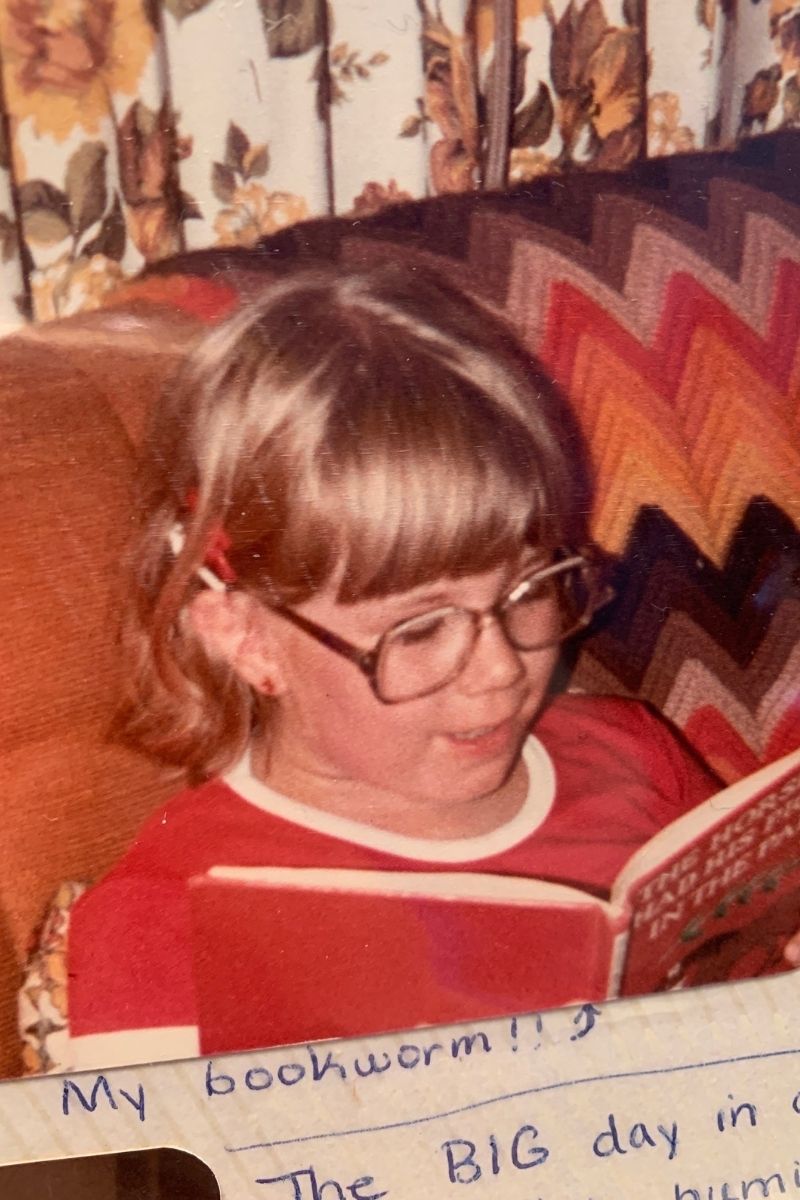
You can see my mother wrote the words “My bookworm” under this photo of me, age 7, reading “The Horse That Had His Picture in the Paper” by Helen Stone. I have always loved fiction.

Of all the people in the world, I am certain I really don’t have to explain to my readers why fiction is amazing. You work in a building stuffed with fiction!

But, if I were to ask you what you’ve read lately that will help improve your work skills, my guess is that you would not name a work of fiction.

Of course, your work will be improved by reading a great business or career-oriented book. I can think of a few inspiring examples, like Ann Handley’s Content Rules, which literally changed my life, or Unmarketing by Scott Stratten. You can get a chance to read books like these and talk about them with other library staffers if you join the Library Marketing Book Club on Facebook. There is a lot of value in reading advice on marketing.

But reading fiction will also make you a better marketer. Here are the six reasons why reading fiction will improve your ability to promote your library.

Fiction is good for your brain. A study by researchers at Emory University, published in the journal Brain Connect, found that reading a novel can increase connectivity in the brain and improve brain function. Lead researcher Gregory Berns concluded, “At a minimum, we can say that reading storiesโ€”especially those with strong narrative arcsโ€”reconfigures brain networks for at least a few days. It shows how stories can stay with us.”

Storytelling requires the work of different areas of your brain in order to help you understand the dialogue, plot, and characters. A work of fiction will train your brain will do a better job of processing complex problems in your library work.

Fiction teaches you to empathize with your community. That same study from Emory University found that reading fiction improved the readers’ ability to view the world from another person’s perspective.

Researchers theorize the act of reading forces the brain to process the emotions and physical actions of the protagonist. That processing leads to a greater compassion.

Activating compassion will cause you to create better service for your community. When you can put yourself in the shoes of your patrons, you are more likely to see their needs and find ways that your library can meet those needs.

Fiction activates your imagination. Reading fiction improved the imagination of the Emory University study subjects. It teaches you to think outside the normal boundaries of your life. It shows you the possibilities that exist when you don’t constrain yourself. It’s also a great way to forget your troubles for a few hours, and we could all use a little of that!

Fiction expands your vocabulary. A novel will expose your brain to a larger variety of words than you might run across in normal conversation or emails. The more your brain is exposed to this increased mass of vocabulary, the more you absorb it and incorporate it into your own work.

That doesn’t mean you have to write in a verbose manner in order to prove how your vocabulary has expanded. Rather, it means you’ll have a greater bank of words in your native vocabulary to choose from when you are trying to convey the perfect sentiment in your marketing pieces.

Fiction teaches you the difference between a great story and a terrible story. When’s the last time you started reading a novel and couldn’t stop? (For me, it was last month.) Now, when’s the last time you started reading a book and had to quit three chapters in because you couldn’t stand it anymore? (Again, this happened to me last month!)

The more fiction you read, the more you understand what a great story looks like. You’ll start to recognize good stories you can use as marketing for your library.

Reading fiction from your own library gives you a sense of your patrons’ experience. In the business world, companies and entrepreneurs are encouraged to go through the buying process for their own products to get a sense of what their customers experience. Library staff should do the same.

Look at the whole experience through the eyes of your community. Is your catalog easy to find on your website? Are there plenty of reading suggestions on your website, in your emails, and social media platforms? Can you find the books you love in the genre you prefer? How long do you have to wait to get your holds? Does your catalog suggest read-a-likes to keep your readers engaged while you wait for your holds? Is the process of checking out a book easy and painless?

Using your own collection can give you valuable insight. Your patrons’ delight and frustrations become your own delight and frustrations. The delights can become promotional tools for you to use in your marketing pieces. And the frustrations will prompt your library to make improvements that will increase circulation.


What are you reading right now? Do you prefer fiction or nonfiction books? Why or why not? Share your thoughts about reading and books in the comments section.

You may also like these posts

Four Eye-Opening Library Marketing Lessons I Finally Learned When I Left My Library Job and Became a Regular Patron

Experts Reveal the Truth About What Your Library Needs to Do Now to Build Support for the Future

Latest Book Review

The Lost Orphan by Stacey Halls

Subscribe to this blog and youโ€™ll receive an email every time I post. To do that, click on the โ€œFollowโ€ button in the bottom left-hand corner of the page. Connect with me on YouTube, Twitter, Instagram, Goodreads, and LinkedIn.
Six Critical Steps You Need To Take Right Now To Shield Your Libraryโ€™s Social Media Accounts From an Attack

Photo courtesy Public Library of Cincinnati and Hamilton County

Next week on the blog: What to do if your library’s social media accounts are hacked!

Two years ago, I listened to two episodes of the Social Media Examiner podcast that gave me nightmares.

The first episode featured an interview with a fitness instructor who lost control of ALL her accounts in the span of an hour. Her quest to gain control back was a saga I don’t ever want to experience.

The second episode featured an interview with the Social Media Examiner team as they recounted the day they lost control of their own Facebook business account.

If it can happen to Social Media Examiner, it can happen to your library.

Here’s the truth: most of us are too trusting. We probably don’t think a social media security breach will never happen to us. But we couldn’t be more wrong. In the first six months of 2020, the data protection company ZeroFOX reported a 95 percent increase in threat activity on social media accounts, compared to the last six months of 2019.

We may be even more vulnerable right now, with staff members working from home and resources stretched thin. One library I know allows more than three dozen staff members to post on their various social media accounts. I’m happy to say they are taking steps to beef up their social media security. But I fear there are too many libraries who operate in this way.

Anti-virus and malware software are essential, but that’s only half the battle. You need to take steps to protect your library’s social media accounts from compromise.ย  Here’s how to do that.

Limit access to your social media accounts.

If you have a large team of people who post for you, consider trimming to no more than five admins for all social media accounts. Most platforms like Facebook or LinkedIn will let you assign roles to people. Limiting access is a good way to protect your full account’s security.

What should you do if you have a large social media team who currently post on your accounts? Ask your team to send pre-written posts with photos, videos, and graphics to a team leader via email or a shared file system like Google Drive, Trello, or Base Camp. Your social media account admins can pull and post that pre-written content.

Create an email exclusively to manage your library’s social media accounts.

This step will prevent your social media accounts from being compromised if one of your admins accidentally opens a suspicious link or file in their own work or personal email. 

Use two-step authentication.

Most platforms will ask you to enter a randomly generated code every time you log in. Take the extra step. It’s better to choose safety over convenience.

Pick strong, unique passwords.

According to the digital risk protection company Idagent, 80 percent of data breaches in 2019 were caused by password compromise. That’s why choosing a strong password is critical.

Strong passwords contain:

  • At least six characters.
  • A combination of numbers, symbols, and letters.
  • Letters in both upper and lowercase characters.
  • No connection to your library. Don’t use the name of your mascot or the numerical portion of your street address in your password.

The easiest way to create strong passwords is to use a secure password generator like Passwordsgenerator.net. You should also consider a process for storing your passwords in a secure location, like a locked file on your Share drive. You could choose to pay a small fee for a password manager like LastPass.com and 1password.com.

Finally, you must also be sure the password you use for each social media platform is unique. Don’t use the same password across all your accounts.ย 

Change your passwords often.

Don’t get too attached to your passwords. Changing them is an inconvenience, but it’s a small price to pay for peace of mind.

A good rule of thumb is to change your passwords at least every quarter, but more often is even better. You should also be sure to change all passwords anytime a staff member who had access to your social media accounts leaves the library’s employment.

Don’t use your library’s public Wi-Fi.

Theย U.S. Securities and Exchange Commission warns that public Wi-Fi is not secure. Cybercriminals easily gain access to passwords and other data on these types of wireless networks.ย Use your staff Wi-Fi or a Digital Subscriber Line (DSL) if available.

If you are posting on a mobile device in a location outside the library with public Wi-Fi, use your cell service instead of the public Wi-Fi. Cell service providers use encryption to ensure safety. You may need to consider the purchase of a library-owned device with cell service so staff aren’t using their personal cell service to post for the library.

Did I miss anything? Did your library experience a social media attack and if so, how did you handle it? Let me know in the comments below.

You may also like these posts

How To Create a Library Social Media Policy for Your Staff and Your Community That Encourages Interaction and Keeps Everyone Safe

Five Easy Fixes for the Little Mistakes That Threaten to Sabotage Your Library Marketing!

Latest Book Review

The Heiress by Molly Greeley

Subscribe to this blog and youโ€™ll receive an email every time I post. To do that, click on the โ€œFollowโ€ button in the bottom left-hand corner of the page. Connect with me on YouTube, Twitter, Instagram, and LinkedIn.

How To Create a Library Social Media Policy for Your Staff and Your Community That Encourages Interaction and Keeps Everyone Safe

You donโ€™t have to do a whole lot of searching to find stories of public relations nightmares caused by a social media scandal.

All it takes is one slip-up, accidental or intentional. A library employee creates an offensive post on an official account, shares confidential information, or lets their anger get the best of themโ€ฆ and you have a situation on your hands. Libraries have also found themselves the target of social media trolls, who take a thread so far out of control that it catches the attention of the community, the algorithm, and sometimes the press.

Libraries have enough to deal with. You don’t want these potential problems keeping you up at night.

Your library can implement two strong social media policies to help avoid these situations: one that lays out the guidelines for how your staff will use social media to communicate with the public, and the second that sets the rules for how your community interacts with you and others on your official library accounts.

In this post, we’ll make suggestions for what should be included in these two policies.

Internal library social media policy

Are library staff allowed to use social media at work?

Social media access during work hours can be beneficial to your library. A Pew survey found that 20 percent of people use social media to find information that helps them solve problems at work. And you’ll want your staff to feel free to promote their work and advocate for the library, even on their personal accounts.

Your staff social media policy should respect the rights of employees while protecting your library. Here’s what to include in this section.

  • Staff should be open about who they are and where they work when posting about the library.
  • Staff should be clear that their opinions are their own. State that you expect them to use good judgement, and be aware that their posts are permanent, retrievable, and public.
  • Staff should not disclose proprietary information about your library. For instance, they should not publicly disclose service costs, salaries, upcoming service changes, or future initiatives that have not yet been announced.
  • You will also need to address the use of personal devices for staff who post on the libraryโ€™s official accounts. You may want to purchase a library-owned mobile device where all apps and content will be produced.
  • Finally, clearly state the procedures for when a staff member wants or needs to post something to your library’s official accounts during off-hours.

Which library staff members can post on the libraryโ€™s official accounts?

  • Specifically outline which staff members will have authorization to create, maintain, and delete official company accounts.
  • You should also define who keeps track of passwords and where will those passwords be saved.
  • Include a process for granting access to new employees.
  • Finally, specify the procedure for securing your library’s social media accounts when a staff member leaves the libraryโ€™s employment.   

Related read: How to protect your libraryโ€™s social media accounts to prevent a security breech.

What content will be posted on the libraryโ€™s social media channels?

  • Clearly state who will be responsible for developing and implementing your organizationโ€™s social media strategy.
  • Decide who will be responsible for making sure all posted content is accurate, how mistakes will be corrected, and what the approvals process will be. 
  • Clearly define all relevant laws and regulations that must be followed for official library posts, including copyright, fair use, financial disclosures, and defamation.
  • Make sure your policy prohibits the use of plagiarized content, inappropriate jokes, obscene text and images, and discriminatory remarks on your library’s official accounts.
  • Most library staff are protective of patron privacy. But your policy will still need to include wording that prohibits staff from posting patron information.  

How will engagement be handled?

  • Your policy should make it very clear who will moderate posts and comments. Youโ€™ll want to lay out scenarios for responding to customer service messages. For instance, what should a staff member do if someone sends the library a Twitter DM about a problem with their library card? What if someone posts a comment on Instagram complaining about how they were treated by branch staff?
  • Define the circumstances for when staff will be allowed to remove posts or comments.
  • Clearly state who will be responsible for recording and analyzing metrics for your various accounts and whose job it will be to adjust strategy or tactics as determined by that data.

Customer-facing social media policy

Your library should define expectations for followers on social media with a short policy which contains a few clear points. Iโ€™ve created a policy below which you are free to copy and customize for your library.


The Library encourages participation on all its social media platforms; however, we ask that users keep postings and comments appropriate for all audiences.

The Library reserves the right to remove any content that is deemed, in its sole view, to be inappropriate in nature. That includes posts that contain:

  • Obscene content or hate speech
  • Personal attacks, insults, or threatening language
  • Private or personal information, including phone numbers and addresses, or requests for personal information
  • Potentially libelous statements
  • Plagiarized material
  • Commercial, political, or religious messages unrelated to the Library or its social media postings
  • Solicitation of funds

The Library also reserves the right to ban or block users who violate this policy. The Library is not responsible for the content posted by others on its social media platforms. User content is the opinion of the specific author and does not necessarily represent the opinions of the Library.   


Did I miss anything? Does your library have a social media policy that you are willing to share? Let us know in the comments below.

You may also like these posts

How Far in Advance Can I Schedule My Libraryโ€™s Social Media Posts??

Should My Library Spend  on Social Media Ads?

Latest Book Review

A Promised Land by Barack Obama

Subscribe to this blog and youโ€™ll receive an email every time I post. To do that, click on the โ€œFollowโ€ button in the bottom left-hand corner of the page. Connect with me on YouTube, Twitter, Instagram, and LinkedIn.

How to Convince Your Library Staff That Library Marketing Materials MUST Be Accessible!

Watch Now

The Library Marketingโ€‹ Show, Episode 80

I recently learned that there are some library marketers who face push back when they try to make sure their marketing materials are accessible.

Accessibility is a library mission. One in five people around the globe live with a disability. Libraries will never be truly inclusive until they design services, programs, and marketing with this group in mind. And so, in this episode, I’ll share some strategies to help you make sure this goal becomes a reality at your library.

Kudos in this episode go to the Hutchinson Public Library for their advocacy idea that they deploy during Library Lovers Week.

Do you have a suggestion for a topic for a future episode? Want to nominate someone for kudos? Let me know in the comments. And subscribe to this series to get a new video tip for libraries each week. Thanks for watching!

Five Easy Fixes for the Little Mistakes That Threaten to Sabotage Your Library Marketing!

Photo courtesy Public Library of Cincinnati and Hamilton County, showing a librarian and a boy interacting at the reference desk in the Children's Department circa 1925.

Itโ€™s been one year since I started working for NoveList.  

I donโ€™t often talk about my day job here on the blog. But the work I do gives me a unique perspective on library marketing.

I get to meet (virtually, of course) with library staffers from all over the world and spend time talking about marketing. It’s a privilege to learn from the people who are kind enough to share their insights, problems, and dreams with me.

Part of my job includes offering advice to help strengthen the position of libraries. And one thing I’ve noticed is that libraries of all sizes and shapes are making some small but common marketing mistakes. All of these little mistakes are fixable!

What’s the most common mistake you think libraries make in marketing and promotions? Share your thoughts in the comments.

Little mistake #1: Trying to promote everything your library has to offer, all at once and all the time.

Libraries are amazing. They quite literally have a service or collection item that is perfect for every single person in their community. The difficulty libraries face in marketing their breadth and depth of service is centered in matching each community member to the right service or collection item.

In the quest to make that match, many libraries will try to market everything they offer, hoping that the person who needs that item the most will see it. I had a boss who would have called this โ€œan error of enthusiasm.โ€

Promoting everything you offer all at once waters down your message. It makes your marketing come off as noise to the community you are trying to reach. And it’s less effective.

How to fix it: Focus with precision on your libraryโ€™s overall strategy.

What goal is your library trying to accomplish right now? Are you hoping to increase your circulation to pre-pandemic numbers? Are you helping to bridge the pandemic educational gap for elementary school students? Are you implementing a step-by-step plan to ensure your library is truly accessible to everyone? Are you undergoing a facilities improvement project?

Your promotions should be centered on whatever your library is trying to accomplish this year. When you focus your marketing with precision on your libraryโ€™s strategy, your marketing will be more effective. You will avoid spreading your message thin.

Little mistake #2: Sending every email to all your cardholders.

This happens as a result of mistake #1. Sending an email to all your cardholders feels like common sense. When you are hoping to get people to check out an item, use a database, or attend a program, you want as many people as possible to know about it for maximum success.

But imagine if you had the entirety of your library service community all gathered in the same place, like a large stadium. If you stood on a platform to survey the crowd, what would you see?

There would be all kinds of people, from different backgrounds, with different economic statuses, of different ages. And if asked just ten people in that crowd to tell you a little about themselves, you would hear ten different stories from people with ten different wants, needs, and interests.

Your service community is diverse. One email isnโ€™t going to inspire action in all your community members. Think of your emails as magazines โ€“ is there a magazine that includes every interest? Even general topic magazines like Better Homes & Gardens have a target audience and covers matters of the home and garden โ€“ not political news or sports or celebrity gossip. (My thanks to my boss, Kathy Lussier, for this brilliant analogy).

How to fix it: Target your email marketing.

There are dozens of ways to segment your audience. To help you get started, read this two part series on targeted email marketing: Targeted Email Marketing for a New Era: The Pros and Cons of How Most Libraries Segment Their Audiences and Psychographics Are the Key to Powerful Email Marketing: How to Unlock the Motivations and Aspirations of Your Cardholders.

Little mistake #3: Assuming your community will see your marketing.  

Remember back before the pandemic when we were all exasperated every time we talked with someone about all the services we offer besides books? We were constantly asking ourselves how it was that there were still people in the community who had no idea their library had e-books or homework help or small business resources. We were certainly marketing them! But it kept happening because our community was not always seeing our marketing messages.

Think back again to your community, gathered in the stadium. Each person in that crowd has a different preference for how they consume marketing. Some are signed up for your emails. Some come into the branch and see your posters. Some have never been in a branch before and only interact with your websiteโ€ฆ and they may have the catalog bookmarked on their computer, so they never even see your homepage promotions!

How to fix it: Target your promotional tactics.

Tactics are the specific methods you use to market your library. They include social media, emails, your website, your catalog, your digital signs, your print promotions, and more.

You don’t need to market each of your library’s overall goals using every tactic. Instead, think about where your target audience is interacting with your library. Then, choose the tactics that your target audience is most likely to see during those interactions.

For example, if you are promoting your new themed storytime, your target audience will be parents, caregivers, and educators. They may interact with your library in emails, on social media, and when they pick holds or use your curbside service.

You can target your promotional tactics specifically to this audience in the places where they are! You’ll want to send them a targeted email message, create social media posts that speak directly to them with wording that focuses on skills their children will learn in the storytime, and slip a flyer or bookmark promoting the storytime into holds or curbside pickups that contain picture books or books about parenting.

Little mistake #4: Letting fear prevent you from implementing a great promotional idea.

The ability to trust your own marketing instincts takes time to nurture. You may be worried that your great promotional ideal will fail. Or you may face difficulty in convincing others that a new promotional idea has merit.

I speak from experience. It took me five years to convince senior staff at my former library to let my department start a blog. It was frustrating. But my good idea did finally see the light of day.

How to fix it: Don’t give up.

Five years is a long time to advocate for a blog. But I did it because I knew it would be good for my library and good for my community.

Iโ€™m not advocating insubordination. But, if you truly believe in your idea, donโ€™t give up. Be patiently persistent.

Your supervisors are a target audience, so use what you know about their priorities, motivation, and work beliefs to build your case. Keep gathering data to back up your idea. Recruit like-minded co-workers or peers to advocate for you.

Keep trying. The real winners will be your service community.

Little mistake #5: Thinking you must be an expert to be a good library marketer.

Itโ€™s a bonus to have formal training in communications and marketing. It gives you extra confidence. But for many of my readers, the role of promotions was handed to them as part of โ€œother duties as assigned.โ€ Itโ€™s hard to do good work when you feel unqualified.

How to fix it: You are already doing it.

If you read this blog or spend any time researching marketing trends, youโ€™re already adding to your expertise. Keep seeking out advice from websites, videos, professional development courses, and conferences. No one understands the importance of lifelong learning better than librarians! 

Remember, the more promotional work you do, the more you will learn about your audience and what works for them. The better you will get at marketing. And the stronger your library will be.

You may also like these posts

The Virtual Library Conference is Over and Now the Work Begins! Hereโ€™s What to do Once Youโ€™ve Closed Your Laptop

The Ultimate Library Marketing Checklist: How to Decide When and Where to Promote Your Library

Latest Book Review

The Wright Sister by Patty Dann.

Subscribe to this blog and youโ€™ll receive an email every time I post. To do that, click on the โ€œFollowโ€ button in the bottom left-hand corner of the page. Connect with me on YouTube, Twitter, Instagram, and LinkedIn.

The Absolute MOST Important Step in Library Marketing…Revealed!

Watch Now

The Library Marketing Show, Episode 79

In this episode, I’ll share the MOST IMPORTANT thing you need to do in library marketing and why you must make time for this step!

Kudos in this episode go to the Madison Library District for their commitment to marketing on Pinterest.

Do you have a suggestion for a topic for a future episode? Want to nominate someone for kudos? Let me know in the comments. And subscribe to this series to get a new video tip for libraries each week.

Thanks for watching!

Feeling Lost and Uninspired by Library Marketing? Here Are Seven Places to Learn and Improve Your Library Promotional Prowess!

Photo courtesy the Public Library of Cincinnati and Hamilton County

Learning is essential to the existence of humans.

No, this blog hasn’t suddenly turned into a philosophical self-help website. But I do think it’s important to make learning and research a part of your work schedule.

You need to know the latest research on customer experience. You need to be alerted when social media algorithms change. You need to be inspired by creative, encouraging, thoughtful people who know the struggles, hurdles, and frustrations of marketing.

Boy, have I got a list for you!

I’ve followed a lot of marketers over the years. I’ve read a lot of blogs, subscribed (and then unsubscribed) to a lot of email newsletters. I’ve watched videos and listened to podcasts about marketing, in the never-ending search to find the people who could offer the most help to me and my library marketing friends.

Here are the seven best places for library marketers to get advice!

Ann Handley: Author, Marketer, Chief Content Officer at @marketingprofs. 

Ann is at the top of my list because she’s the definitive expert on writing and creating engaging content.

Read her two books, Content Rules and Everybody Writes. Your library likely has a copy of both.

Next, sign up for her newsletter, Total Annarchy. It’s the gold standard for e-newsletters and one of my favorite pieces of email to receive!

Mark SchaeferMarketing strategist, author, and podcaster.

Mark is a human being. I mean, that’s obvious. But what I’ve always loved about him is that he gives advice like he’s your best friend. He’s not afraid to talk about the hard truths of promotional work.

Back in 2014, he started warning marketers about content overload (sometimes also referred to as content shock). This is the idea that people don’t pay attention to marketing because there is just too much stuff bombarding them from all angles.

This was pretty revolutionary for the time, and as I recall, there were a lot of people who thought Mark was nuts.

But he was right. And that’s why he’s written seven best-selling marketing books, launched a podcast, and is a popular speaker.

Read his latest book, Marketing Rebellion. I also recommend his free Pandemic Playbook. Subscribe to his {grow} blog and his podcast Marketing Companion (co-hosted with another marketing expert, Brooke Sellas).

Jay BaerNY Times best-selling author, marketing consultant, keynote speaker. 

Jay is an expert in the content marketing and social media space.

He has two podcasts that contain tips that relate to libraries. Social Pros focuses on real people doing real work in social media. Talk Triggers shares inspirational case studies about businesses succeeding with word of mouth marketing. 

Library Marketing Book Club

What do Ann Handley, Jay Baer, and Mark Schaefer all have in common? They’ve all been guests at the Library Marketing Book Club on Facebook!

Chris Boivin of the Jacksonville Public Library founded the group in the fall of 2020. We meet once a month to discuss a marketing book and to share tips and strategies for library marketing. Chris is usually able to get the author of the books we discuss to come to our meetings!

Learn more about the book club.

Content Marketing Institute

This is the go-to organization for everything related to content marketing. I came to know of the existence of Ann Handley, Jay Baer, and Mark Schaefer because of this organization.

Sign up for Chief Content Officer magazine (its free) and for their email newsletter. You’ll get the heads-up on upcoming seminars, free webinars, eBooks, and white papers.

Follow their Twitter for great advice and alerts when they post new blog articles. CMI also hosts #CMWorld chat on Tuesdays at noon EST on a host of relevant marketing topics.

Social Media Today

This is my go-to website to check for the latest information on changing social media algorithms, new features, and tips on how to get the best organic reach.

The easiest way to consume their plethora of tips is to sign up for their daily newsletter. They also host #SMTLive chats on Twitter on a variety of social media topics. You can find recaps of their past Twitter chats on their website.

Social Media Examiner

This website makes a good companion for Social Media Today. It provides a deeper dive into social media marketing, with expert advice from some of the leading marketers in the space.

They have a variety of ways for you to receive updates. They post articles and have a robust YouTube channel full of tutorials and shows about social media marketing. They also have two podcasts chock full of information about social media and more expert interviews.

Do you have an expert that should be added to this list? Let me know in the comments!

You may also like these posts

Podcast Like a Pro! Amazing Advice from a Library Podcast Expert

Expert Advice on How to Work Diversity into Your Library Marketing

Latest Book Reviews

Finding Dorothy by Elizabeth Letts

Uncomfortable Conversations with a Black Man by Emmanuel Acho

Subscribe to this blog and youโ€™ll receive an email every time I post. To do that, click on the โ€œFollowโ€ button in the bottom left-hand corner of the page. Connect with me on YouTube, Twitter, Instagram, and LinkedIn.

A WordPress.com Website.

Up ↑