Search

Super Library Marketing: Practical Tips and Ideas for Library Promotion

Tag

library social media

Why Your Library Should Have One Social Media Account to RULE THEM ALL!

Watch Now

The  Library Marketing Show, Episode 59

Angela answers a question from a viewer, who wishes to remain anonymous, about whether their library should have one social media account per platform for the entire library system.

It’s a good question, and one that Angela gets all the time. Watch the video to find out what she advises.

Kudos this week to the Public Library of Cincinnati and Hamilton County for unveiling a new website and branding in the midst of a pandemic!  

What did you think of this episode? Are you struggling with marketing and promotion right now? Do you have a suggestion for a topic for a future episode? Want to nominate someone for kudos? Let me know in the comments. And subscribe to this series to get a new video tip for libraries each week! Thanks for watching.

What to Do When Someone Tells Your Library to CALM DOWN on Social Media!

Watch Now

The  Library Marketing Show, Episode 58

Angela is back in her outdoor work space. She answers a question from a viewer who said: “We have gotten a lot of criticism recently for posting too much on social media. We’ve even had people reach out to us and tell us to ‘calm down!’ How do I approach this? I have decreased the amount of posting (1-2/day on FB, 2-3/ week on Insta and Twitter), but I have noticed a plateau in our engagement on social media. Help!!!”

Angela talks about what to do!  

Kudos this week to Mandel Public Library for an amazing post, which you can share if you give them credit.  

What did you think of this episode? Are you struggling with marketing and promotion right now? Do you have a suggestion for a topic for a future episode? Want to nominate someone for kudos? Let me know in the comments. And subscribe to this series to get a new video tip for libraries each week!

Thanks for watching.

Worries in the Library World: Here are Answers to Your Four Biggest Library Marketing Concerns Right Now!

Photo Courtesy Public Library of Cincinnati and Hamilton County

A few weeks ago, a good number of you were kind enough to respond to this question, “What is your biggest library marketing concern right now?” As you can imagine, many of those worries are not all marketing related. In fact, as the responses came in, I realized they all fell into one of four categories: delivering a clear message about reopening and new safety precautions, keeping everyone safe, dealing with angry patrons, and communicating the library’s value.

I decided to research resources to help library staff tackle each of these concerns. I also mixed in a little of my own advice, gathered from my experience as a former public library staff member and my current work consulting with library staff.

I’d also love to hear your tips for dealing with these four concerns. If you have advice to add for your fellow library staffers, please share it in the post comments.

Clear messaging 

Libraries are struggling to make sure everyone understands the new expectations for library service. Many libraries have fragmented social media accounts, with different branches or departments running their own Facebook pages and Instagram feeds. That makes the job twice as difficult.

Messaging is the most important job for libraries right now. Before anyone posts anything on social media, you must do one thing: Create a core set of talking points. Commit to repeating them on every promotional platform. 

Write posts word-for-word and send them to any staff handling social media accounts. Tell them to copy and paste the message into their pages to maintain consistent wording and calls to action. 

You’ll also want to use your core messages on signage, in emails, and in your videos. If you do live virtual events, ask staff to repeat the message before they go into their main program.

It’s going to seem redundant to staff. But a consistently repeated messaging campaign works. Remember, research tells us that people need to hear a message seven times in order to remember it and take action. 

And a consistent and clear message now will have long-range benefits for your library. It will reduce frustration and anger from patrons. And it will position your library as a strong yet calm institution with a plan to provide the best library service possible while keeping everyone safe. People will remember the way your library handled this crisis when it comes time to ask for funding later.

Keeping everyone safe

Health and library organizations have worked tirelessly to create guides for reopening. Some of my favorites are The Safe Work Playbook from the Toledo Lucas County Public Library, the Reopening and Working Safely Guide from the Idaho Commission for Libraries, and the Service Recovery Checklist from the Australian Library and Information Association. There is also guidance available in this article from Library Journal. 

If your managers haven’t communicated their plans for keeping you safe, now is the time to ask. If it’s your job to figure out the new protocols, first check your local health authorities for their mandates. Your library will need to follow those rules. Next, check with you state library association for guidelines. Many library consortiums are also putting together suggestions and holding virtual meetups to talk about the best practices for library reopening and safety. 

Dealing with angry patrons

This may be the most frequently expressed fear among library staff. A recent episode of the Library Marketing Show centered on this topic: Tips for Dealing With Angry Patrons When Your Library Reopens. I also recommend this webinar from RAILS (Reaching Across Illinois Library System) and this recent article from American Libraries magazine. Scroll down to the second half, which is all about libraries are dealing with staff anxiety.

Proving the library’s value

While you are knee-deep in reopening plans, there is another messaging mission your library must now champion with fervor. You must make sure the public and local lawmakers realize how valuable you are.

The pandemic has taken a toll on the economy. We may not be able to grasp the full extent of it now, but it will surely affect libraries, to the detriment of our communities. Messaging that emphasizes the value of the library is vital to our survival as an industry.

You must make sure the public knows how hard your staff was working while the building was closed. Did you help people file for unemployment? Did you help parents with remote learning? Did you help small business secure PPP loans to pay their workers?  Did you provide comfort and distraction to communities on lockdown?

Tell people what you did. Emphasize the ways your library helped with the economic recovery and the mental well-being of your community. Talk about how quickly you pivoted to online services and how your audience responded.

We must start letting people know about all the fantastic things we do when we are physically reopened. We must work a value-oriented message into everything we put out into the world. We must repeat these messages, over and over again, to drive home the point.

Libraries are too humble about their work. It’s a virtue that may lead to our downfall.

For more inspiration, read this post: Marketing is Not a Dirty Word! Why Libraries Need to Promote Themselves Now, More Than Ever

Latest Book Reviews

The Ballad of Songbirds and Snakes by Suzanne Collins

Conjure Women by Afia Atakora

Find more 60-second Book Reviews here.

Subscribe to this blog and you’ll receive an email every time I post. To do that, click on the “Follow” button in the bottom left-hand corner of the page. Connect with me on YouTube, Twitter, Instagram, and LinkedIn.  


Should You Post Non-Library Content on Your Library’s Social Media Accounts? The Answer is…


Watch Now

The Library Marketing Show, Episode 50

Angela answers a viewer question from a viewer who asked, “Is it okay to post non-library content on your library’s social media accounts?”

Also Kudos to Starkville Public Library in Starkville, Mississippi. See why Angela loves their storytime videos.

What did you think of this episode? Are you struggling with marketing and promotion right now? Do you have a nominee for the Kudos segment? Drop a comment below!

And subscribe to this series to get a new video tip for libraries each week! Thanks for watching.

Email vs. Social Media: Which is Better for #LibraryMarketing Right Now?⚔️

Watch Now

The Library Marketing Show, Episode 48

Angela is back in her outdoor work tent and this week, she’s sharing her opinion about the best way for your library communicate wth cardholders. Is it email? Is it social media? Can you guess? Listen and then join the conversation–let her know what works best for your community in the comments.

Also Kudos to the Toledo-Lucas County Public Library for their Safe Work Playbook. This is the best physical library building reopening document I’ve come across.  

What did you think of this episode? Do you love a specific library’s Facebook work? Are you struggling with marketing and promotion right now? Do you have a nominee for the Kudos segment? Drop a comment below. And subscribe to this series to get a new video tip for libraries each week! Thanks for watching.

Which Libraries Are Kicking *ss on Facebook? A Viewer Seeks Inspiration

Watch Now

The Library Marketing Show, Episode 47

Angela answers a viewer question from a librarian at Pearsall Public Library. This librarian feels like she’s “drowning” on Facebook. She wanted to know if there were any libraries doing a great job on Facebook right now. The answer is…yes! Watch for my picks and add your own library Facebook page to the comments.

Also Kudos to everyone doing curbside service videos.

Don’t forget to subscribe to this series to get a new video tip for libraries each week! Thanks for watching.

Want more Library Marketing Show? Watch previous episodes!

I also have a new video series, 60-Second Book Reviews.

This blog consists of my own personal opinions and may not represent those of my employer. Subscribe to this blog and you’ll receive an email every time I post. To do that, click on “Follow” button in the bottom left-hand corner of the page. Connect with me on Twitter, Instagram, and LinkedIn.   


The Very Latest Research on Social Media and How It Affects Library Marketing

Watch Now

The #LibraryMarketing Show, Episode 45

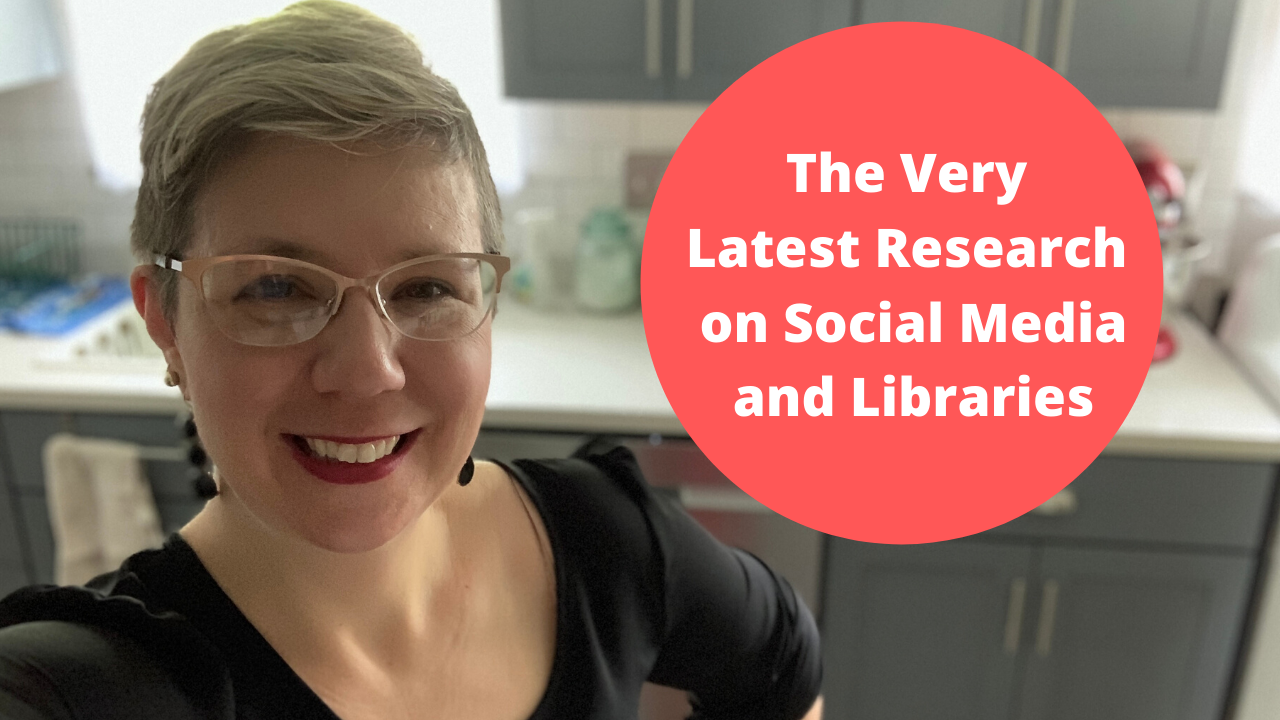
Angela goes over the latest study from Sprout Social which lays out the latest research on how people are using social media, plus how they view social media use by brands. The same study then compares how marketers *think* people use social media and how they view brands. The difference is fascinating, and there is a lot of great insights for libraries.

Also Kudos to the Monroe County Public Library. They released a video called “A Cautious Path to Phasing In Services” which manages to be formal and light-hearted at the same time.

What did you think of this episode? Are you struggling with marketing and promotion right now? Do you have tips for handling this crisis that you can share with other libraries? Do you have a nominee for the Kudos segment? Drop a comment below! And subscribe to this series on YouTube to get a new video tip for libraries each week!

Want more Library Marketing Show? Watch previous episodes!

This blog consists of my own personal opinions and may not represent those of my employer. Subscribe to this blog and you’ll receive an email every time I post. To do that, click on “Follow” button in the bottom left-hand corner of the page. Connect with me on Twitter, Instagram, and LinkedIn.   

Butts in Seats: Which Video Metrics Count as Attendance in the New World of Virtual Library Programming?

Photo Courtesy the Public Library of Cincinnati and Hamilton County

This week’s post is inspired by a question on the Libraries and Social Media Facebook page. A library staff member asked this: “We’re being asked to track the virtual ‘butts in seats’ numbers for each of our programs and also how many views each get in the first hour. I can’t for the life of me find that in insights.”

Analytics on views for videos, both live and pre-recorded, are measured differently by each platform. So, tracking actual attendance can be confusing and time intensive. But it is valuable data.

I have done some research this week to find updated information about how to track video views on the platforms where most libraries are posting video and doing live stream programming: Facebook, Twitter, and YouTube.

Special note: Libraries are also using Instagram for live streaming and video views. However, analytics for videos on Instagram are nearly impossible to track. My advice is limited by that fact.

What counts as attendance?

Before you begin analyzing video views on any platform, you’ll want to establish what will count as attendance to a virtual programming. It may be easiest to align your library’s definition of what counts as video attendance with the way each platform measures a video view.

Most platforms based their metrics on someone viewing a very short portion of your video, not the whole thing. That sounds like good news. But, like an email open rate or a social media follower count, the simple video view is vanity metrics. We want our videos to impact our community. We need to push our definition of video program attendance into deeper territory.

You’ll also want to consider whether your library will use a different metric to measure the number of people who attend a live stream virtual program versus a pre-recorded video. My recommendation is to track both numbers separately. This will give you a sense of whether your followers prefer live streaming over pre-recorded video.

When you live stream, you can see right away how many people are “attending” your event. When you finish your live stream on Facebook and Instagram, you’ll have the option of saving your video to your device. Always do that.

Then, you’ll be asked if you want to upload your live stream recording to the platform for on-demand views. You should do that too!

As soon as you end your live stream, Facebook and Instagram both tell you right away the number of people who viewed your live stream. Then you’ll need to decide how often you check the on-demand views of your live stream. You’ll also need to decide how long will you track the on-demand views on each live stream recording.

Make these decisions now so you can consistently report the attendance and compare metrics on videos to see which ones perform best. If you have one type of video program that does well, you should offer more of that!

Once you decide what will count as attendance by one person on each platform, you’re ready to start recording your views. If you are using a social media scheduling platform, this will be easy. Most scheduling platforms have a video performance section that will help you analyze your views. If you can’t find it, go to the “Help” section of your platform. You should also check your scheduling platforms help section to get more information about how they gather those metrics.

If you don’t have a social media scheduling platform, you’ll check the video views on each platform. Here’s how to do that.

Facebook: Go to your library’s page. At the top, under the general Facebook search bar, you’ll see “Insights.” Click on that. Then scroll down the menu on the left side of the page until you see “Videos.” Click on that.

Instagram: You can see how many people viewed your live stream after it’s finished. If you post your live stream to your stories, you can see how many people viewed it. Be sure to check it before the end of your 24 hour period, because it will disappear! If you upload a video to IGTV, you can see how many people viewed the video, but there are no further analytics. You cannot track video views for videos posted to your normal Instagram feed.

Twitter: Go to Google and type “Twitter Analytics.” If you are logged into your library’s Twitter account, the URL will automatically populate with your library’s analytics. At the top of the page, to the right of the Twitter logo, you’ll see the word “More” and a drop-down menu. Click on the arrow to find “Videos.”

YouTube: Go to your channel. Click on YouTube Studio, then Video Analytics.

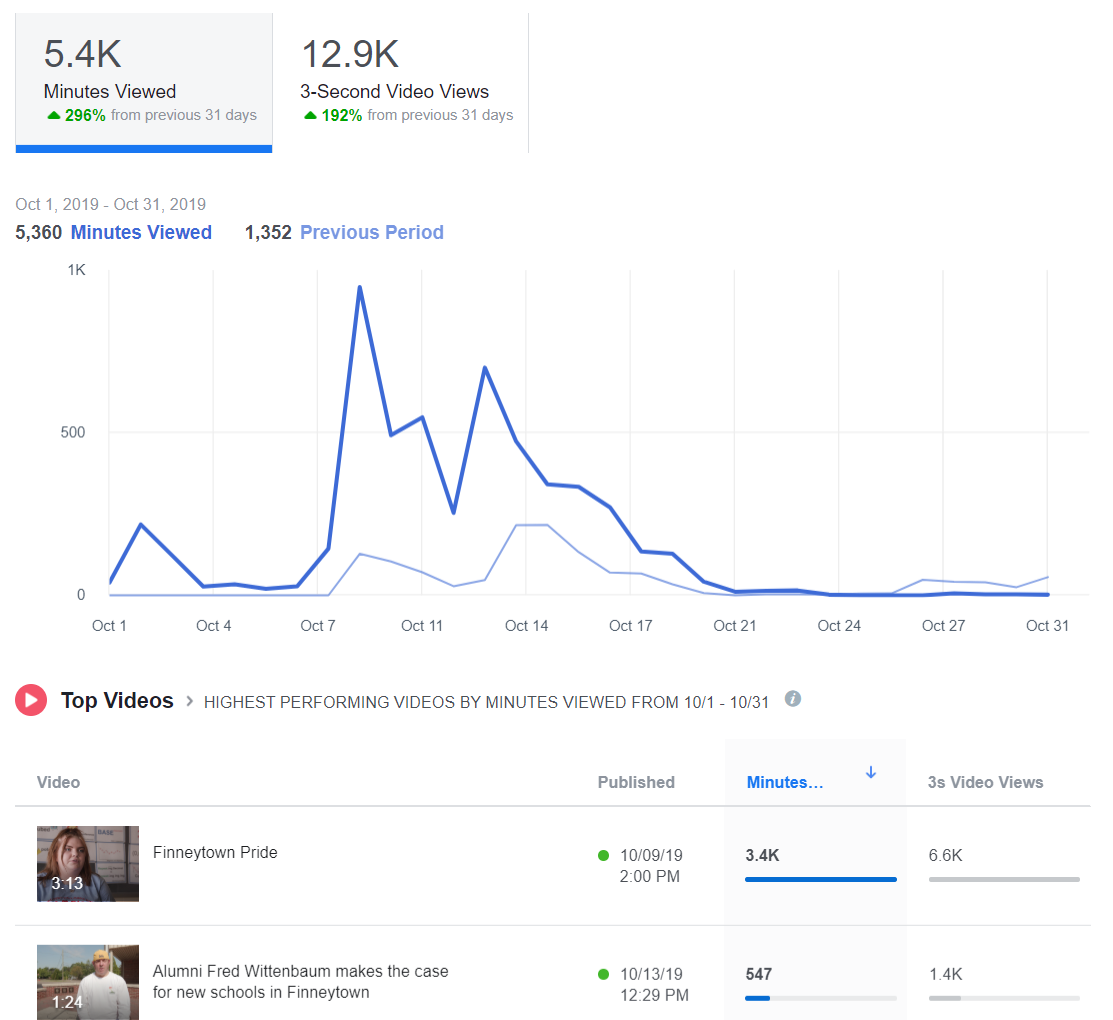
Side note: You can see my latest book review did not do very well on YouTube. I am comforted by the fact that it was gangbusters on Facebook. And that’s a lesson too. Different videos will work better on different platforms. You’ll learn how to pair a video to a platform by tracking video analytics.

The top three video metrics to track

#1-Video Views

Facebook and Instagram: a view is counted anytime someone watches your video for at least three seconds.

Twitter: a view counts if someone watches at least two seconds. Additionally, at least 50 percent of the tweeted video must be visible on screen to be registered as viewed. This rule is to account for the auto-play function.

YouTube: a view is counted anytime someone watches your video for at least 30 seconds.

#2-Watch Time

Facebook reports this metric in insights and calls it “minutes viewed.”

Instagram, as far as I can tell at this writing, does not report watch time. (BOO!)

Twitter reports minutes watched under the “video details” of every video you publish on the site. In addition, they have a cool graph that tells you how long the average viewer watches your video. This is reported in quarter percentages. You’ll also get the completion rate, or the percentage of viewers who watched your video from start to finish.

YouTube will tell you the average total watch time for every video you create.

Let’s say you post a 10-minute video on YouTube. You might have 500 views, which means 500 people watched at least the first 30 seconds. Then you’ll have an average watch time of say, 5:33, which means most people watched at least five minutes and 33 seconds of your video.

YouTube prioritizes videos with high watch times in its viewing suggestion algorithm.

I can tell you from my own experience posting The Library Marketing Show to YouTube each week that it’s rare for someone to watch an entire video from start to finish. I challenge myself every week to improve my watch time.

#3-Engagement

As always, you want to record likes, comments, and shares of your videos, as you would with other social media posts. These metrics can tell you how many people were compelled to act based on your video. You can help boost these numbers by actively asking your viewers to like, comment, and share.

Shares are the most important engagement metric, because that means someone liked your online program so much, they wanted their friends and family to enjoy it too.

You might also want to read these⬇️

Videos Can Reach Library Users at Home Now and in the Future. Here’s Your Starter Kit.

The New Guide to Library Marketing Social Media for 2020! Part Four: Maximizing YouTube for Video Plus What About Tumblr, Snapchat, and TikTok?

Subscribe to this blog and you’ll receive an email every time I post. To do that, click on the “Follow” button in the bottom left-hand corner of the page. Connect with me on YouTube, Twitter, Instagram, and LinkedIn.  

Now is the Absolute BEST Time to Prove Digital Promotions are Essential for Library Marketing. Here’s How to Gather Evidence.

PHoto courtesy of Public Library of Cincinnati and Hamilton County

I had a wonderful conversation with a librarian from Canada this week. She heads technical services at her library. We were brainstorming about ways to market her library services, programs, and collection during the COVID-19 shutdown. And we both realized something. The pandemic is awful and scary. But it also affords one big opportunity for librarians and library marketers.

Now is the time to prove the value of digital promotions 

The Marketing Rule of 7 states that a prospect needs to “hear” the advertiser’s message at least seven times before they’ll take action to buy that product or service. This marketing maxim developed by the movie industry in the 1930s. Studio bosses discovered that a certain amount of advertising and promotion was required to compel someone to see one of their movies. 

What does the Marketing Rule of 7 have to do with your library? Digital promotion helps you fulfill the rule of seven. It’s the most efficient way to get your message in front of eyes in a variety of places.

In fact, if you’ve been thinking of slowing down the communication you do right now, don’t. Ramp it up! Your community needs to hear from you.

You should be sending more email to your cardholders. You should be posting to social media more frequently. You should be putting more notices about digital resources on the homepage of your website. 

In this moment, we can accurately measure the results of digital marketing because of the lack of competition from more traditional means of library marketing, like book displays, flyers, and posters. No one is seeing those at this moment, because no one is coming into your physical library building. Digital results are easy to record.

And, if we take this unique moment to gather data to prove that our work yields results, we can provide solid evidence of our worth in the community. We may prevent layoffs and budget cuts. When this is all over, we can say the library was there–and people turned to it for help. 

Statistics to gather now to prove your worth later

Measure virtual program viewing. Many libraries are putting together great virtual programming, particularly story times. If you do live streaming or on-demand videos, be sure to gather metrics on views.

Some platforms will tell you how a person got to your video and some will tell you how long they watch. Most will give you demographics on your viewers, like their age, identified gender, and location. All will give you stats on reach, engagement, and follower growth.

All those data points are valuable. Start a spreadsheet now and track the results day by day. You’ll be able to prove that people watched, how they found out about the video, which videos they liked most, and how long your library held their interest.

Send more emails, and track results religiously. Your library can use email to promote everything from services to events to the collection. Tell your cardholders about the new eBooks and eAudiobooks in your collection. Use your email to drive usage of those hidden treasures in your library, like online homework help, streaming music, and resume or job-hunting databases. Then…  

Tracks holds, checkouts, and usage for digital collection items. Be sure to write down how many holds and checkouts there are before you market, and one week after. It’s easy to prove the value of digital collection marketing when no one can walk into a library to check out a book. Every checkout is likely coming from your efforts!

Ramp up your social media posting schedule on two platforms. Social media is the second method most effective method for digital promotions. And it’s the best way for you to reach non-library cardholders right now.

Current research shows that people are Tweeting a lot more right now. With the amount of content on that platform, I would not recommend posting more frequently on Twitter. There’s too much competition and your posts are likely to get lost in the shuffle.

However, those same stats also show growth in use of LinkedIn and Pinterest during the pandemic. If your library is not posting on those platforms, now is a fantastic time to experiment and reach a new audience.

On LinkedIn, you can share collection items, services, and events that focus on job-hunting, career advancement, personal wellness, diversity, literacy, and entrepreneurship.

On Pinterest, post new eBooks and eAudiobooks added to your collection. If you have DIY, STEM-activities, or story time videos, you can also post those to Pinterest. People are using the platform for inspiration and to find activities to fill their time. Now is a great time to give them some content so they can discover your amazing library.

One more thing to do

Advocate to change your marketing emails from opt-in to opt-out. That means every cardholder who gives your library their email address, in the past or in the future, is on your marketing list. If they want to opt-out, they can (but they won’t!).

I know many libraries will find this to be a radical shift. Libraries worry about angering their cardholders by sending them emails. They don’t want to be one of the “bad brands” that sends spam. Many libraries have actual board policies making opt-in mandatory for emails.

Now is the time to advocate for change. Here’s why.

A library is NOT a business. The normal consumer sentiment about spam email does not apply to you. Your cardholders want your emails.

People love the library. They love what you offer them. They want to know what’s going on at the library. 

You are not going to spam people or make them mad by sending them emails. Unwavering cardholder loyalty is the one big advantage libraries have over their competitors in the profit world. And we should use it!

In addition, people are accustomed to opt-out emails. They know that if they give you their email, you’re going to message them. 

My argument for opt-out emails comes from lots of experience. When I worked for a public library, we sent marketing emails nearly every day of the week. My library’s unsubscribe rate was ZERO percent. I usually saw about 10-15 unsubscribes for every 10-thousand emails I send. Across the non-profit world, the average unsubscribe rate is about .19 percent, according to Smart Insights.

I worked the library outreach table at a book festival every year while I worked at the public library. Without prompting, customers asked about the library’s marketing emails. One lady said she heard her friends talking about them and wondered why she wasn’t receiving them! Several others mentioned they learned about new books and services from our emails. I had people GIVING ME their email addresses to check their status.

Do you think customers of other companies ask about their emails or talk about them with fondness to other customers?  I never have, and I sign up for A LOT of marketing emails from other companies.

Start sending your emails to every customer. They want to hear from you! And you can track usage and circulation increases from those emails to help prove your library’s worth.

You might also want to read these⬇️

What Metrics Demonstrate Your Library’s Social Media Marketing is Working?

How to Reverse Engineer Your Library Marketing Social Media Audiences!

The One Social Media Shortcut That Can Tank Engagement and Cost Your Library in a Pandemic–or Anytime!

Subscribe to this blog and you’ll receive an email every time I post. To do that, click on the “Follow” button in the bottom left-hand corner of the page. Connect with me on YouTube, Twitter, Instagram, and LinkedIn.  

A WordPress.com Website.

Up ↑