Search

Super Library Marketing: Practical Tips and Ideas for Library Promotion

Tag

library marketing advice

Looking for Guaranteed Email Marketing Success at Your Library? Here Are Four Essential Metrics To Track.

Image courtesy Public Library of Cincinnati and Hamilton County

Use the feedback button to share your most pressing email marketing question. I’ll answer these in a future blog post!

I love opening the “reports” tab on an email platform. There is a second or two of anticipation as the page loads that brings me a thrill.

What will the numbers say? Will they be better or worse than last month? Will they reveal a new trend that I can use to better serve my target audience?

I realize I sound a little nuts. But honestly, I love metrics.

They are clear and concise. They show you what’s working and what’s not working. They give you permission to stop doing promotions that don’t help your library at all. If you try something new, they’ll tell you whether your idea worked or not.

Tracked over time, email metrics will help you to take the 30,000-foot view of your library marketing. You can see if your emails are doing what they are supposed to do… moving your library toward its overall strategic goals.

There is a lot we could measure in terms of email marketing. It would be easy to get lost in the quagmire of numbers and analysis.

So, I want you to focus on four data points that really matter to library email marketing. Use these metrics to determine whether your messages are connecting with your audience and promoting your library’s overall strategic goals. And don’t miss the bonus tip at the end of this list!

“Email is the only place where people, not algorithms, are in control.โ€

Ann Handley, writer, digital marketing pioneer, and Wall Street Journal best-selling author 

1. Increase of raw circulation numbers.ย 

Recordย the number of checkouts and holds before you send the message and then again after the message is sent. You can generally wait about three days to check those numbers. Cardholders who want to act on an email will do so within a three-day period of receiving it.

What this metric will tell you: Raw circulation numbers will likely be of interest to anyone in collection development at your library. They are also the basis for the next two metrics, which will help you compare the effectiveness of your emails.

2. Percentage increase in circulation.

Once you start collecting data on raw holds and checkout increases, you will want to calculate the percentage increase in circulation.  

Let’s say on Monday, you send an email promoting one specific eBook. Before you send the email, you note that there are currently three holds or checkouts of this eBook. When you check on Tuesday, there are four new holds or checkouts placed on the eBook. In total, there are now seven holds or checkouts on this item.

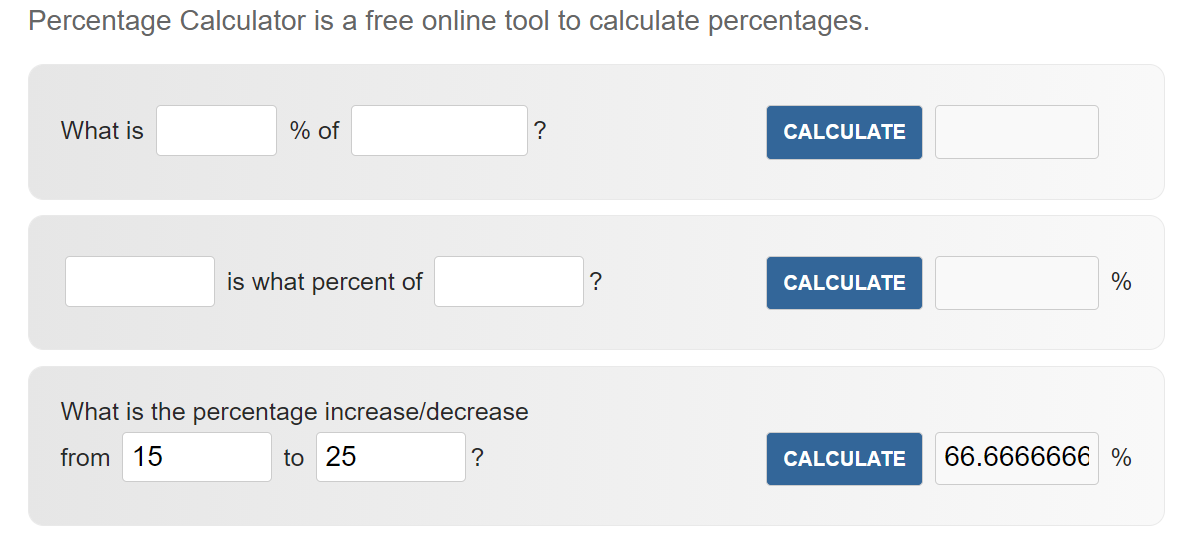
Use percentagecalculator.net to calculate the percentage increase in circulation. For this example, we use the third calculation tool on the page:

That’s a 133 percent increase in circulation.

Now, the next week, you decide to send another email promoting a different eBook. But this time, the eBook you choose to promote has 15 holds or copies before the email is sent. When you check 24 hours after sending the email, there are 10 new holds or checkouts. In total, there are now 25 holds or checkouts on the eBook.

The raw numbers for the second email are bigger (an increase of 4 holds/checkouts vs. an increase of 10 holds/checkouts). But the percentage increase for the second email is actually smaller, at 66%! That means email #1 was more effective.

What this metric will tell you: Percentage increase in circulation lets you compare your promotions more accurately. If you are short on time, this kind of comparison will help you determine which promotions will give you the most success with your limited resources.

3. Conversion rate.

This is the percentage of people who took an action after receiving your email.

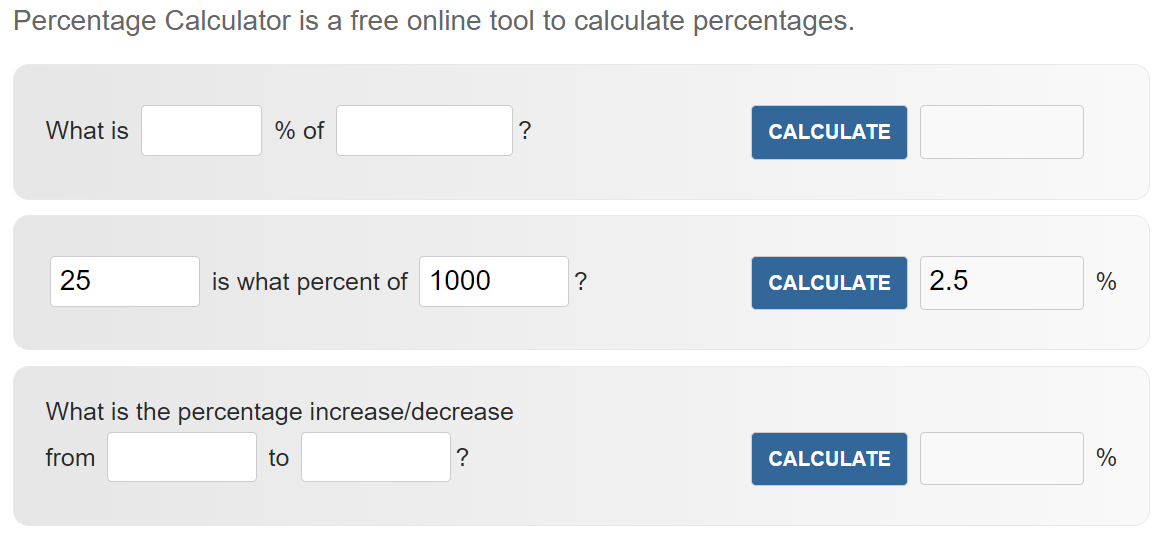
Let’s pretend that you’ve sent an email to 1000 people. The email promotes a streaming video on your library website that hasn’t had any views in the past couple of weeks.

When you check the streaming statistics for that video, you see that 25 people watched the video in the days immediately after you sent the email.

Using the second tool on our percentage calculator website, you can calculate the percentage of people who “converted” or took an action after your email.

What this metric will tell you: If you start tracking conversion rates on your emails, over time you’ll have a clear picture of the types of emails your audience responds to. You’ll be able to establish a good base percentage for your audience. This number will be different for every library.

If you are short on time, this metric will help you determine which promotions will give you the most success with your limited resources. When you find a certain type of email promotion works based on conversion rate, you should do it more often.

4. Amount of traffic driven to your website.

Track how much traffic is funneled to your public website by your emails. You can use Google Analytics to analyze how efforts on those platform translates into action by your cardholders. If you’ve never worked with Google Analytics, here is an easy guide to get you started.

What this metric will tell you: This is an important metric to share with administration, because it clearly demonstrates the value of the time and energy you have invested in email marketing.

Special bonus tip!

If you promote the same collection item or booklist on social media, email, and your website, put some space between those three promotions. A week is a good amount of time. That allows you to really pinpoint whether your increase in circulation is coming from email, your placement of the item on your website, or social media.

In fact, that’s a fun experiment to run. Can you drive higher circulation numbers by promoting your collection on your website, email, or social media?

You can even get more granular: which social media platform is best for collection promotion? Which page on your website is best for placing collection promotions? Which email list responds best? See, this is fun!


Subscribe to this blog and youโ€™ll receive an email every time I post. To do that, click on the โ€œFollowโ€ button in the bottom left-hand corner of the page.

You may also like these articles

Are My Library Email Metrics Goodโ€ฆ. or Bad?! Here Are the Latest Stats to Help You Figure It Out.

What Metrics Demonstrate Your Libraryโ€™s Social Media Marketing is Working?

Angelaโ€™s latest book review

Beautiful Things by Hunter Biden

The Truly Engaged Library User: Why It’s Critical That Libraries Focus Less on Transactions and More on Relationships

Photo courtesy Public Library of Cincinnati and Hamilton County. Acquisitions Department, Main Library, 1982-1983.

I was asked a deep question this week.

What is engagement?

I mean, you might as well ask me to explain the meaning of life. (I’m kidding. Please don’t ask me that question.)

There are two ways to define engagement in your library promotional efforts.

Transactional Engagement

One way to talk about engagement in library marketing is solely centered on numbers.

How many likes, shares, comments, and direct messages do your social media posts get? What is the open and click through rate of your emails? How many people signed up to attend your program based on the flyer you slipped into their checkout? How many people used a database after you mentioned it at your last program?

These hard numbers are measurable and easy to explain. They demonstrate that your community sees your marketing. They take an action.

Transactional engagement is data that proves people are interacting with your library marketing.

Relationship Engagement

But engagement cannot, and should not, be solely defined by the hard numbers. It must also be the ongoing relationship building that your library does with patrons.

People may be opening your emails and clicking on your social media posts. They’re checking out books and using your services.

But more importantly, how do they feel about your library long term?

Engagement must involve building a deeper relationship with your patrons over time. When that happens, the relationship will manifest itself in ways that go beyond hard numbers.

This is the real value of your library. Your cardholders will not only use the library more, but they’ll also donate more, volunteer more, speak out to support you more often, and influence others to use the library.

If this relationship building has not been in your list of priorities, you’re not alone. A study by Chief Marketing Officer found that most marketers fail to nurture long-term relationships. Instead, they focus more on the transactional nature of engagement.

That’s because transactional engagement is easy to measure. You can take those metrics to your supervisor and to the board. You can prove what you’re doing is effective. And you can feel good about your work.

It’s far more difficult to explain to your library administrators and stakeholders that you are building a lifelong emotional connection and loyalty with your community. It is hard to convince them that this is important. It’s also difficult to measure this work.

And building relationships doesn’t happen overnight. Libraries may feel they don’t have the luxury of devoting time to this work.

But we must. And we must do that right now.

Why this is the moment to focus on relationship building

Libraries are at a crossroads. I cannot stress this strongly enough: as we emerge into the post-pandemic world, we should not go back to doing things the way we were doing them before the crisis.

Libraries were already facing budget cuts, apathy, and accusations of irrelevancy. And that was before the pandemic forced us into lockdown and severed tenuous ties with our community by physically separating us from our customers.

The pandemic forced us to take our service models in a whole new direction. We proved that we can pivot.

We should use this opportunity to move our marketing in a new direction too. We cannot let the fear of doing something different keep us from making the bold changes needed to move into a real position of success.

Libraries should use this time to turn their sights on building loyalty. We’re going to need it to survive in the post-pandemic world.

Relationship engagement is the key. When we focus on building loyalty, we’ll learn more about our communities. We can put those discoveries to use to create services that actually solve problems. We can provide the services our community needs, not the services we *think* they need.

Yes, I know this sounds a little aspirational and far-fetched

Now, when I gave this answers to the folks who asked me do define engagement, I could see the look of skepticism on the faces of some of my peers. And I understand why.

We are just coming out a major life changing event. Most libraries think they must be solely focused on trying to get their circulation and usage numbers back up to pre-pandemic levels.

But I think this is a chance to do something bigger. This moment is an opportunity that comes once in a lifetime.

Library staffers often seek to find the deeper meaning of the work they are doing. They want to know that their jobs are having an impact on the community. If we focus on building sustainable relationships of loyalty and trust with our community, staff will feel like they are contributing to the library’s overall goals in a meaningful way.

How does relationship building work in a real library?

Let’s say your library does personalized reading suggestions. Staff members may view their work as transactional. A reader asks for a suggestion and answers a few questions. The library staffer sends them a list of suggested books based on their reading preferences. Interaction complete.

To turn this from solely a transactional interaction to a relationship building interaction, the library staff member could write a personal email or note to the reader, to explain why they chose these particular books. A few weeks later, the staff member could reach out to the reader to ask for their thoughts about the selections. Did they like them? Which books did they check out? Did they learn anything new about what they like to read?

This interaction takes longer but it’s more meaningful. It shows that the library cares about the person and strives to provide the best customer service possible. And that’s how you build loyalty in your community.

Here are more ideas that will help you take transactional library interactions and turn them into relationship building engagement.

By the way, this weekend, I heard someone say they believe the meaning of life is for us to help each other get to wherever we are going next.

That view has a connection to the work you do at your library, don’t you agree?

Subscribe to this blog and youโ€™ll receive an email every time I post. To do that, click on the โ€œFollowโ€ button in the bottom left-hand corner of the page. Connect with me on YouTube, Twitter, Instagram, Goodreads, and LinkedIn.


You may also like these articles

The Best Library Customer Service Advice from an Expert

Customer Is Not a Dirty Word! Why Libraries Should Shift Their Focus to Customer Experience to Stay Competitive and Relevant

Angela’s latest book reviews

A Children’s Bible by Lydia Millet

Dark Tides by Philippa Gregory

Why Itโ€™s OKAY for Your Library To Pull Back on Posting on a Social Media Platform!

Watch Now

The Library Marketingโ€‹โ€‹โ€‹โ€‹โ€‹โ€‹โ€‹โ€‹ Show, Episode 97

In this episode, I’ll address a post I saw recently on the Libraries and Social Media Facebook page. A library staffer shared their plans to pull back on the amount of posts they are doing on Twitter. There was a bit of debate among the members about whether that was a good idea.

Kudos go to the San Marcos Public Library for their Breakfast Club inspired photo shoot.

Do you have a suggestion for a topic for a future episode? Want to nominate someone for kudos? Let me know in the comments. And subscribe to this series to get a new video tip for libraries each week.

Thanks for watching!

Angela’s Latest Book Reviews

Everything Sad is Untrue by Daniel Nayeri

A Certain Hunger by Chelsea Summers

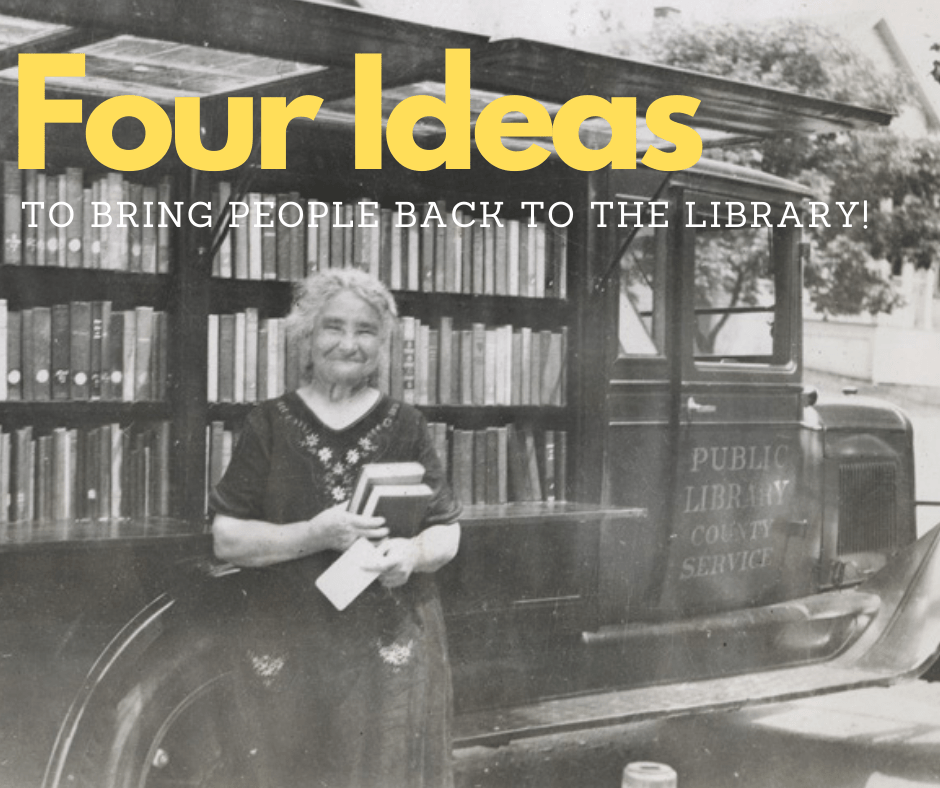
How Do We Get People To Come Back to the Library? Four Ideas That Can Help You Rebuild Use of Your Library

Here is something I’ve noticed in my conversations with library staff over the past six months.

Staff share a profound feeling of separation from their communities. They’ve been working for more than a year without the normal interactions with the public. And that has led to increased anxiety about whether things will ever return to normal.

The big questions I’m getting are: How long will it take before circulation returns to normal? How long will it take before program attendance is back to where it was before the pandemic?

I can’t answer those questions. I’m not sure anyone credibly can.

But what I can do is help you to rebuild use of your library through marketing and promotions.

Here are four ideas that libraries can strategically use to bring people back to the library, re-engage cardholders, and get new community members to use the library.

Renew everyoneโ€™s library cards automatically and incentivize people to use them. Then, use that interaction to re-connect.

If you have a system where cards need to be renewed, a blanket automatic renewal is a great promotional tactic. Automatic renewal of library cards is a customer service best practice. And doing so right now, when we are coming off more than a year of service limitations, is strategically smart.

If your senior leaders have concerns about a blanket renewal, ask them to read Cordelia Anderson’s book. It explains the advantages of this action.

The next step is to gather prizes from partners, like you would for summer reading. Let people know theyโ€™ll be entered into a drawing to win a prize if they use their card. If they check out a book or use an online resource, they can fill out an entry. If your priorities are to drive attendance at in-person programs or to get people to physically come into a branch, you can tell people they get two entries in the drawing!

Once they come back, make sure you do everything you can to re-connect with these cardholders. Have your staff do three things with every person they interact with.

  • Get their email address.
  • Get them to self-identify their interests. Are they looking for help solving a particular problem, like finding a job? Are they looking for books for entertainment and relaxation? Ask your public to name at least one topic they would want more information about.
  • Give them a print piece of marketing material to encourage further use of the library. Don’t let them leave this interaction without something in their hands. Remind them that the library is open and actively providing service to your community again.

Rebuild a sense of community.

One of the things that library users said they missed most during the pandemic was social interaction. This is another opportunity for libraries to rebuild.

Rather than re-starting our one-off programs, letโ€™s spend our energy putting together programs that everyone can participate in. Wider-ranging programs, which focus on getting large groups people to do an activity together, help to build a sense of community.

One idea: everyone reads the same book, or watches the same movie, or listens to the same piece of music. Then, your library creates ways for your community to share their thoughts and experiences around that group activity.

Another idea: ask your patrons to share their pandemic stories. Encourage them to share how they survived their time in lockdown, what they learned, and how the experience changed them.

Let the public know you’ll be posting their contribution on a special landing page of your website, and sharing them through social media and in email. You can even print short versions of the stories on a bookmark, which youโ€™ll slip into holds and checkouts to encourage other library users to share their stories.

Finally, hold an event where people can have the chance to read their stories to an audience.

A shared experience builds community. And a community that feels connected to your library, and to each other, will keep coming back to use your services.

Use your virtual programs and videos to encourage your community to expand their library use.

Since the beginning of the pandemic, libraries have embraced livestream and video programming. Now we can use the platforms and audiences we have built for promotions.

Do a livestream from inside your building. Show your audience one thing they can do in your library that they havenโ€™t been able to use since the building was closed or operating under limited services. Save the video and repost it later for on-demand viewing.

Do a livestream where the community can ask questions about the library… an “ask me anything” type event. During your livestream, be sure to mention programs or services that may be interesting to those asking questions.

It’s like working the front desk: people ask questions and you provide the answers. You’ll be demonstrating your staff’s expertise and reminding people that the library is there to help.

Buy two kinds of social media ads.

We know social media algorithms do not work in favor of organic posts. Use some of your budget to circumvent the system by purchasing ads. 

Your ad approach can have two methods. One ad should focus on followers. They donโ€™t necessarily see your posts because of the algorithm. But a purchased ad will make sure you are in their feeds. Use the ad to alert them to your expanded changes in service.

The other ad should be focused on people who arenโ€™t library users or followers. You can even split this audience into people you think might be interested in coming into a branch versus people who might want to use digital resources. Social media platforms do a great job of helping you to target specific audiences with your ads.

Spend $25 and see what kind of results you get. If you have more money, use the data youโ€™ve received from this smaller test to run larger, longer ads.


You Might Also Like These Posts

Why NOW Is the Time To Experiment With Your Library Marketing and Promotions!

Your Summer Reading Challenge: How Your Library Can Use Big Events To Gather Compelling Content for Promotions During the Rest of the Year

Angela’s Latest Book Reviews

Everything Sad is Untrue by Daniel Nayeri

A Certain Hunger by Chelsea Summers

Subscribe to this blog and youโ€™ll receive an email every time I post. To do that, click on the โ€œFollowโ€ button in the bottom left-hand corner of the page. Connect with me on YouTube, Twitter, Instagram, Goodreads, and LinkedIn.

Listen To This! How To Use Social Listening To Gain New Insight and Catch Promotional Opportunities for Your Library

Photo courtesy The Public Library of Cincinnati and Hamilton County. Main library, 1920.

In 2016, the Public Library of Cincinnati and Hamilton County caught wind of a fantastic promotional opportunity.

I donโ€™t remember the exact quote, but this is a paraphrase of a Tweet our library saw that revealed a local manโ€™s big plan.

โ€œMy son and I are planning a big adventure. Weโ€™re going to try to visit all 41 Cincinnati library branches in one day.  Weโ€™ll take a picture at each branch. Wish us luck!โ€

The father didnโ€™t tag our library. Still, our social media manager found out about the plan by practicing social listening.

What is social listening?

Your library already tracks mentions, shares, comments, and hashtags related to your library. They record and analyze those engagement metrics to figure out the effectiveness of your library’s promotions on social media.

Social listening is a step beyond that.

Social listening is the purposeful search for conversations about your library on social media platforms, both the ones you are using to promote your library and the ones you are not using.

It’s not looking to see how your library’s marketing is landing. Rather, it’s looking to see the conversations that happen about your library between people who may or may not use your library or who may or may not see any marketing from your library.

Imagine if you could eavesdrop on the conversations people are having about your library when youโ€™re not around. What do you think your community would say?

โ€œThat childrenโ€™s librarian is a hoot. His storytimes are fun, even for the adults.โ€

โ€œI cannot believe I have to create a separate login and password to use some of the libraryโ€™s free stuff. Itโ€™s so frustrating and time-consuming.โ€

โ€œBig interview on Monday. I could really use some help figuring out what kinds of questions theyโ€™ll ask and practicing my answers. There ought to be a service like that at the library.โ€

These three made-up examples illustrate the valuable information your library can uncover when it practices social listening.  

Social listening will give you a clearer picture of how people feel about your library. You may be able to spot problems before they happen. And you will certainly spot promotional opportunities which you can amplify to connect to more users.

In the case of the father and son Cincinnati Library branch adventure, our marketing staff reached out to the dad. We told him we loved his plan and wanted to follow along. We ended up turning their marathon day-long quest to visit all our branches into a memorable cover story for our quarterly content marketing magazine, Library Links.

Read the story about the Grand Library Adventure

Free social media listening tools

If your library uses a social media scheduling platform, it will have the ability to integrate social listening into your dashboard in some form. Check the help section of the platform for instructions.

There are also free tools to help you with social listening.

Boardreader: This site searches forums, websites, blogs, and messaging boards. Type the name of your library into the search bar to find all the posts mentioning your library.

TweetDeck.com: This tool is run by Twitter and lets you monitor live feeds across the platform.

Also, read this post to see how to use Google alerts for social listening as well as catch media mentions of your library. If your library gets media coverage, you may find conversations about your library in the comment section of the story and on the social media pages of the media outlet.

What to monitor with social listening

You’ll want to set up your social listening tools to monitor:

  • Your libraryโ€™s name and social media handle
  • Common misspellings of your libraryโ€™s name and social media handle
  • Names of your services, especially branded names, like the name of your bookmobile, your Library of Things, your summer reading program, your storytimes, etc.
  • Common terms associated with libraries like reading, librarian, book drop, etc.
  • The names of senior leaders like your director and board members
  • The names of your branches and locations

Opportunities to gain from social listening

Social listening means you can interact more with your community. Cardholders (and non-cardholders) may talk about your library but not directly tag you. If you are doing social listening, you will still spot those interactions.

You might consider responding. This can create those surprise and delight moments that show that your library cares about its users.

You can also spot problems and trends. If you notice that a lot of community members are posting negative comments about a service, you can elevate that to senior leadership.

Social listening also means youโ€™ll know more about your competitors. If you are โ€œcompetingโ€ with other organizations in your community or with for-profit companies that provide services similar to your library, you can use social listening to look for opportunities to position your library as a free and better alternative to those competitors.

Finally, social listening can also help you identify library advocates. They might be vocal about their support of the library. You want to connect with these people who already love your library and ask them to speak out for you.


You May Also Want to Read These Posts

New Research on Social Media Use Plus Updates on YouTube and Facebook for Libraries!

How Far in Advance Can I Schedule My Libraryโ€™s Social Media Posts??

Subscribe to this blog and youโ€™ll receive an email every time I post. To do that, click on the โ€œFollowโ€ button in the bottom left-hand corner of the page. Connect with me on YouTube, Twitter, Instagram, Goodreads, and LinkedIn.

Take Your Library Email Newsletter to the Next Level with These Eight New Topic Ideas!

Photo courtesy Public Library of Cincinnati and Hamilton County

This week, I heard a truism about email marketing.

Marketing expert Ann Handley said, โ€œEmail is the only place where people, not algorithms, are in control.โ€

When the pandemic struck, email became the only reliable way libraries had to communicate with their patrons. More libraries are sending email newsletters. And theyโ€™ve gotten good at the basics.

So, itโ€™s time to take the power of email newsletters to the next level.

Focus less on the news, more on the letter

Handley has one of the best newsletters Iโ€™ve ever seen. It stands out because she focuses less on the news partโ€ฆ and more on the letter. Sign up, and you’ll see what I mean.

What I’ve learned from Handley is that your newsletter is your opportunity to directly connect with cardholders in their inbox. What does your community need? What can you provide for them? And most importantly, how can your library demonstrate the way it is different than any other organization?

Ann recommends you lose the marketing voice for your newsletter. Instead, write as you would if you were trying to convince a friend or family member to use the library. Be personable and relatable. Your authentic voice will connect to your readers.

New topic ideas for your library email newsletter

Your library newsletter can and should contain more than book recommendations and announcements about programs and services. Here is a list of ideas that go beyond the typical library information.

Send simple how-to instructions for using your library.

There are all kinds of opportunities to share instructions. Write simple steps for using one of your services. Or share instructions on how to complete a task outside of your library, like fill out an absentee ballot form or make a COVID-19 vaccination appointment.

Step-by-by-step instructions shared in your newsletter will help you build a relationship and form trust with your community. It demonstrates your libraryโ€™s ability to find solutions to your communityโ€™s most pressing problems.

Answer frequently asked questions.

Ask your front line staff, your chat service operator, or the person who handles your library’s main email inbox to share the questions they get most frequently from the public. Then, answer them in your newsletter!

Your email audience will learn new things about your library. Youโ€™ll make your library more accessible. And you’ll build trust with your community by proving your library is a place where answers are found.

Promote blog posts.

Use your newsletter to promote your blog and get more views.

Take the first few lines of your post and use them to tease your newsletter audience. Include a photo or graphic from the post to tie your newsletter into your blog. If you send one newsletter a month but post several blogs, tease each post and include a link. 

Your newsletter audience will be introduced to a new way to interact with and get news from your library. It will also give you valuable information about which blog posts your newsletter audience is interested in.

For instance, if you see that your newsletter audience always click on links for blog posts about genealogy and history, then youโ€™ll know to write more posts on that topic and include them your next newsletter.

Promote your videos.

If your library is creating and posting videos on YouTube, Facebook, Vimeo, or another platform, your newsletter is the perfect place to give those videos an extra boost. As with the blog posts, share a sentence or two to entice your audience to click on a link to the video.

One note: Include a link to the video on the original platform to which you published. Donโ€™t embed the video in your newsletter. Many email services view embedded video code as suspicious, and will mark your email as spam.

Create lists.

Thereโ€™s a reason Buzzfeed articles are so popularโ€ฆ they contain listicles, which are articles that feature a numbered list (Hey, this post is a listicle of sorts!) A list is easy for your audience to digest and remember.

Create a top ten list of anything: your staffโ€™s book picks, the ten things a patron can create in your Makerspace, the best albums to download from the libraryโ€ฆ the possibilities are endless. Your email readers will love it. You can even ask your readers to suggest a topic for a list in your next email newsletter!

Share social media content in your newsletter.

If you library had a popular social media post, you can replicate it by adding it to your newsletter.

For instance, if your library posted a book review that got a lot of comments, likes, and shares, put that post into your newsletter, along with a link so your patrons can visit the social media platform, see the original post, and interact with it.

Likewise, when your library gets a great piece of user-generated content, share it in your newsletter as well as on your social media audience. 

Share testimonials and reviews.

We know that trust is built between your community and your library through social proof: namely, other community members talking about how theyโ€™ve used and loved your library. So, when you get those reviews and testimonials, insert them into your newsletter.

You should also ask your email readers to share reviews and testimonials of your library. Include an easy way for them to send you feedback on what they love about your library. Then share those in your next newsletter and on social media.

Advocate your library.

As a library staffer, you likely know about all the good work your library is doing. But your community has a very limited understanding of the value of your work.

Your newsletter is a great way to begin to share examples and stories of how your library works to make your community a better place. Share short tidbits or an infographic to explain your library’s value.

You Might Also Like These Posts

There is NO SUCH THING as Too Many Library Marketing Emails! Why Libraries are the Exception to the Rule.

Are My Library Email Metrics Goodโ€ฆ. or Bad?! Here Are the Latest Stats to Help You Figure It Out.

Latest Book Reviews

The Kitchen Front by Jennifer Ryan

The Wife Upstairs by Rachel Hawkins

Subscribe to this blog and youโ€™ll receive an email every time I post. To do that, click on the โ€œFollowโ€ button in the bottom left-hand corner of the page. Connect with me on YouTube, Twitter, Instagram, Goodreads, and LinkedIn.

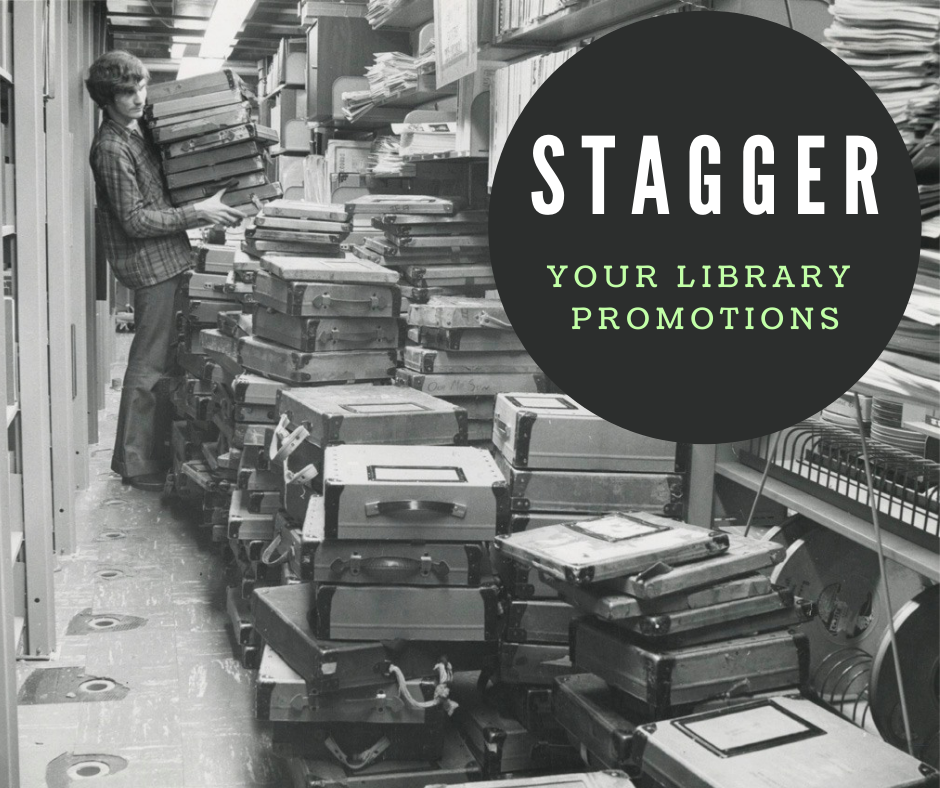
Donโ€™t Release All Your Library Promotions at the Same Time: Why a Staggered Approach Reaches More People!

Shelver in the 16mm film area of the stacks, May 26th, 1974. Photo courtesy Public Library of Cincinnati and Hamilton County.

I am a new-ish fan of K-pop.

During quarantine, my 20-year-old daughter asked me to watch a reality series with her. It features her favorite Korean boy band, Stray Kids.

I was touched that she wanted to spend time together. I couldn’t say no, especially when I know she’ll be moving out of our house soon.

So during those dreary days of lockdown, I had something to look forward to: the point in the evening when she and I would make tea and snacks, and crawl into her bed to watch the members of Stray Kids compete to see who could sled down a hill holding a pitcher of water without spilling it or who could catch the most fish.

I became a fan of their music. And because I work in marketing, I started taking note of the way the promotion for Stray Kids, and other Korean musical groups, is coordinated.

Right now, six big K-pop groups are competing in a music variety reality show called Kingdom. It’s a master class in promotion. The marketing team builds excitement in the fan base by staggering promotional content over a specific period of time before each episode airs. Fans are seeing content at different times and days as they move across various platforms.

Libraries can learn something from K-pop.

Creating a compelling message, picking images, and deciding which tactics you will use to promote your library is important. But, deciding when you’ll release those promotions is just as critical.

When I started work in library marketing, I would create a marketing campaign and intentionally release all the promotions on all channels in the same day.

On the appointed day, my team sent an email and a press release. We added a homepage graphic and posted on all our social media platforms. We changed out the digital signage in our branches and put up posters.

And it was never very effective.

Then I heard marketing expert named Andrew Davis talk about staggered distribution. The approach takes advantage of the consumer cycle of excitement to expand your reach.

When you use staggered distribution, you release one or two promotional tactics at the beginning of your promotional cycle.ย Maybe you put up posters and send an email to your community.

Your promotion gets some play, and excitement builds in your community. People start talking about it. They might even share your promotion with their family and friends.

When the excitement dies out, you release your promotion on a second channel. The cycle of excitement and sharing begins again.

When that ends, you release your promotion on a third channel. You cycle through your promotion like this until you’ve used all the tactics planned.

When you use the staggered approach, you get a longer promotional thread. Your promotions will be more successful because the excitement around them builds over time, not in one big burst. Everyone in your audience sees the promotions. And more people take the action you want them to take!

For decades, my library used a traditional, all-at-once promotional approach to our Summer Reading program, which ran from June 1 through July 31. We released promotions using all our available tactics on May 1. And our registration numbers and check-in numbers were never as high as we wanted.

By the time we got to June 1, our audience was already tired of hearing about Summer Adventure. We used up all their excitement before we even got to the event!

So, we switched to a staggered approach.

We released promotions on our website on May 1 and installed yard signs. On May 15, we sent an email. On May 20, we put up all the signs around the inside of the library and started promotions on social media. From May 21 until June 1, we’d post once a day on one of our social media platforms. We started our ads on May 25. We sent a second email on June 1.

Throughout the course of our summer reading program, we would stagger promotions around all channels, so the message reached everyone in our audience, wherever they were consuming our content. We kept our audience excited, engaged, and interested.

And most importantly, it was effective. The first year we tried this staggered approach to distribution, we saw an 18 percent increase in registrations and a 67 percent increase in weekly check-ins.

This approach will work for your audience for any large-scale promotion. Stagger the elements of your promotion across various channels over time. More people will see your marketing and your efforts will be more effective.

I talked more about this idea in this episode of the Library Marketing Show. Try it and let me know if you see an increase in the effectiveness of your marketing work.


You Might Also Like These Posts

Everything You Need to Know to Create an Effective Marketing Plan for Any Library Promotion

Virtual Library Programmersโ€“Heads Up! Hereโ€™s a Super Easy, Step-by-Step Plan to Establish a Style Guide for Your Library Videos

Latest Book Reviews

How to Avoid a Climate Disaster by Bill Gates

Subscribe to this blog and youโ€™ll receive an email every time I post. To do that, click on the โ€œFollowโ€ button in the bottom left-hand corner of the page. Connect with me on YouTube, Twitter, Instagram, Goodreads, and LinkedIn.

Library Blogs are the Best! How to Use Your Website to Amplify Your Library Marketing Message on Your Own Terms

Photo courtesy Public Library of Cincinnati and Hamilton County

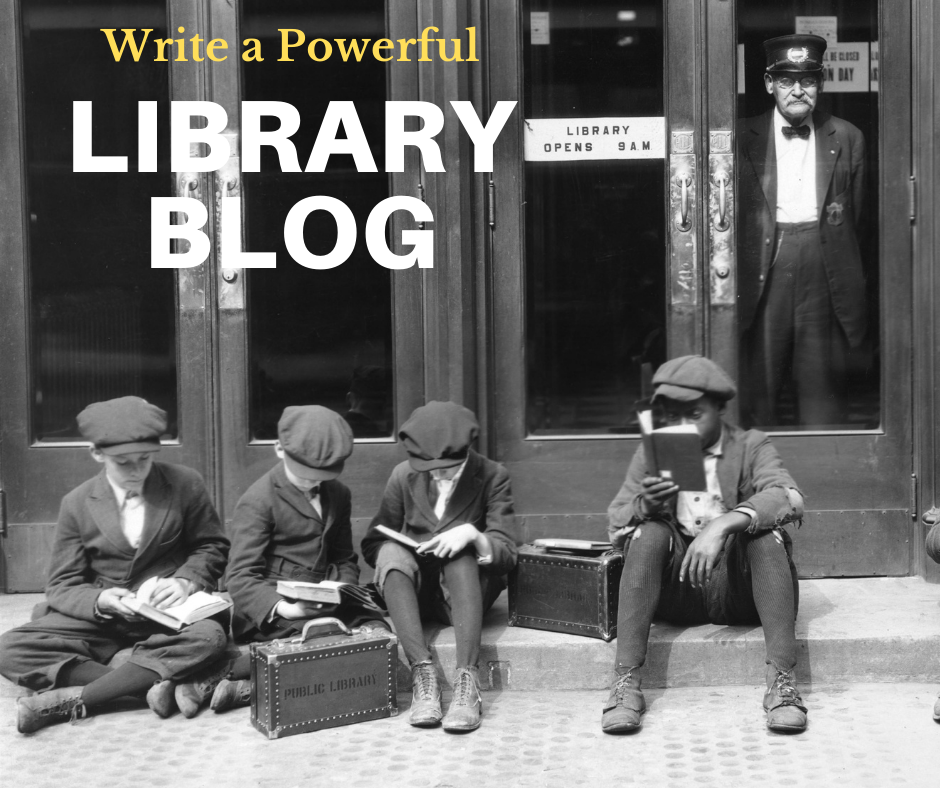
One of the hardest and most rewarding things I ever did while working for the Public Library of Cincinnati and Hamilton County was to start a blog. It took me five years to get it off the ground. I wrote about that experience in this blog post.

I worked hard to get a library blog because I knew it would be a transformative and powerful communication asset.

A blog allows your library to tell your own story, create brand awareness, and promote your library to your own audience for free, without having to deal with the rules of someone else’s platform.

If your library has a blog, you will want to make sure you are doing everything in your power to grow your audience. In this post, I want to share the best practices Iโ€™ve learned from years of blogging.

Before you post

Create an editorial calendar for your library promotions that includes your blog post ideas. I wrote a two-part guide to help you through this step.

A calendar will let you see all the promotions your library is doing in one glance. It will help you schedule posts that amplify your other marketing messages.

You can use your calendar to formulate due dates and publication dates for blog posts. You can also plan the promotion of your library blog posts on other channels, like your email newsletters and social media platforms.

The three main genres of library blog posts

The best blogs are a mix of these three types of blog posts.

Promotional posts: Most library blog posts are promotional. They focus on telling readers about an event, service, or collection item available at the library.

Promotional posts tend to be shorter. They also need to be frequently updated as services and collection items change.

Example: Jacksonville Public Library uses their blog to help their community find information on their website without having to create special landing pages for events and services.

Opinion posts: These posts demonstrate what the library stands for. They center on questions people have about libraries but are afraid to ask. Opinion posts also celebrate the strengths of libraries and the opportunities for improvement.

Opinion posts are compelling and allow your library to cement your voice and your position in a way that your readers and cardholders will remember. Itโ€™s great when a library takes a stand. People will respect you for it.  

Example: The Stark Library CEO and Executive Director took a clear stand against racism in this recent blog post.

Authoritative posts: These posts demonstrate your libraryโ€™s expertise in a subject. For instance, a post that highlights your library’s award-winning family history department is an authoritative post.

Example: Check out the My Librarian(s) Favorite Resources series on the Chapman University: Leatherby Libraries blog.

The Ugly First Draft

If youโ€™ve been asked to write a post on your libraryโ€™s blog, your journey begins with what my favorite marketer Ann Handley calls The Ugly First Draft (UFD).

Your first job is to get all your ideas down in whatever format they escape from your brain. Write your draft without worrying about spelling, grammar, punctuation, or phrasing.

Open a Word document and try to keep typing until you canโ€™t think of anything else to say on a subject. If you are a skilled typist, look away from the screen so you’re not tempted to focus on spelling or grammatical errors.

Revise to create the perfect library blog post

Write short paragraphs, not short posts. Itโ€™s a myth that short blog posts will attract more readers. If your blog post is long but compelling, youโ€™ll have no problem holding the attention of your readers. A longer post that is well written and contains keywords will do better in Google search than a shorter post.

However, you should break up your blog post into shorter paragraphs. Short paragraphs are easier to read and understand. They open white space on your blog, which makes your post more inviting.

Writing experts recommend paragraphs of no more than 150 words. I started writing shorter paragraphs about two years ago and saw a big boost in my metrics.

Be deliberate with your keywords. In the blog text, you need to include keywords for search.

Youโ€™ll notice I use the phrase โ€œlibrary marketingโ€ and โ€œlibrary promotionโ€ frequently in this blog. Thatโ€™s because people searching for help with library marketing use those two phrases most often. Try Keywordtool.io. It does an amazing job of helping you to narrow your target phrase.

Put your keyword phrase in title, header, and body of blog post at least two times but more often if it makes sense.

Include images. Images can help you craft your message and tell your story. They also help to break up the text of your blog posts.

Use images to explain concepts or enforce the emotion you are trying to create.

Link to other content from your library. Your blog post can funnel your readers into engaging with your library. If you are talking about a specific service or a part of your libraryโ€™s collection, include links embedded in your text to help readers find more information.

Make sure your links open in a new tab. Thereโ€™s nothing more annoying that clicking on an embedded blog post link in the middle of a post and then having to tab backwards to read the rest of a blog post.

Create engagement opportunities for your reader. Use your blog posts to start a conversation with your readers. Ask a question and invite readers to post their answers in the comment.

Your library can also embed a social media post in your blog so readers can post a key point to their social media. This gives your post the potential to reach new readers.

Spend a lot of time on your headline.  A good headline should give your readers a hint at the copy that lies ahead without giving away the whole story. It should trigger an emotional response that includes an irresistible urge to read more.

You can get lots of tips for headline writing in this blog post.  

Incorporate several rounds of edits for spelling, grammatical, and punctuation errors. Run your blog posts through an online editor to catch errors. Ask your co-workers to edit your blog as well.

Print your blog post out and read through it, word for word, out loud. Doing this will force your brain to pay attention to the extra attention to what you’ve written. Your brain will often fill in or gloss over errors when you silently read. But if you read your post out loud, those errors become obvious and can be fixed before publication.

Four more tips for library blog success

Use your blog as a networking tool. Ask community leaders to write guest posts. Reach out to school administrators, policy makers, influencers, and other nonprofit organizations. Or use your blog to interview someone.

Once you publish, send a link to the contributors or interviewees. Ask them to share your post with their audience. This will amplify your message and expose your blog to a new audience of readers.

Example: The National Library of Australia interviewed fashion designer Nicky Zimmermann in this blog post that led to lots of media exposure for the library.ย 

Post consistently. The best way to maintain web traffic to your blog is to make sure people are always waiting for an article to go live.

Decide how many posts you can create a week and which days youโ€™ll post on. Then stick to your schedule.

Promote your blog posts on other platforms. Most of your readers will not just stumble upon your post by accident. You need to make sure they know that your library has published a post.

Promote your posts on your social media platforms, in your emails, and in patron interactions.

Your blog can also be used instead of a press release to pitch a story to a member of the media.

Evaluate your post metrics. Check in once a month and enter your metrics on a spreadsheet so you can track results over time.

Compare views, watch time, and bounce rate for your posts. You can also compare post length.

Your metrics will help you to continue to improve and update your blog based on your audienceโ€™s needs and wants.


Does your library have a blog? I’d love to see it! Share a link in the comments!

Subscribe to this blog and youโ€™ll receive an email every time I post. To do that, click on the โ€œFollowโ€ button in the bottom left-hand corner of the page. Connect with me on YouTube, Twitter, Instagram, Goodreads, and LinkedIn.

Want To Do a Better Job at Marketing Your Library? Hereโ€™s the Secret: Read More Fiction!

I was recently looking through some old photo albums when I came across this gem.

You can see my mother wrote the words “My bookworm” under this photo of me, age 7, reading “The Horse That Had His Picture in the Paper” by Helen Stone. I have always loved fiction.

Of all the people in the world, I am certain I really don’t have to explain to my readers why fiction is amazing. You work in a building stuffed with fiction!

But, if I were to ask you what you’ve read lately that will help improve your work skills, my guess is that you would not name a work of fiction.

Of course, your work will be improved by reading a great business or career-oriented book. I can think of a few inspiring examples, like Ann Handley’s Content Rules, which literally changed my life, or Unmarketing by Scott Stratten. You can get a chance to read books like these and talk about them with other library staffers if you join the Library Marketing Book Club on Facebook. There is a lot of value in reading advice on marketing.

But reading fiction will also make you a better marketer. Here are the six reasons why reading fiction will improve your ability to promote your library.

Fiction is good for your brain. A study by researchers at Emory University, published in the journal Brain Connect, found that reading a novel can increase connectivity in the brain and improve brain function. Lead researcher Gregory Berns concluded, “At a minimum, we can say that reading storiesโ€”especially those with strong narrative arcsโ€”reconfigures brain networks for at least a few days. It shows how stories can stay with us.”

Storytelling requires the work of different areas of your brain in order to help you understand the dialogue, plot, and characters. A work of fiction will train your brain will do a better job of processing complex problems in your library work.

Fiction teaches you to empathize with your community. That same study from Emory University found that reading fiction improved the readers’ ability to view the world from another person’s perspective.

Researchers theorize the act of reading forces the brain to process the emotions and physical actions of the protagonist. That processing leads to a greater compassion.

Activating compassion will cause you to create better service for your community. When you can put yourself in the shoes of your patrons, you are more likely to see their needs and find ways that your library can meet those needs.

Fiction activates your imagination. Reading fiction improved the imagination of the Emory University study subjects. It teaches you to think outside the normal boundaries of your life. It shows you the possibilities that exist when you don’t constrain yourself. It’s also a great way to forget your troubles for a few hours, and we could all use a little of that!

Fiction expands your vocabulary. A novel will expose your brain to a larger variety of words than you might run across in normal conversation or emails. The more your brain is exposed to this increased mass of vocabulary, the more you absorb it and incorporate it into your own work.

That doesn’t mean you have to write in a verbose manner in order to prove how your vocabulary has expanded. Rather, it means you’ll have a greater bank of words in your native vocabulary to choose from when you are trying to convey the perfect sentiment in your marketing pieces.

Fiction teaches you the difference between a great story and a terrible story. When’s the last time you started reading a novel and couldn’t stop? (For me, it was last month.) Now, when’s the last time you started reading a book and had to quit three chapters in because you couldn’t stand it anymore? (Again, this happened to me last month!)

The more fiction you read, the more you understand what a great story looks like. You’ll start to recognize good stories you can use as marketing for your library.

Reading fiction from your own library gives you a sense of your patrons’ experience. In the business world, companies and entrepreneurs are encouraged to go through the buying process for their own products to get a sense of what their customers experience. Library staff should do the same.

Look at the whole experience through the eyes of your community. Is your catalog easy to find on your website? Are there plenty of reading suggestions on your website, in your emails, and social media platforms? Can you find the books you love in the genre you prefer? How long do you have to wait to get your holds? Does your catalog suggest read-a-likes to keep your readers engaged while you wait for your holds? Is the process of checking out a book easy and painless?

Using your own collection can give you valuable insight. Your patrons’ delight and frustrations become your own delight and frustrations. The delights can become promotional tools for you to use in your marketing pieces. And the frustrations will prompt your library to make improvements that will increase circulation.


What are you reading right now? Do you prefer fiction or nonfiction books? Why or why not? Share your thoughts about reading and books in the comments section.

You may also like these posts

Four Eye-Opening Library Marketing Lessons I Finally Learned When I Left My Library Job and Became a Regular Patron

Experts Reveal the Truth About What Your Library Needs to Do Now to Build Support for the Future

Latest Book Review

The Lost Orphan by Stacey Halls

Subscribe to this blog and youโ€™ll receive an email every time I post. To do that, click on the โ€œFollowโ€ button in the bottom left-hand corner of the page. Connect with me on YouTube, Twitter, Instagram, Goodreads, and LinkedIn.

A WordPress.com Website.

Up ↑