This video is for anyone who works in a library with a long holds list and frustrated readers. I’ll share some ideas for keeping people engaged with your collection even as they wait for that one book they are dying to read.
Kudos in this episode go to Indian Trails Public Library for this cute Library Card Signup month video, created by staff member Stephanie Diebel.
Do you have a suggestion for a topic for a future episode? Want to nominate someone for kudos? Let me know in the comments. And subscribe to this series to get a new video tip for libraries each week.
Thanks for watching!
Subscribe to this blog and you’ll receive an email every time I post. To do that, click on the “Follow” button in the bottom left-hand corner of the page.
It’s time for social media updates for libraries! We’ll highlight three headlines and talk a bit about their impact on library social media.
Kudos in this episode go to the Columbus Library for their help with Operation Backpack.
Special note
I'm hosting a live Twitter chat next Tuesday, August 31 at 12 p.m. ET. It's on changing public perception through storytelling. To join, follow #CMWorld on Twitter. We'll ask five questions during the chat. You can answer using the hashtag. I want to make sure libraries are represented in this chat. See you there, friends!
Do you have a suggestion for a topic for a future episode? Want to nominate someone for kudos? Let me know in the comments. And subscribe to this series to get a new video tip for libraries each week.
Subscribe to this blog and you’ll receive an email every time I post. To do that, enter your email address and click on the “Follow” button on the lower left-hand corner of the page.
In this episode, I’ll answer a question I got from a library staffer: What are the biggest mistakes you see library staff making in their marketing and promotions?
I’ll talk about the three most common boo-boos and give you ideas for avoiding these pitfalls. Don’t worry… you can do it!
Watch to find out who gets kudos!
Do you have a suggestion for a topic for a future episode? Want to nominate someone for kudos? Let me know in the comments.
And subscribe to this series to get a new video tip for libraries each week.
Thanks for watching!
Subscribe to this blog and you’ll receive an email every time I post. To do that, click on the “Follow” button in the bottom left-hand corner of the page.
In this episode, I answer a question from Tovah Anderson about how to decide how much time and money should be spent on the three buckets of library marketing: programs, services, and the collection.
Kudos in this episode go to the Monroe County Public Library for their new testing kitchen.
Do you have a suggestion for a topic for a future episode? Want to nominate someone for kudos? Let me know in the comments. And subscribe to this series to get a new video tip for libraries each week.
Before I worked in library marketing, I spent nearly 20 years as a broadcast television journalist.
I was a newscast producer for a local TV station. I created a nightly newscast from scratch. I decided which stories would be told, who would tell them, how long they would be, and more.
Every day, I was part of the newsroom decision-making process. I know why certain stories get airtime and others don’t (ratings). I know why important facts end up “on the cutting room floor” (time constraints). I know why online media outlets and newspapers write sensational headlines (clicks).
For the last eight years, I’ve been on the other side of that world. I’ve been the one sending press releases and asking, sometimes begging, for coverage of my library or for the libraries I work with in my current job.
A library blog and a video marketing strategy are the best ways to control the narrative and tell your own library story on your terms.
But let’s be honest… media coverage can be great for your library.
So here are my top six tips to help get more positive press for your library.
Did your library get amazing press coverage? How did you do it? Share your story by clicking on the feedback button in the lower left-hand corner of your screen.
Send news releases early.
For events like author visits, grand openings, and other programs, send press releases four to six weeks before the event. Then, send a reminder to the media again about a week before the event.
If your library is unveiling a new service, send your press release one to two weeks before the new service launches.
For big announcements, like awards, send the press release one week before the official announcement and include a line that embargos the release. That means the news outlet can’t cover the story in print or on air until the day the embargo ends. Put the embargo right in the sub-headline of the press release, to be sure the journalists see it.
Write a news story instead of writing a press release.
If you send the newsroom a publishable piece of content with photos or video, you win on two levels.
First, you’ll increase the chances that your library will get coverage. Second, the narrative is exactly as you want it! You make the important points. You have control.
So, write a story which the media outlet can copy and paste into a script or column. Use Associated Press style and these four basic journalistic principles:
A catchy lead sentence;
The who-what-where-when-why sequence, interspersed with a quote or two;
Clear writing without library jargon or technical terms. If you must use a technical term, explain it clearly. And,
A concise ending.
Make your quotes sound like they come from a real person.
Reporters and editors can spot a manufactured quote a mile away.
I know a manufactured quote is often a necessity in libraries. So, if you must make up a quote from your director, don’t write: “Our dynamic approach to customer service is central to our strategic initiatives. We are scheduled to implement more of these forward-thinking tactics.”
This is so much better: “We are adding an online, real-time reading recommendations service because we wanted to do a better job of answering our patrons’ questions and help them find the books they want. We’re hoping to really shake up the service experience. But mostly, we want to make it easy for people to get personal attention and a great book.”
Don’t send your press release in a mass email.
A reporter is much less likely to follow up with you for a story if they are part of a large group of journalists who’ve all received the same story. Journalists want the “exclusive,” even on small things. So don’t let on that you are also sending your release to other outlets.
When you create your list of media contacts, include information about that outlet’s target audience, the kind of stories they usually cover, and the reporters with whom you have a personal connection.
Then, match your potential story with the right reporter rather than sending your release to every reporter you know. It’s a better use of your time and energy, and you’re more likely to get media coverage.
Find good interview subjects ahead of time.
Reporters are looking for compelling quotes that add depth to a story.
They’ll love a quote or a soundbite from a child who finally catches up in reading because of extra tutoring from a children’s librarian. They’ll jump at the chance for a quote or soundbite from an immigrant who got help at his library filling out a naturalization form.
Arrange diverse interviews, including people from all different backgrounds and walks of life. Most newspapers, TV, and radio stations will tell you their target audience is women, ages 25-54. Your interview subjects should be relatable to people in that demographic.
Pick interview subjects who are comfortable on camera and can “talk in soundbites”. That means they can make a point in three to four sentences.
Respect the reporters’ deadline.
When I was a journalist, it was frustrating to call an organization hoping for an interview or answers to questions only to be told that the person was out of the office or wouldn’t be able to call me back until late in the day.
If a reporter is calling you, chances are that they’re working on the story for today’s edition or newscast, which means they’d really like to have all the elements by early afternoon at the latest, to give themselves time to craft the story. Tomorrow is too late.
Move heaven and earth to accommodate the reporter as much as possible. When you do that, you’re more likely to get coverage every time you ask for it.
Newsrooms often have crews available at odd hours, like 10 a.m. or 8 p.m. Sometimes reporters will squeeze in a story during a very limited window in their day. They may call you and say they can come to the library in 10 minutes. Make sure you and your interview subjects can accommodate those last-minute requests.
I have a special request.
I’m putting together a conference presentation and I’m looking for some examples.
Libraries that have reopened and have had some success drawing people back into the physical branch.
Libraries who believe they’ve figured out the hybrid program model.
Libraries who are trying to turn their pandemic digital users on to other services now that the library has reopened.
I know you are doing amazing work. I want to highlight you on a national stage! Thank you in advance.
Subscribe to this blog and you’ll receive an email every time I post. To do that, click on the “Follow” button in the bottom left-hand corner of the page.
In this episode, I share two social media updates that are relevant for libraries. I’ll tell you about YouTube’s “New to You” feature and Facebook explained how its algorithm works!
Kudos in this episode go to the ten libraries in the UK who participated in the “Creating Space for Kindness” Project.
Do you have a suggestion for a topic for a future episode? Want to nominate someone for kudos? Let me know in the comments. And subscribe to this series to get a new video tip for libraries each week.
Thanks for watching!
Subscribe to this blog and you’ll receive an email every time I post. To do that, click on the “Follow” button in the bottom left-hand corner of the page.
The plain fact is: Next to the face-to-face interaction between librarians and community, an email list is your most effective library marketing tactic.
How do your cardholders learn about new services? How do they find their next great read? How do they figure out how to use parts of the collection they didn’t even know existed, like video streaming or eAudiobooks? You can tell them all about your library’s awesome resources by talking with them in their inbox.
If your library isn’t already collecting cardholder email addresses, please start now.
As your finger hovers over the send button, you may find yourself facing another important decision.
When should I send the email?
Does the timing really matter?
The simple answer is yes.
A great headline and great content are only half the battle for your cardholders’ attention. You’re also competing with their personal schedule, other messages sitting in their inbox, and social media.
Your message is more likely to catch their attention if it lands in their inbox at the right time of day.
Your library is fighting with others for urgency. You want your recipient to say to him or herself, “I need to read this and act on it, right now!”
Getting that message in front of your audience at the right moment increases the open, click-through, and conversion rate because it takes advantage of that sense of urgency.
What the data tells us about the best time to send emails
I’ve done a lot of experimenting with time of day emailing over the course of my library marketing career.
There are three times of day to send messages for the most effective results.
Really early in the morning (by 5 a.m.)
Lunchtime (11 a.m. to 1 p.m.)
Before bed (between 8 and 10 p.m.)
The website Optinmonster calls these “key transition times.” And their research confirms what I learned.
A message sent in the early morning will be sitting in your cardholders mailbox when they first wake up. It’ll be among the first things they check. An email sent at lunch means it’ll be sitting there when they check their messages over their tuna sandwich. An email before bedtime means it’ll be there when they scroll through their emails while they watch a show or before they get ready for bed.
Optinmonster also recommends sending emails at 4 p.m., when people need a little distraction as they get through the last hours of their workday.
As for day of the week, most libraries should avoid sending emails on Mondays and weekends. The agency Wordstream says their data agrees with that assessment.
Your recipients inbox may be flooded with emails on Mondays. And on weekends, many people are running errands and doing other things with their friends and family. They’re less likely to check their inbox on a Saturday or Sunday. Case in point: I’m writing this on a Saturday. It’s 9 a.m. and I just realized I haven’t checked my email yet today!
But what works for me and what works for Optinmonster and Wordstream might not work for you.
It’s crucial that you do your own experimentation.
Try this Four Email Experiment to narrow down the best day and time for your audience.
For this experiment, use the same email for your test. Perhaps you have a weekly newsletter you send to parents, or a bi-weekly email that you send to people who regularly visit a certain library branch. Those emails will work perfectly for this experiment.
Try to keep the subject line for each of the four emails in your experiment similar. You’re testing for the best day and time, so you want to rule out other factors that may make an email more or less likely to be engaging.
Start by sending your email on Tuesday at 4 a.m. The next time you send it, schedule the email for Tuesday at noon. The following send, try Tuesday at 4 p.m. and finally, Tuesday at 8 p.m.
Track your open, click-through, and conversion rates on all these messages to see which is most effective. Work through each day of the week to see which days get you the most traction.
When you find a day and time that works best for your audience, stick to it for about six months. Continue to track your metrics over that six-month period to ensure you’re not seeing a slip in the numbers.
If, after six months, that day and time continues to be effective for you, you don’t need to run the experiment again.
But the habits of your audience may change during that time. Outside forces (like the pandemic) may affect the daily rituals of your recipients. You may need to run the experiment again if you see numbers slipping.
I have a special request.
I’m putting together a conference presentation and I’m looking for some examples.
Libraries that have reopened and have had some success drawing people back into the physical branch.
Libraries who believe they’ve figured out the hybrid program model.
Libraries who are trying to turn their pandemic digital users on to other services now that the library has reopened.
I know you are doing amazing work. I want to highlight you on a national stage! Thank you in advance.
Subscribe to this blog and you’ll receive an email every time I post. To do that, click on the “Follow” button in the bottom left-hand corner of the page.
Use the feedback button to share your most pressing email marketing question. I’ll answer these in a future blog post!
I love opening the “reports” tab on an email platform. There is a second or two of anticipation as the page loads that brings me a thrill.
What will the numbers say? Will they be better or worse than last month? Will they reveal a new trend that I can use to better serve my target audience?
I realize I sound a little nuts. But honestly, I love metrics.
They are clear and concise. They show you what’s working and what’s not working. They give you permission to stop doing promotions that don’t help your library at all. If you try something new, they’ll tell you whether your idea worked or not.
Tracked over time, email metrics will help you to take the 30,000-foot view of your library marketing. You can see if your emails are doing what they are supposed to do… moving your library toward its overall strategic goals.
There is a lot we could measure in terms of email marketing. It would be easy to get lost in the quagmire of numbers and analysis.
So, I want you to focus on four data points that really matter to library email marketing. Use these metrics to determine whether your messages are connecting with your audience and promoting your library’s overall strategic goals. And don’t miss the bonus tip at the end of this list!
“Email is the only place where people, not algorithms, are in control.”
Ann Handley, writer, digital marketing pioneer, and Wall Street Journal best-selling author
1. Increase of raw circulation numbers.
Record the number of checkouts and holds before you send the message and then again after the message is sent. You can generally wait about three days to check those numbers. Cardholders who want to act on an email will do so within a three-day period of receiving it.
What this metric will tell you: Raw circulation numbers will likely be of interest to anyone in collection development at your library. They are also the basis for the next two metrics, which will help you compare the effectiveness of your emails.
2. Percentage increase in circulation.
Once you start collecting data on raw holds and checkout increases, you will want to calculate the percentage increase in circulation.
Let’s say on Monday, you send an email promoting one specific eBook. Before you send the email, you note that there are currently three holds or checkouts of this eBook. When you check on Tuesday, there are four new holds or checkouts placed on the eBook. In total, there are now seven holds or checkouts on this item.
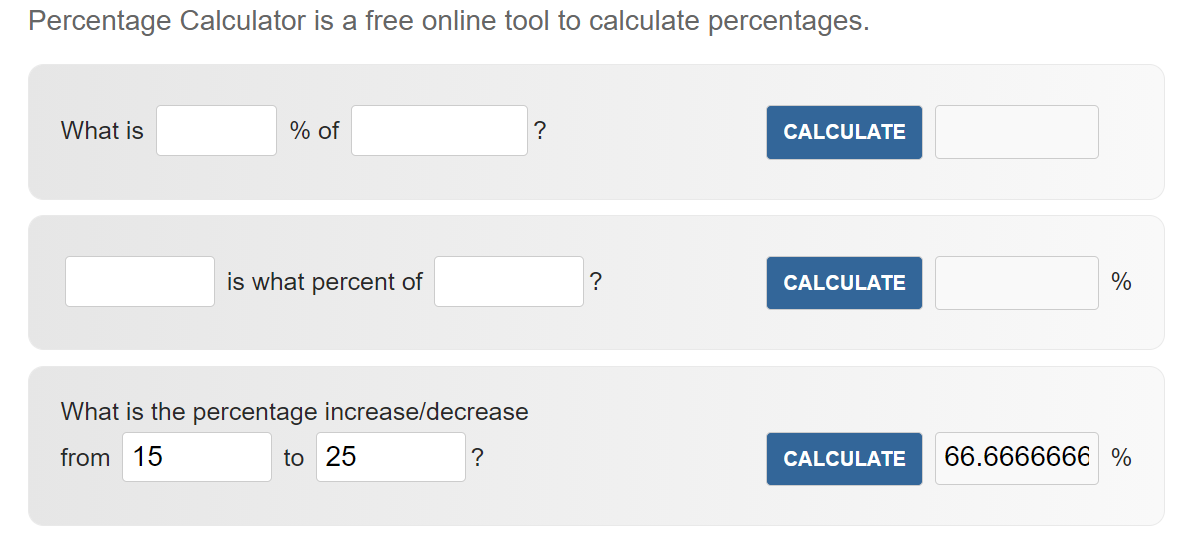
Use percentagecalculator.net to calculate the percentage increase in circulation. For this example, we use the third calculation tool on the page:
That’s a 133 percent increase in circulation.
Now, the next week, you decide to send another email promoting a different eBook. But this time, the eBook you choose to promote has 15 holds or copies before the email is sent. When you check 24 hours after sending the email, there are 10 new holds or checkouts. In total, there are now 25 holds or checkouts on the eBook.
The raw numbers for the second email are bigger (an increase of 4 holds/checkouts vs. an increase of 10 holds/checkouts). But the percentage increase for the second email is actually smaller, at 66%! That means email #1 was more effective.
What this metric will tell you: Percentage increase in circulation lets you compare your promotions more accurately. If you are short on time, this kind of comparison will help you determine which promotions will give you the most success with your limited resources.
3. Conversion rate.
This is the percentage of people who took an action after receiving your email.
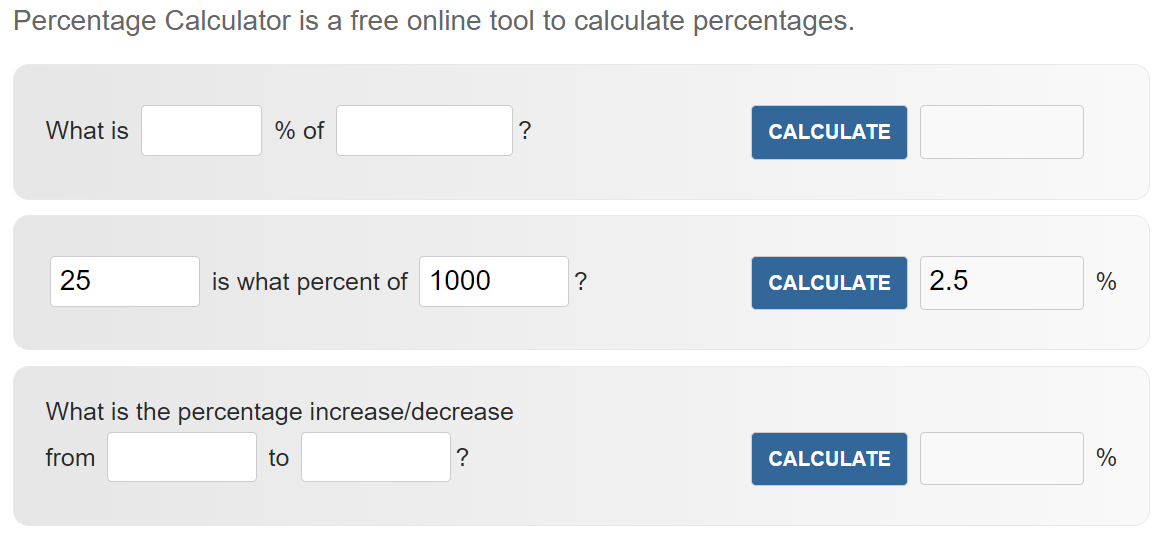
Let’s pretend that you’ve sent an email to 1000 people. The email promotes a streaming video on your library website that hasn’t had any views in the past couple of weeks.
When you check the streaming statistics for that video, you see that 25 people watched the video in the days immediately after you sent the email.
Using the second tool on our percentage calculator website, you can calculate the percentage of people who “converted” or took an action after your email.
What this metric will tell you: If you start tracking conversion rates on your emails, over time you’ll have a clear picture of the types of emails your audience responds to. You’ll be able to establish a good base percentage for your audience. This number will be different for every library.
If you are short on time, this metric will help you determine which promotions will give you the most success with your limited resources. When you find a certain type of email promotion works based on conversion rate, you should do it more often.
4. Amount of traffic driven to your website.
Track how much traffic is funneled to your public website by your emails. You can use Google Analytics to analyze how efforts on those platform translates into action by your cardholders. If you’ve never worked with Google Analytics, here is an easy guide to get you started.
What this metric will tell you: This is an important metric to share with administration, because it clearly demonstrates the value of the time and energy you have invested in email marketing.
Special bonus tip!
If you promote the same collection item or booklist on social media, email, and your website, put some space between those three promotions. A week is a good amount of time. That allows you to really pinpoint whether your increase in circulation is coming from email, your placement of the item on your website, or social media.
In fact, that’s a fun experiment to run. Can you drive higher circulation numbers by promoting your collection on your website, email, or social media?
You can even get more granular: which social media platform is best for collection promotion? Which page on your website is best for placing collection promotions? Which email list responds best? See, this is fun!
Subscribe to this blog and you’ll receive an email every time I post. To do that, click on the “Follow” button in the bottom left-hand corner of the page.
This is the 100th episode of the Library Marketing Show. It’s a celebration of YOU… the person who does marketing and promotions at your library.
I think you are amazing and awesome, and I’m sharing the five reasons why library marketing is the best job at the library.
And Kudos in this episode go to… you! Thank you for your comments, feedback, ideas, and support. The library marketing community is gracious and warm and wonderful, and I’m proud to be a part of it.
Do you have a suggestion for a topic for a future episode? Want to nominate someone for kudos? Let me know in the comments. And subscribe to this series to get a new video tip for libraries each week.
Thanks for watching!
Subscribe to this blog and you’ll receive an email every time I post. To do that, click on the “Follow” button in the bottom left-hand corner of the page.



 Super Library Marketing: Practical Tips and Ideas for Library Promotion