Search

Super Library Marketing: Practical Tips and Ideas for Library Promotion

Category

Library Marketing Strategy

Three Transformative Tips to Improve Focus and Re-Energize You When Working in the Library Doesn’t Feel Fun Anymore

Blue Ash - Sycamore Branch staff: Mrs. Sonia Bibbs (left) Library Assistant, Douglas Robinson, Corinne Hand (right) Children’s Librarian. Courtesy Public Library of Cincinnati and Hamilton County.

I don’t know about you, but I’m exhausted.

The pandemic is exhausting.

Worrying about the health and safety of family and coworkers is exhausting.

Natural disasters, a nation coming to terms with centuries of racial disparity, and a Presidential campaign here in the United States are exhausting.

And yet the library world continues to provide service during this crazy year. Your library probably still did a summer reading program. You’re providing virtual programs. You support students and teachers as they navigate distance learning. You’re promoting books and offering reading recommendations.

The world throws hurdles at you, and your library responds.

Is it any wonder if you feel like you need a nap and a hot bath nearly every day?

Library marketers are expected to be energetic and enthusiastic. More than any other library staffer, you’re expected to have exciting and innovative ideas to promote all these major developments and service changes as well as the smaller services that everyday cardholders rely on.

And you’re expected to produce results, driving people to watch virtual programs, use your curbside pickup service, and follow all the rules for social distancing.

It’s only natural to feel burned out by the speed at which everything happens at your library. And when you get stressed, work stops being fun. The quality of your work suffers.

But your library and your community depend on you. So here are some tips to help you manage your work and avoid burnout.

Prioritize, stay completely focused on your goals, and say “no” to EVERYTHING else.  Humans are all weirdly programmed to say yes, to take on more, to squeeze as much out of life as we possibly can.

Busyness feels wonderful. We’re doing something! Stuff is happening! Progress is being made!

But without space for creative thought, mistakes are going to happen. Your work won’t be what it could or should be. And that means your marketing will be less effective.

So, just like you weed your collection, you need to weed your promotions. This is especially true now, when your audience is suffering from content burnout because of the pandemic.

In my first year at a library, I said “yes” to everything. And nothing I did was any good.

When I realized I was doing too much, I set some ground rules for the goals I wanted my staff to focus on. I aligned these goals with my library’s strategic goals. They were:

  • A promotional tactic (like emails) had to produce a ten percent bump in circulation, program attendance, or usage. If it didn’t, we stopped doing it.
  • A service had to be easy for the cardholder to use to get promotion. Databases are a good example. If a cardholder was required to sign into the library website with their card to get to the database landing page, and then had to create a separate account tied to their email to use the database, we didn’t promote that database.
  • We only did full marketing campaigns for paid presenters. Free presentations got a poster or flyer and a social media mention.
  • All promotional requests had to tie directly to the library’s overall strategy. If the branch or library staffer requesting promotion couldn’t demonstrate how the program or service moved the library’s overall goals forward, we didn’t promote it.

I know that sounds harsh. And some of those rules might not work for a smaller library or a different set of library leaders. That’s okay. Set your boundaries to work within your own system.

Weeding your marketing content will allow you to do a better job and be more creative with the promotions you have left. Evaluate your promotions twice a year to keep your marketing lean and reduce the stress on yourself and your co-workers.

The word “no”, while it may be very small, is liberating. It’s good for you and for your marketing strategy.

Define your workflow and make it the law of your marketing landscape. A defined workflow sounds like the opposite of a creative endeavor. But it ensures that a quality product is created in a timely and efficient manner. It creates space for you to think. And that’s incredibly important for anyone working in a library, especially right now.

There are two options: outward-facing workflow and team workflow. Choose the one that works best for you and your library.

Outward facing workflow means that you approach each job given to you by a senior leader or another library department or partner in the same way.

  • All marketing requests go through one person on your team, who acts as project manager.
  • That person is responsible for looking at the request and determining if it fits into the library’s overall strategic goals.
  • That person sets clear expectations and goals for each project and communicates a plan of action based on realistic timelines and due dates.

This is not to say that your team has no say in the work you do. But the ultimate decision rests with the project manager.

Team workflow is more collaborative.

  • All marketing requests are considered by the team.
  • The team looks at each request and decides what tactics will work, and whether they have the time to complete those tactics.
  • The team sets the goals and determines who will communicate due dates and expectations.

It may take some time to get a smooth workflow in place. Be patient with yourself and with others. Keep reinforcing your expectations. Eventually, your coworkers and supervisors will understand and appreciate your workflow, especially when they start to see results.

Be generous with positive reinforcement. Positive reinforcement is one of the easiest and quickest ways to improve happiness and effectiveness on the job. It bolsters self-confidence and inspires people to do their best work.

If you see a co-worker doing something well, say so, even if the job is small. A kind word can go a long way to boosting morale and creating energy. Don’t just say, “Well done.” Write out a note or an email praising specific actions or portions of work.

And, if you have a staff, give your employees unexpected breaks. When I was a library manager, I took my staff to lunch off-site. We had field trips to libraries outside of our system. Sometimes we had “reading time” where I would read them one chapter a day from a book we all chose together.

It might sound silly, but these little activities are energizing. They create bonds between co-workers. Staff return to work after these little breaks with enthusiasm for their work. And enthusiastic people do a better job… on the job.

You might also want to read these

Four Important Project Management Lessons You’ll Need to Survive the Next Year of Library Work

COVID-19 is STRESSFUL for Library Workers. Here Are Tips to Help You Feel Better.

Latest Book Reviews

The Bell Jar by Sylvia Plath

All the Broken People by Leah Konen

Find more 60-second Book Reviews here.

Subscribe to this blog and you’ll receive an email every time I post. To do that, click on the “Follow” button in the bottom left-hand corner of the page. Connect with me on YouTube, Twitter, Instagram, and LinkedIn. 


Four Important Project Management Lessons You’ll Need to Survive the Next Year of Library Work

Photo Courtesy the Public Library of Cincinnati and Hamilton County

I’ll never forget the day.

It was hot and bright, the sun warm enough to leave no doubt that summer was here but not hot enough to melt the makeup clear off your face. I had been back from vacation for about a week. School was out. I had time to enjoy long walks and read.

My husband came to me with a look of curiosity on his face. He had just received an email from the school district superintendent. She asked if we would lead the school’s bond issue campaign.

“She knows we have no political experience, right?” I said.

“Yes,” replied my husband. “But she also knows we’re both in marketing and actively involved in the school. Anyway, I can’t do it. I’m too busy. Can you do it?”

“Okay,” I said. “How hard can it be?”

If you are laughing so hard right now that you are at risk of falling out of your chair, I wouldn’t blame you. I have always been naive. But never more so than in that moment.

I had absolutely no idea how to run a campaign. I only knew that, as long as we had lived in our school district (22 years), we had talked about the day when the district would finally build new schools. They are desperately needed. Our buildings are between 50 and 90 years old and lack the technological capabilities for today’s students.

And that’s how I landed myself the hardest, most stressful, most rewarding, most frustrating volunteer role I’ve ever had. My husband did end up helping me. And the bond issue did pass, with 70 percent of our community voting “yes”.

It’s been one year since I took on this monumental task. I learned a great deal about project management while I was campaign chair. And the other day, I was reflecting on those lessons as I considered the stress libraries are under to reopen or provide service to their communities amid a pandemic.

It’s very clear, in every conversation I have with library staff across the world, that we are in a workplace crisis. Staff are overworked. They don’t feel safe. They worry about budget cuts. They worry about furloughs. They worry about catching COVID-19. They can’t enjoy reading. They feel separated from their peers.

Administrators are suffering too. They are trying to make decisions with incomplete information. They can’t make anyone happy with their decisions. They’re trying to balance the needs of the community and staff. They’re under pressure from donors and lawmakers.

I want to help. So, I’m sharing the four big project management lessons I learned while doing the hardest job I’ve ever had.

You can only do what you can do.

If you lead a project for your library, like a COVID-19 related reopening, or the launch of a new service, this is the most important thing I want you to remember. You are only human. You cannot do all the things, no matter how energetic you are.

There are only so many hours in the day. Give yourself and your coworkers the grace to accept that, in most cases, it’s impossible to accomplish everything by the time your deadline approaches.

I had to repeat this to myself when it came to the canvassing portion of the bond campaign. We had a list of 3000 houses we wanted to canvass. But we were unable to recruit anywhere near the number of volunteers needed to get to that many houses.

I had to make hard choices. I had to prioritize my list and send my volunteers to the neighborhoods where I thought they could do the most good. I set aside a few hours every week to canvass myself. And I had to let the rest go.  It wasn’t easy. But I had to do that to preserve my own sanity.

You can drive yourself to madness thinking about all the things you can’t accomplish. Focus on what you can do. Make a list of tasks that you’ll need to complete to reach your goal. Then, prioritize them. If something doesn’t get finished, no one will die.

People have phases of enthusiasm. Use them to your advantage.

When you’re working with a team, you’ll notice that there will be some people who are willing to dive right in and tackle jobs as soon as the project is announced. Later, they may tire out. Others will pick up the mantle halfway through the project. And still others will jump on your project train as you near the finish line. You need all these people and their varying levels of energy to finish your project.

There was a woman who came to all the campaign meetings starting in July. She never volunteered. She sat quietly in the back, asked a few questions, but mostly seemed to be observing. While everyone else was signing up right away to head up subcommittees and tackle tasks, she did not offer her time. I was annoyed.

And then, in early September, she signed up to do a very easy task. She was clearly not enthusiastic about it. I did not harbor any grand notions that she would turn out to be a super volunteer.

Boy was I wrong. Once she completed her first task, she started volunteering to do the work no one else wanted to do. And before I knew it, she was an unstoppable volunteer. She cheered on other campaign volunteers. She advocated for the bond issue everywhere she went. I truly believe her work played a significant role in the bond issue’s passage.

Don’t begrudge people for joining your project even when it looks like they just waited until the last minute. People have different levels of talents, abilities, and comfort with team interaction. You’ll get more work done and reach your goals if you graciously accept help at all stages of your project.

The middle portion of any project is the hardest.

The weeks from the beginning of September to mid-October in the campaign were torture. I ran into so many hurdles. Time seemed to move so slowly. Nothing was going the way I had planned. The whole campaign team was getting tired.

This is totally normal. It happens with every big project I’ve done, from new email onboarding campaigns to putting together my library’s quarterly content marketing magazine. The transition from planning to completing project tasks is always a slog. Expect that it will happen and devise strategies ahead of time for how you’ll deal with it. Then, keep your eye on the prize. The hard part won’t last forever.

Set boundaries for yourself.

I had one big, unbreakable rule during the campaign. I did not, under any circumstances, look at my email or phone after 9 p.m. This helped ensure that I could take one hour at the end of the night to unwind. It minimized the amount of sleep I lost.

You will have to decide what boundaries to set for yourself, but you must set some. You cannot be open and available for work 24 hours a day. It’s not healthy for you or your organization.

Set your ground rules and stick to them. Encourage your fellow team members to set boundaries as well and lead by example in respecting them. You’ll be a more productive library employee.

You Might Also Find These Articles Helpful

COVID-19 is STRESSFUL for Library Workers. Here Are Tips to Help You Feel Better.

Self-Care for Library Social Media Staff in the Midst of a Crisis like #COVID-19

Latest Book Reviews

White Fragility: Why It’s So Hard for White People to Talk About Racism by Robin DiAngelo.

The Other Windsor Girl: A Novel of Princess Margaret, Royal Rebel by Georgie Blalock

Find more 60-second Book Reviews here.

Subscribe to this blog and you’ll receive an email every time I post. To do that, click on the “Follow” button in the bottom left-hand corner of the page. Connect with me on YouTube, Twitter, Instagram, and LinkedIn. 

The One Social Media Shortcut That Can Tank Engagement and Cost Your Library in a Pandemic–or Anytime!

I know work is hard right now. But there is one time-saving social media marketing technique that libraries should avoid at all costs.

Libraries should avoid cross-posting on social media. Cross-posting is when you post the same text and graphics in a message across multiple social media networks.

I get why many libraries cross-post. Cross-posting is easy. It saves time and energy. And library staff have a lot of work to do. Even when there is no pandemic to deal with, librarians are often asked to take care of marketing along with their regular duties. But the detrimental effects of cross-posting outweigh any time you might save doing it.

Why cross-posting is a bad idea

Cross-posting is a bad idea because social media platforms are different. They have different standards for post length, image size, hashtags, links, and captions.

For example, LinkedIn is more copy-heavy and formal. Instagram is more visual and informal. Twitter is more suited to short quotes, threads, and GIFs. Pinterest is graphic-heavy. One post with the same text and photo can’t be all those things.

An image you post on one platform may not be sized for another platform. It may end up stretched, pixelated, or squished. This will hurt your ranking and engagement.

Speaking of engagement, the metrics are different for each platform. On Facebook, you’re aiming for likes, comments, and shares. On Twitter, you want retweets and replies. On Pinterest, you want comments and re-pins. One post can’t generate all those things.

Your followers are also different depending on the platform. Twitter users are overwhelming between the ages of 18 and 44. LinkedIn users are more likely to have a college degree than users of other platforms. 70 percent of Pinterest users are women. Every platform has a unique demographic with different needs.

When you cross-post, you risk looking inauthentic and spammy. Your posts will feel like they’re auto generated and robotic. It may look like you don’t care about what you post on your account or worse, that you don’t know you to use social media.

Your audience will respond negatively by not responding at all. That hurts your standing in the algorithm. It can have a negative effect on your reach.

What to do instead

Cross-promotion is better! Take your message and adjust it slightly to suit each social media platform. It’s much easier than it sounds.

First, you need a base message. What is the basic info you wish to convey? What is the action you want your followers to take? Answer these two questions in a two or three sentence nugget. This is your base message.

Then take that base message and adjust it for each of the social media platforms you wish to use. A tweak of a word or phrase here and there, an adjustment of an image, and a unique call to action are all you need to be authentic.

Westerville Public Library in Westerville, Ohio did a great job of tweaking this promotion for Twitter…
…and Facebook.
Here’s another good example of cross-promotion from Barlett Public Library District in Illinois. This is their Twitter post…
..and the same message tweaked for Facebook.

Decide how much time your library is willing to invest on social media. Smaller libraries will want to concentrate on the platform or platforms that will give their library the most benefit. If you are pressed for time, pick the platforms that perform best for you or the platforms where the audience you wish to target is using. If that means you only post on one social media network, it’s okay. Quality is better than quantity.

Use a scheduling tool. There are plenty of free scheduling tools that will help you to share your social media messages without cross-posting. I have used the free version of TweetDeck for my personal social media for years. You can schedule lots of posts in advance and the metrics are great. I recommend it for libraries without the budget for scheduling software.

At my former library job, we had a paid account with Sprout Social. It was easy to use and had more cross promotion capabilities than TweetDeck. I recommend it if you have money for a paid scheduling platform.

More library social media advice

How #COVID-19 is Impacting Social Media Marketing and What That Means for Libraries

Self-Care for Library Social Media Staff in the Midst of a Crisis like #COVID-19

What Metrics Demonstrate Your Library’s Social Media Marketing is Working?

How to Reverse Engineer Your Library Marketing Social Media Audiences!

Subscribe to this blog and you’ll receive an email every time I post. To do that, click on the “Follow” button in the bottom left-hand corner of the page. Connect with me on YouTube, Twitter, Instagram, and LinkedIn.  

Videos Can Reach Library Users at Home Now and in the Future. Here’s Your Starter Kit.

In a time of social isolation, video is a great way to communicate with patrons. A video can help you provide service to the community without having an open physical building.

If you are nervous about using video for marketing, I’ve got a secret for you. Video, whether live or recorded and edited, is easy and relatively inexpensive. During the COVID-19 crisis, it’s now necessary for you to produce videos. And, when things return to normal (and they will) you will have the skills to extend the reach of your library to home-bound customers through video.

Using video for library outreach

This list will help you brainstorm specific videos to fill your library marketing content editorial calendar.

Demos: You can show library users how to navigate your digital resources. You can show them how to use specific platforms, like Overdrive, LearningExpress Library, or Lynda.com. Demonstrate how to search a database, like NoveList or Consumer Reports. Make a video to show how patrons can talk to a librarian through chat or email while buildings are closed.

Programs: Many libraries are moving their planned program presents online right now. And this is a great video opportunity. You can record a teaser video, then the actual event, and a highlight reel for further promotion of more presenters. You can also move your story times to video format.

If you do these videos live on Facebook, Instagram, or YouTube, your viewers can still ask questions by commenting. In fact, live videos are a great option for library reach.  Viewers spend up to eight times longer with live video than with video-on-demand.

Book reviews: Turn the camera on yourself or a fellow book lover and record a review! I have started doing this on my YouTube channel. It took me about five minutes, once I figured out what I was going to say. Writing a Goodreads review of the book first helped me to organize my thoughts.

What equipment do you need?

In the past, producing video was expensive and difficult. But that is no longer the case. If you have a smartphone, you’re set. You can also record video on most DSLR cameras.

If you have an Adobe Creative Suite license already, you can use that to edit. You can also use iMovie or a host of other online editing software pieces, many of which are free. Here’s a great list. I edit the Library Marketing Show videos on my iPhone or using YouTube studio. And that’s really all you need!

Before you begin

Before you record anything, it’s important to identify who your target audience will be, and what the goal of the video will be. What do you want your audience to do after watching the video? This will help you plan the script, the call to action, the setting, and the goals by which you’ll measure the video’s success.

You should also decide where the video will live… on Facebook, on Instagram’s IGTV, on your library’s webpage, on YouTube, etc. Decide on one target location for your video.

Writing a script or outline

Most library videos will need a script or, at the very least, an outline. If you skip this step, you’ll may spend more time than you want editing. You may even discover you have to re-record certain sections. Your video might end up being longer than necessary. It might not be as engaging as you hope.

When I do the Library Marketing Show, I write a script. Sometimes it’s just an outline with key points. And sometimes it’s a word-for-word account of what I want to say. The script or outline helps me to formulate my thoughts. It also helps me time the video so I’m sure I’m not babbling on for longer than I need to be. But I don’t memorize my script. You know those cards with key points that I hold up during the video? Those are like slides in a conference presentation–they are visual cues to me so I can remember what I need to say.

As with any kind of library marketing, the language of your video should be relaxed, clear, and conversational. Avoid complex sentences and industry jargon or buzzwords. Speak to your video audience as you would to a customer at the front desk.

Also remember that the written word will sound different when you read it out loud. I rediscover this every time I do a webinar or a video! Be sure to read your script out loud before you record.

If your video features an outside presenter, write an introduction, as you would if you were doing the program in person. Be sure to tell your viewers how they can contact you with questions or comments during the video, if it’s live, or later if they are watching on-demand.

Time to record

Before you start recording, be sure your device has enough storage. If you’re using your smartphone, turn on the “Do Not Disturb” feature to avoid distracting notifications. When I shoot my videos, I also do a few test recordings to make sure the lighting, the background, and the sound are the best they can be.

Record horizontally. This gives your video the best viewing experience on most platforms. If you are recording yourself speaking, be sure your camera is on a level surface and won’t fall over! And don’t forget to focus on the object that’s most important, like your face.

If you are shooting a video of yourself, be sure to look at your phone’s camera… not at yourself on the screen. This may feel like the weirdest thing ever. But it looks more normal because it mimics looking someone in the eye.

It may take a couple of takes to get a video right. Don’t despair… and don’t erase any bad takes until you publish your finished video officially. You never know what footage you may need in editing.

If your video needs music

The right music can set the mood and tone for your video. Do you need background music or something that will manipulate the mood of your viewers? Will someone be speaking in the video? What kind of pace should your music have–fast, steady, ethereal, dramatic? These are all factors to consider when choosing your music.

Most music isn’t free. If you use an artist’s music without permission or proper licensing, you risk legal action against your library and your video may be removed from social media channels. Look for royalty free tunes to fill your music needs.

Royalty free songs aren’t free to use; they’re quality songs available for a single flat fee. This means you don’t have to worry about paying additional licensing fees or royalties in the future. YouTube, Shutterstock, and Epidemic Sound are all great sites to find royalty free music.

Posting your video

You’ve got a couple of good options for housing your finished video. YouTube is the largest video hosting platform It’s free to upload your videos to YouTube and optimize them for search. I created this guide for optimizing your videos on YouTube.

Vimeo is another choice. There is a free option, with limited storage space. During the COVID-19 crisis, videos on Vimeo might be higher quality because YouTube has reduced its streaming quality to deal with bandwidth issues.

You can also post videos on Facebook, IGTV (this is Instagram’s version of YouTube), and of course, your library’s own website.

Pick one spot to house the full-length video. Then use your other marketing channels to drive traffic to your video on that one, main location.

It doesn’t have to be perfect

We all have this idea that the video must be narrated by the perfect person with the perfect hair in front of the perfect background. That’s old school TV thinking and it’s no longer necessary. In fact, the best videos are the ones that show your library’s authentic self. Don’t worry about getting every little hair to lie in place, having the right clothes, or always saying the right thing. You’re talking to real people, even if they are on the other end of a video screen. And they’ll forgive you–and love you–if you aren’t robotic. You will find fans will love you just for being you!

More Library Marketing Help During the COVID-19 Crisis

Recording of live session on promoting your online resources through social media.

Self-Care for Library Social Media Staff in the Midst of a Crisis like #COVID-19

Library Marketing During a Pandemic: Tips for Working from Home or the Office and Dealing with the Stress of a Crisis

How #COVID-19 is Impacting Social Media Marketing and What That Means for Libraries

Subscribe to this blog and you’ll receive an email every time I post. To do that, click on the “Follow” button in the bottom left-hand corner of the page. Connect with me on YouTube, Twitter, Instagram, and LinkedIn.  


Seven Big Revelations I Had About Library Collection Marketing and How You Can Avoid Making the Same Mistakes

Photo Courtesy Public Library of Cincinnati and Hamilton County

Four weeks ago, I started my new job.

In my previous role at a major metropolitan system serving a population of nearly a million people, I thought I knew people who were wild about books. But these folks at my new company love books on a whole new level.

I have learned so much in my first month. And I’ve come to realize that, as much as I loved collection marketing, I was making mistakes. In fact, I did a lot of things wrong.🤷

Because promoting the collection should be the core of any library’s marketing efforts, I want to make sure I pass on what I’ve learned.

Seven Mistakes to Avoid When Promoting Books

What I did wrong: I recommended books.
What you should do instead: Suggest books.

It sounds like semantics, but there is a real difference between recommending and suggesting books to potential readers.

Readers advisory consultant Becky Spratford of RA for All points out that library anxiety is a real thing. People come into your building or log onto your website to find a book they love. But they have a certain amount of anxiety. They feel like they absolutely must read a book that is recommended to them by a library staff worker. If they don’t finish it, they worry that we will judge them.

So, let your library users know that your book recommendations are just suggestions. No one will judge them for not reading the titles you suggest. And let your customers know it’s okay to return books unread!

What I did wrong: I used plot to promote books.
What you should do instead: Use story elements to promote books.

Most readers advisory experts rely on something called the Vocabulary of Story Appeals to make books suggestions. This is a way of describing the book without talking about the plot.

When picking their next book, readers don’t look for a certain plot line. They are looking for factors that appeal to them, including pacing, characters, tone, style, and the story line. Story line, I have learned, is different from plot in that it focuses on the WAY the story is told, as opposed to what happens in the story. Mind blown.

Library marketers can learn about story elements by requesting a free copy of The Secret Language of Books. I got my copy at the 2019 Library Marketing and Communications Conference. It expanded my vocabulary and gave me new words to use when marketing my library’s collection.

It’s so much more interesting to describe a book in terms of story elements. It intrigues readers and may lead them to place holds on books they would otherwise ignore.

What I did wrong: Promoting only new books.
What you should do instead: Promote new books AND offer a readalike available right now on the shelf to help soften the hold wait.

At my library job, I stopped promoting older books because the data told me that new books were the ones that got the most circulation from my targeted email marketing.

My change in philosophy doesn’t mean that the data was wrong. But there was a piece I was missing.

Sometimes, the most popular books are also the ones with the longest hold list. Most library lovers are, in my experience, okay with waiting awhile for a book they really want to read.

In the meantime, library marketers can do a better job of suggesting a currently available readalikes to our readers. This helps to create satisfaction for our readers. It also can expand their worldview. It keeps them engaged with the library while they wait for the new title. And, it helps our circulation numbers!

What I did wrong: Thinking I really didn’t have the skills to suggest books.
What you should do instead: Everyone in your library can suggest books. And I mean everyone!

I had a real hang-up with suggesting books to others. I can’t tell you how many times I said the words, “I’m not a real librarian but…”

But what I’ve come to learn is that I am a book expert because I love reading! I don’t have a degree, but I do read… a lot.

I also read about books a lot. I listen to podcasts about books. I talk to other book lovers. I have resources at my disposal that I can use like NoveList and Goodreads.

You don’t have to have a degree to be passionate about books or connect with another reader.

What I did wrong: Limiting the book genres I suggest to what I have know or read.
What you should do instead: Use resources to make recommendations from genres you’re not familiar with.

Consciously push yourself to suggest books outside your own comfort zone. It’s better for you, for your friends, your fellow readers, and for the world in general, when we broaden our horizons to suggest books outside our comfort zone. We should strive for equity, diversity, and inclusion in all areas of our lives—and that includes our reading materials.

What I did wrong: Putting more weight on New York Times bestsllers list for book suggestions.
What you should do instead: Promote books on the USA Today best seller list and on Amazon.

By using more than just one list of bestsellers, I could have gotten a better idea about what was truly a best seller. Lists from USA Today and Amazon include books from every age, genre, and publishing house.

Don’t discount sales of a book. If a book is making money, it’s popular. And your community is full of people who can’t afford to buy those books. But that doesn’t mean that people don’t want to read those books. We need to let them know they have access.

What I did wrong: Not asking my readers often enough what kind of books they like.
What you should do instead: Ask your readers about the books they love!

Survey your patrons. And do it regularly, because their tastes change. Your population changes. You don’t even have to do this using a formal survey. Just ask on social media. People love to talk about what they’re reading or what they want to read!

Subscribe to this blog and you’ll receive an email every time I post. To do that, click on the “Follow” button in the bottom left-hand corner of the page. Connect with me on YouTube, Twitter, Instagram, and LinkedIn. For more help with your library marketing, email me at ahursh@ebsco.com.

Libraries are Winning the Relevancy War! Why Now is the Perfect Time to Banish Your Fear and Promote Your Books

I have a confession to make.

For more than a year now, I’ve been amid an internal struggle that caused me some anguish. It started when I realized that I was hearing the same phrase from many administrators and staff in public libraries, both here in the U.S. and abroad.

Here’s what I kept hearing, over and over: In order to stay relevant, libraries must change completely.

The fear that the public perceives libraries as old-fashioned and unnecessary is not new. But it seemed to reach a kind of fever pitch last year. Everyone was writing about it. Everyone was talking about. There were whole conference sessions and webinars dedicated to library relevancy.

I thought maybe I was imagining it at first. So, I did what any normal person does when they’re looking for validation. I did a Google search.

I clicked on the first result, “library relevance.” There are 314 million results.

I understand why libraries are worried about relevancy. It’s the media narrative. (For a great perspective on that, read this fabulous opinion piece from Public Libraries Online). It’s also the argument made by those who want to cut funding and services for libraries.

But here’s the thing. The public at large doesn’t think libraries are irrelevant. In fact, they think quite the opposite.

I’m sure you saw the new Gallup poll released this past Friday (Jan. 24, 2020) that shows “Visiting the library remains the most common cultural activity Americans engage in, by far. The average 10.5 trips to the library U.S. adults report taking in 2019 exceeds their participation in eight other common leisure activities.”  

Public libraries have bought into the notion that we have a brand perception problem. But we don’t. We’re doing a great job. And people see it.

What we have is a fear problem. Public libraries are afraid to market the fact that they have books.

Why? Because they’re terrified that talking about our collection will reinforce a notion that libraries are a dusty, old, unsophisticated repository of classics. They may even believe that marketing the collection will distract people from the other great services that the library offers.

I vehemently disagree.

Libraries should market their collection. In fact, they should do a lot of collection marketing. Instead of limiting the conversation to non-collection services, libraries should expand the conversation to show the connection between the books, literacy, and all the other amazing work they do.

Your collection makes it possible for you to offer social services. Your collection makes it possible for you to create programming around workforce development. Your collection makes it possible for your library to offer support to educational institutions in your community. Your collection makes it possible for your library to be a thriving, open, welcoming, and inclusive public space.  

Literacy is tied, undeniably and inextricably, with all the things libraries do outside the realm of books.

Data tells us that most people who sign up for a library card do so to get free and open access to the collection. The collection is the gateway to get community members in the door of your library, where they’ll experience the other services you provide.

If you were to look at the Google Analytics data for your website, or the usage data provided by your library’s app developer, I’ll bet my bottom dollar that the number one activity for online use of your library is collection-based. That’s why your library spends most of its non-facility related, non-staff related budget on collections.

Studies of library usage by the Pew Research Institute shows that 66 percent of library cardholders use their card to check out items including books, magazines, CDs, and more. Only 17 percent of library cardholders say they use their card to attend programs, classes, or lectures.

People are still reading books. People believe libraries have transformed themselves into tech hubs. People see that libraries offer digital services. People hear about the social service help offered by libraries. Libraries are winning the relevancy war (good job, you!). The community knows and understands that we are more than a place for books. It’s why your library gets regular requests from organizations looking for a partner in important outreach work and advocacy.

The message is out there that libraries are more than books. But make no mistake, most of the folks who walk through your doors or interact with your library online, are there for the collection.

Before I was a library marketer, I worked as a television news producer. That means I put together each night’s newscast, decided which stories were told, in what order, and how they were told.

Every year, our news director would bring in a consulting firm to help us improve our shows and increase our viewership. I was proud of my work as a journalist. But when I was presented with the feedback from focus groups, it was clear that most viewers were watching my show for the weather. I spent a lot of time writing insightful, informed, well-sourced investigative pieces. But my viewers only wanted to know was whether it would rain the next day.

In television news, weather is king. In libraries, the collection is king. That’s why your library spends the majority of it’s non-staff and non-facility money on the collection.

Now, please understand me. I’m not saying you stop promoting your non-collection related activities. Far from it. Library programs and outreach nourish the soul of our community and offer cultural and educational opportunities for those who might not otherwise have access to them. And they must be given attention through marketing.

But don’t stop talking about your collection. Don’t hide your collection below the fold on your website. Mention your collection when you talk with the media. Write about your collection on your blog. Send emails to your cardholders with reading suggestions.

If we want to compete with Amazon, Audible, Netflix, Hulu, and other paid content providers, we must promote our main asset. If you want to attract new cardholders and keep the ones we have happy and using their library, market the collection. If you want to have a part in making the world more informed, more educated, and more empathetic, market the collection. Share this infographic to help spread the word!

Check the Upcoming Events page for a list of webinars and conferences where I’ll be next. Let’s connect! Plus, subscribe to this blog and you’ll receive an email every time I post. To do that, click on the “Follow” button in the bottom left-hand corner of the page. Connect with me on YouTube, Twitter, Instagram, and LinkedIn. 

The Top Eight Free Websites to Spy on Competitors and Get Ahead in the Library Marketing Game!

Eight Free Websites to Use to Spy on Your Library Marketing Competition

Library marketers are asked to make a lot of miracles happen. We are asked to grow circulation, drive attendance at programs, and increase the visibility of our libraries.

To reach your goals for 2020, your library marketing needs to stay ahead of your competitors. Who are you competing with? You’re fighting with independent bookstores, Amazon, Audible.com, video streaming services like Netflix, museums or other local attractions, genealogy websites like Ancestry.com, language apps like Duolingo, retail stores, and co-working spaces for your cardholders’ time and attention.

But don’t be discouraged! You can spy on your competitors and identify their areas of weakness. Then, you can use those weaknesses as an opportunity to promote your library. And you don’t have to pay to find out how to target your competitors.

I found eight websites that will help you gather intelligence on your competition’s website and social media presence. Most of these sites require you to sign up with an email and password for free access but their information is extensive. They also have paid plans (most are very affordable) that give you access to more data. I use all of them.

Here are my top picks to help you spy on your competitors in 2020!

SEMrush: This is my favorite tool. I check it frequently. Their analytics are incredibly robust. You can compare your own website and your competitors’ website in several areas, including keywords, traffic, where your page ranks on Google, what websites are sending traffic to your library’s website, and so much more. The colorful charts will tell you how well your website is positioned on the internet in comparison with your competitors. And it will even show you the cost, in dollars, that your library is losing in traffic to other websites. That’s a great statistic to have if you’re trying to advocate for additional resources for your library’s online presence.

SpyFu:  Use this tool to check how high your competitors rank in SEO keyword search. Get insight on keywords that lead people to your competitors’ site, including any paid keywords they may be using. You can plot the reach of any website on a timeline, giving you an idea of when the site is seeing a spike in traffic. The graphic below shows you what that looks like for this website!

My favorite feature on SpyFu is the keyword analysis. I found out that people searching for “free downloads,” “free download music,” and “free faxing” are most likely to end up at my library’s website. Now I know that I need to make sure the word “free” appears frequently on every page of my library’s website to drive more traffic!

Social Searcher: This real-time social media search engine allows you to quickly pull all recent mentions of a competitor from the major social media platforms and the internet together into one dashboard. You can search for keywords and hashtags to see recently published posts. You can also set up email alerts to keep track of what people are saying about your library, a competitor, or a service, like Audible or DuoLingo.

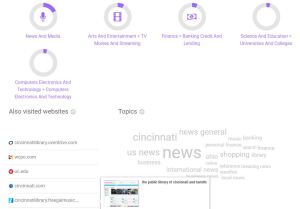
SimilarWeb: This tool reminds me of Google Analytics, but with prettier graphics. You can see all kinds of useful information about your competitors including where their customers live, how much of their website traffic comes from social media, what keywords people are using to find their website and more. You can also see the top five “interests” of visitors to your competitors’ websites. And of course, you can compare that with your library’s website.

Moz: The site is focused on links and can tell you how other websites are linking to your competitors’ website, and how your competitor is using anchor text to drive traffic. You can also download their reports for free as a CSV file. You can also find out your website’s Spam Score!

Alexa:  This site will show you how your bounce rate and traffic sources compare with your competitors, as well as how much of your audience overlaps with that of your competition. Best of all, Alexa will identify keywords to drive more traffic to your website, based on what people in your area are searching for on Google and Amazon (Alexa is owned by Amazon).

TalkWalker: An alternative to Google Alerts, it lets you search blogs, websites, and news for posts about your competitors. You can have the alerts delivered to your inbox once a day or once a week.

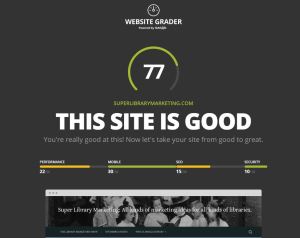
MarketGrader: This free tool from Hubspot grades your website or your competitors on factors like how fast the pages load, keyword ranking, and security.

I did an analysis of this website and found that 30 percent of my traffic comes from mobile devices. That’s incredibly important information because that means that I must make sure everything I do on this website is responsive. This tool also gave me tips on how to increase my SEO ranking and security. All of those tips would be invaluable for my library’s website as well.

Check the Upcoming Events page for a list of webinars and conferences where I’ll be next. Let’s connect! Plus, subscribe to this blog and you’ll receive an email every time I post. To do that, click on the “Follow” button in the bottom left-hand corner of the page. Connect with me on YouTube, Twitter, Instagram, and LinkedIn.   

How to Create a Library Marketing Strategy from Scratch! The Library Marketing Show: Episode 20

Watch now!

Your library has no strategic marketing plan in place! What do you do? Emily from Berks County Public Library System in Pennsylvania asked: “I’m the Community Relations Coordinator for the Berks County Public Library System. Our headquarters provides support services to the 19 member libraries in our county. As someone who stepped into this role two years ago where there was no strategic marketing plan in place, could you give some suggestions on best practices when creating a plan from scratch?”

Plus KUDOS go out to the Evanston Public Library in Illinois for their free book distribution centers. Find out why this is a great way to reach non-cardholders and get them introduced to the your library! Read all about their efforts here.

Stay in Touch

Check the Upcoming Events page to see where I’ll be soon. Let’s connect! I’m doing a webinar soon, so be sure to sign up… it’s free!

Have an idea for the next Library Marketing Live Show? Submit it now.

Subscribe to this blog and you’ll receive an email every time I post. To do that, click on “Follow” button in the bottom left-hand corner of the page. Connect with me on Twitter, Instagram, and LinkedIn.  

You Can Fix It! If Your Library Marketing Is Failing, Here are the Top Eight Solutions

Do you remember when you learned to read?

I was in the first grade. The school was holding a contest to find a student to deliver a public service announcement about education on a local radio station. I was determined to win.

My mother, who was a first-grade teacher, was incredulous when I shared my plan for my broadcast debut. How could a kid who hadn’t learned to read yet get good enough to get that radio spot? She thought I was crazy.

And maybe I was. But I proved my mother wrong through sheer will and determination, and with a little help from the “Dick and Jane” series. By the end of first grade, I was reading well enough to tackle Laura Ingalls Wilder’s Little House in the Big Woods. And I was on the radio.

Twenty years later, I was working weekends as a newscast producer at a television station. That meant every Saturday and Sunday, I had to 8 hours to produce two shows… the 6 p.m. news and the 11 p.m. news. On a good night, it was a fast-paced and stressful proposition.

One day, the television station suffered a huge power failure. The station had backup generators that were supposed to kick on to keep us on the air. But a surge had fried the wiring and we were dead… really most sincerely dead. We had no way to get on the air. And the newscast had to get on the air.

Failure was not an option. We needed to get the show on the air because thousands of homes were also without power and those people looked to us for information. We also needed to get on the air because when the ads that are supposed to be a part of the newscast don’t air, the station loses money.

With airtime fast approaching, we came up with a plan. We would broadcast live from the parking lot using our live truck. It was crude but it worked. We felt like heroes. Journalism won the day and after that, I felt like there was no problem that I could not solve.

We all face obstacles during our work every day. Some are big, some are small. Your attitude plays a huge role in determining whether you overcome them, particularly for those of us working in the library marketing space. Many of our problems are unique to this industry. But trust me when I tell you that you are smart and you can figure anything out!

To prove it, here are the top five problems we face in Library Marketing along with eight solutions… because there are always more solutions than problems!

Problem: we simply don’t have enough time to do all the stuff we’re asked to do. The library year is kind of like the “lazy river” at my local YMCA… a constant swirling movement of events that keeps pushing us forward. It takes some force and a change of direction to break free. When you’re under pressure to promote each big event, it can leave you feeling like you never have enough time for your collection or services. You might feel like you don’t even have enough time to think or be creative.

Solution: a strategy gives you freedom. It not only helps you drive your marketing for the year in a measurable way, it will also provide a concrete reason the next time you have to say “no.”

Say “no” to promotions that don’t serve to drive your library’s strategic mission. Say “no” to promoting every exhibit, program, and author visit at your branches. Empower your branches to do some of their own promotion by providing them with simple guidelines for doing their own community marketing and set them free so you can focus on the big picture… your library as a whole.

Problem: we don’t have enough money. Tiny budgets really separate us most from the for-profit marketers. I do see more libraries spending big budgets but they’re doing it in smart and strategic ways, for re-branding and full production media ad buys, slick content marketing magazines, and direct mail to non-cardholders.

If you don’t have a big media budget, you can spend a little money to boost the effectiveness of your social media posts. Honestly, you can’t get much social media reach without a little spending.

Solution: social media advertising is cheaper than traditional ad buys. Your administrators might not realize how super effective targeted ads can be. You can easily prove that you can make a good return on their investment.

Solution: partnership opportunities to promote more than the big programs. At my library, we created media sponsorship guidelines which list the action items we’d like our potential sponsors to fulfill and what benefits we can offer them in return. Why not pitch a media sponsorship to promote your digital collection or your fantastic database resources?

Solution: find super library fans or influencers in your marketplace and invite them to write about your organization. At my library, when we opened our new MakerSpace and got lots of publicity outside the traditional media (this article is a good example).

Problem: we don’t have enough staff. If your handling a one-person marketing department, trying to take on marketing can be a scary proposition. You probably feel like you’re already just hanging on by the skin of your teeth.

Solution: use the talents of non-marketing co-workers. There are likely a number of librarians who have an interest and a proficiency for social media, writing, video, and design. Ask around and recruit those staff members to help you create content. Ask for permission to recruit interns. You’ll have someone to handle the grunt work and you’ll have the joy that comes with mentoring and encouraging the career of young marketers.

Problem: we don’t know enough about our cardholders to target them effectively with messages they will love. I suffer from this and many of my library marketing friends do too! It’s not a hard one to solve.

Solution: create a new cardholder survey to gauge the interests of people just entering your library system.

Solution: a yearly satisfaction survey for all cardholders is also extremely helpful, particularly when you can take the results and split them into your different persona groups. From there, you can map your customer’s journey. When they get a card, how long does it take them to use it? Are they checking out books or using your digital collection or your computers, or do they simply let it languish? Do you have some customers who got a card years ago, used it a specific way, and then stopped altogether? Do you have some customers who are making the transition from print items to digital materials? Do you have some customers who are only interested in one particular kind of item–DVDs, audio books, or computers?

Break your customers into groups based on what they do with the card and start creating pieces of content that target those groups. Maybe you’ll want to focus your efforts at first on one group in particular. At my library, we’re targeting a persona we call “Occasionals” which are people who use their cards once every six months. We focus on moving people from that cluster into a more active user persona, by targeting them with messages about the convenience of our digital collection.

Problem: we are resistant to change. This problem is the biggest, in my opinion. We are too set in our ways. How many times have you heard someone in your library say, “But that’s the way we’ve always done it!” It’s the phrase I dread most.

It takes an enormous amount of effort and energy to change the minds of our fellow library staff members and our administration. It seems like it would just be easier to stay the course.

Do. Not. Give. In. Marketers have a reputation for being talkative, a little eager, a bit bold, and maybe a tad whacky, and these are all GOOD traits! We have to remember our main objective–to get customers to move through the cardholder journey and engage with the library. Without that engagement, the people who argue that libraries are obsolete will win! We can’t have that.

Solution: with patience and persistence, you can thoughtfully steer your library into the future. It works best when you start small. Think of it like a staircase. On the bottom step, you make a small argument and you try a new thing. You see results. You report the results and chances are, you’ll get to climb to the next step.

The more you do this, the faster you’ll get up the stairs–at some point, you might even be allowed to take the stairs two at a time. Keep the end goal in mind but set smaller goals that help you to get there.

Subscribe to this blog and you’ll receive an email every time I post. To do that, click on “Follow” button in the bottom left-hand corner of the page. Connect with me on YouTube, Twitter, Instagram, and LinkedIn.

A WordPress.com Website.

Up ↑