Search

Super Library Marketing: Practical Tips and Ideas for Library Promotion

Tag

collection marketing

Your Library CAN Compete With Amazon for Readers! Here Are 4 Ideas To Beat the Big Box Giant at the Book Game๐Ÿ†

Watch the Episode Now

The Library Marketingโ€‹โ€‹โ€‹โ€‹โ€‹โ€‹โ€‹โ€‹ Show, Episode 154: In this episode, I will share how your library CAN compete with Amazon for readers!

A study by two researchers from Portland, Oregon shows us why readers prefer Amazon.

But libraries can win those readers back with some simple changes. I’ll show you what the researchers said libraries need to do to compete with Amazon.

Kudos in this episode go to “the lone librarian” of Castle Rock Library.

Do you have a suggestion for a topic for a future episode? Want to nominate someone for kudos? Let me know in the comments. And subscribe to this series to get a new weekly video tip for libraries.

Thanks for watching!


Subscribe to this blog and youโ€™ll receive an email every time I post. To do that, enter your email address and click on the โ€œFollowโ€ button in the lower left-hand corner of the page.

You Don’t Have to Choose Between Print and Digital Books: How to Promote Your Collection to Patrons Who Use BOTH Formats

Image courtesy Cincinnati and Hamilton County Public Library

Dear readers: I have a poll for you to take this week. Thanks in advance!

How many times have you been asked the question: which do you prefer most, print or digital books?

For me, the answer isโ€ฆ yes. Both.

I am not unusual. The Pew Research Center questions Americans about their reading habits and preferred book format every year. The survey for 2021 shows there are plenty of readers just like me who read both print and digital formats. Here are the topline numbers:

  • 75 percent of adults in the United States read a book in some format over the last year.
  • 33 percent say they read both print books and eBooks.
  • Nine percent say they only read eBooks or audiobooks.

And, although libraries don’t sell titles, book sales provide more evidence of our readers’ format preference.

  • Sales of print books increased in 2021 by about 9 percent.
  • eBook sales decreased, but that was to be expected after skyrocketing during the 2020 pandemic.
  • Audiobook sales continue to rise, up six percent in 2021 over the previous year.

The bottom line is that readers love to read. When theyโ€™re searching for a title, many readers want to get their hands on it in whatever format it’s available, as quickly as they can.

Who are these cross-format readers?

One email company I know has a name for people who read both digital and print books. They call them “transitionals”. But I think thatโ€™s not an entirely accurate way to describe cross-format readers.

First, most people are not transitioning from one format to the next. They are using both.

Secondly, that term lends an air of credibility to the notion that your print and digital collection are two separate things that need to be marketed in two separate ways. But they are not.

The collection is the collection, no matter what format our community members use. And the reasons they read both digital and print formats are opportunities for our marketing.

How to promote to cross-format readers

Remember, if your community is checking out books in all formats, circulation numbers will increase for your library. And youโ€™ll be fostering a deeper level of engagement for these readers.

They’ll become dependent on your library for their reading material. And they’re more likely to volunteer, donate, and advocate for your library.

Cross-promote readalikes using context clues during in-person interactions.

Most people who visit your physical library branch are there to check out print. But you can cross-promote readalikes in digital formats to these readers.

To do this, look at your current print circulation statistics. Identify the three genres or topics of physical books most often checked out by your patrons. Next, create a bookmark or a quarter sheet flyer with three readalike suggestions for each of these topics. Specifically suggest your readalikes in a digital format.

Or, instead of suggesting three specific titles on your print piece, create a booklist of readalikes in digital format on your website. Your readalike bookmark or flyer should include a shortened URL link that leads to your online booklist.

When you see someone checking out print materials that might match your digital readalikes, hand them your digital readalike bookmark or flyer. Or slip the bookmark or flyer into holds.

You can also cross-promote print readalikes to your digital readers. Most digital format vendors will let you download the email addresses for your eBook and audiobook users.

Pull those lists and then send an email to those digital users promoting readalike titles, both new and backlist, in print formats.

Remember if you live in the US, you are not breaking any laws by emailing patrons, even if they don’t opt-in to an email. In fact, they expect you to market to them.

If they donโ€™t want to receive emails from your library, they will opt-out. The overwhelming majority will appreciate your reading suggestions.

Libraries outside of the U.S. can add a section to their library news email to promote their digital and print collection. Use a link that allows your readers to check out your book suggestions in whatever format they prefer.

Make sure you track holds and checkouts of the titles you promote in your emails. That will give you data to help you make decisions about what to promote next. It will also be proof of the effectiveness of your work.

In my experience, one collection-based email a month can drive a circulation increase on average from 125 percent to 375 percent!

Include a digital option for your physical library book displays.

A patron who visits your library and sees your display may want to read those books in digital format. You can serve that patron by including a small sign or a bookmark with a QR code that allows readers to check out those same books in digital formats.

Offer titles in the format with a shorter wait list.

A few weeks ago, a staffer at my library was helping me search for a book I’d been wanting to read. She mentioned the holds list for the title was shorter for the audiobook version than for the print or eBook versions.

I honestly appreciated that! It’s a simple thing, but it’s good customer service. It gets books into the hands of your patrons more quickly and drives circulation.

Promote the benefits of each format.

In library marketing, we often focus on the title itself. But the format is a promotional opportunity too.

People find it easier to retain information when they read print. Readers also talk about the tangible experience of a print book: the feel and smell of it.

This is an opportunity for you to create experience-based marketing. Talk about the physical and emotional experiences readers have when they read print materials.

Likewise, you can talk about the benefits of digital formats in your promotions. eBooks let readers adjust font and background color for accessibility. They take up less physical space and they’re automatically returned at the end of a loan period. And audiobooks allow readers to get lost in a book while doing something else like exercising or cleaning.

Incorporate these features into your collection promotion. Your marketing will resonate with readers who feel comfortable jumping between formats.


Further Reading

Subscribe to this blog and youโ€™ll receive an email every time I post. To do that, enter your email address and click on the โ€œFollowโ€ button in the lower left-hand corner of the page.

A Major Research Study Sheds Light on the Reading Habits of Millennials and Gen Z: What the Results Mean for Your Library Promotions

Photo courtesy Cincinnati and Hamilton County Public Library

Self-absorbed. Screen-obsessed. Entitled. Lazy.ย Those are just four of the many stereotypes I’ve heard about young adults.

Iโ€™ve raised two Gen-Zers. My daughters, now aged 18 and 22, are hardworking and socially conscious. They set boundaries for their work-life balance. They have an easier time setting down their phones than I do. And they read books from the library.

Their generation and the one before them (Millennials) are the subjects of a study by two researchers from Portland State University. I first learned the results at ALA 2022. This is one of the only studies that shed light on this key demographic’s reading and library habits.

Dr. Rachel Noorda and Kathi Inman Berens’ findings are part of a larger study that included questions about video games, publishing piracy, and TV and movie-watching habits. Noorda and Berensโ€™ drilled down on the results of about 2,000 Millennial and Gen-Z respondents who were part of their original study.

Anyone born between 1981 and 1996 is considered a Millennial. Anyone born from 1997 onward is Gen Z.

Pew Research Center

Noorda and Berens made a lot of fascinating discoveries, some of which Iโ€™ll cover in an upcoming episode of The Library Marketing Show. Here are five key implications their research has on your library marketing.

Millennials and Gen Z toggle between virtual and physical spaces.

What this means for library marketing: Don’t make the mistake of thinking that all your promotions aimed at Millennials and Gen Z need to be in the digital space.

92 percent of people in this age group check social media every day. But 54 percent have visited a physical library location in the last 12 months. That compares with 45 percent of Gen Xers (born between 1965 and 1980), 43 percent of Baby Boomers (born between 1946 and 1964), and 36 percent of the Silent Generation (born before 1945).

Remember the Rule of 7 marketing principle: it takes an average of seven exposures to your marketing message before a person will act on it. The rule is less about the number. It means you must promote your library services, collection, and events more than once on multiple channels.

Youโ€™ll want to check your platform insights to identify the preferred digital platforms for these two age groups. For most libraries, you’ll likely discover that your Gen Z and Millennial patrons prefer TikTok, Instagram, YouTube, and email.

And they love print materials, especially mail! This article has lots of great stats about young adults’ attitudes toward print promotions. It’s clear that postcards, brochures, and magazine-style pieces, must be part of your marketing aimed at Millennials and Gen Z.ย 

For more tips on communication with Gen Z and Millennials, watch this: ย ย 

Millennials and Gen Z reader get their book recommendations from many places including the public library and online library catalogs.

What this means for your library marketing: Collection marketing and readers’ advisory must be a part of your strategic promotions. We want young adults to turn to your library for expert reading recommendations. That will help your library to build loyal users in these two generations.

Booklists need to be front and center on your libraryโ€™s website. Book recommendations should make up most of your libraryโ€™s promotions aimed at young adults. And if your library offers personalized readers’ advisory, you should be promoting it specifically targeted to this generation.

Millennials and Gen Z prefer print, eBooks, and audiobooks… in that order.

What this means for your library marketing: Your collection marketing promotions aimed at young adults should include cross-promotion of titles and formats.

The study respondents told Noorda and Berens that they are deterred from checking out digital items by long wait times. So, if there is a shorter wait list for holds in another format, offer a choice. And include read-alikes in multiple formats when the holds list is long.

Don’t feel conflicted about promoting both your print and your digital collections. Over time, promoting print and digital offerings on a consistent basis will drive home the idea that your library is focused on the wants and needs of your community.

Coming up next week: Key points about digital and print reading habits that will help you create effective promotions of both formats!

1 in 3 members of this demographic bought a book they first found in a library.

What this means for your library marketing: Author events at libraries drive book sales. But publishers have no idea that we are helping them make money.

Most libraries work with authors, not publishers, to schedule events. As a result, publishers are often unaware of library eventsโ€™ positive impact on sales.ย They need to know that your work is having a positive impact on sales for these two generations.

Your library needs to track, measure, and communicate your full impact on book sales back to publishers. Develop a media kit that defines the audience of the event, and the actual monetary value of promotional platforms like email, social media, and press coverage. Once the event is over, send that data to the publisher directly. 

Millennials and Gen Z readers are motivated to read by escape, self-improvement, and social connection.

What this means for your library marketing: This study uncovered the psychographic motivations of these two generations. Those pieces of information are the key to compelling marketing messages.

The words you use, the images you use, and the emotions you create with your promotions should be focused on evoking these motivations. Think about how you craft your messages to activate the things young adults care about.


Further Reading

Angela’s Latest Book Review

Subscribe to this blog and youโ€™ll receive an email every time I post. To do that, enter your email address and click on the โ€œFollowโ€ button in the lower left-hand corner of the page.

My Favorite Session at #PLA2022: How One Library Increased Circulation by 79 Percent DURING the Pandemic! [VIDEO]

Watch Now

The Library Marketingโ€‹โ€‹โ€‹โ€‹โ€‹โ€‹โ€‹โ€‹ Show, Episode 137: In this episode, I’ll share highlights of my favorite session at the #PLA2022 Conference in Portland, Oregon.

One library saw a 79 percent increase in circulation during the pandemic. How did they do it? Details in the video!

Kudos in this episode go to the East Hampton Public Library, which presented this session.

Do you have a suggestion for a topic for a future episode? Want to nominate someone for kudos? Let me know in the comments. And subscribe to this series to get a new video tip for libraries each week.

Thanks for watching!


Subscribe to this blog and youโ€™ll receive an email every time I post. To do that, enter your email address and click on the โ€œFollowโ€ button in the lower left-hand corner of the page.

Beginner’s Guide to Promoting Your Collection: How to Get Started and Drive Circulation at Your Library

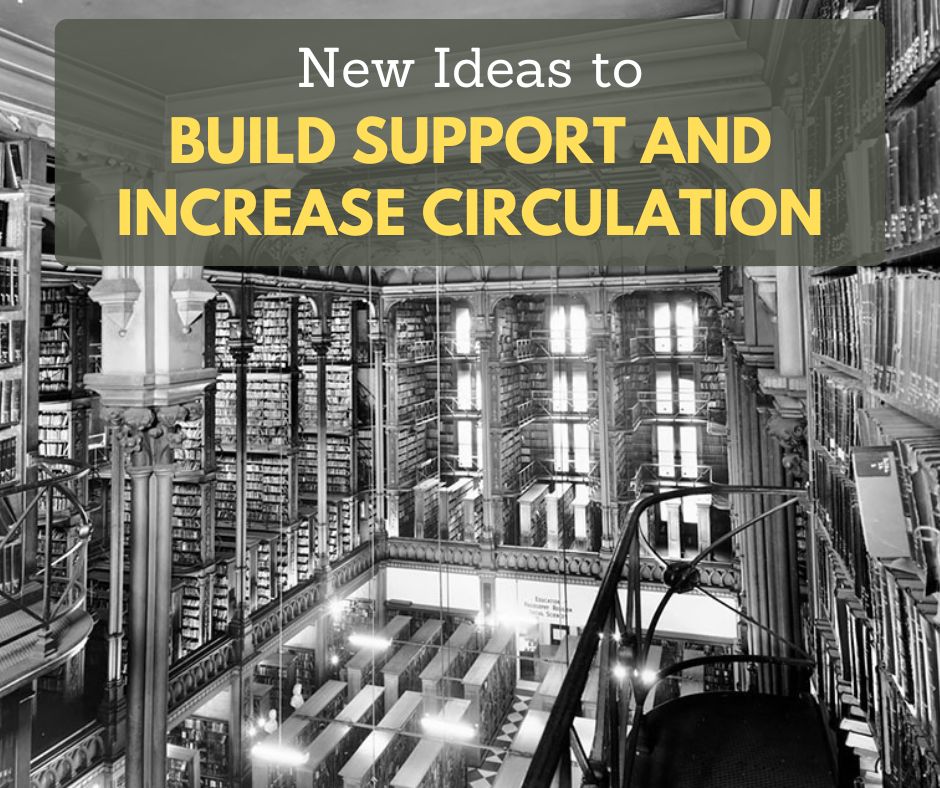
Photo of a man in the library stacks, vintage, courtesy Public Library of Cincinnati and Hamilton County's Digital collection.

I have an obsession.

I check my holds list on my library’s website pretty much every single day.

This is no lie.

At my library, each cardholder has a dashboard. You can see all the items you’ve put on hold and how many cardholders are in line in front of you.

You can also put books, DVDs, and CDs on a “for later” shelf. If you’re like me, you’ll check that shelf religiously.

After checking my print item holds, I open the Libby app and check the status of all the audiobooks I’ve put on hold. I try to guess which audiobook has the best potential to be made available at the exact moment I finish my current audiobook.

That’s totally normal, right?

I promise you that there are thousands, nay, tens of thousands of readers who partake in this same obsessive routine. Libraries who capitalize on that obsession get higher circulation numbers. And the more people engage with your collection, the more they are likely to engage with other parts of your library.

That’s why I am an advocate for robust and strategic collection promotion. But most library marketing teams spend their energy and resources promoting programs.

I was at the Association of Rural and Small Libraries Conference last week (shoutout to my new friends!). I asked the group where their library spends most of its promotional resources (time and energy).

75 percent said promoting programs and events. A mere FOUR PERCENT said promoting their collection.

(Excuse me now while I have a short cry).

These libraries are missing a crucial fact about their cardholders.

People want the collection items. That’s why people get a card. And that’s the main way people use their card once they’ve got it.

The Public Library Survey Report‘s latest data, released in August, showed that there were 2.2 billion items circulated in 2019, about seven items per person in the United States.

By comparison, there are almost 125 million program attendees at public libraries. If each of those attendees only attended one program, that would account for only 38 percent of the total population in the U.S.

And most libraries spend significantly more on their collection than they do on anything else. Library Journalโ€™s 2021 Budgets and Funding Survey shows that libraries spent 11.2 percent of their total budget on materials in 2020.

I am certain the data for other countries is similar.

If your library is putting resources into your collection, you must promote it. That’s the truth no matter what size library you work in.

But my gosh does it seem intimidating. Where do you start? And how do you get the most bang for your buck, in terms of circulation success?

Here are four easy things you should do right now to promote your collection. Because it’s what your community wants and needs from you.

Create FOMO with email.

Last month, I spoke to a self-described “library fan” who confessed to me that she often buys books because she didn’t know her library had new titles for checkout.

Most people don’t even think about turning to the library when their favorite author releases a new book. A concentrated collection marketing effort will change that.

Holds are a promotional opportunity. And the Fear of Missing Out (FOMO) is a real and tangible driver of promotional success.

So, promote your titles, especially new titles, using email. Include a line telling your cardholders that they are getting a jump on the holds list. Your most avid cardholders will pounce at the chance.

You can start small. Send an email once a month promoting three titles. Include a link to your catalog that will allow people to check that title out in whatever format they prefer.

All you need to do is include the book jackets, a short annotation, and a link. There are email programs designed specifically for libraries that make this process super easy.

You can also create a list of titles that aren’t new, but that are related by story element to the new titles which are the primary focus of your email. Give cardholders the option to check out these older titles while they wait for the newer titles.

Make sure you track holds and checkouts of the titles you promote in your email. That will give you some data to help you make decisions about what to promote next month. It will also be proof of the effectiveness of your work.

In my experience, one email a month can drive a circulation increase on average anywhere from 125 percent to 375 percent!

Strategically “upsell” your collection

Upselling is a sales term in which customers are encouraged to buy a more expensive version of a product than they originally intended.

Libraries can upsell too. We want our cardholders to end up checking out more items than they originally intended!

To do that, we must always be thinking of ways to offer other collection items to patrons as they checkout.

For instance, if you are running your library’s drive-thru window and a patron comes to pick up their hold on a memoir by a rock star, you can encourage them to log onto your library’s website to listen to that musician’s streaming music.

Or maybe you notice a patron bringing a stack of Regency-era books to your checkout desk. Suggest that the patron also check out DVDs of movies like “Pride and Prejudice”.

If your library is doing a screening of a kids’ movie, be sure to have an abundant number of books for kids in the same genre so that your patrons can leave the movie with a stack of books to read at home.

Look for every opportunity to encourage your patrons to check out more materials.

Harness the power of an eye-catching book cover.

Publishers understand the psychological impact of a good book cover. They spend a ton of money and research to pick the most engaging cover. We can use that to our advantage when we promote collection items.

On digital platforms, you’re trying to get people to stop scrolling as they move their feed. And a beautiful book cover works great for this purpose.

You can also put this concept to work for in-person book displays. Put your books face out. You want people to be drawn in by the beauty of the book cover.

Let someone else pick the items.

Delegate the selection of items to promote to the people who know what they’re doing–your collection or materials selection department.

Or ask the general staff of your library for recommendations. Librarians love it when you ask them what they’re reading. Your biggest problem will be whittling down the answers!

You can also crowdsource collection promotions from your followers. Ask people to share their book recommendations with you on social media or by emailing you.

You can even ask them to record a short video of themselves making their recommendations. Then you can share that content! You can even make a poster or sign featuring a photo of your patron and their book recommendations.

Want to talk more about collection promotion? Send me your questions or comments.


You Might Also Want to Read These Articles

Now, More Than Ever, Your Library MUST Market the Collection!๐Ÿ“š๐Ÿ“š Hereโ€™s Why.

Four *Easy* Ways to Promote Your Libraryโ€™s Childrenโ€™s Collection

Subscribe to this blog and youโ€™ll receive an email every time I post. To do that, enter your email address and click on the โ€œFollowโ€ button in the lower left-hand corner of the page.

Readers Can’t Wait! Marketing Around a Long Holds List at Your Library

Watch Now

The Library Marketingโ€‹โ€‹โ€‹โ€‹โ€‹โ€‹โ€‹โ€‹ Show, Episode 110

This video is for anyone who works in a library with a long holds list and frustrated readers. I’ll share some ideas for keeping people engaged with your collection even as they wait for that one book they are dying to read.

Kudos in this episode go to Indian Trails Public Library for this cute Library Card Signup month video, created by staff member Stephanie Diebel.

Do you have a suggestion for a topic for a future episode? Want to nominate someone for kudos? Let me know in the comments. And subscribe to this series to get a new video tip for libraries each week.

Thanks for watching!


Subscribe to this blog and youโ€™ll receive an email every time I post. To do that, click on the โ€œFollowโ€ button in the bottom left-hand corner of the page.

Four *Easy* Ways to Promote Your Library’s Children’s Collection

Watch Now

The Library Marketingโ€‹โ€‹โ€‹โ€‹โ€‹โ€‹โ€‹โ€‹ Show, Episode 109

In this video, I’ll share four ways you can make sure the public knows about the many wonderful children’s books you have in your library’s collection.

Kudos in this episode go to the Bridges Library System, which has a wonderful and funny newsletter signup and confirmation process.

Do you have a suggestion for a topic for a future episode? Want to nominate someone for kudos? Let me know in the comments.

And subscribe to this series to get a new video tip for libraries each week.

Thanks for watching!


Subscribe to this blog and youโ€™ll receive an email every time I post. To do that, click on the โ€œFollowโ€ button in the bottom left-hand corner of the page.

Now, More Than Ever, Your Library MUST Market the Collection!๐Ÿ“š๐Ÿ“š Here’s Why.

Watch Now

The Library Marketing Show, Episode 69

In this episode, Angela explains why she believes that marketing your library’s collection will keep your library afloat during these trying times. She’ll lay out three reasons why at least 50 percent of your marketing should be promoting your collection.

Kudos in this episode go to Stacey Desroisers and Melissa Mannon who launched “The Curious Reader” podcast, a collaboration between the Goffstown Public Library and the local high school.

Do you have a suggestion for a topic for a future episode? Want to nominate someone for kudos? Let me know in the comments. And subscribe to this series to get a new video tip for libraries each week!

Thanks for watching.

You Can Do It! What Library Marketers Need to Know About Promoting Books

The Library Marketing Show, Episode 34

WATCH NOW

This week, we talk about the work of Becky Spratford from RaForAll.Blogspot.com. She is a reader’s advisory expert. Her seminar made me think about how to improve library book promotion. You’ll learn four things that can help you with your library collection promotion.

Also, KUDOS in this episode go out to Greenfield Public Library in Greenfield, Massachusetts which recently received great press for their pop-up library initiative. Get out of your building and reach out to the community. Thatโ€™s good marketing!

If you have a topic for the show, kudos to share, or want to talk to me about library marketing, email me at ahursh@ebsco.com.

Want more Library Marketing Show? Watch previous episodes!

Check the Upcoming Events page to see where I’ll be soon. Let’s connect!

This blog consistsย of my own personal opinions and may not represent those of my employer. Subscribe to this blog and youโ€™ll receive an email every time I post. To do that, click on โ€œFollowโ€ button in the bottom left-hand corner of the page. Connect with me on Twitter,ย Instagram, andย LinkedIn.ย  Need help with your library marketing? Email me at ahursh@ebsco.com.

A WordPress.com Website.

Up ↑